Showing posts with label "molecular biology". Show all posts

Wednesday, May 7, 2025

Scientists Engineer Bacteria to Make Soil And Crops 'Glow' Different Colors

Researchers at MIT have developed a groundbreaking method to monitor soil and crop health using genetically engineered bacteria that "glow" in different colors when they detect specific environmental triggers like nutrients or pollutants. These engineered microbes produce unique pigments—such as biliverdin and bacteriochlorophyll—when exposed to certain stimuli, and these signals can be captured from afar using hyperspectral cameras mounted on drones or buildings. Unlike traditional bacterial sensors that require microscopic analysis, this system enables rapid, large-scale environmental monitoring in under 30 seconds across hundreds or thousands of square meters.

The engineered bacteria, including Pseudomonas putida and Rubrivivax gelatinosus, were designed to emit distinct light wavelengths when detecting specific targets, such as toxic metals or beneficial nutrients. The emitted signals, although invisible to the naked eye, are easily detectable by hyperspectral imaging, which identifies subtle spectral shifts. This “plug and play” system can be adapted to sense a wide variety of chemical or biological cues, making it a versatile tool for agriculture, pollution detection, and land management.

Funded by the U.S. and Israeli defense departments, the researchers emphasize the need to navigate regulatory and safety concerns. Still, they highlight the system’s potential as a sustainable, low-power, and persistent environmental monitoring technology.


Friday, December 1, 2023

Tiny Beads Protect Enzymes from Damaging Effects of Plasma Co-substrate

A biology research team from the Ruhr University Bochum found that immobilization protects enzymes from plasma-mediated inactivation.


In general, the researchers aimed to use plasmas (charged gas particles that produce reactive species) to drive enzymes using hydrogen peroxide to actually convert substrates into more valuable products. However, enzymes are sensitive to this treatment and are inactivated briefly. This issue was interestingly resolved with enzyme immobilization by attaching tiny beads with porous surfaces to them. Creating a protective zone between the plasma phase at the top (via buffer solution at the enzyme’s top) and the enzyme below (via beads lying at the sample’s bottom), enzymes had varying survival rates through different immobilization methods. Considering this, the discussed study aimed to study the effects of various methods on plasma stability using a larger set of enzymes among which some convert hydrogen peroxide. Additionally, various types of beads were tested. Following immobilization and the subsequent plasma treatment, the research study found that beads with resin surfaces performed the best, forming the strongest covalent bonds with the enzymes that couldn’t be disassociated. 


It was rather interesting to learn that immobilization allows for enzymes to be vastly more protected from the damaging effects of plasma treatment and the reactive species it produces, allowing the enzyme to be infinitesimally more stable and less susceptive to plasma-mediated deactivation. Through this knowledge, it makes it possible for various enzymes to be treated to produce more valuable substances industrially for consumer culture (i.e. the fragrance (R)-1-phenylethanol) and various other applications.

For more information regarding the study, view the news article linked here and the published journal article linked here.

Wednesday, October 25, 2023

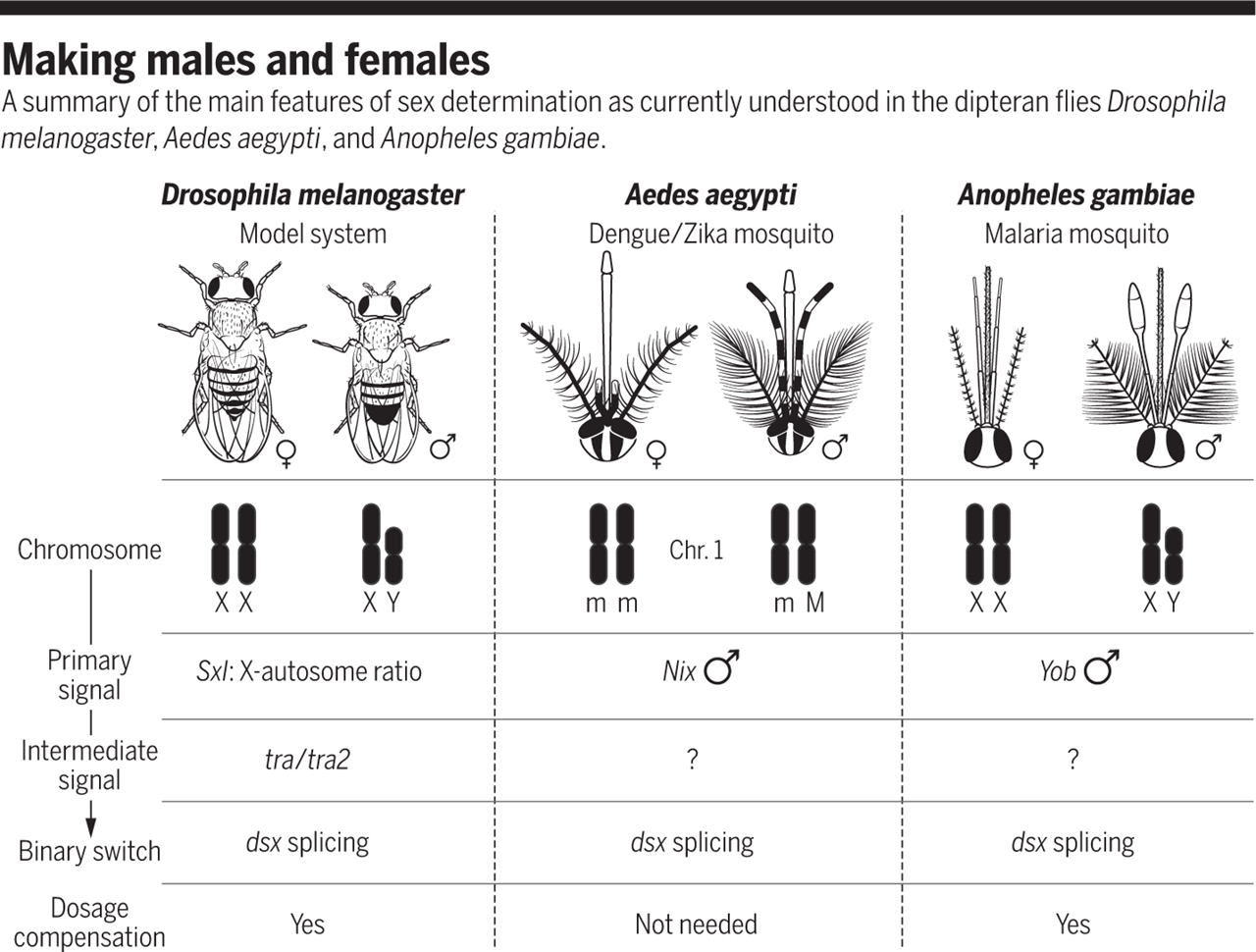
How male mosquitoes compensate for having only one X chromosome

 How male mosquitoes compensate for having only one X chromosome

    Dr. Claudia Keller Valsecchi's research team at IMB in Mainz discovered the master regulator, SOA, responsible for balancing X chromosome gene expression in male mosquitoes. This understanding is crucial for equalizing gene expression between male and female mosquitoes, which might lead to new malaria prevention strategies. Only female mosquitoes spread malaria, making understanding the molecular differences between mosquito genders essential. The study found that SOA binds to X chromosome genes, increasing their expression in males, while females produce a non-functional version.

The groundbreaking research led by Dr. Claudia Keller Valsecchi's team at IMB in Mainz is truly commendable and shows how research on small organisms like mosquito genetics can be applied to humans. Discovering the role of the SOA protein in balancing X chromosome gene expression opens the door to a deeper understanding of mosquito biology. Targeting the molecular differences between mosquito sexes could revolutionize our approach to combating this deadly disease. In the second article, Omar Akbari and his team at the University of California are using CRISPR genetic engineering to combat mosquito-borne diseases. They've developed techniques that either block viral transmission in mosquitoes or cause mosquito lethality. A notable approach being explored is pgSIT, which makes the mosquitoes sterile, preventing the need for insecticides in population control.


Links: 

https://www.sciencedaily.com/releases/2023/10/231006104515.htm

https://www.the-scientist.com/news-opinion/combating-mosquito-borne-diseases-with-crispr-70607


Monday, March 25, 2019

First Gene-Edited Soybean Oil Sold

An article recently published by The Scientist discusses the first sale of gene-edited soybean oil for commercial use. Calyxt, an agriculture-focused company based in Minnesota, has developed a product called Calyno oil and sold it to a Midwestern restaurant with multiple locations. The company has modified their soybeans to produce a “high oleic” oil with no trans fats and less saturated fat. Calyxt stated that transcription activator-like effector nuclease (TALEN) was used to alter the soybeans.  The company used precision technologies to edit the soybean crop and does not consider their new product a GMO. Calyno oil is being marketed as a non-GMO oil similar to olive, sunflower, and safflower oils. Calyxt hopes to sell to consumers in the near future. 
I was a little concerned by this article. Nowhere in the article is the FDA or regulations mentioned. GMO foods face large scrutiny before becoming available for consumers and commercial businesses. What standards are being used to evaluate gene-edited products? Has there been enough research on gene-edited products to ensure they are safe for consumption? Further research is needed on gene-edited crops to ensure they are safe for human consumption.