Showing posts with label CCR5 gene. Show all posts

Monday, December 3, 2018

Implications of Jiankui's Genetically Modified Babies


The latest news in genetics comes out of Shenzhen, China where an associate professor of bioengineering at the Southern University of Science and Technology, He Jiankui, claims that two little girls are the world’s first genetically edited newborn babies. Using CRISPR, Jiankui has modified the babies’ genes to make them resistant to infection from HIV. The father of the babies is said to be positive for HIV. As of November 27th (the date of the article), there was no data to demonstrate how this experiment took place but is said to speak on more on the topic. The University has condemned the topic and even issued a statement saying that they had no idea that the project was going on.


How HIV infects cells via CCR5


In a Youtube video, Jiankui claimed that he used CRISPR to disable CCR5, a protein receptor that allows HIV to infect blood cells. On specific mutation, Delta32, disables HIV from locking onto the cell. In theory, if all individuals carried this mutant allele, then nobody would be able to get AIDs from HIV. CRISPR has been used in the laboratory for many situations, like eliminating diseases and improving the health of different crops. This technique, though, has never been used on human embryos, and therefore the results are unknown. One major problem is that CRISPR can cause off-target mutations to genes away from the target genes, and therefore can have many other implications.

Many companies are already looking to gene therapies in adults to edit the CCR5 cells in adults. In theory, scientists would remove blood from HIV positive patients, delete the CCR5 protein and return the cell back to the patient. It seems like every action has a reaction, and in this sense, getting rid of the CCR5 protein would increase susceptibility to West Nile virus, which is already seen in the real world when individuals are born without the CCR5 protein. Overall, Jiankui wrote a piece that discussed the core principles in the genetic editing of human embryos.

I am very interested in ethics in relation to science, and especially in relation to genetic editing. I believe that it should be interesting to see the effects of this experiment over time. I do not feel strongly for or against human genome editing or the idea of “designer babies”. If this experiment works and is able to basically eliminate HIV and AIDs ability to infect humans, think of what other uses human genome editing could have. Genetic cancers could be cured, and other genetic diseases could be edited. I think the use of genome editing for superficial purposes is unethical at this point in time. I think that the world has a ways to go in terms of being able to accept genetic editing and there will always be disagreement for it. Overall, the effects of this experiment will be interesting to see how it changes genetics forever, and it is so cool to see this monumental moment in scientific history.

Sunday, October 18, 2015

Re-editing the human genome for disease therapy


Researchers at Washington State decided that they could figure out a new way to edit genes.  The typical gene-editing protocol started with using nucleases to induce double-stranded DNA breaks then allowing the cell’s non-homologous end-joining machinery to repair the nucleic acid.  This procedure didn’t always work correctly.  The researchers learned that if they tapped into the cell’s recombination repair pathway was a more efficient and precise way to edit the gene.  The new method can be used to disrupt a gene and could also insert new information into a specific site in the genome.  The Washington State Researchers used the new method to disrupt and replace CCR5 in the human T cells.   They also delivered a repair template that coded for gene they wanted to knock in. That gene was flanked by sequences that match the target gene.  The researcher demoed the success of their method with a reporter gene and then with gene cassettes with therapeutic abilities such as rewriting the CCR5 gene to protect T cells from HIV infections.  The study could be used to combat and correct other diseases like cancer. 
     This could be great for people who have diseases that doesn't have a cure for yet.  My wife have a disease that doesn't have a cure just yet, Reflex Sympathetic Dystrophy  RSD.  The only treatment allowed in the US is pain medication or anti-seizure.  I know there is a company in PA that is working on non-narcotic pain medication but maybe one day this could be used to repair the pain receptors or the affected cell to return to normal function. 

The original article
Genome editing cuts out HIV


Sunday, October 4, 2015

Seattle Children's Researchers Pioneer Gene Editing That Kills, Resists HIV.


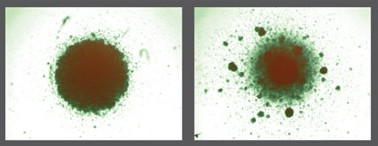
A team of researchers from the Center for Immunity and Immunotherapy at Seattle Children's Research Institute led by Dr. David Rawlings and Dr. Andrew Scharenberg have published their work in which they have discovered a means of creating T cells that could combat infected HIV T cells and B cell tumors while also being immune to HIV infection. The success rate of this new study is what makes it significantly ground breaking. The researchers have used gene editing to accomplish this experiment. In the picture above, the left is an image of a clump of HIV infected T cells, and to the right is an image of it after it was introduced to the edited T cells which are attacking the infected cells.

Within genetics, researchers often use techniques to find cures to diseases by editing a gene to cause certain behaviors in the cell or to block a gene that directly causes a disease. In HIV, T cells are attacked, which is why the immune system is so greatly compromised in such patients. Out of the 30,000 genes that code for T cells, Dr. Rawlings and Dr. Scharenberg pinpointed one particular gene that coded for a receptor called CCR5. In a very precise method, they cut out this particular gene, so the HIV virus would have nothing to latch onto, making them immune to infection. Then, researchers replaced this segment with a genome sequence that would give the T cells ability to fight infected cells and B cell tumors. Dr. Rawlings notes of how distinctive the research is among others of its kind because of the fact that it had a 60% success rate. In other words, 60% of the time, researchers were successfully able to cut out the CCR5 gene, replace it with an edited sequence and simultaneously give the edited cells both the ability to resist HIV infection and fight infected cells.

They are still working on how this method would work in infected individuals. They would propose to take an individual's own T cells, edit them and place them back into the individual where they can reproduce and keep the patient protected for a long time, hopefully. I find it incredible how these scientists can almost master the dexterity it takes to accomplish the genetic editing. It would be a very bright future for affected individuals who get the diagnosis and experience the stigma attached to it. It may affect how we view the infection as well from something that used to be so deadly, to now how it is now considered "manageable," and towards the future where it may be combated successfully. It is hard to wrap around the idea that researchers can make changes in the genetic on such a microscopic scale. The fact that they can do this, and now with a very high success rate, will pave the way for cures of other autoimmune diseases and viruses.

Original Link

Saturday, November 29, 2014

Is There a Potential Cure for HIV?

It all started with the “Berlin Patient” in 2007. Timothy Brown was cured of HIV when given the stem cells of another patient who was naturally immune to the disease. When this happened two companies, Sangoma and Calimmune, took the opportunity to attempt to recreate the natural immunity to HIV in a lab. This natural immunity occurs because of a gene mutation on the CCR5 gene which is located on CD4 T-cells. When this gene is disable HIV cannot attack the T-cells.


Sangamo was the first to attempt the recreation in 2009. Lead by Carl June from the University of Pennsylvania, a team of researchers and doctors removed CD4 T-cells from patients with HIV. The study then focused on disabling the CCR5 gene alleles and then returning the modified cells to the patient. It was stated that this did no harm to the patients and the altered genes had a half-life of 48 day, which is expected because “…T-cells are not permanent residents of the body”. In fact, several of the patients in this study even exhibited a decline in their HIV levels.

The next company to attempt to recreate the natural immunity to HIV is Calimmune. In 2013 a team led by David Baltimore and Irvin Chen decided to take a different approach to solve the task at hand. Instead of focusing their work on T-cells, they decided to take advantage of blood stem cells. This approach is different because blood stem cells, unlike T-cells, are permanent residents in the body. During this study patients were “given back both their own T cells, and longer-lived HSCs [blood stem cells], both with the CCR5 gene disabled using hairpin RNAs delivered by a lentivirus.” By doing this they hope that these blood stem cells can continue to produce T-cells with disabled CCR5 gene alleles throughout a patient’s lifetime.

Despite the fact that neither of these studies have conclusive clinical trials yet, Harvard University has decided to be next in the search for a cure for HIV. Their approach will include new CRISPR/Cas technology which has already proven effective in mice. It was stated that Harvard may even apply for clinical trial approval in five years.


Saturday, November 15, 2014

New Gene-Editing Technique Makes Strides Towards HIV Resistance

According to the Centers for Disease Control (CDC), 1,155,792 people in the United States have been diagnosed with acquired immunodeficiency syndrome (AIDS) caused by the human immunodeficiency virus (HIV). HIV targets T-cells via the CCR5 gene receptor which serves as a channel for the virus into cells. The virus then replicates inside the T-cells, eventually killing the host cells. This destruction of T-cells ultimately results in a highly susceptible immune system.While countless research projects aspire to develop a cure for the devastating virus, an approved cure has yet to be determined. However, hopes for finding a cure remain as vast strides towards a cure have been accomplished by some promising research.

Using a new gene-editing technique, researchers for the Harvard Stem Cell Institute (HSCI) at Massachusetts General (MGH) and Boston Children's (BCH) hospitals have created an effective technique for blocking HIV from invading and destroying its subject's immune system. The researchers effectively and precisely used CRISPR-Cas gene-editing technology to edit clinically relevant genes out of human hematopoietic stem cells and T-cells. The team was able to remove the CCR5 gene receptor out of of hematopoietic stem cells and demonstrate that these cells could differentiate into functional blood cells without the CCR5 gene. This outcome suggests that gene-edited stem cells could be delivered into HIV patients by bone marrow transplantation. The procedure would result in an HIV-resistant immune system. Dr. David Scadden, co-director of HSCI, stated that the new work is "a tremendous first step in editing out what makes human cells vulnerable to HIV."


The team identified areas of caution regarding the future of the new gene-editing therapy such as unexpected complications with the new therapy and the potential difficulty involved in treating people in the areas where HIV is most prevalent.The team also believes the new therapy will be ready for human safety trials within 5 years. The new therapy will undergo animal trials, and once they are completed, the team will apply for phase I human trials.

The more I read about the advances in gene-editing techniques, the more I am humbled at how far medical technology has come in such a short time period. I am excited to follow the development of this therapy through its trials. Advances such as this will encourage hope globally regarding the devastating virus.                                                                                                                                                                                                                                                                                                                                                                                                                                                                       
 Article: http://news.harvard.edu/gazette/story/2014/11/a-promising-strategy-against-hiv/
Related Article: http://www.nejm.org/doi/pdf/10.1056/NEJMoa0802905

Friday, September 26, 2014

Potential Cure for HIV
According to the World Health Organization (WHO), approximately 0.8% of adults between the ages of 15-49 years old are living with human immunodeficiency virus (HIV) worldwide. Despite the global prevalence of the virus, there has not yet been a functional cure. However, recently an HIV-positive patient with leukemia was cured of the virus. The patient underwent total body irradiation (TBI) and a bone-marrow transplant. The bone-marrow donor had a mutation which prevents the function of the CCR5 gene. The CCR5 gene codes for a protein which allows HIV to enter human cells. The mutation the donor possessed, however, protects cells against HIV infection.

Experts believe three factors may have contributed to the cure in the Berlin patient. The first factor which may have contributed to the patient’s cure is that the removal of blood and immune cells  which occurred after irradiation killed many of the viral reservoir cells. The second contribution may have been that the CCR5 deletion mutation from the donor cells protected those cells and their progeny from HIV infection. The third contribution to the patient’s cure may have been a graft versus host reaction which resulted in the transplanted cells and their progeny attacking and eliminating the remaining HIV-positive cells.
In order to further research this potential cure for HIV, a study was conducted involving six rhesus macaques infected with simian immunodeficiency virus (SIV). The researchers harvested hematopoietic stem cells from three of the six of the macaques prior to infection with SIV and treated the macaques with antiretroviral therapy (ART). They treated the three macaques from which they collected hematopoietic stem cells with high doses of radiation. The radiation killed 94%-99% of the monkeys’ CD4-T cells. The three monkeys then received their own virus-free hematopoietic stem cells. The viral load rebounded rapidly in the three control group monkeys and in two of the monkeys who received the transplant. Due to the failure of the treatment, the researchers suggest that “the use of the CCR5 mutant donor and/or the presence of graft versus host disease played a significant role” in the cure of the Berlin patient.
Overall, this potential treatment for HIV seems to have promise and should definitely be more extensively researched. This treatment involving ART, irradiation, and a hematopoietic stem cell transplant is very complex, and there are many aspects of it which should be thoroughly examined. I found this article extremely interesting because the graft versus host disease in the Berlin patient seemed to have been a vital factor in how the patient was cured of HIV. Due to the complexity of the Berlin patient’s case, the results will be difficult to replicate; however, replication of the Berlin patient’s results has profound implications in the search for a cure for HIV.