Showing posts with label HIV cure. Show all posts

Sunday, October 4, 2015

Seattle Children's Researchers Pioneer Gene Editing That Kills, Resists HIV.


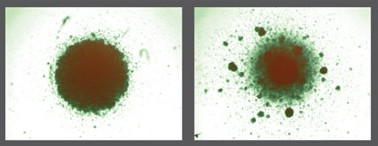
A team of researchers from the Center for Immunity and Immunotherapy at Seattle Children's Research Institute led by Dr. David Rawlings and Dr. Andrew Scharenberg have published their work in which they have discovered a means of creating T cells that could combat infected HIV T cells and B cell tumors while also being immune to HIV infection. The success rate of this new study is what makes it significantly ground breaking. The researchers have used gene editing to accomplish this experiment. In the picture above, the left is an image of a clump of HIV infected T cells, and to the right is an image of it after it was introduced to the edited T cells which are attacking the infected cells.

Within genetics, researchers often use techniques to find cures to diseases by editing a gene to cause certain behaviors in the cell or to block a gene that directly causes a disease. In HIV, T cells are attacked, which is why the immune system is so greatly compromised in such patients. Out of the 30,000 genes that code for T cells, Dr. Rawlings and Dr. Scharenberg pinpointed one particular gene that coded for a receptor called CCR5. In a very precise method, they cut out this particular gene, so the HIV virus would have nothing to latch onto, making them immune to infection. Then, researchers replaced this segment with a genome sequence that would give the T cells ability to fight infected cells and B cell tumors. Dr. Rawlings notes of how distinctive the research is among others of its kind because of the fact that it had a 60% success rate. In other words, 60% of the time, researchers were successfully able to cut out the CCR5 gene, replace it with an edited sequence and simultaneously give the edited cells both the ability to resist HIV infection and fight infected cells.

They are still working on how this method would work in infected individuals. They would propose to take an individual's own T cells, edit them and place them back into the individual where they can reproduce and keep the patient protected for a long time, hopefully. I find it incredible how these scientists can almost master the dexterity it takes to accomplish the genetic editing. It would be a very bright future for affected individuals who get the diagnosis and experience the stigma attached to it. It may affect how we view the infection as well from something that used to be so deadly, to now how it is now considered "manageable," and towards the future where it may be combated successfully. It is hard to wrap around the idea that researchers can make changes in the genetic on such a microscopic scale. The fact that they can do this, and now with a very high success rate, will pave the way for cures of other autoimmune diseases and viruses.

Original Link

Friday, January 30, 2015

A possible cure for HIV


HIV is a Human Immunodeficiency Virus that affects the immune system. It makes people much more vulnerable to infections and diseases. It is found in the bodily fluids of an infected person such as through blood. The virus can be passed from one person to another though blood to blood and sexual contact. 

A recent article on Science Daily discusses HIV and how it can lie dormant in infected cells for years or even decades. Scientists think unlocking the secrets of this viral reservoir may make it possible to cure and not just treat HIV. A team of researchers led by Zanvil A. Cohn and Ralph M. Steinman at Rockefeller University and their collaborators describe new insights on which cells likely do and do not harbor this latent virus. These researchers think the reservoir of latent virus may be hiding out in a type of CD4 T cell: long-lived memory cells that help the immune system remember particular pathogens. 

 I believe that this research is important and will aid in saving many lives in the future. More than 1.2 million people in the United States are living with HIV infection, and almost 1 in 7 are unaware of their infection. Finding a possible cure for HIV will lower these numbers greatly.


Saturday, November 29, 2014

Is There a Potential Cure for HIV?

It all started with the “Berlin Patient” in 2007. Timothy Brown was cured of HIV when given the stem cells of another patient who was naturally immune to the disease. When this happened two companies, Sangoma and Calimmune, took the opportunity to attempt to recreate the natural immunity to HIV in a lab. This natural immunity occurs because of a gene mutation on the CCR5 gene which is located on CD4 T-cells. When this gene is disable HIV cannot attack the T-cells.


Sangamo was the first to attempt the recreation in 2009. Lead by Carl June from the University of Pennsylvania, a team of researchers and doctors removed CD4 T-cells from patients with HIV. The study then focused on disabling the CCR5 gene alleles and then returning the modified cells to the patient. It was stated that this did no harm to the patients and the altered genes had a half-life of 48 day, which is expected because “…T-cells are not permanent residents of the body”. In fact, several of the patients in this study even exhibited a decline in their HIV levels.

The next company to attempt to recreate the natural immunity to HIV is Calimmune. In 2013 a team led by David Baltimore and Irvin Chen decided to take a different approach to solve the task at hand. Instead of focusing their work on T-cells, they decided to take advantage of blood stem cells. This approach is different because blood stem cells, unlike T-cells, are permanent residents in the body. During this study patients were “given back both their own T cells, and longer-lived HSCs [blood stem cells], both with the CCR5 gene disabled using hairpin RNAs delivered by a lentivirus.” By doing this they hope that these blood stem cells can continue to produce T-cells with disabled CCR5 gene alleles throughout a patient’s lifetime.

Despite the fact that neither of these studies have conclusive clinical trials yet, Harvard University has decided to be next in the search for a cure for HIV. Their approach will include new CRISPR/Cas technology which has already proven effective in mice. It was stated that Harvard may even apply for clinical trial approval in five years.


Saturday, November 22, 2014

Some People May Be Naturally Immune to HIV

Doctors have long wondered why some people can be exposed to certain viruses (from the flu to ebola or HIV) over and over and not become ill. Specifically, doctors are interested in the case of HIV. A team of researchers seems to be closing in on an answer. At the University of Minnesota, scientists studying HIV-1 discovered some people have a variation of the gene APOBEC3H. In these individuals, the variation produces an antiretroviral that inhibits HIV from replicating and spreading through the body. Scientists are hopeful that this new information may help in developing new treatments.


The research team took HIV strains and created mutant probes and tested the stability of the proteins fighting HIV. The scientists then produced stronger and more stable forms of the antiretroviral proteins using cells from individuals with the desired variation of APOBEC3H. These were successful in blocking HIV with a weak version of Vif (which is the virus's own way of defending itself). However, when the HIV had a stronger version of Vif, the engineered antiretroviral proteins were unsuccessful. 

Moving forward, scientists hope to find a way to keep Vif from destroying the APOBEC3, so that the antiretrovirals can fight the virus. They believe that they are on the right track to finding a way to kill HIV, and possibly even cure the virus itself.

This article offers a lot of hope for the future of HIV treatment and hope for a cure. The research seems promising enough that the researchers themselves feel they are close to finding a lot of answers. This groundbreaking discovery could potentially change the lives of millions of people who are living with HIV and those who have not been infected yet.

Sunday, March 9, 2014

Study Gives Hope of Altering Genes to Repel HIV

Published in the New York Times, this article gives hope to a possible cure to HIV. The treatment involves zeroing in on a particular gene and disables it; a method called "gene editing". In this particular study scientist are eliminating a protein that in located on immune cells that the virus must latch onto in order to invade the cell. The goal is that enough cells can be engineered to repel the virus so that antiviral drugs are no longer needed and perhaps a cure will be discovered.
The initial study was not performed for efficacy, but rather safety, to see if immune cells can in fact, be altered without harming the patients. In some cases, during the pilot study just altering the immune cells had already helped fight infections in some of the patients.
There are still many "what if's" that need to be solved and then patients must ask themselves if they want this complex treatment when many people can keep their infection under control with a few pills a day. Patients who dislike the side effects of the pills and the expense of them may wish to use this treatment in the future as it could be cheaper! Right now scientist are trying to increase the proportion of edited cells.
It will be a very happy day when HIV infected people can say they are HIV negative. Finding advances to curing HIV should give hope to all people who suffer from "incurable" diseases such as cancer, diabetes, and other autoimmune diseases.
The original article about this study can be found in the New England Journal of Medicine.

Thursday, April 18, 2013

The Future of the Prevention of HIV

An article in ScienceDaily says that the researchers at Albert Einstein College of Medicine have figured out how regulation occurs of the protein that blocks HIV-1 from multiplying in white blood cells. HIV-1 is the virus that causes AIDS and this discovery could serve as a potential elimination of the virus. It can eliminate the residue of the HIV-1 that remains in patients that have undergone antiretroviral therapy which reduces HIV-1 levels in the blood until it is undetectable, but it still remains in the phages. Dr. Felipe Diaz-Griffero says, “If you stop antiretroviral therapy, the virus emerges from these reservoirs and returns to the general circulation in a matter of days, as if the patient had never been treated.” Now that they have identified the protein and its regulation, they can prevent the HIV-1 from arising form reservoirs, eliminating them completely. Scientists have always known that the protein is SAMHD1 but they have never been able to figure out why it only prevents HIV-1 replication in certain cells but not other crucial ones such as macrophages. SAMHD1 exists in two forms: phosphorylated and unphosphorylated. A cell is only protected from the replication of the HIV-1 when there is unphosphorylated SAMHD1 proteins present. They are now trying to figure out a way to permanently keep SAMHD1 in its unphosphorylated state.

[caption id="attachment_8000" align="aligncenter" width="625" caption="T-cell Infected by HIV "]HIV Infection[/caption]

I think this is a great discovery in science. It can potentially lead to a cure of a disease that people have been searching for the longest time. It would be a great success in medicine if this technique could be introduced to the public. However, I am curious to know how they will be able to account for the differences that exist from patient to patient.