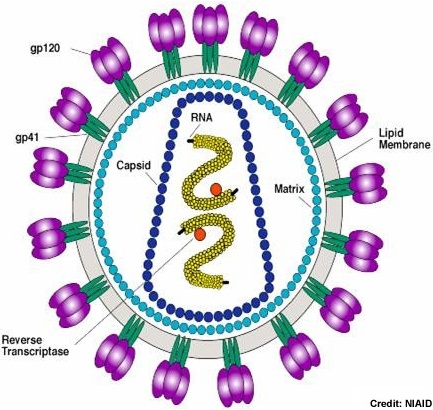
Doctors have long wondered why some people can be exposed to certain viruses (from the flu to ebola or HIV) over and over and not become ill. Specifically, doctors are interested in the case of HIV. A team of researchers seems to be closing in on an answer. At the University of Minnesota, scientists studying HIV-1 discovered some people have a variation of the gene APOBEC3H. In these individuals, the variation produces an antiretroviral that inhibits HIV from replicating and spreading through the body. Scientists are hopeful that this new information may help in developing new treatments.

The research team took HIV strains and created mutant probes and tested the stability of the proteins fighting HIV. The scientists then produced stronger and more stable forms of the antiretroviral proteins using cells from individuals with the desired variation of APOBEC3H. These were successful in blocking HIV with a weak version of Vif (which is the virus's own way of defending itself). However, when the HIV had a stronger version of Vif, the engineered antiretroviral proteins were unsuccessful.
Moving forward, scientists hope to find a way to keep Vif from destroying the APOBEC3, so that the antiretrovirals can fight the virus. They believe that they are on the right track to finding a way to kill HIV, and possibly even cure the virus itself.
This article offers a lot of hope for the future of HIV treatment and hope for a cure. The research seems promising enough that the researchers themselves feel they are close to finding a lot of answers. This groundbreaking discovery could potentially change the lives of millions of people who are living with HIV and those who have not been infected yet.
More Information: http://www.sciencedaily.com/releases/2014/11/141120141750.htm