Showing posts with label AIDS. Show all posts

Tuesday, August 3, 2021

HIV: Defeated Naturally By A Human's Immune System

 This HIV/AIDS Specialist Explains Its Similarities — And Differences — To  COVID-19

In this article, it discusses multiple cases of people who naturally cured their own HIV. In the past, there has been two cases where people have been cured of HIV when receiving a bone marrow transplant, but now we have seen someone cure it with their own immune system. A patient who had the virus, eventually showed no functional HIV copies in any of their cells, even though they still had some nonfunctional copies of the virus, it suggests that some people's immune systems can eliminate the virus on its own like usual. Another patient, only had one functional copy out of 1 billion blood cells, and it was stuck in a genetic prison, which can hold the key to controlling the virus because they did not need antiretroviral drugs. In understanding the extensive nature of this, the first patient had undetectable levels of the virus without drugs for 24 years.

Studying their immune systems on how it fights the virus, could change all treatments of HIV as we know it and could lead us to cure, but it is still a huge question right now.

Links:

https://www.sciencenews.org/article/hiv-immune-system-elite-controllers

https://www.cdc.gov/hiv/basics/whatishiv.html


Saturday, May 4, 2019

Antibody Suppresses HIV

Discussed in this article by The Science Daily, an antibody has been discovered that suppresses HIV for up to four months. This study was conducted in Taiwan and led by Dr. Chang Yi Wang. Twenty-nine volunteers with well-controlled HIV discontinued their normal regimen of daily normal ART at the time of their first infusion. Fourteen of the participants received eight weekly infusions of UB-421 and fifteen of the participants received eight higher dose infusions. At the end of the treatment all the participants started up their regular ART regimen. One participant discontinued due to a skin rash side effect but all the other participants maintained HIV suppression during the study. UB-421 avoids the possibility of HIV mutation by blocking a stable human protein that HIV uses to infect the T cells. Resistance to UB-421 was not seen because the small study did not include a comparator group receiving a placebo infusion. Further studies are planned in Taiwan to evaluate the safety and efficacy  of UB-421 as a treatment for HIV. We are constantly looking for better treatments and this could potentially be another very successful treatment for many HIV patients worldwide.

Microscopic image of an HIV infected T Cell

Monday, December 3, 2018

Implications of Jiankui's Genetically Modified Babies


The latest news in genetics comes out of Shenzhen, China where an associate professor of bioengineering at the Southern University of Science and Technology, He Jiankui, claims that two little girls are the world’s first genetically edited newborn babies. Using CRISPR, Jiankui has modified the babies’ genes to make them resistant to infection from HIV. The father of the babies is said to be positive for HIV. As of November 27th (the date of the article), there was no data to demonstrate how this experiment took place but is said to speak on more on the topic. The University has condemned the topic and even issued a statement saying that they had no idea that the project was going on.


How HIV infects cells via CCR5


In a Youtube video, Jiankui claimed that he used CRISPR to disable CCR5, a protein receptor that allows HIV to infect blood cells. On specific mutation, Delta32, disables HIV from locking onto the cell. In theory, if all individuals carried this mutant allele, then nobody would be able to get AIDs from HIV. CRISPR has been used in the laboratory for many situations, like eliminating diseases and improving the health of different crops. This technique, though, has never been used on human embryos, and therefore the results are unknown. One major problem is that CRISPR can cause off-target mutations to genes away from the target genes, and therefore can have many other implications.

Many companies are already looking to gene therapies in adults to edit the CCR5 cells in adults. In theory, scientists would remove blood from HIV positive patients, delete the CCR5 protein and return the cell back to the patient. It seems like every action has a reaction, and in this sense, getting rid of the CCR5 protein would increase susceptibility to West Nile virus, which is already seen in the real world when individuals are born without the CCR5 protein. Overall, Jiankui wrote a piece that discussed the core principles in the genetic editing of human embryos.

I am very interested in ethics in relation to science, and especially in relation to genetic editing. I believe that it should be interesting to see the effects of this experiment over time. I do not feel strongly for or against human genome editing or the idea of “designer babies”. If this experiment works and is able to basically eliminate HIV and AIDs ability to infect humans, think of what other uses human genome editing could have. Genetic cancers could be cured, and other genetic diseases could be edited. I think the use of genome editing for superficial purposes is unethical at this point in time. I think that the world has a ways to go in terms of being able to accept genetic editing and there will always be disagreement for it. Overall, the effects of this experiment will be interesting to see how it changes genetics forever, and it is so cool to see this monumental moment in scientific history.

Thursday, May 4, 2017

HIV vs. CRISPR


HIV is one of the most prolific viruses out there capable of killing not only individuals but entire communities, because of the way it spreads and humanities inability to cure it.  However new information is coming out from the Lewis Katz School of medicine at Temple University that could halt HIV in its tracks.  This new technology, which is based off of the CRISPR/Cas9 technology, was built of the premise that you could use gene editing to remove the HIV-1 gene from infected cells in an infected victim.  Recently the researchers provided a proof of concept where they removed the gene from transgenic mice.  The technology even managed to find the HIV-1 gene that was carried in latent T cells, which can usually avoid detection.  
      VS.


For the original article here 
For more information on Aids Here

Tuesday, December 1, 2015

Scientists Identify Two Genes that ‘Shut Down’ HIV-1 Virus


An international group of researchers has uncovered the mechanisms of genes that may inhibit the virility of the HIV-1 virus. The two proteins, SERINC5 and SERINC3 are typically found in  the cell membrane of a cell. The HIV-1 virus has 9 genes, one of them coding for the protein HIV-1 Nef, which accounts for much of the viral ability of HIV. HIV-1 Nef also prevents SERINC5 and SERINC3 from reaching the cell membrane or being incorporated into new virions. In the absence of Nef, new virions can leave the host cell and attempt unsuccessfully to infect other cells because the SERINC proteins prevent the HIV virus from leaving the viral envelope. With the presence of SERINC proteins, research say the virility of HIV is reduced by 100-fold.

The research is pointing towards a promising future in viral studies, as HIV has become rampant over the years. Current medicine usually keep the virus at bay and infected individuals manage to have normal, functioning lives. Even so, they still have to live with the stigma of their infection and infected people who do not get diagnosed early may suffer greater consequences. With SERINC's anti-retroviral ability, this could lead to a more effective treatment option for HIV/AIDs and treatment of other enveloped viruses.

Original article

SERINC

HIV/AIDS

Sunday, October 4, 2015

Seattle Children's Researchers Pioneer Gene Editing That Kills, Resists HIV.


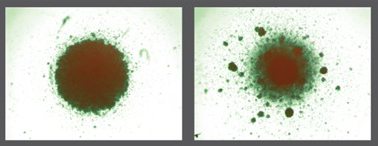
A team of researchers from the Center for Immunity and Immunotherapy at Seattle Children's Research Institute led by Dr. David Rawlings and Dr. Andrew Scharenberg have published their work in which they have discovered a means of creating T cells that could combat infected HIV T cells and B cell tumors while also being immune to HIV infection. The success rate of this new study is what makes it significantly ground breaking. The researchers have used gene editing to accomplish this experiment. In the picture above, the left is an image of a clump of HIV infected T cells, and to the right is an image of it after it was introduced to the edited T cells which are attacking the infected cells.

Within genetics, researchers often use techniques to find cures to diseases by editing a gene to cause certain behaviors in the cell or to block a gene that directly causes a disease. In HIV, T cells are attacked, which is why the immune system is so greatly compromised in such patients. Out of the 30,000 genes that code for T cells, Dr. Rawlings and Dr. Scharenberg pinpointed one particular gene that coded for a receptor called CCR5. In a very precise method, they cut out this particular gene, so the HIV virus would have nothing to latch onto, making them immune to infection. Then, researchers replaced this segment with a genome sequence that would give the T cells ability to fight infected cells and B cell tumors. Dr. Rawlings notes of how distinctive the research is among others of its kind because of the fact that it had a 60% success rate. In other words, 60% of the time, researchers were successfully able to cut out the CCR5 gene, replace it with an edited sequence and simultaneously give the edited cells both the ability to resist HIV infection and fight infected cells.

They are still working on how this method would work in infected individuals. They would propose to take an individual's own T cells, edit them and place them back into the individual where they can reproduce and keep the patient protected for a long time, hopefully. I find it incredible how these scientists can almost master the dexterity it takes to accomplish the genetic editing. It would be a very bright future for affected individuals who get the diagnosis and experience the stigma attached to it. It may affect how we view the infection as well from something that used to be so deadly, to now how it is now considered "manageable," and towards the future where it may be combated successfully. It is hard to wrap around the idea that researchers can make changes in the genetic on such a microscopic scale. The fact that they can do this, and now with a very high success rate, will pave the way for cures of other autoimmune diseases and viruses.

Original Link

Monday, April 13, 2015

Trial brings researchers closer to an antibody treatment for HIV

A small trial, one with only 17 participants, showed promising signs in the fight against HIV. The participants were "infused" with HIV fighting antibodies and the patients with the highest dose of this antibody showed a 300 fold drop of HIV in their blood with no adverse side effects. To me this sounded way to incredible to be true. I mean 300 times lower than before the study started? The sample size for this trial was small, but the results were published in Nature, so I was sold on the credibility of this study. Another cool part of this study was that in order to make a sufficient amount of antibodies to inject into the people, they had to be cloned.
The researchers also talk about how the HIV virus mutates so rapidly, that a combination of antibodies would be needed to effectively treat the disease. This treatment could be used in conjunction for with the current antiviral treatments and maybe even lead to a vaccine one day.
For now, the best method of preventing HIV is to educate the population on prevention and safe sex practices. Hopefully in the future a definitive cure will come out, especially for those developing populations in which HIV and AIDS runs rampant.

Saturday, November 29, 2014

Is There a Potential Cure for HIV?

It all started with the “Berlin Patient” in 2007. Timothy Brown was cured of HIV when given the stem cells of another patient who was naturally immune to the disease. When this happened two companies, Sangoma and Calimmune, took the opportunity to attempt to recreate the natural immunity to HIV in a lab. This natural immunity occurs because of a gene mutation on the CCR5 gene which is located on CD4 T-cells. When this gene is disable HIV cannot attack the T-cells.


Sangamo was the first to attempt the recreation in 2009. Lead by Carl June from the University of Pennsylvania, a team of researchers and doctors removed CD4 T-cells from patients with HIV. The study then focused on disabling the CCR5 gene alleles and then returning the modified cells to the patient. It was stated that this did no harm to the patients and the altered genes had a half-life of 48 day, which is expected because “…T-cells are not permanent residents of the body”. In fact, several of the patients in this study even exhibited a decline in their HIV levels.

The next company to attempt to recreate the natural immunity to HIV is Calimmune. In 2013 a team led by David Baltimore and Irvin Chen decided to take a different approach to solve the task at hand. Instead of focusing their work on T-cells, they decided to take advantage of blood stem cells. This approach is different because blood stem cells, unlike T-cells, are permanent residents in the body. During this study patients were “given back both their own T cells, and longer-lived HSCs [blood stem cells], both with the CCR5 gene disabled using hairpin RNAs delivered by a lentivirus.” By doing this they hope that these blood stem cells can continue to produce T-cells with disabled CCR5 gene alleles throughout a patient’s lifetime.

Despite the fact that neither of these studies have conclusive clinical trials yet, Harvard University has decided to be next in the search for a cure for HIV. Their approach will include new CRISPR/Cas technology which has already proven effective in mice. It was stated that Harvard may even apply for clinical trial approval in five years.


Monday, November 24, 2014

Genetics has allowed selected a small percentage to have a strong resistance or immunity towards HIV-1.

The HIV-1 virus as is widely known to cause Aids and that lowers the effectiveness of the immune system. In the article it states that the HIV-1 harms the individual, “by invading immune system cells known as Tlymphocytes, hijacking their molecular machinery to make more of themselves,then destroying the host cells.” The immune system is a system that keeps the body in check of sickness and diseases; it is what fights foreign invaders that enter the body. Although the individual that acquires the HIV-1 virus is known to have their immune system weakens and even diminish to barely anything, and the individuals becomes more prone to sickness. This is a major concern for people, and it should since there is no fully effective cure to rid of the virus completely, but yet there are people out there that have a high resistant and could even label it immunity to the HIV-1 virus.  

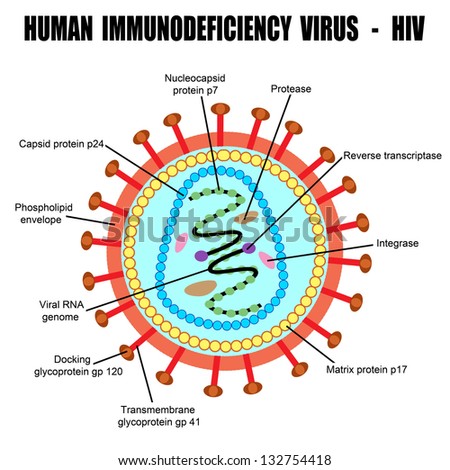
Image of a HIV-1virus that can attack immune systems cells.

Recent studies from the University of Minnesota suggests that there is a clue as to why these individuals show immunity and the answer lies in the cells that the HIV-1 has impacted. The body immune system has a defense against foreign invaders and HIV-1 is no exception, the body produces proteins titled, APOBEC3, that prevents the virus from replicating, but the virus has a counter of a defense that allows the body to be deceived and destroy the APOBEC3 that stopped replication of the virus. Studies conducted showed that individuals produces different levels of the proteins that fight back the HIV-1 virus, although the people showing immunity lack the ability to prevent the virus if it has a strong ability to produce the protein Vif, which makes the body destroy it own resilience. Overall the individuals showing immunity have to have met certain conditions and even with those conditions met they still have an internal struggle of the virus against their immune system.

This is a large step forward since now that there is a targeted identity now, researchers can targets the Vif of the virus to stop producing it’s counter defense, so the infected individual immune system can hopefully get rid of the virus. Although, personally knowing that there is an internal competition within the infected body, is a large concern since any serious illness or shock to the body can tip the favor to the virus.  

Sunday, December 8, 2013

AG3 new pathway to fight HIV


The term HIV brings fear to nymphos and is known to be one of the most deadly of all STD’s. Researchers from Northeastern University have found multiple properties of the protein AG3. AG3 is a protein that is known to chemically alter DNA to cause HIV to mutate; however, researchers have found that the protein AG3 acts also acts as a “roadblock” to prevent HIV to replicate DNA.

This new pathway of the protein AG3 stopping HIV can lead to multiple innovations of drugs. These different type of pathways also allow for the trial of other proteins to stop HIV.