Showing posts with label ASD. Show all posts

Tuesday, December 8, 2020

The Genetic Links to Autism


    Autism Spectrum Disorder is a neurological disorder that affects everyone who has it very differently. With such a broad range of characteristics and symptoms, it has been very difficult to pinpoint the exact cause of it, and there seem to be not only physiological but environmental factors that play a role as well. In a recent study lead by the director of Seaver Autism Center for Research and Treatment, Joseph Buxbaum, 102 genes were found to have a link to ASD which included 30 genes that had no previous correlation. The study also found that some of the genes were also linked to other neurodevelopmental disorders as well.

    By being able to look at such a large sample size of DNA from people who have autism and close relatives, it was easier to identify genes that are directly linked to the disorder. Though there is still so much to learn about this disorder and genetics alone may not be the only answer, studies like these that look at such a large amount of people are incredibly helpful and will help put together the much larger picture.

Additional Links

https://www.appliedbehavioranalysisedu.org/is-autism-genetic/

Friday, April 15, 2016

Nutrient called carnitine might counteract gene mutations linked with ASD risks

Autism spectrum disorder (ASD) is the name give for a group of developmental disorders. ASD includes a wide range of symptoms and different levels of disability. People with ASD often display characteristics of ongoing social problems that include difficulty communicating and interacting with others along with repetitive behaviors as well as limited interests or activities. About 1 in 68 children in the United States along are affected with some degree of ASD, and the annual cost associated with ASD has been estimated to be around $250 billion per year.

Scientists aren’t sure what causes ASD, but there is evidence that suggests it’s the result of complex interactions between genetic and environmental factors that affect brain development. Hundreds of genes whose mutations are associated with ASD have been identified, and many are known or are predicted to play critical roles in the cells that make up the building blocks of the brain. The one gene this the scientists were looking at in this article was the gene TMLHE which  is required for a critical chemical reaction that lets cells burn fat molecules to produce energy.


The scientist studied effect of TMLHE mutations in mice to see if TMLHE mutation could increase autism risk and if they could counteract the effect of the mutation. It was found that the mutations affected neural stem cells during early stages of brain development. TMLHE mutations make it difficult for neural stem cells to produce energy by processing fat molecules. 

 A nutrient called carnitine helps transport fat to these parts of the cell, but the TMLHE gene is required for carnitine synthesis, so a mutation in this gene can lead to carnitine deficiency. By adding carnitine to the mutated TMLHE cells it can restore their ability to burn fat into energy and restore proper cell division behavior. "Our research raises the possibility that the increased autism risk associated with TMLHE mutations might be effectively managed by making sure the embryo has enough carnitine during critical stages for brain development. It also seems that sufficient carnitine is required at very early stages of pregnancy – far earlier than previously suspected." (Bankaitis)

The high incidence of TMLHE mutations in human beings (1 in 350) suggests the impact of carnitine deficiency on ASD risk has been severely underestimated. This is very interesting given that diet could be a contributing factor to some ASD associated with TMLHE mutations.

Original source : https://theconversation.com/new-autism-research-a-nutrient-called-carnitine-might-counteract-gene-mutations-linked-with-asd-risks-54299

Saturday, September 19, 2015

Growing Micro-Brains to Help With Autism


To study the genetics of Autism Spectrum Disorder, researchers took skin cell samples of four people with autism with enlarged brains and each of their unaffected fathers. They turned the samples into stem cells, had them grow into mini brains, and compared them. They found that inhibitory neurons were over-expressed in the Autism patients, causing an imbalance of signals. The scientists were able to suppress the over-expressed gene to fix the imbalance. Although the sample size was very small, this study had promising results.

I think this is great news to hear! Autism is a very serious disorder that has very few, if any, treatments. This study is a breakthrough that could lead to effective treatments and possibly even a cure for it, which I never thought would happen.


Friday, November 21, 2014

The Missing Link Between Fragile X Syndrome and Autism Spectrum Disorders

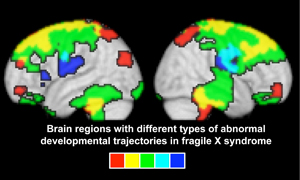
For a while, scientists have known that humans born with Fragile X Syndrome (FXS) have a high chance of being placed on the autism spectrum, but it was not known why this occurred. We knew that fragile X syndrome is characterized by an error in the production of the FMRP protein. We also knew that autism spectrum disorder (ASD) involves changes in normal brain development to effect social skills, empathy, learning ability, and speech. Therefore it was long theorized that the FRMP protein could be a factor in neurodevelopmental disorders, such as ASD.


Scientists have now obtained study results to support the idea that the FMRP protein does have an effect on embryonic development in the cortex of the brain. More specifically, FMRP is responsible for creating N-Cadherin. N-Cadherin helps neurons to reach their final positions in the cortex, and allow for the brain to be properly connected. Since this brain connectivity is lacking in someone with ASD, this may be a link to show the reasons why Fragile X Syndrome is highly associated with Autism Spectrum Disorder.


This study did not just give the reasoning for the link between FXS and ASD. The study also involved introducing the proper FMRP protein in mice embryos before birth to find out if it was possible to change the brain's wiring properly to potentially reduce or stop ASD from developing. It was shown that introducing the proper protein did have positive effects on the proper wiring of the cortex.

Those diagnosed with Fragile X Syndrome are highly affected by their disorder. With this, about 1/3 of those affected are also diagnosed with ASD. 15% are also affected by severe epilepsy. All three of these disorders are due to errors in development of the cortex. With this research, it could help treat or prevent Fragile X disorder in those with a genetic pre-disposition for it. Being able to help treat a disease with genetic factors is an important thing. It will allow for genetic reproduction without worry as to whether or not the offspring will inherit it.

Article: http://www.medicalnewstoday.com/releases/285578.php

Friday, March 14, 2014

Genetics May Explain Why Autism Is More Common in Boys

Many years of research has shown that males are at a greater risk for neurodevlopental disorders like autism spectrum disorder (ADS) than females. Also, studies have shown that boys on average are five times more likely to have autism than girls. A recently published article by Carl Engelking clarifies why genetics can explain why this is so. According to geneticists in the U.S and in Switzerland, it has something to do with “female protective model.” This means that females have a higher tolerance of harmful genetic mutations causing them to require a larger number of them to reach a diagnostic threshold of a developmental disorder than males do. So, with identical mutations a male could show symptoms of ASD while a female won’t. However, since the female mutation threshold is higher, when they are diagnosed with ASD it tends to be more severe.
shutterstock_109336046

Geneticists analyzed the DNA samples of 16,000 boys and girls who had neurodevelopmental disorders. They found that on average girls with ASD had a 1.3-3 times more harmful genetic alterations than boys. The researchers had suggested that the male brain develops smaller than that of a female so it more subtle genetic changes can trigger ASD. Study author Sebastien Jacuemont of University hospital of Lausanne in Switzerland also studied 800 families in which a family member was affected by ASD. He found that children were more likely to inherit gene mutations from their mothers. The reason for this was because males with autism are less sociable and form less relationships so they are less likely to have children. Whereas females can go unnoticed with the genetic glitches and so in turn are more likely to start a family. 

Although the study did not answer the most profound question, “what causes these disorders,” geneticists are still on the lookout for more insight to answer this question.


Tuesday, December 3, 2013

Autism Risks are increased by Air Pollution

Studies show that genetics isn't the only factor that effects a persons chance of having autism. Researchers say the enviornment also has an important impact on the risks. The gene MET is associated with autism and predicts altered brain structure and function . It controls the MET protein in the brain and the immune system. In the experiment 408 kids between the ages of 2 and 5 were examined. The kids were from the Childhood Autism Risks for Genetics and the Environmental study. Out of those 408 kids, 252 had the standards to have autism spectrum disorder. Many of those children lived in unfavorable conditions that researchers say may have increased the risk of these children to have autism. Researchers found that the air pollution exposure, traffic- related sources and air quality measures could have in fact increased the risk of the disease. The case is still under further study.


http://www.scienceworldreport.com/articles/11304/20131202/air-pollution-genetics-increase-autism-risk.htm

Friday, November 23, 2012

A Possible Link Between Schizophrenia and Autism?

Autism belongs to a category called Autism Spectrum Disorder (ASD). ASD and autism are general terms for a group of complex disorders of neural development.  Most of the signs of autism emerge during the first 2 - 3 years of life.  The U.S. Centers of Disease Control and Management reports one in 88 children in the United States falls somewhere on the Autism spectrum.  Researchers of Tel Aviv University discovered that family history of schizophrenia is a risk factor for autism.  This study was conducted by Dr. Mark Weiser of Tel Aviv University's Sackler Faculty of Medicine and the Sheba Medical Center.  This study was also in collaboration with researchers at the University of North Carolina, Karolinska Institute in Sweden, Kings College London, and the Israeli Defense Force Medical Corps.


The study revealed ASD seemed to share a common root cause with schizophrenia and bipolar disorder, as well as other mental illnesses.  Researchers used databases in Israel and Sweden to discover the two illnesses, schizophrenia and autism, had a genetic link.   Researchers found that those who have schizophrenic sibling are 12 times more likely to have autism than those who have no schizophrenia in the family.  The same results were found when they studied bipolar disorder and autism.  The presence of bipolar disorder in a sibling showed a similar pattern like schizophrenia, but to a lesser degree.  This study opens up further research on the genetic connection to mental illnesses.    I think this could possibly change how physicians treat their patients with mental illnesses in the future.  I look forward to further research on the subject matter since this could lead to clinical research as stated by Dr. Weiser.  I also wonder if this will lead to an increase in genetic counseling for mental illnesses.