
Showing posts with label hearing loss. Show all posts
Showing posts with label hearing loss. Show all posts
Friday, April 12, 2019
38 New Genes related to hearing loss found in mice
In a recent study done at the Wellcome Sanger Institute discovered 38 new genes in mutant mice that are related to hearing loss. Hearing loss is very prevalent in our society, with many people experiencing deteriorating hearing as they age. The study done on 1,211 mutant mice revealed 38 new genes related to hearing loss that were not known before. Out of the 38 found, 11 of the genes can be linked significantly to the hearing ability in the UK population. One of the genes, SPNS2, is linked to childhood deafness. The studies done show that hearing disorders are varied and can involve as many genes as 1000. Therefore there will not be an end all cure to hearing loss, but the new research is a big step forward in helping prevent hearing loss. The research can even be used to just slow down the rate at which people lose their hearing ability.
 This new research is very important for the fact that it can help prevent hearing loss as we age. Without hearing, someone's social life can be dramatically effected. Without the ability to hear everyday activities can become strenuous and tedious. Being able to push back, or even prevent hearing loss with age would be very beneficial to us all.

Monday, December 12, 2016
Children's Hearing Loss

In modern times, children tend to block out the world with music: headphones being of help. The levels of music the children hear are different but are mainly high. When something is as loud as they have it at, they shouldn't be listening to it as much.
"Eighty decibels is twice as loud as 70 decibels and 90 is four times louder." No one should be listening to this type of level because " 100 decibels, about the volume of noise caused by a power lawn mower."
Parents tend to let their children use headphones for their children for multiple reason, watching. Movies, shows, or just listening to music. A study showed that "hearing loss in adolescents had increased to 19.5 percent in2005-2006 from 14.9 percent in 1988-1994.
http://www.nytimes.com/2016/12/06/health/headphones-hearing-loss-kids.html
Saturday, November 19, 2016
Cytomegalovirus: Lesser Known But More Dangerous than Zika
Practically everyone today is well-informed in regards to the Zika epidemic that had originated from Africa. When the Zika virus finally spread to America, it has left more than 2,000 infants with brain damage. However, there is a virus that is far more dangerous than Zika, especially to pregnant women and their infants. Cytomegalovirus, or CMV, is the most common viral infection that is present in birth and the leading non-genetic cause of deafness in children. Annually 20,000-40,000 infants are born with CMV, with at least 20% of the infants developing permanent disabilities such as deafness, microcephaly, deficits and abnormalities in intellect and vision. However for such a dangerous disease, why is there no known vaccine for it?
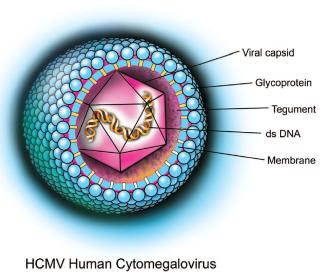
According to Dr. Mark R. Schleiss, the director of pediatric infectious diseases at the University of Minnesota Medical School, "Everyone and their brother knows about Zika, but it's very rare in the U.S." In fact, only 900 pregnant women in the US have contracted the Zika virus in comparison to CMV. He argues that CMV is just as dangerous as Zika and a vaccine should have been made a long ago. However, there isn't one due to the lack of public awareness about CMV. Less than half of gynecologists tell pregnant patients how to avoid CMV, yet in contrast, doctors have advised every precaution available for the Zika virus.
CMV is a member of the herpes family and is often transmitted by contact with saliva and urine, often between children and adult. According to the statistics for CMV, nearly 1 in 3 children are infected by age 5 and more than 50% of adults by age 40. Like Zika, it can remain in the body permanently and can cause mild flu-like symptoms but can be detrimental to pregnant women.
Luckily, it has been discovered that antiviral drugs can reduce the effects of CMV symptoms upon being detected early on. However, there is still no known cure for CMV. Experts however are pushing for routine screening of newborns for CMV and developing guidelines to advise pregnant woman in preventing CMV. Despite being lesser known than Zika, CMV still should not be taken lightly and more public awareness should be made in hopes of developing a vaccine for such a lethal viral infection in pregnant women and newborns.
Sunday, November 15, 2015
Restoring Hearing & Balance
 |
| Normal development of an ear(left) and abnormal ear due to loss of hair cells(right) |
Our inner ears all contain hair cells which are important
for hearing and balance. The final number of hair cells we have in our inner
ear are reached before we are even born. Over time loud noises, trauma,
infections, and aging cause us to lose these hair cells which impair our
hearing and balance. Around 90% of hearing loss occurs when hair cells or
auditory nerves are destroyed. Around 36 million adults in the U.S. have
reported some degree of hearing loss. A new study from Rockefeller University
has found that two genes responsible for inner ear development can be switched
on to generate more hair cells in the ear and reverse the loss of hearing and balance.
The study look place at the sensory neuroscience lab at Rockefeller University,
headed by post-doctoral researcher Dr. Ksenia Gnedeva. Dr. Gnedeva began her
study by looking for changes in gene expression in the utricle (an inner ear
structure) of mice before and after birth. She discovered that two genes were
highly active before birth but later became silent after birth. The silencing
of these two genes after birth is what causes hair cells to stop developing. When
both of these genes were switched off in the mice, the entire ear developed
abnormally. However, when Dr. Gnedeva switched on the two genes in elder mice,
she found that new hair cells began to generate inside the utricles of the
inner ear. Dr.Gnedeva says that she hopes her findings will allow us to generate
new hair cells later on in life in order to repair the loss of hearing and
balance as we age.
I was surprised to learn that 36 million people in the U.S.
suffer from some sort of hearing loss. It was interesting to learn that
switching on two genes in the inner ear have the possibility to restore hearing
and balance later on in life. It will be interesting to see if the same results
seen in the mice will also be seen in humans.
Sunday, November 1, 2015
Discovery of Inner Ear Gene Grants Clues about Restoring Hearing and Balance

The inner ear contains hair cells that are important for hearing and balance, however, the number of hair cells an individual has is reached before we are born. Thereafter, loud noise, trauma, infections and aging will take their toll until loss of hair cells impairs hearing and balance. However, a new mouse study from The Rockefeller University in New York, NY could help researchers look at new ways to regrow hair hair cells and and restore lost hearing and balance. The study took place at Rockefeller and was done by a postdoctoral researcher, Dr. Ksenia Gnedeva. She examined mice before and after birth and found two genes that could switch on the process of generating hair cells.
Dr. Gnedeva began her work by looking for changes in gene expression in the utricle, an inner ear structure. She spotted two genes that are highly active before birth, but become silent after birth, which coincides with a halt in the development of hair cells in the mice's utricles. The two genes code for the transcription factors Sox4 and Sox11, which help shape the destiny of precursor cells into their final cell types by regulating the activity of other genes. Dr. Gnedeva found when the two genes were switched off, the entire ear, not just the utricle, developed abnormally. When she turned on the genes in older mice, she found it led to the regeneration of hair cells inside fully developed utricles. In the picture above, the image on the right happened with the absence of Sox4 and Sox11, which led to severe malformation of the inner ear structures that contain hair cells.
Hearing occurs when sound waves reach the structures inside your ear, where the sound wave vibrations are converted into nerve signals that your brain recognizes as sound. Aging and exposure to loud noise may cause wear and tear on the hair cells in the inner ear. According to the CDC, Centers for Disease Control, around 36 million American adults report some degree of hearing loss. 36 million is a huge number and it is unfathomable to think about. Everyone should be able to hear because life without hearing can be severe. Imagine waking up everyday and not being able to hear. I cannot imagine myself not being able to hear. I hope Dr. Gnedeva does more research with these genes and maybe someday hearing loss will be a thing of the past.
Original article here
Tuesday, October 27, 2015
Genes Identified Could Help Restore Hearing
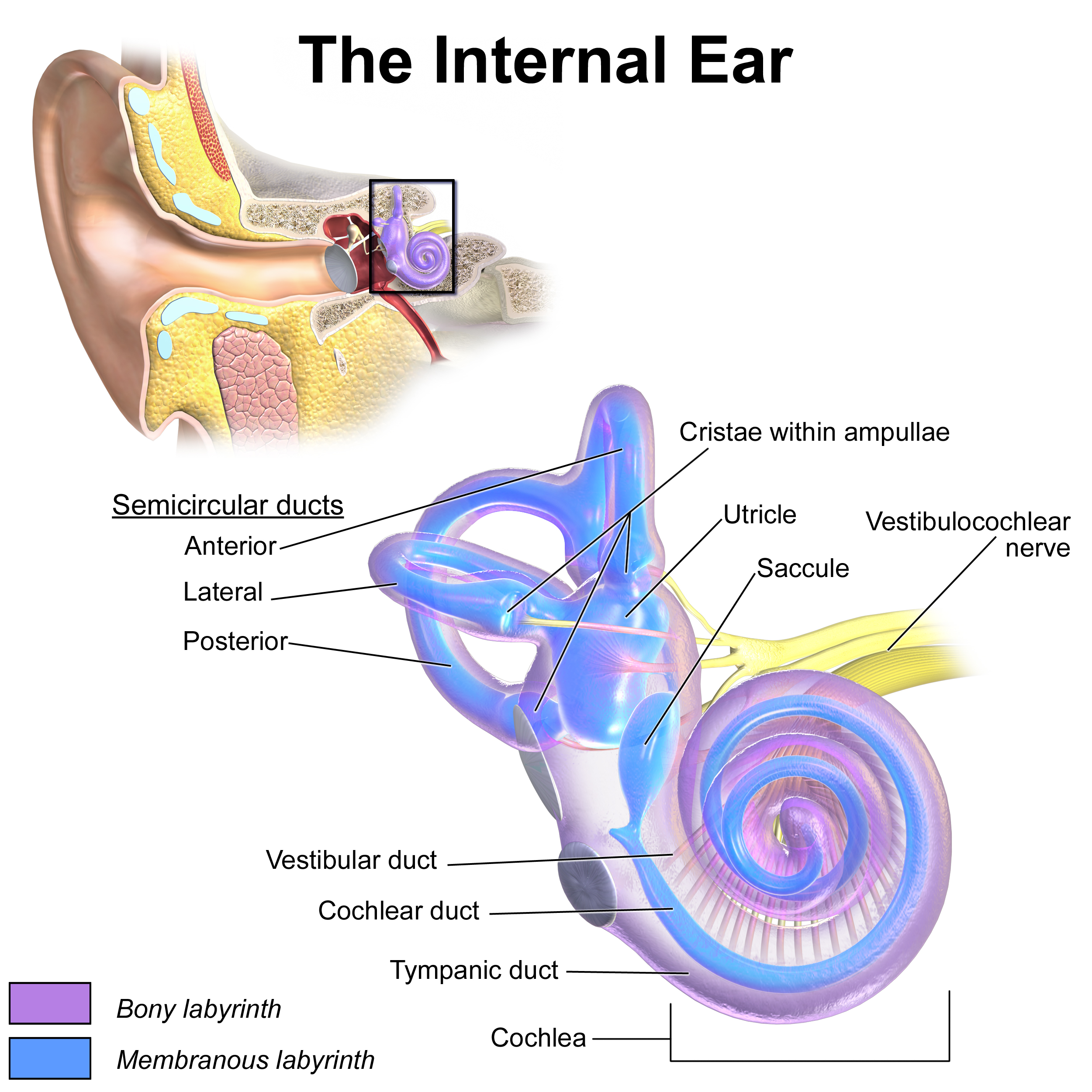
A new study has identified two genes that are responsible for the growth of these hairs. Dr. Ksenia Gnedeva observed the gene expression in an inner ear structure called the utricle. The utricle is lined with these hair cells, as is the cochlea. Gnedeva identified the Sox4 and Sox11 transcription factors. They are highly active during development, but they become dormant after birth. The study was done with mice. The mice that were developing had their genes turned off to observe the results. The inner ear as a whole did not develop normally. The mice that were already developed had their genes switched on and were able to regenerate the stereocilia.
The overall goal of this study is to turn these genes back on in animals to allow them to regenerate their hair cells in the inner ear. If this is successful, it could potentially mean that humans who suffer from hearing loss could regain it eventually. One issue with this therapy could be if the hearing loss is caused by auditory nerve cell damage. This would only help people affected with hair cell damage. If there is a mix of the two, it is possible for the person to regain some of their hearing but not all. There is still work to be done before use as a therapy for hearing loss.
Friday, April 27, 2012
Novel Genetic Loci Identified for High-Frequency Hearing Loss
As people get older, they gradually lose the ability to hear high-pitched sounds. This occurrence is called presbycusis. The genetic loci have been recently found that affects a human’s ability to hear high pitched sounds. These genetic loci affect certain portions of the hearing frequency map and especially the loss of hearing as age increases. The National Institute of Deafness and other Communication Disorders (NIDCD) successfully identified two loci that affected hearing at high frequencies. These two loci are Hfhl1 and Hfhl3. To discover these two loci the NIDCD used genome-wide linkage analysis. The Hfhl1 loci is thought to be confined to hearing frequencies from 25-44 kHz of the tonotopic map. The Hfhl3 loci is thought to be confined to the 35-44 kHz region on the tonotopic map inside the inner ear. The loss of high-pitched sounds is a result of variations in gene activity and cochlear partition. There is different hearing sensitivity located in different sections of the cochlea of the inner ear. The loci Hfhl1 and Hfhl3 account for only a portion of the variation in high-pitched hearing loss. Additional genotyping and analysis needs to be done in order to find the remaining loci that affect high-pitched frequency loss.

Subscribe to:
Comments (Atom)