Showing posts with label Cell regeneration. Show all posts

Monday, May 6, 2019

Suffering from a broken heart? This new discovery could help.

In a very recent article written by Ana Sandoiu and published by Medical News Today, new research on regenerating heart tissue is discussed. This research was originally published in the journal Nature Communications. The study was conducted by Da-Zhi Wang from Boston M.A. and his colleagues. Continuing on from previous research conducted by Prof. Wang, the research team further expanded on the function of microRNAs in the generation of cardiomyocytes. The team identified two specific microRNA molecules which influenced the inflammatory response and cell death which follows a heart attack. These microRNA molecules are known as miR-19a and miR-19b. Experiments were conducted on mice who displayed promising results. The team intends to test the microRNAs on larger mammals and hopefully proceed to human studies. They hope this could be a revolutionary treatment and prevention of heart disease.

In America, heart disease is the leading cause of death. Heart disease can be caused by a variety of factors. A major element which causes this steep number of fatalities, is due to the hearts lack of ability to continue to proliferate new cardiomyocytes. This means that once the hearts cells are damaged they can not regenerate thus putting individuals at risk for heart failure. Our heart is the crucial for life and it deserves to be carefully cared for. However some events are out of our control. Discoveries such as these have the potential to save many people equip the heart to replace deceased cells.  

Monday, November 23, 2015

Scientists Uncover Mechanism that Explains how Single Gene Drives Brain Development

     The brain is the most complex organ in the body, and the most difficult to understand at a molecular level. Scientists dedicate their lives trying to understand the brain and how it functions. Understanding the brain at such a complex level would create incredible health innovations and provides cures for current degenerative diseases. Scientists have found in new research the the gene NeuroD1 drives the formation of brain cells single handedly. Currently, neurodegenerative diseases such as Parkinson's and Alzheimer's are unable to be cured because the brain loses function due to a loss of brain cells that are unable to replace themselves. Since the cells cannot replace themselves, the damage is permanent, which is why these diseases get worse and not better. Understanding the function of NeuroD1 can lead to regenerative therapy innovations, which would be imperative in the medical world.

     I find this article extremely important because these types of diseases are extremely heartbreaking and difficult to handle. Nothing must be worse than watching a loved one slowly deteriorate and not being able to do anything to help them. It is crazy to me that with all of our technology and ability to conduct such incredible research that we still have such a hard time understanding the brain. Finding a way to regenerate brain cells to help cure these diseases would be absolutely incredible, and I hope to hear more findings on this topic.

Original Article
Related Article

Tuesday, October 27, 2015

Genes Identified Could Help Restore Hearing


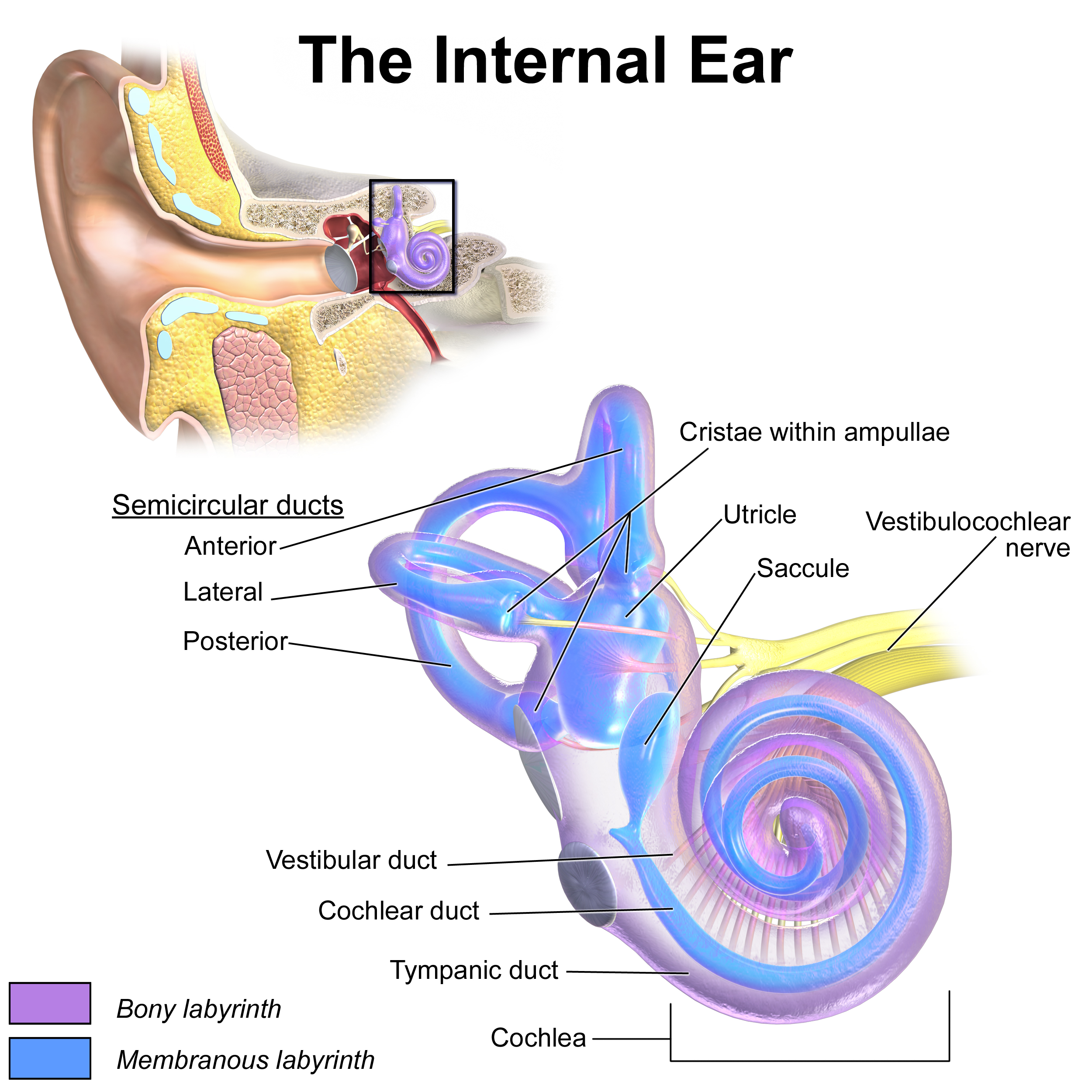
A majority of the time, hearing loss occurs due to damage to hair cells or auditory nerve cells located in the inner ear. The hair cells are named due to their hair-like extensions, and they are formally called stereocilia. These cells convert vibrations into electrical signals and the auditory nerve carries them to the brain, producing sound. Stereocilia can be damaged through various means such as aging, medication, trauma, or loud noises. These hair cells grow during fetal development, but this growth stops after birth, which also prevents regeneration later on.

A new study has identified two genes that are responsible for the growth of these hairs. Dr. Ksenia Gnedeva observed the gene expression in an inner ear structure called the utricle. The utricle is lined with these hair cells, as is the cochlea. Gnedeva identified the Sox4 and Sox11 transcription factors. They are highly active during development, but they become dormant after birth. The study was done with mice. The mice that were developing had their genes turned off to observe the results. The inner ear as a whole did not develop normally. The mice that were already developed had their genes switched on and were able to regenerate the stereocilia. 

The overall goal of this study is to turn these genes back on in animals to allow them to regenerate their hair cells in the inner ear. If this is successful, it could potentially mean that humans who suffer from hearing loss could regain it eventually. One issue with this therapy could be if the hearing loss is caused by auditory nerve cell damage. This would only help people affected with hair cell damage. If there is a mix of the two, it is possible for the person to regain some of their hearing but not all. There is still work to be done before use as a therapy for hearing loss.