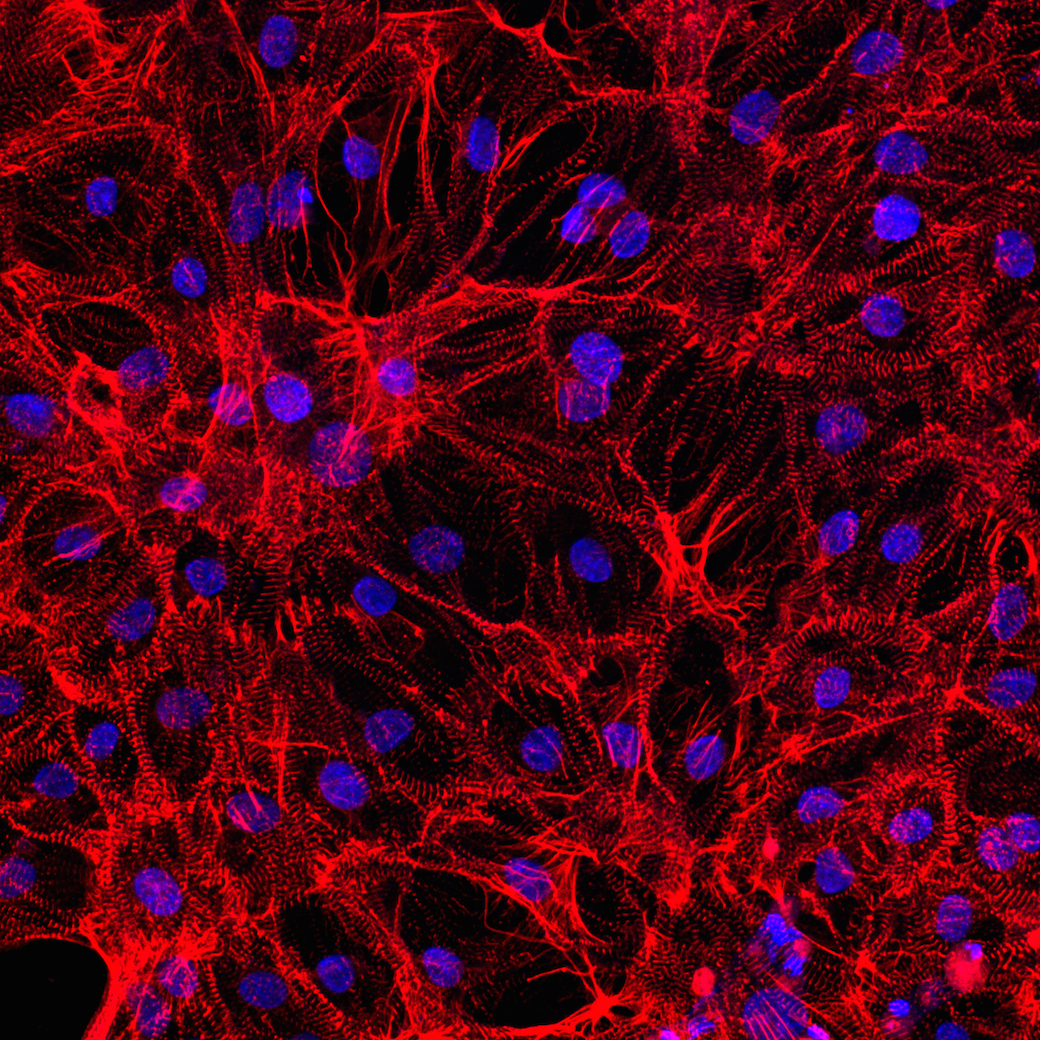
 Joseph Wu, and those who are on his team, decided to compare stem cells that remained on earth and those who traveled in space. Through the comparisons, they were able to see that the cells that migrated into space were expressing genes differently than the ones on earth. For example, there was an increase in the mitochondrial metabolism gene. They found that a total of 2,635 genes were expressed differently, whether it be upregulated or downregulated. Interestingly, some things had no change such as the cell shape.
I think that this study is extremely interesting. It's odd to think that space doesn't have an affect on cell shape, yet a humans heart changes shape. I also think that this study is extremely beneficial to science because it would be the start of many more experiments and research to come. It was
said that astronauts have an increase risk in (iPSC/Cardiomyoctyes)
cardiovascular disease. Looking at the cells and
the changes they undergo could be very beneficial
in finding out why they are at an increased risk as well as possibly finding a solution to that problem.
https://www.the-scientist.com/news-opinion/spaceflight-alters-genes-of-human-stem-cellderived-heart-cells-66693
https://www.newscientist.com/article/2222698-spaceflight-alters-heart-cells-but-they-quickly-recover-back-on-earth/

