Showing posts with label #human. Show all posts

Saturday, August 5, 2023

Lab Grown Human Embryo Replicas


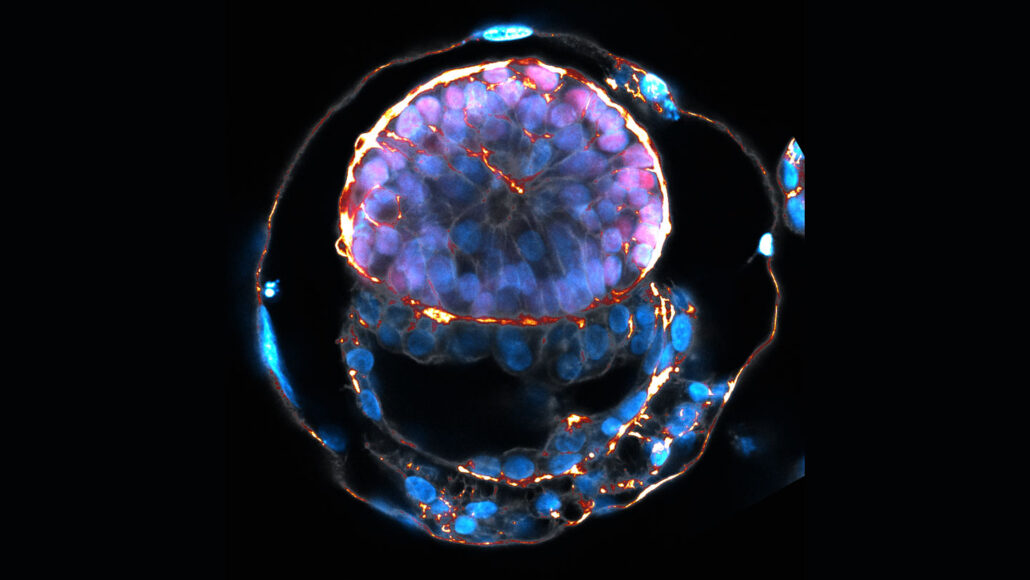
 Scientists are now starting to develop lab grown human embryos past the 10 week fertilization period. These human embryo models are being made from stem cells that mimic the development of human embryos. The scientific goal is to be able to study human development past the first week or so which is usually when the embryo would need to be implanted in a human to continue its development. These models have caused both excitement and concern as they may be used to mimic babies. This raises the issue on whether or not to to regulate what scientists can and cannot do with the embryos. For years scientists have been able to study donated embryos which helped with learning about the blastocyst which is needed to form the placenta inside of the uterus, but the most interesting part of the embryo is from day 7-35 when the actual development occurs which is usually after implantation. These embryo replicas contain most cells needed but not the trophectoderm which would be needed to develop the placenta which would then be needed for further development of the embryo. Since embryos can only be implanted if they have from 1-64 cells, these embryos would never successfully implant as they are late stage which have well beyond the 64 cells. 


Friday, December 13, 2019

How tardigrades protect their DNA to defy death


Article: https://www.sciencenews.org/article/tardigrades-dna-damage-radiation-death

Related Article: https://www.accessscience.com/content/how-tardigrades-protect-their-dna-to-defy-death/SN1910141

Certain species of tardigrades can survive doses of radiation up to 1,000 times that which would kill a human. They owe their ability to do this partly due to their molecular equivalent of cotton candy which allows them to be able to survive outer space. They can survive just about anything including x-rays, cosmic rays, or being doused in hydrogen peroxide.

It is very interesting to see that radiation and chemical exposure result in production of DNA-damaging hydroxyl radicals, molecules composed of oxygen and hydrogen. The cloud it forms similar to cotton candy keeps hydroxyl radicals away from DNA. Although more research is needed, it is interesting to see that researchers don't know yet whether the human proteins also form a similar shield against DNA-damaging chemicals.

Wednesday, November 15, 2017

Scientists make first ever attempt at gene editing inside the body

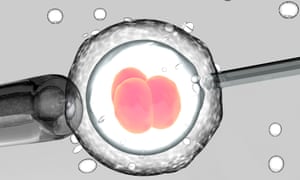
A human egg seen through a microscope. In the study, Crispr-Cas9 was used to fix mutations which cause a potentially fatal heart condition known as hypertrophic cardiomyopathy.


The article was published on The Guardian, scientists have tried editing a gene inside the human body. This a bold attempt to cure an incurable disease by changing a patient's DNA. The patient, Brian Madeux, who has Hunter syndrome, received billion of copies of a corrective genes. A genetic tool was used to cut his DNA in a precise spot. Signs if the procedure worked will come in a month, while tests will be confirmed in three months. If the procedure is successful, the new technique could give a major boost in gene therapy.

This was a very informative article and is interesting what the outcome of the procedure will be. I believe if this technique works and is able to benefit the individual's well being by getting rid of genetic diseases that are inherited, this could be a big breakthrough in genetics. This would create cures for other genetic diseases and to the improvement of treatments. There are scientists with opinions that do believe there could be side effects to the procedure or that it might not work. There has not been enough studies on the effects it will have on the human body.


https://www.theguardian.com/science/2017/nov/15/scientists-make-first-ever-attempt-at-gene-editing-inside-the-body

https://medworm.com/446666671/scientists-make-first-ever-attempt-at-gene-editing-inside-the-body/

Monday, November 13, 2017

Breakthrough: Scientists reverse aging in human cells

Image result for reversing aging


Researchers in the Universities of Exeter and Brighton, both in the United Kingdom, carried out a study. The researchers experimented with genes called "splicing factors" which are a type of protein, that tends to become inactive as humans age. The researchers were capable of taking older human cells and physically rejuvenate them by applying chemical compounds called reversatrol analogues. Resveratrol is a substance found in red wine, peanuts, grapes and dark chocolate.This would make the older cells appear and behave like young cells again.

I found this article very interesting because researchers are finding ways of making society healthier, especially the elderly population because their old cells would be regaining features of the youth. This would decrease the deterioration of the human body as age progressed. The discovery could possible lead to therapies which could help people age better avoiding risks like stroke or illnesses.


https://www.sciencedaily.com/releases/2017/11/171107113145.htm


https://www.medicalnewstoday.com/articles/320017.php

Wednesday, July 26, 2017

Predicting & Identifying Elite Athletes Through Genetic Testing.


Imagine yourself looking at your genetic code to see and find out if you have an advance athletic gene. Well, it can happen. A recent article in USA Today has found a new trend that hit the athletic sport companies. A simple genetic test to determine who has an advantage in becoming a sport athlete. In addition, you are able know what injuries you are prone to and which fitness workouts are best suited for your body physique. So, how does this work? Scientists have been researching genetics for sometime now and discovered that sport and fitness athletes have a few similar genes connected to their athletic performance. A saliva sample is observed to see into an athlete's genetic code and to specifically find if the gene ACTN3, which is linked to a distinct protein to help muscles powerfully contract at high speeds, is in the athlete's genetic code. The companies that look into an athlete's genetic code have claim that these athletes are more likely to be proficient in either power or endurance type of sports like football and soccer. Teams have been using these genetic tests to find out if their athletes has what it takes to be skillful at the sport. However, scientists all over the world are skeptical about this claim and are just simply saying that this genetic discovery doesn't fully determine a person's capability of becoming an elite athlete. Years ago, the Human Genome Project had found that the human genome has about 20,000 genes but only about 200 has been identified to have a correlation with fitness performance. Also, we are not certain that there are only 200 genes associated with fitness, we predict that there could be many more. Dr. Robert Green, a Harvard geneticist, says " The notion that [athletic genetic testing companies] are somehow tailoring recommendations on the basis of your DNA is nonsense". In the end, it is questionable to believe someone's athletic performance through genes but what if the ACTN3 gene is an athlete's key to success?