Showing posts with label age. Show all posts

Wednesday, November 24, 2021

Embryos appear to reverse their biological clock early in development


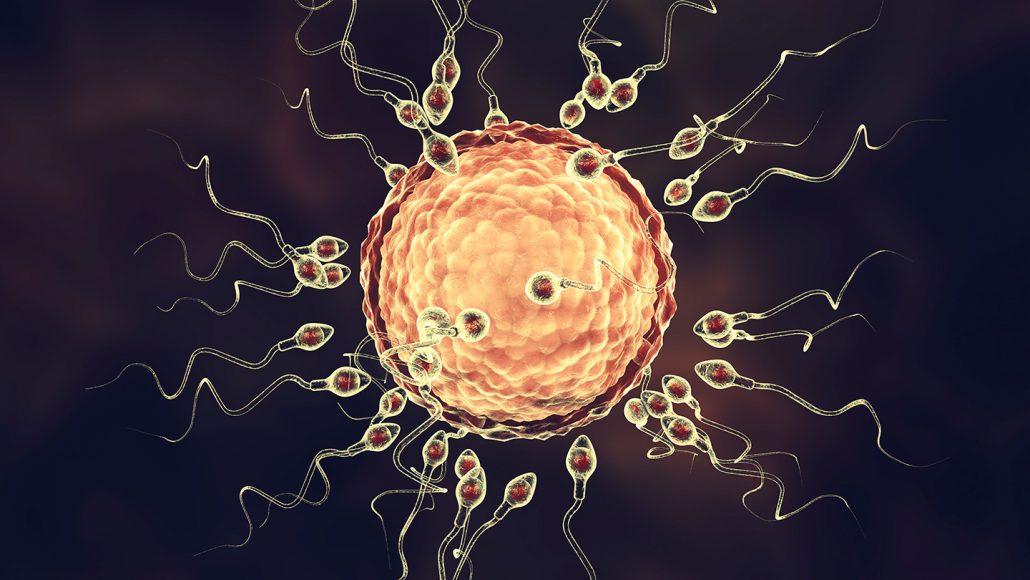
a magnified image of an egg cell surrounded by sperm Aging does not carry over to the next generation of progeny. There is no inheritance of the age of your parents and the germ-line cells are responsible. Once thought to be ageless or immortal but found to be untrue, the germ-line cells now are thought to possess a function that acts as a reset on their age. In a new study, scientists report that both mouse and human germ-line cells reset their age early in embryo development. The biological clock of a mouse embryo being studied was constant and unchanging but after 6 to 8 days, the age had taken a dip. The understanding of this process and the ability to control it could lead to further advances on battling age-related diseases like arthritis or Parkinson's. It is still unknown what the mechanism behind the age changes in these early developmental cells and further research will be necessary to uncover it.

Friday, November 12, 2021

Does Risk Of Disease Decrease With Age?

Our genes influence the risk for different types of diseases from heart disease to cancer. Genomic technology can be used to predict future risk of these diseases. A recent study from Gil McVean of the University of Oxford and colleagues determined that the impact genes have on the risk of getting sick decreases with age. Genomic data from 500,000 people in the UK Biobank was analyzed to see how their genetics impacted their risk of developing 24 diseases. Researchers determined that the highest risk for many genetic diseases, including skin cancer and underactive thyroids, is early in life and then decreases with aging. The magnitude and form of decrease varies with disease. The exact reasons behind why the risk decreases with age is not clear, but McVean and the team concluded that there must be underlying processes that they are currently unaware of such as the interactions between genes and the environment or gene-gene interactions. Future studies will hopefully determine why aging decreases the risk of developing genetically related diseases to help determine if someone will develop a disease. If we can determine whether or not someone will develop one of these diseases, we can take measures to lower the risk. It will be interesting for them to conduct more studies on this inherited risk because age is just one factor that varies among us.

Monday, November 13, 2017

Breakthrough: Scientists reverse aging in human cells

Image result for reversing aging


Researchers in the Universities of Exeter and Brighton, both in the United Kingdom, carried out a study. The researchers experimented with genes called "splicing factors" which are a type of protein, that tends to become inactive as humans age. The researchers were capable of taking older human cells and physically rejuvenate them by applying chemical compounds called reversatrol analogues. Resveratrol is a substance found in red wine, peanuts, grapes and dark chocolate.This would make the older cells appear and behave like young cells again.

I found this article very interesting because researchers are finding ways of making society healthier, especially the elderly population because their old cells would be regaining features of the youth. This would decrease the deterioration of the human body as age progressed. The discovery could possible lead to therapies which could help people age better avoiding risks like stroke or illnesses.


https://www.sciencedaily.com/releases/2017/11/171107113145.htm


https://www.medicalnewstoday.com/articles/320017.php

Wednesday, October 5, 2016

What's the Longest Humans Can Live?

Jeanne Calment set the record for the longest living person after she died on August 4, 1997 at 122 years old. Humans have been progressively living for longer over the last few centuries, but it is likely that we have reached our limit, at about 115 years, according to Dr. Jan Vijg from Albert Einstein College of Medicine. Other experts agree with him, but some disagree strongly, basing their arguments on the fact that life expectancies have been increasing rapidly since the early 1900s. However, studies have been done which look at the growth of the population of a given age from year to year. For example, in France in the 1920s, 85 year olds were the fastest growing group of people. This trend shifted to even older people as the average life expectancy grew but about a decade ago, the peak stopped shifting. This is likely due to the stall in life expectancy. The International Database on Longevity also points to the same conclusion- people are not living as long as they used to decades ago, and besides the rare case like Jeanne Calment's, no one is living longer than about 115 years.

It is predicted that 115 will be the highest age that anyone reaches in the foreseeable future. It has been an ongoing argument for years whether or not there is a limit to lifespans, and because people have been steadily reaching the same age for decades now, it seems that there are only so many years that a body can live and work and continue repairing itself before it collapses.
I agree that there is a certain ceiling for age that humans can reach. The body is simply not able to continue repairing itself after a certain point. Because of the advancements in medicine and quality of life that have been improving over the past few centuries, life span has been increasing steadily, but at this point in time we have most likely reached the limit to how old we can get. 
Tuesday, March 31, 2015

Hope to Live to 100? Check Your Genes


          Healthy eating and exercise might help most people live to a respectable old age, but making it to 95 or 100 might require help from your DNA. A Study led by the professor of biostatistics, found that people who lived to age 90, the chances that their siblings also reached 90 was only about 70 percent higher than for the average person born around the same time. When studied further, it was statistically shown that siblings of people who lived to age 95,  had a 3.5 times higher than the normal chance of also reaching the age of 95. For people who lived to 100, the chances of their siblings also reaching 100 was 9 times higher than normal. And for the few who lived to 105, the chances of their siblings also reaching 105 was 35 times higher than normal.  Researchers say that genes play a strong role in living to extreme ages. Also, that the combinations of longevity-linked genes that help people live to 95, may be different than the ones who help people live to 105.

I find it interesting that genes play a role in age, especially because it is thought that all you need to live a long life is to be healthy. It would be cool to see if future geneticists could somehow alter genes to lengthen peoples lives. 


Thursday, November 28, 2013

Aging cells could be to blame for late-life cancers

Researches have found that cancers aren't only linked to genetic damage. From old age, cells start circumventing which activates a switch that tells the cell to stop growing - causing cancer. Researches observed old aging cells slowly losing the control over methylation. Methylation is the process of chemically tagging DNA. The stop of cell growth and multiplication is linked to cells becoming cancerous. Although things still remain unclear, this is a vital research that can help develop ways to prevent late stages of cancer and maybe even a cure. 
Constantly we find new information on how genetics plays a big part of our health. With continuing research there is hope for those who develop cancer at a late age and state. Finding other reasons as to the cause of cancer is ironically great because the more information you receive the better chance we have to fight it.

Thursday, November 21, 2013

Aging Erodes Genetic Control, but That's Flexible

     Undergraduate researchers at Brown University have recently confirmed a hypothesized age defect in flies, one which was previously only known to happen in yeast. Researchers had found that in yeast, age led to the degredation of gene supression, which contributed to many problems common to advanced age (due to the need for harmful genes to be surpressed). Using reporter genes to track levels of silencing, the Brown researchers were able to repeat this phenomenon is fruit flies. Using this new knowledge, they then tried several different "anti-aging" techniques to see if they restored levels of gene silencing found in the younger flies. Of these methods, severe calorie restriction was found to be the most useful.
     While this finding doesn't necessarily prove that the same process occurs in humans, it certainly posits that this may be the case. While further study is necessary, having an aging indicator like gene silencing would allow scientists to find out which methods of youth restoration are most effective.


     This article hit home for me. Anti-aging science has always been a topic of interest, and one that is of vital importance and urgency (not getting any younger...). While the findings here are small, they are definitely an important step towards anti-aging technology of the future.

http://www.sciencedaily.com/releases/2013/11/131120143752.htm
http://venturebeat.com/2013/11/20/calico-enlists-a-genetics-a-team-for-its-mysterious-anti-aging-venture/

Sunday, November 3, 2013

Reading Your Biological Clock

UCLA professor Steve Horvath used eight thousand samples of fifty-one tissue and cell types in order to develop a new way to understand the biological clock. Specifically, he used over 350 genetic markers to track the relationship age and methylation levels. From his results, he noticed that different types of tissue aged differently when compared to different tissue found on the same body. Specifically, he noticed that healthy breast tissue was two to three years older than the rest of a woman's body when compare to abnormal cancerous breast tissue that, was on average, twelve years older than the rest of another woman's body. He also observed that biological clock is not moving at a constant rate. The clock ticks faster during the earlier stages of life up until the age of twenty. From there, the biological clock was shown to slow down until a constant rate was reached.
I understand that everyone's clock is not same, but this new biological clock can be used as a guide to help us indicate potential issues within our tissue. With more studies, patterns could be developed to indicated a deleterious change compared to a normal change. With further research, people can start to understand some of the processes related to primary aging and the changes that are associated with it on a molecular level. By knowing the relative age of different tissues within the body, specific preventative medicines could be designed to slow down aging in order to prevent possible disease. Aging is a very complex process. Understanding its fundamental processes can help correct age-related diseases or lower risks for diseases.

Sunday, November 25, 2012

Decline of Immune System With Aging May Be Linked to Genetics


This article in Science Daily discusses why our ability to fight infection declines with age from Genetics Society of America's journal, Genetics. Scientists found these declining genes in a study on fruit flies. They found that a completely different set of genes are responsible for fighting infection at middle age than during youth.  Many of the genes that were discovered are also present in humans and may help us understand the genetics of our immune systems.  Scientist are hoping to develop new treatments form this information to help prevent the decline of the immune system.


Scientists used fruit flies of different genotypes that were from a natural population. Fruit Flies from each genotype were infected with bacteria at two different ages.  The younger flies were equivalent to the age of a human teenager, and the older flies were equivalent to a middle age adult.   The scientists then observed how fast each set of flies responded and fought off the infection, while also seeing what genes responded.  Genes whose variation in expression were associated with the ability to clear the infection were identified for each of the different ages when exposed to the infection. Thus, the genes for the two age groups were different.  There was no overlap in the sets of genes associated with the ability to clear infection across ages.  This is a very significant study for the medical community.  The genes responsible for warding off infection are almost completely different in younger individuals than in older individuals.   Since the average age of a humans life is continuing to increase we may be able to discover new ways to help our immune systems stay stronger and healthier for longer amounts of time.

Saturday, November 24, 2012

With age comes more genetic mutations?

Studies have shown that older fathers who still continue to have children increase their offspring's risk of inheriting genetic mutations. Among these mutations offspring can inherit are autism and schizophrenia. These studies have been tested among dozens of Icelandic fathers, in which their genomes were sequenced. Scientists have concluded that "sperm is continually being generated by dividing precursor cells, which acquire new mutations with each division. By contrast, women are born with their lifelong complement of egg cells."

From the research conducted on Icelandic families, scientists found that these fathers had four times as more mutations than the mothers. According to Nature, the father's age was responsible for almost all the variation in the newly inherited mutations in the child's genome. The older the father was, the number of new mutations that were passed down to the child rose exponentially. Researchers estimated that a 36 year old man would pass down twice as many mutations as a father in his 20s, while a 70 year old man would pass down eight times as many mutations to his offspring.