Showing posts with label microbiome. Show all posts

Monday, April 20, 2026

Can Genetically Reprogrammed Gut Bacteria Help Treat Disease?


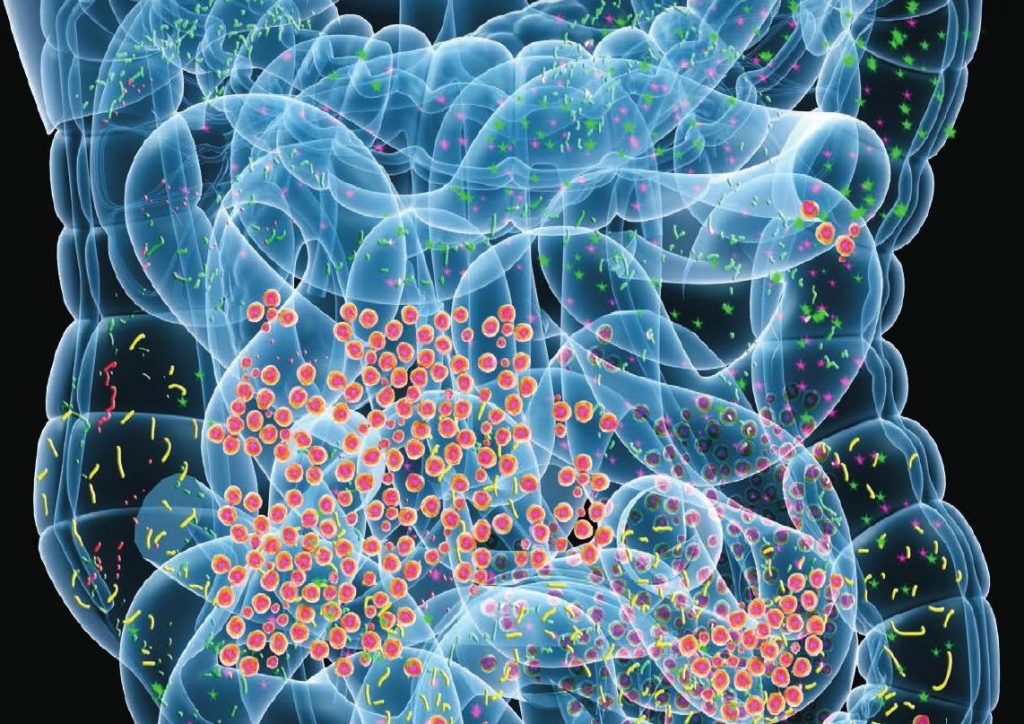
        Recent research suggests that genetically reprogramming gut bacteria may offer a new way to treat disease. Scientists are studying how the human microbiome (community of bacteria living in the digestive system) can be modified to perform beneficial functions in the body. Instead of targeting human genes directly, this approach focuses on engineering bacteria to help improve health.

        Researchers are exploring ways to alter certain bacteria so they can produce helpful molecules, reduce inflammation, or deliver treatments directly in the gut. Because gut bacteria interact closely with the immune system, metabolism, and digestion, modifying these organisms may help treat conditions such as inflammatory diseases, metabolic disorders, and other chronic illnesses.

        This research is significant because it represents a different approach to genetic medicine. Traditional gene therapy often focuses on changing human cells, but this method uses genetically modified bacteria as a potential treatment tool. In some ways, these bacteria could act like living medicines by performing functions inside the body over time.

        The importance of this research is that it may lead to treatments that are more targeted and less invasive than some current therapies. Instead of relying only on medications that treat symptoms, scientists may be able to use engineered bacteria to influence disease processes at a biological level.

        Overall, this research highlights how genetics is expanding beyond human DNA and into the study of the microbiome. As scientists continue to understand how gut bacteria affect health, genetically reprogrammed microbes may become an important part of future treatments and personalized medicine.


Source: 

https://news.berkeley.edu/2026/03/05/reprogramming-our-gut-bacteria-could-be-key-to-fighting-disease/


Additional Link: 

https://my.clevelandclinic.org/health/body/25201-gut-microbiome


Monday, November 18, 2024

How does salmonella evade the gut's natural defenses?

The digestive system has a microbiome housing countless microorganisms that act as a line of defense against harmful viruses and pathogens and aids digestion. So, how is it that Salmonella bacterium are able to slip past the defenses that the gut has?

The sneaky trick that Salmonella uses is one that affects the nutrient balance within the gut. By causing inflammation when it enters, normal absorption of amino acids from food is disrupted and creates an imbalance of nutrients. This imbalance then sustains the growth of the Salmonella bacterium within the large intestine.

Researchers at the University of California analyzed change in chemical composition within the guts of mice as a result of being infected with Salmonella. By tracking the absorption rates of amino acids, they were able to find that certain amino acids had lower absorption rates in mice affected by Salmonella and were able to track virulence factors that broke down those same amino acids for the benefit of Salmonella. 

This study has the potential to inspire future treatment methods, namely probiotic health or dietary plans that can aid the body's natural defenses against harm.


Sunday, August 8, 2021

Gut Microbiome Affected by Genetics More Than Once Thought

Why the Gut Microbiome Is Crucial for Your Health 

Our gut microbiome is made up of microorganisms that live within our digestive tract and ensure the proper function of it. While our lifestyle and diet has a large impact on the health of it, a new study shows that genetics can also play a large role. Researchers studied baboons for over fourteen years in Kenya's Amboseli National Park and looked at over sixteen thousand gut profiles. What they found was that up to 97% of gut microbiome phenotypes were heritable. This is in contrast to older studies that found only 5 to 13% were heritable. This stark difference is likely due to older studies only focusing on profiles at one point in time and not across time. While researchers did find more connection to genetics with gut health, they also found that environmental factors such as weather and age also had a big influence on the gut. Finding this connection between genetics and the gut microbiome can be very useful in the future in order to help shape treatments for people with gut problems.


Article - https://www.genengnews.com/news/gut-microbiome-affected-by-genetics-more-than-once-thought/

Study -  https://science.sciencemag.org/content/373/6551/181


Saturday, March 3, 2018

Vampire Bats: A Unique Genome and Microbiome

Vampire bats, a blood sucking animal lives deep in the forests of Mexico, Central and South America. Blood is a very hard substance to live on because it is mostly made of protein with very few vitamins, and is riddled with viruses. Organisms that can live on only blood are intriguing to the scientific community especially mammals that can live on it. A bioinformatics researcher, M. Lisandra Zepeda Medonza traveled to vampire bat caves and collected their fecal matter to better understand their genome and microbiome. After collecting samples the researcher compared the genome and microbiome of other species: a fruit eating bat, one that eats insects and one that eats lizards, mice and other small creatures. It was found that vampire bats have differing patterns in their genomes that showcase the power of natural selection and how the bat's unique diet affects their immune system and metabolism.
Surprisingly, the vampire bat's genome was not riddled with pieces of viral DNA that would usually insert itself into the DNA of most organisms. Interestingly genes that fight off viruses were found which suggests that vampire bats have adapted to fight off the onslaught of pathogens. The vampire bat's microbiome revealed that bacteria in their gut are focused on metabolic tasks like breaking down the protein and producing vitamins that vampire bats lack otherwise. The study of the vampire bat has given the scientific community a unique look into how creatures with unusual diets function. My hope is that the study of creatures with strange diets will possibly help humans who suffer from gastrointestinal problems.
https://www.nytimes.com/2018/02/22/science/vampire-bats-blood.html
https://www.nationalgeographic.com/animals/mammals/c/common-vampire-bat/

Sunday, October 1, 2017

Genetic Connection to Cavity Configuration


A recent article published through Discover Magazine gave an eye opening outlook on the foundation of cavities. Cavities, also known as dental caries, are caused by breakdown of tooth enamel which results in tooth decay. Studies have shown that poor hygiene may not be the only cause for this. Sugary and acidic substances have always been known as the main culprit of cavities. However, scientists recently learned that genes, as well as environmental and individual oral microbiomes, play a part in the forming of cavities too. A study was performed that examined the factors linked to tooth decay. The study consisted of 485 pairs of twins of ages between five and eleven, both identical and fraternal. Both types of twins were observed because identical twins are genetically identical while fraternal twins are not. This allows researchers to study the role of genes in trait and disease inheritance. Research revealed that genes do in fact effect oral microbiome configuration, however, the bacteria species did not. It was also discovered that as the ages of the children increase, their inherited parental microbes decrease. This is because new environmental microbes are initiated. Researchers found that a certain bacteria species associated with cavities were linked in high quantity to the children that consumed more sugary substances, while the ones that did not consume sugar often did not hold that particular bacteria as much. This bacteria was not found to be contrived by genes. With that being said, eating habits consist of a big part in cavity forming, but they are not the only factor that comes into play. As a pre-dental student, this article was extremely interesting to me. I've always done my best to steer clear of sweets and sodas because I've always believed that they caused cavities. It's very interesting to learn that my genes may be able to keep my teeth safe if I want to indulge in some goodies. Both of my parents do have healthy teeth, so I can understand where my oral health has come from. The study of ones oral microbiome can detect the possibility of cavity formation, as well as many other health risks. This can keep one far from a dentist, doctor or medical specialist for quite some time since oral health can be the opening gates for additional health issues.

Sunday, October 9, 2016

Associations Between Genetic Material and Human Microbiome


The microbiome has been the subject of study since humans realized bacteria could be as interesting, dynamic, and even symbiotically beneficial as it can be harmful. A biome is just the flora/fauna that naturally occupy and major habitat, likewise the microbiome is just the biome of microbes/bacteria that occupy places like...humans, or plants, or well anything. Twin studies of the past have determined some of our microbiome must be inherited. The University Medical Center Groningen and University of Groningen Department of Genetics have posted results on a study looking into the relationships between human DNA and the microbiome on humans and they’ve identified loci and genes that hold some influence over one’s microbiome years later. Through the metagenomic sequencing of 984 participants’ stool samples (supplemented with dietary information) three associations were found.


The first association was between a gene that predisposes hypolactasia (a lack of lactase which is obviously linked to lactose intolerance) and amount of Bifidobacterium present. Milk intake was not different among the people with and without this gene with the only difference being those with the lactase deficient genotype had a higher Bifidobacterium content.


The next association was between the c-type lectin genes which code for fungal and bacterial receptors as well as responses to such organisms’ cytokine effects. Those working on this study has therefore deemed the c-type lectin receptors as a good path to altering the microbiome. The third association the researchers were expecting to find came up empty; the gene variation in the HLA adaptive immune system could not be associated to the microbiome.


The researchers hope to draw more more conclusions about genetic diseases and the microbiome after seeing the relationships above. If such relationships exists it may lead to alternate treatments.


links: http://medicalxpress.com/news/2016-10-human-genes-affect-microbiome.html

Monday, April 11, 2016

Recent developments in microorganism studies has suggested that the genetic codes flexibility may be greater than previously thought. A new study by researchers from the U.S Department of Energy Joint Genome Institute (DOE JGI) and Yale University has discovered that the codon for the amino acid selenocysteine is not coherent across all organisms. Scientists found that in some microorganisms, the three-letter codon UGA signals for the translation of the amino acid selenocysteine. This is of major significance because UGA is among three codons that normally signal the termination of protein construction.


Starting from the four innermost letters and working to the outermost ring, this table shows shows which three-letter base sequence or codon encodes which amino acid. Credit: Wikimedia Commons, public domain image


Researchers scanned approximately 6.4 trillion bases of metagenomic sequence and 25,000 microbial genomes in the National Center for Biotechnology Information and the DOE JGI's Integrated Microbial Genomes data management system. Based on two 2014 publications in the journal Science, they expected to find variations in microorganisms genetic vocabulary within nature. The team discovered several species that identify stop codons UGA, UAG and UAA, as well as ten sense codons, that are variants for selenocysteine.

This finding is of major significance because it is opening geneticist's minds to the possibility of a greater network of genetic schemes. While our knowledge of genetics has grown tremendously over the past couple of decades, there remains an abundance of questions unanswered about the intricacies between reading the genetic code and applying it. The genetic variation in microorganisms is far greater than in animal species and the further study of these microorganisms may prove useful to fill in the missing gaps of our current genetic knowledge.


Thursday, March 17, 2016

Using DNA to Diet Plan


Low carb, Paleo, high protein, vegan, low calorie; the myriad of contradictory dieting information is dizzying. Many people have tried to lose, maintain, or gain weight based on one of these diets.  In addition, those that follow the food pyramid dietary guidelines used to help the public make balanced diet choices, are aware that it is revised and changed often. It is becoming obvious that the ever-changing food pyramid and conflicting dietary information is leading to the realization that a one-size-fits-all diet does not work for everyone. A recent article in The New York Times entitled A Personalized Diet, Better Suited to You discussed this topic.
Research has increasingly suggested that each one of us are unique in the way we metabolize and absorb nutrients.  This has led entrepreneurs and scientists to study how our genetic makeup, gut bacteria, body type, and chemical exposures influence weight. Dr. Erin Elinav, an immunologist from the Weizman Institute of Science, says, "The same dietary advice cannot be good for everyone because we are all different.  This is why we have failed so miserably at controlling the obesity epidemic."  Elinav and his colleagues are working together to build a diet-counseling business from the findings of their study recently published in the journal Cell.  During the study, it became evident that individuals have extreme variation in glucose response.

 The 800 participants were fed the same foods and their blood sugar was monitored.  Some participants had sharp increases in blood sugar  and some had moderate or flat responses when they consumed foods with high glycemic indexes such as chocolate and ice cream.  These extreme variations led the researchers to question the validity of the calculations used in the glycemic index. This allowed the team to deduce that the capacity to extract energy from foods is highly individualized.  The Weizmann team took their findings and created an algorithm that used data from the glucose responses with information about the participant's family histories, gut bacteria information, and lifestyles, genetic tests, and medications.  This algorithm accurately predicted the blood sugar responses of foods that the participants have not yet eaten in the study.  More research needs to be done to fine-tune the algorithm but  the group hopes that eventually it could be used to customize dietary advice to the public.  Several companies such as Vitagene and DNAfit are already offering individualized dietary counseling based mostly on genetic testing.

The problem is scientists have only just begun to connect the dots between DNA and good nutrition.  More research is needed to the understand interactions between one's genes, microbiome, environment, diet, and lifestyle because the combinations are extremely complex.  However, scientists are beginning to find connections between several factors.  Studies have linked 38 genes to nutrient metabolism. Dr. Mathers said, "We're starting to see what links there are between food, microbiota, individual genetic makeup, and our health. These different lines of work are beginning to come together now partly because we have the technology to cope with the big data issues." This research is exciting because it could potentially help with the overwhelming obesity epidemic our country is facing.  Admittedly, the researchers working on diet personalization based on the myriad of previously mentioned factors is still in its infancy.  Nonetheless gathering more data to help the public will not only better public health but also provide considerable revenue for the companies and scientists involved.

Thursday, February 4, 2016

Fat? Thin? Molecular switch may turn obesity on or off


Identical twins are usually alike in everything but; can diverge in one important characteristic, their weight. A new study uncovers a molecular mechanism for obesity that might explain why in twins, one can be extremely over weight even while the other is thin.

Heredity influences whether we become obese , gene researchers have found this link but yet doesn't explain the many differences in weight among people. Identical twins with non-identical weights are a prime example.

Researchers are now taking a closer look at this phenomena to see what accounts for this variation. Could it be changes in the intestinal micro-biome (Collection of bacteria living in the gut) or is it epigenetic changes (Alternations in gene activity)? These changes occur when molecules latch on to DNA proteins, turning sets of genes "on" or "off". Triggered by the factors in the environment, epigenetic modifications can be passed down from one generation to the next.

Physiologist J. Andrew Pospisilik of the Max Planck Institute of Immunobiology and Epigenetic's in Germany noticed an odd pattern of weight gain in mutant mice. After DNA testing the mice only had one copy of a gene called Trim28, the researcher found that most of them were obese. Trim28 is an epigenetic modifier which implicates it is a major gene in the bodies weight management. The exact functions remain unclear, but Pospisilik and colleagues hypothesize that Trim28 helps form an epigenetic switch that can flip on obesity by suppressing these genes.

Could this be the same mechanism to cause obesity in humans?

 The thing is mice only have one copy vs humans who have two. To compare, the team took fat samples form obese children in hospitals as it turns out Trim28 activity was abnormally low in those kids. The researchers then analyzed data on 13 pairs of identical twins in which one twin was obese.

Trim28 was diminished in the fat of the obese twin,  could this be the key to obesity ? This opens up the possibility of DNA screening at birth to see in fact if that new born will be obese.

This study gives a new potential mechanism of obesity and is a step closer to prevent or even reverse the condition of obesity.


Monday, October 28, 2013

The Role of Genes in Immunity and the Microbiome of the Human Body


In a recent study done by scientists at the American Society of Human Genetics, the human genes in immunity related pathways were found to be likely associated with the composition of an individuals microbiome. Areas of the human body are colonized by vast quantities of microorganisms and "shifts in the composition of species have been associated with multiple chronic conditions," said Ran Blekhman, PhD assistant professor of department of genetics, cel biology and development at the University of Minnesota. Dr. Blekhman and collaborators found evidence of genetic influence on microbiome composition at 15 sites of 93 people surveyed. Genetic variation was found to correlate at an individual and species level.

At the individual level principle component analysis showed that genetic variation correlated with the overall structure of a persons microbiome. At the the species level potential correlation between host genetic variation and the abundance of a single bacterial species was identified. The bacterial species were identified using data from the Human Microbiome Project, an international program to genetically catalog the microbial residents of the human body. Using a system level association here, the study showed that variation in genes related to immune system pathways at 15 host body sites.
Genes in pathways linked to composition of an individuals microbiome were found to vary significantly across populations. According to Dr. Blekhman, "the results highlight the role of host immunity in determining bacteria levels across the body and support a possible role for the microbiome in driving evolution of bacteria associated host genes."

This research  shows how important the role of genetics and ecological composition can be inside the human body. Knowing people differ not only genetically but even at the level of a microbiome can prove useful in medicine and when utilizing treatments.


http://www.sciencedaily.com/releases/2013/10/131024121808.htm
http://mpkb.org/home/pathogenesis/microbiota