Showing posts with label microbiology. Show all posts

Saturday, October 28, 2023

Probiotics: Biofilm Formulation Protects The Intestines and Brain

Necrotizing enterocolitis (NEC) is a deadly, debilitating disease that affects premature babies, causing inflamed intestinal tissue and even ischemia and necrosis of related tissue in severe cases. Children who manage to live to adulthood can face several lifelong challenges, like neurodevelopmental delays and short-gut syndrome. Oftentimes, NEC treatment involves surgical removal of the dying tissue.

Working to create a novel preventative solution, principal research investigators at Nationwide Children’s Center for Microbial Pathogenesis developed a probiotic system employing the durability of biofilm to improve probiotic administration to neonate patients. Hoping to demonstrate their model’s efficacy in an animal similar to humans, a piglet model of NEC was adapted to the study, providing the same care given to premature infants in terms of the medication and fluids, nasogastric tube feedings, and monitoring done and given. Overall, the data from the piglet model supported those of the initial rodent model, and the findings demonstrated that the Lr’s (Limosilactobacillus reuteri) biofilm protected both the brain and intestines from NEC, preventing the associated morbidity and mortality. 


Considering the severity of a child’s condition after developing NEC, it was interesting to learn about how bacterial biofilms (often having a negative connotation) could be applied to life-saving treatments to protect newborns. By using this piglet model, as well, we can better understand the safety issues associated with this biofilm formulation and provide a better foundation for researching neonatal risk for certain diseases. Potentially, a clinical trial may even be possible in the foreseeable future thanks to this model.


Click here for information

Click here for the journal article for the study information

Thursday, February 9, 2017

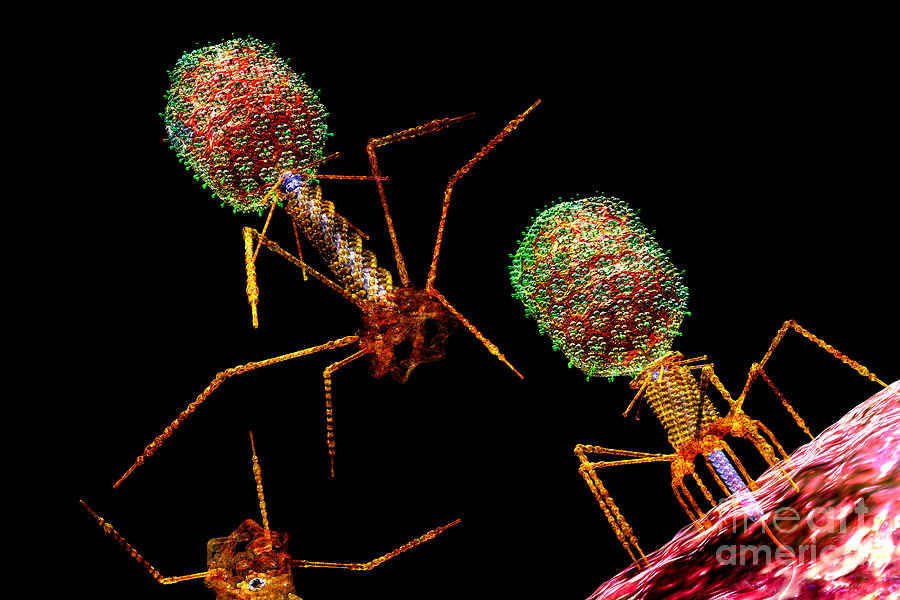
Phages Carry Antibiotic Resistance Genes

     This article  suggest that  bacteria phages, which can also be identified as viruses that infect bacteria, might play a role of gene transfer that confer drug resistance to bacteria. This experiment provided a strong case that antibiotic resistance genes exist in the virome. Andrew Singer who was ones of the researchers involved in the experiment at the University of Girona, Spain, collected several viromes from raw sewage, human feces, pig feces and marine and fresh water environments. The researches found that there was an abundance of viromes that carried antibiotic resistant genes.
     When the researches began to break down the different samples they found that in human feces there was a relatively low amount of resistant genes. However, for the other samples there was a hight amount of resistant genes. In the pig feces was majority of the resistant genes had Beta- lactamase. The rest of the samples contained range of different resistant genes. Some of those resistant genes were ones that could even confer multi-drug resistance to at least three different antibiotics.
      This article peaked my interest because it is amazing how phages can go from bacteria to bacteria picking up their DNA and transferring the DNA to other bacterias they come across. I have always though that by phages doing this they were just making bacteria more resistant to antibiotics and making the bacteria stronger. However, it is nice to see that it is not always the case and that phages aren't always doing harm but can be useful in other aspects.

Monday, April 11, 2016

Recent developments in microorganism studies has suggested that the genetic codes flexibility may be greater than previously thought. A new study by researchers from the U.S Department of Energy Joint Genome Institute (DOE JGI) and Yale University has discovered that the codon for the amino acid selenocysteine is not coherent across all organisms. Scientists found that in some microorganisms, the three-letter codon UGA signals for the translation of the amino acid selenocysteine. This is of major significance because UGA is among three codons that normally signal the termination of protein construction.


Starting from the four innermost letters and working to the outermost ring, this table shows shows which three-letter base sequence or codon encodes which amino acid. Credit: Wikimedia Commons, public domain image


Researchers scanned approximately 6.4 trillion bases of metagenomic sequence and 25,000 microbial genomes in the National Center for Biotechnology Information and the DOE JGI's Integrated Microbial Genomes data management system. Based on two 2014 publications in the journal Science, they expected to find variations in microorganisms genetic vocabulary within nature. The team discovered several species that identify stop codons UGA, UAG and UAA, as well as ten sense codons, that are variants for selenocysteine.

This finding is of major significance because it is opening geneticist's minds to the possibility of a greater network of genetic schemes. While our knowledge of genetics has grown tremendously over the past couple of decades, there remains an abundance of questions unanswered about the intricacies between reading the genetic code and applying it. The genetic variation in microorganisms is far greater than in animal species and the further study of these microorganisms may prove useful to fill in the missing gaps of our current genetic knowledge.


Monday, April 4, 2016

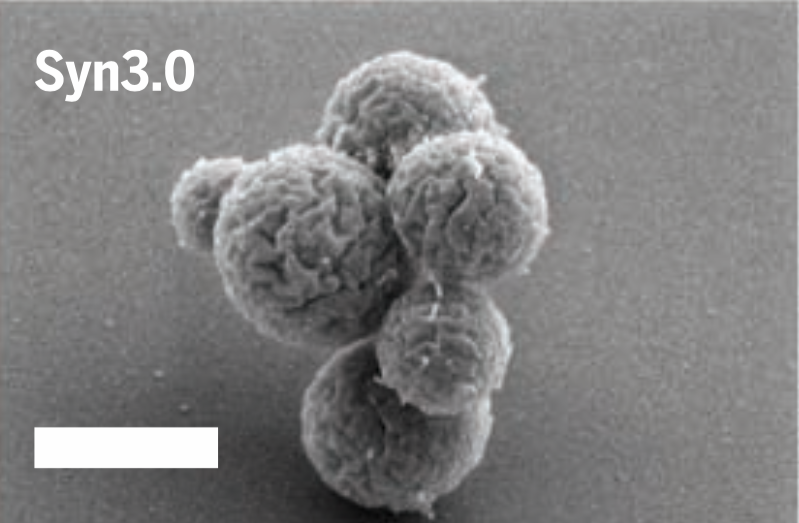
Bacterium Syn3.0 has smallest genome of known living organisms


https://i.kinja-img.com/gawker-media/image/upload/zgu0pba2jps488olbpur.png

            Scientists have been working to construct a genome of a newly created bacterium known as Syn3.0 Syn3.0 has the smallest genome of any living organism with only 473 genes in its genome. To compare to other bacteria, E. coli has a genome of approximately between 4,000 and 5,000 genes. Furthermore, out of the 473 genes of Syn3.0’s genome, 149 genes biological function remains unknown to biologists. However, scientists have been able to identify the genes that convert DNA into RNA, perform DNA replication/repair, maintain structure of the cell membrane, and metabolism. To put it numerically, scientists have identified the function of 83% of the genes in Syn3.0.

Since, Syn3.0 has an uncluttered genome, scientists hope to learn even more about the foundations of life. With any luck, answers can found in the 149 genes that have yet to identify their function. Consequently, this will allow scientists to build custom microbes to produce drugs and or chemicals.  Currently, scientists have deduced that a microbe needs about 300 genes to survive. More importantly, when scientists have created microbes, they left genes of unknown function out of the mix. Resulting with the death of the microbe. However, when the addition of these genes of unknown function were added, the microbe sprung to life. In the end, Syn3.0’s 149 genes of unknown function may possibly contain the requirements for life.

Original Source: https://www.sciencenews.org/article/scientists-build-minimum-genome-bacterium?mode=topic&context=87
Additional Readings: https://www.rt.com/usa/337122-bacteria-minimal-genes-venter/