According to the article “Scientists
on brink of overcoming livestock diseases through gene editing”, by Hannah
Devlin, UK geneticists at the Roslin Institute in Edinburgh have been making significant
progress in genetically engineering disease resistance and resilience into livestock
species. Although still in its trial stages, the director at the Roslin Institute,
Prof Eleanor Riley, believes that in the very near future, the farming industry
will be able to save millions every year once these resistant/resilient animals
are successfully introduced into the live stock population. The first and most promising
experimental trial is currently producing blue ear disease resistant swine, who
may be introduced into the live stock population as soon as in three years’
time. Blue
ear disease can cause the effected swine to produce stunted offspring or still
births, resulting in significant monetary loss in the farming industry. By identifying
the gene that codes for the surface receptor, in pig cells, that the virus
needs in order to bind and spread, the scientists at Roslin, were able to
select and remove a small section of this gene, therefore causing the link from
the blue ear virus to the pig cells to be removed entirely. This in turn means
that this small genetic intervention would make the resulting swine immune to
this ailment
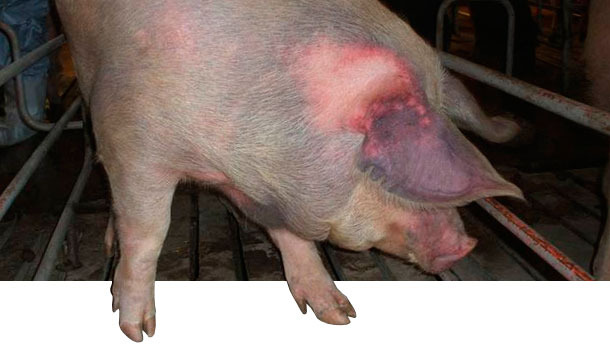 (pig with blue ear)
Furthermore,
this type of genetic identification and alteration research is also under way
for other significant live stock illnesses, such as the avian flu, oyster herpes,
and amoebic gill disease in salmon. Geneticists at Rolsin have also begun
investigating the genetic foundation for E coli and campylobacter resilience,
as they are believed to be the cause of hundreds of thousands of food poisoning
cases in the U.K. alone each year. Yet the public seem slow to come around to
the idea of eating genetically modified animals (even though they have had no qualms
with GMO crops for decades). However, once they realize the benefits genetically
engineered livestock will bring to animal welfare and environmental impact mitigation,
both the professionals at the Roslin institute and myself believe, the publics opinion
will sway much faster in its favor.
Link to article
And for more on Blue Ear Disease

