Showing posts with label resistance. Show all posts

Friday, November 13, 2020

The Genetics of the Tuatara


    The tuatara is a reptile that has been around since the dinosaurs. Its century-long life span, resistance to several infectious diseases, and optimal activity in very low temperatures have been questioned by scientists for years, but not until recently was the genome of the tuatara finally sequenced. The tuatara's genome is 5 million base pairs, and is two-thirds larger than the human genome. There were several observations made from the sequencing of the tuatara genome. The first is that the tuatara is more closely related to snakes and lizards than crocodiles, birds or turtles. The second was the discovery of selenoproteins, which help protect the reptile from cellular deterioration, which contributes to its extremely long life span, Another observation was an abundant amount of TRP genes in the tuatara. "TRP genes are involved in making proteins tied to temperature sensitivity and also aid in the regulation of body temperature," (Buehler, 2020). The excessive amount of TRP genes in the tuatara is what aids in their ability to survive and prosper in such low temperatures. Sequencing the genome of the tuatara has given humans insight into their evolutionary history, and may even be useful for human usage. Is it possible for humans to look at the tuatara's selenoproteins and somehow use them to increase human lifespan? I think that continuing to study the genome of the tuatara will provide new discoveries about most importantly, evolution, but could also help in the preservation of this species. With the earth's temperature increasing, and their optimal activity being in cooler temperatures, we need to be careful of extinction of species such as the tuatara, that can give us much insight into the evolutionary world. 

https://www.sciencenews.org/article/tuataras-rare-reptiles-genes-longevity-cool-weather

https://www.nature.com/articles/d41586-020-02063-4

Saturday, November 25, 2017

Blocking antibiotic resistance

In the article titled, "Antibiotic resistance: researchers succeed to block genes of resistance," researchers explain that the plasmids bacteria carry may have coded for the resistance to antibiotics.  Researchers were able to discover the exact binding site for the molecules and insert a stronger molecular to bind instead.  By doing so the molecules for antibiotic resistance were not transferred with the plasmid.  The molecule being inhibited is known as TraE, being the gene known to produce an resistance to antibiotics.  This article was interesting because I know any time somebody has taken antibiotics the bottle always says to take all of the pills regardless to be sure all the harmful bacteria are killed, otherwise some will be left and will develop resistance.  Seeing that something is being discovered to hopefully slow down this process is a relief.

Tuesday, November 21, 2017

Gene Discovery May Halt Wheat Epidemic

Stem rust

In a study published by the University of California in Science Daily, a new gene was discovered in a wheat plant that enables resistance to a new strain of stem rust, a type of fungal infection in wheat plants. The strain of stem rust, Ug99, has been infecting wheat plants across Africa and Asia, but has a global impact. A wheat shortage threatens food security worldwide, and with approximately 90% of global wheat plants being susceptible to Ug99, this new fungus is a crisis.

This new gene could provide a new level of protection against this fungus. New strains of wheat plants can be grown next season that are resistant to the fungus, and solving the crisis. Although a new GMO is a great solution to this problem today, like many diseases, a simple mutation in Ug99 could render the resistance gene useless. I think it is great that we are solving these disease problems in our food supply, however when can we begin to find long term solutions that will work regardless of the diseases changing in the future?

Thursday, February 2, 2017

The Resistance: English Ash trees fight back

    
     The Ash trees of Europe are facing the continued spread of a fungal disease that has killed a vast majority of the common tree. Ash dieback disease is caused by the fungus Hymenoscyphus fraxineus. Denmark has lost nearly all of their native ash trees to the disease and it has only recently been introduced to England where it is spreading just as rapidly. But new research reveals that English ash trees have a resistance to the disease that other European ash trees do not.
     The Guardian reports that these more resistant trees could potentially be used to breed down ash trees that could be used to repopulate the forests that have lost large portions of their native trees. There are drawbacks to this plan however. Although these English trees are more resistant to the fungus they are more susceptible to the emerald ash borer. Those working on slowing and controlling the spread of the fungal infection warn that care must be taken when selectively breeding tougher trees.
Map points are scaled by hue (high predicted damage scores in brown, low in green) and plotted according to the geographical origin of the parent trees of the British Screening Panel (n = 130) and the Danish Test Panel (n = 58).
   
     I think this article and the research behind it highlight the benefit of the genetic diversity a single species across several geological locations can develop. Developing an ash tree with a resistance to both the fungal disease and emerald ash borer is the ultimate goal in this situation. If such a tree is created its introduction into the environment must be a careful undertaking. We could just as easily create a tree with a severe susceptibility to the next big disease or insect infestation.

Friday, April 15, 2016

Resistance To Antimalarial Drugs Is Not Passed On To Parasite Offspring


The parasites that cause malaria often develop resistance to antimalarial drugs, but according to a new study, parasites with mutations that make them resistant to an antimalarial called atovaquone can’t pass their resistance on to their offspring. The drug disrupts the lifecycles of the parasites while they’re living within their mosquito hosts. Atovaquone, is a component of the antimalarial medication Malarone. It kills both the blood and liver stages of malaria, however researchers believed that it’s prone to resistance like so many other antimalarial medications. To investigate, a team of scientists examined three atovaquone resistant strains of Plasmodium Bergheim, a malarial parasite. Each strain contains a different mutation in their cytB gene, which is encoded in their mitochondrial DNA. The team let mosquitoes infected with the Plasmodium feed on mice infected with the resistant Plasmodium strains, and then they followed the parasites over the course of their entire lifecycle.

While resistance mutations protected the parasites from the drug, it was lethal later on in the mosquito phase. "Two of the mutations resulted in developmental defects in the parasites’ fertilized embryos, and the third mutation led to complete infertility. The team describes cytB mutations as genetic time bombs. Because maternally-inherited mitochondrial DNA is critical for a molecular process that Plasmodium rely on when they’re living inside of mosquitoes, the resistant parasites weren’t able to respire efficiently. Since this severely impairs their reproductive cells, atovaquone-resistant mutations can’t be passed on to the next generation of parasites. " (Goodman)

In a total of 44 separate transmission attempts which involved over 750 mosquito bites, the transmission of atovaquone resistance was observed just once. And this mutation couldn’t be transmitted further despite seven attempts. Cross breeding parasites with and without these mutations didn’t work either, which means we could be one step closer to being able to stop malaria from spreading across the world.

Original source: http://science.sciencemag.org/content/352/6283/349.full
Related source : http://www.eurekalert.org/pub_releases/2016-04/uom-nhf041316.php

Sunday, March 22, 2015

Rabies Resistance

   A new technology to determine the resistance or sensitivity to the rabies virus has been developed. Researchers at Texas A&M AgriLife were able to create a platform so that they could look further into how pathogens interact with human genes which will allow them to find genes that are either more sensitive or less sensitive to the rabies virus. The rabies virus is still a concern in today's world, it is the cause to nearly 55,000 deaths per year worldwide. Further understanding the way that genes are affected by this virus will greatly help the human race when it comes to the Rabies virus.
   
     These researchers used "knockout mice" which are laboratory mice that have inactivated existing genes, these genes are replaced with an artificial piece of DNA. They took thousands of different stem cell lines carrying different mutations and separate them into neurons. With this they were able to see that genes that are known to be involved in rabies when mutated had different sensitivities to the rabies virus.
      The experiment was set up so that about 100 embryonic stem cells were spread out on different plates, separating them into fully functioning neurons. The rabies virus was then added showing up as a florescent green color and monitored for several days. The results were astounding, some plates showed large amount of fluorescent green, while others showed very little. The plates that showed high amounts of green were more sensitive to the rabies virus, the ones showing little green were more resistant. The researchers were able to uncover 63 different host genes that will help with new pathways that can aide in the treatment of rabies. This is a remarkable discovery as it will help with other diseases such as tuberculosis, botulism, Ebola as well as many other disorders. This experiment can be used  to help find resistances or sensitivities to almost any virus or bacteria.

Article: Stem cells help researchers peg rabies resistance
Article 2: Rabies

Wednesday, February 4, 2015

Caffeinated Fruit Flies Used to Help Understand Insecticide Resistance

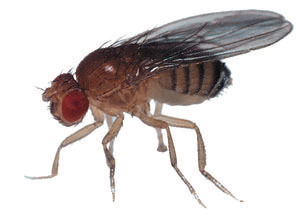
     Ahh, the amazing fruit fly (Drosophila melanogaster) has done it again. Researchers at the University of Kansas have turned to caffeine to help identify which genes in flies have become resistant to insecticides. The reason the researchers used caffeine is because it is a common surrogate for xenobiotics in lab cultures. The researchers tested 1,700 lines of fruit flies and successfully mapped out ten loci that could potentially describe how these flies are resistance. From these ten loci, the researchers further identified Cyp12d1-d and Cyp12d1-p as the main genes that are responsible for over ten percent of  the variation in fruit flies that lead to resistance to insecticides. Based on these findings, the researchers have stated that this method can be used to identify genes that lead to resistance to virtually any drug.
     Reading this article has made me question how far this research can go. Specifically, how valid these gene identifications will be in the future. I feel like gene mutation is a major component in evolution; therefore, these recently identified genes will change in the future and other genes may be responsible for resistance. Also, this article was a little brief; I wish there was more content because it would make the topic a little clearer, especially about the actual methods of how the genes were identified. All in all, this is a fascinating concept that can revolutionize the insecticide industry.

Original Article: http://www.sciencedaily.com/releases/2014/03/140327101417.htm
More on Insecticide Resistance: http://grapes.msu.edu/integrated_pest_management/how_pesticide_resistance_develops

Sunday, November 23, 2014

Viruses and Diversity

Viruses are known to range in severity, and an experiment in mice was conducted to find out more about them. More specifically, five genetically identical mice were infected with a virus that was much more virulent than when the same virus infected five genetically diverse mice one at a time. One reason for this is that the virus wasn't able to adapt to the different genetic makeups of the different mice, and therefore was less effective. However, this has only been able to be experimentally proven with mice, plants, and insects. Research in this field was done by biologists Jason Kubinak and Wayne Potts.

Since viruses tend to be less virulent in a more diverse population, researchers encourage the diversification of cattle to lessen the probability of disease spreading. Potts and Kubinak use their study to show that the "sex-against virulence hypothesis." This hypothesis states that sexual reproduction evolved in order to increase genetic diversity, which in turn decreased the chance of viral infection.Therefore, the group of mice that had the same genetic makeup showed what would happen if mice reproduced asexually, and this reiterates the importance of diversification as an effect of sexual reproduction. Sexual reproduction enables organisms to gain resistance to viruses and diseases that they may have be vulnerable to otherwise. In the experiment, the virus used is mouse leukemia combined with a virus that causes a drastic increase in the number of red blood cells. Together, the virus is called the "Friend virus complex." The red blood cell count is increased in the spleen, and the more there are, the more likely the spleen will be inflamed, endangering the mouse's life. With the help of this combination of viruses, a virus in the spleen is able to replicate itself.


To start, a healthy mouse was injected with infected spleen tissue from another mouse. The previously healthy mouse was tested for how well it was fitted to the virus (i.e. if it allowed the virus to replicate easily). This was done by weighing the spleen because an enlargement of the spleen yields a more harmful virus.

Although there has been no experimental proof of this in other vertebrates, plants and insects have shown that genetic similarity allows a virus to adapt to a host more efficiently, and thus become more detrimental. Being able to replicate itself faster is lethal to the organism, as well as the rest of the organisms with its identical genetic makeup.

Article: http://www.sciencedaily.com/releases/2014/11/141118072528.htm
Supporting Article: http://www2.estrellamountain.edu/faculty/farabee/BIOBK/biobookdiversity_1.html

Saturday, November 22, 2014

Gene for Natural Resistance to Spruce Budworm

White spruces in Eastern North America have been devastated by spruce budworms. These are moths whose caterpillars are dangerous to spruce populations due to their consumption of white spruce needles and balsam fir. The most recent paramount invasion by this species occurred between 1970 and 1990, resulting in the loss of half a million cubic meters of wood in just Quebec alone. Conifer trees continue to be negatively affected by the existence of spruce budworms, although scientists have come much closer to solving this problem with a recent discovery.


Researchers from the University of Oxford, the University of British Columbia, and Université Laval have uncovered a gene in white spruces that provides natural resistance to the spruce budworm. This was done through analysis in which the researchers compared the genomes of the more resilient trees to those that were more negatively impacted by the feeding activity of the spruce budworms. They found that the betaglucosidase-1 gene had much higher levels, about 1,000 times higher, of gene expression in the resistant conifers than the non-resistant ones. The protein encoded by this gene was isolated, and found to contribute to chemical reactions that ultimately produce two compounds that have shown to be toxic to the spruce budworm. Thus, those trees with increased levels of expression of the gene that encodes this protein are more resistant to the budworm due to high production of what is essentially a natural insecticide.


The betaglucosidase-1 gene is present in all individuals of the white spruce population; however, only certain trees have a high enough level of expression to provide for sufficient resistance to the harmful spruce budworm. Scientists believe that they can utilize this information to create white spruces that experience increased expression of this gene, so that they remain resistant to this insect invader. This would prevent the further destruction of these large forests of white spruce conifers.

I find this article to be very interesting. Normally when looking into genetic studies, I have seen many examples of different alleles for genes or mutations to genes that result in differences among various organisms in a population. For this scientific discovery, the various individuals of the white spruce population all have the gene interest (the betaglucosidase-1 gene); however, the differing level of expression of the gene to encode the protein makes the difference. I find it fascinating that there is 1,000 times greater expression of the gene, and that this provides for production of enough of the protein to give the conifers resistance through production of a natural insecticide. Hopefully this information will allow researchers to be successful in protecting white spruce populations from the spruce budworms.


Related Links:


Wednesday, November 12, 2014

Anti-typhoid Gene Found

1AQD.png 
        
        Researchers say they have found a gene variant that has a natural resistance against typhoid fever. Scientists from the Nossal Institute of Global Health, at the University of Melbourne in Australia, screened the genome of hundreds of healthy and infected people from Vietnam and Nepal. Dr. Sarah Dunstan, the lead researcher of the study, says the were looking for genes "associated with susceptibility, or resistance from typhoid." They found that people carrying a particular variant of the HLA-DRB1 gene provides a better protection against typhoid fever. HLA-DRB1, also known as major histocompatibility complex, class II, DR beta 1, codes for a receptor that plays a central role in the immune system, by recognizing proteins from invading bacteria. Dr. Dunstan says, "this study is the first large-scale, unbiased search for human genes that affect a person's risk of typhoid."
        Typhoid fever, also known as enteric fever, is a serious health problem to underdeveloped countries. Consuming food or drinking water contaminated with the Salmonella Typhi or Paratyphi bacterias is how typhoid fever is contracted. 26.9 million people are infected with typhoid fever, and about 200,000 people succumb to typhoid fever a year. The infecting bacterias are becoming resistant to antibiotics, and currently, there is no licensed vaccine for typhoid fever. Hopefully, this discovery can lead to enhanced vaccines for not only typhoid fever, but also other invasive bacterial diseases. 


        Although, I did not initially know much about typhoid fever, this article stood out to me. Just hearing that researchers are getting closer to discovering treatments to serious diseases, makes me happy. This could be the beginning of a discovery that could change the world.

Sunday, November 9, 2014

How Diet and Pesticides Change Bees Gene Expression

Feeding a bee an artificial pollen diet is not beneficial. A bee that has a natural diet of pollen is more resistant to pesticides than a bee with an artificial diet. Pesticides also cause a change in expression of genes in bees that deal with detoxification, immunity, and nutrition.
Help me I'm a poor little cute bee.

The first part of the study, done by Christina Grozinger at Penn State, showed that even when bees are exposed to nonlethal doses of pesticides, larges changes in gene expression are made. There is a link between nutrition, diet, and pesticide exposure when dealing with the health of a bee. The diet impacts how long bees live after given lethal doses of pesticides. Danial Schmehl at the University of Florida states that a bee's natural diet makes them "significantly more resistant to lethal doses of a pesticide than feeding them a more simple, artificial diet."
The impact of pesticide exposure on gene expression was done by feeding bees pesticides that have been detected in hives for a period of seven days. On the last day the RNA of the bees was extracted, attached to a fluorescent marker, and then the differences in gene expression patters were examined. The patterns of fluorescence between the treated bees and controlled bees showed the changes. Over 1100 pieces of RNA showed change in genes involved in detoxification, nutrition, and immunity. The researches then did the tests giving bees a natural and artificial diet, and the natural diet showed less changes.
This study is very useful because it could help the future of honey bees. Many honey bees have been dying off due to pesticides and it is negatively impacting the environment since honey bees are a major contributor to spreading pollen. This study could help scientists make sure bees are getting a proper diet that can help them survive harmful pesticides. The amount of pesticides used needs to be greatly reduced first, but this study could also help honey bees survive. This study also shows how gene expression could be affected and this may be helpful for humans and what could affect their gene expression diet, nutrition, and detoxification wise.

Article: http://news.psu.edu/story/332959/2014/11/03/research/diet-affects-pesticide-resistance-honey-bees

Sunday, November 2, 2014

Scientists Shed More Light on Ebola Virus Through Experimentation on Mice

          There is a laboratory located in Hamilton, MT which is said to be one of the safest in America. This is the location where Scientist are trying to dismantle the problem of Ebola. Through experimentation with Ebola-infected mice, it has been discovered that the host genes play an important role in deciding if the virus is fatal or not. What does this mean? In some people the virus could actually be restricted, saving the lives of who are infected.
                                          From: http://www.bbc.com/news/world-africa-28749615
       
           The Ebola virus deals immensely with the genetics behind the host it deals with, not necessarily due to the virus itself. Some of the infected people suffer from bleeding, shock, and some resist the virus entirely. After implementing the virus into the mice, the scientists found that 19% of them were not infected at all meaning there was no major sign of physical deterioration, they looked "normal". Less than half of the group of mice died, with 11% showing partial resistance. However, their was 70% that were severely infected. Many suffered from liver inflammation, loss of blood, swollen spleens, and many more symptoms.

         The conclusions the scientists came to were astonishing. The severity of Ebola infection was directly correlated to their specific gene patterns.The mice were a specific inbred of mice that had been developed to study influenza and were replicated in order to study the Ebola virus. I feel this experiment needs more studies done on it. Those mice could have built up an immunity from the previous side effects of the influenza virus. However, this experiment is definitely on the right track in solving this epidemic, which is adamant in Africa.
Article: http://www.medicalnewstoday.com/articles/284708.php
Related Article: http://jid.oxfordjournals.org/content/178/3/651.short

Saturday, October 11, 2014

Finding Clues in Genes of 'Exceptional Responders'


        Grace Silva pictured above of Dartmouth, Massachusetts was diagnosed in 2010 with anaplastic thyroid cancer following symptoms of a swollen neck and throat at the Dana-Farber Cancer Institute in Boston. Most patients die within months of finding out they have this type of cancer. Her doctor attempted to treat her with antibiotics but was not successful. Her thyroid gland was removed along with the tumor, and after chemotherapy and radiation treatments the cancer kept coming back. Dana-Farber Institute began studying a drug called everolimus in thyroid cancer due to studies of success in labs with mice. This drug was successful with Mrs. Silva, shrinking her tumors and disappearing for about a year and a half. 

       Researchers sequenced her tumor's genes, finding a mutation that made her cancer dependent on mTOR, and everolimus is able to oppress the production of that protein. Her tumors did begin to grow again and a second genetic analysis found a second mutation in the mTOR gene was allowing the cancer evade the drug and grow. Mrs. Silva is now receiving an experimental drug to take over the mutation's effect and stop cancer growth. Researchers can now just look for that mutation to help other patients because it is seen in hundred of other cancer types. 

      Cancer doctors are using 'exceptional responders' by testing them with a drug a doctor truly feels could work without really knowing if it will and in some cases this person responds positively. Studies are now being done to do this with gene sequencing. In one study at Memorial Sloan-Kettering Cancer Center a woman was treated with everolimus with bladder cancer. Her cancer was spreading rapidly and was told she had about a year to live. This drug caused her tumors to vanish. A variety of studies have been done to find these responders, which opens many doors for curing cancer.  

    This article really intrigued me, considering cancer is among a large portion of humans in the United States alone. A relative of a good friend of mine has just recently been diagnosed with liver cancer and my heart sank. I believe it is so important that research is done to help these victims and stop them from suffering. This may not be the cure for all cancer, but it is definitely a step in the right direction.


Sunday, November 25, 2012

New Way for Antibiotic Resistance to Spread

Since we were just studying antibiotic resistance in lab,I chose this article. The article was found on Science Daily.The study was performed by Washington State University. The researchers used dairy calves to perform their experiments in the lab. The researchers focused on the antibiotic ceftiofur, a cephalosporin believed to be the helping drive for the proliferation of resistance in bacteria like Salmonella and E. coli. Ceftiofur has minimal impact on gut bacteria. Even though infections have been considerably lowered in the past 70 years, it has had a negative effect on many due to natural selection of drug-resistant microbes. The individuals who are infected with this organism find it difficult to get well fast. They tend to have long hospital stays and have a higher chance of death from minor issues. The researchers mixed cow dung, soil and urine infused with metabolized antibiotic. This recipe was used for antibiotic resistant bacteria. The urine killed off the normal E-Coli in the dung-soil mixture. The antibiotic resistant E-coli survived the soil mixture to recolonize in the calves gut through pasture, forage or bedding.

The main researcher stated " "If our work turns out to be broadly applicable, it means that selection for resistance to important drugs like ceftiofur occurs mostly outside of the animals, This in turn means that it may be possible to develop engineered solutions to interrupt this process. In doing so we would limit the likelihood that antibiotic resistant bacteria will get back to the animals and thereby have a new approach to preserve the utility of these important drugs." One possible solution they mention is to isolate and dispose of residual antibiotic after it is excreted from an animal but before it interacts with soil bacteria.

This article was interesting because many people nowadays have a drug- resistant microbe and it's most likely going to get worse as time goes on.