Showing posts with label homosexuality. Show all posts

Wednesday, December 2, 2015

Epigenetic Marks Tied to Homosexuality


In a recent study of male twins, nine methylation sites helped researchers predict a person's sexual orientation. Throughout the study, it had been examined its genome and determining whether the individuals are methylated can peg sexual orientation with nearly 70 percent accuracy. The idea of epigenetics influencing sexual orientation had been proposed several years ago, but had been more recently examined in today's generation. Researchers had found that methylation status of nine regions in the genome could identify sexual orientation with a significant percent accuracy. Margaret McCarthy, a scientist at the University of Maryland School of Medicine stated, "This study provides a major step forward in our understanding of how the brain can be affected by factors outside of the genome. It is also possible that the experience of being a homosexual or a heterosexual has itself impacted the epigenetic profile. But regardless of when, or even how, these epigenetic changes occur, their findings demonstrate a biological basis to partner preference". It is also true that pinpointing the exact origins of this biological basis is a thorny issue. More work must be done to uncover the functional significance of the methylation profiles. Some scientists expressed caution in interrupting early data from a small study.
Additionally, twin studies and family trees provide strong evidence that sexual orientation is at least partially genetic. When one identical twin is gay, there is about 20% chance that the other will be as well. Due to the fact that this rate is not 100%, it is thought that environmental factors play a role as well and this can be characterized as the 'older brother effect', which is that chance is a man being gay increases by 33% for each older brother he has. This reason is not clear, but one hypothesis holds that the mother's immune system begins to react against male antigens and alter the fetus's development. In my opinion, I think a genome being able to tell if a person is homosexual or heterosexual is absolutely outrageous. I always believed a persons sexuality preference is their personal desire, not determined from a gene in your brain. I also think that the topic is not researched enough where it can prove this theory to be accurate.  

Link to article:
Link to alternative article:
http://www.nature.com/news/epigenetic-tags-linked-to-homosexuality-in-men-1.18530

Friday, October 16, 2015

New Genetic Research Predicts Sexual Orientation in Men


In a recent study, researchers used an algorithm that can identify patterns of DNA methylation across nine regions of the human genome, potentially related to sexual orientation. Gene expression is controlled by a molecular modification to DNA called DNA methylation and can be triggered by environmental factors including stress, diet, exercise, and exposure to chemicals.

The main group of people that were studied for this research were identical twins because although identical male twins posses the same genetic sequence, previous research found obnly 20% are both homosexual. This caused the researchers to hypothesize that sexual orientation can be influenced by altering DNA. The study consisted of 37 pairs of identical male twins, one homosexual one heterosexual, and another 10 pairs of identical twins that were both homosexual. After studying the algorithm the team named "FuzzyForest," in which they studied 400,000 data points. "From this, the researchers identified DNA methylation patterns in nine small areas of the human genome that could predict whether each twin was heterosexual or homosexual with up to 70% accuracy." These researchers plan on continuing with their findings to increase accuracy of the algorithm and discover new aspects of DNA methylation.


This research is important because there has always been much debate over whether or not homosexuality is a matter of nature or nuture. Are you born homosexual or do your surroundings influence your sexual orientation? This study is picking apart the human genome to be able to detect homosexuality and even in the beginning stages, with such great accuracy. As our world is changing, we learn more and more about homosexuality, but we fail to look at it from a molecular standpoint. I look forward to seeing where this research will lead in the future. 


[Two men holding hands]


Wednesday, April 1, 2015

Genetics in Homosexuality

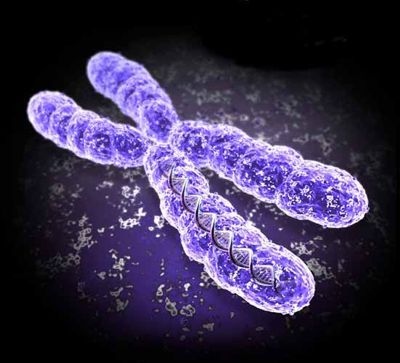
Chromosome - what is, definition and function

Scientists have always asked themselves does homosexuality just occur due to the outside environment? Or are people born with a gene that make them homosexuals? Back in the day many thought of it as a disease and didn't want to be around homosexuals in fear of becoming one. We all know that is not the case.

Scientists are starting to believe that the answer is in the genes, but where? Marker Xq28 was found in 67% of gay men and that, "Xq28 plays some role in about 5 to 30 percent of gay men." Said Hamer. There is some evidence of this being passed down from the mother. More and more evidence is leading to the answer, but the exact answer is yet to be found.

I believe that it is a gene that causes homosexuality and that it will be found soon. This really fascinates me because things are still being discovered in genetics. And I feel that the understanding of homosexuality in terms of how it comes about and where it originates from is a good thing. It may also lead to the full acceptance of homosexuals around the world.

Source:
http://www.pbs.org/wgbh/pages/frontline/shows/assault/genetics/nyreview.html

Tuesday, November 25, 2014

Homosexuality and Genes


There are many suspected influences of homosexuality in humans. Some believe that sexual orientation is socially influenced and some believe that it is a choice to be homosexual. In a new study it is suggested that it is influenced by genetic information. This study was led by Alan Sanders and it is the largest of its kind.

Over 400 pairs of gay brothers, some twins, participated in a genetic analysis that focused on two region of the human genome. Samples of blood and saliva were collected from each of the participants. The only trait that all 818 men shared was being gay. Two genes were identified in influencing sexual orientation in men. One of the genes is located on the X chromosome, which is one of the chromosomes responsible for determining a person’s sex. The other gene that was found to correspond to sexual orientation in men was found on chromosome 8.

The goals of this study were to contradict the notion that homosexuality is a choice and to “refute” the belief that gay people can be treated to be straight. It was stressed that sexual orientation is determined by numerous different factors from the environment to genes. There is not one reason for homosexuality.


Article: http://economictimes.indiatimes.com/magazines/panache/sexual-orientation-not-a-choice-influenced-by-genetics-study/articleshow/45231147.cms

Related article: http://healthland.time.com/2012/12/13/new-insight-into-the-epigenetic-roots-of-homosexuality/

Monday, November 24, 2014

Genetic Influence on Sexual Orientation

Genetic Linkage study reveals possible genes relating to sexual orientation in men.  More specifically the study claims to have isolated the x chromosome and chromosome 8 as the most possible locations for genes regarding predisposition to homosexuality.  The study, published in Psychological Medicine, analyzed the genome of  908 individuals from 384 different families.  The only commonality between all of the subjects was there sexual orientation.  Genetic-linkage studies are somewhat outdated at this point in time.  Further research combining this studies data and a GWA, genome-wide association, study will hopefully further isolate the individual genes influencing sexual orientation in males.  
These studies are deeply rooted in controversy.  For some, the possibility that there may actually be specific genes that can influence an individuals sexual orientation lends truth to the argument that sexuality, be it homosexuality or heterosexuality or even asexuality, is not a choice.  In truth, human sexuality is a complex combination of social, political, cultural, and biological factors.  

Article: http://economictimes.indiatimes.com/magazines/panache/sexual-orientation-not-a-choice-influenced-by-genetics-study/articleshow/45231147.cms
Related Article:  http://www.medicaldaily.com/red-herring-gay-gene-and-how-sexuality-more-just-genetics-311120
Related Article:  http://news.sciencemag.org/biology/2014/11/study-gay-brothers-may-confirm-x-chromosome-link-homosexuality 

Thursday, November 20, 2014

Study suggests genetic link for male homosexuality

Gay Genetics_Hord.jpg

A study of gay brothers was conducted and supports the idea that genetic makeup may influence a males sexuality. After studying nearly 800 men, scientists feel that the genes are found on the X chromosome.This study found their data using DNA samples from saliva and blood.  The X chromosome is one of the sex chromosomes that determines our gender. Females have two X chromosomes while males have one X and one Y. There was small amounts of evidence that suggested genes on other chromosomes playing a factor but it has not been determined exactly which ones although some say it is chromosome 8. Some scientist not involved in this research project do not believe this data to be true such as Dr. Robert Green, a medical geneticist at Harvard Medical School who says the study is “intriguing but not in any way conclusive" others believe it is a step in the right direction to determining the causes of homosexuality. 

Tuesday, November 18, 2014

New Evidence Shows that Genetics Influence Sexuality

A new study that involved 800 homosexual brothers and twins has shown that 2 genes are linked to male sexuality.  One of these genes is on the X chromosome while the other is on a different chromosome.  While this does not give definitive proof that sexuality is determined by genetics, it brings many people one step closer to the accepting the idea that sexuality is not a choice.  For a long time, people have debated the idea of nature vs. nurture; which one determines sexuality? Many people believe that being gay is a choice or that the environment influences sexuality.  This study has brought forward evidence that sexuality is determined by genetics, just like hair color.  It is a possibility that the environment influences sexuality when a person has a genetic predisposition for a certain sexuality.

I think it is morally wrong to believe that sexuality is a "choice" and that a person has chosen to be attracted to men, women, or both.  This study gives more evidence that people do not have a choice in their sexuality and who they are attracted to.

Monday, March 4, 2013

Genes Linked to Homosexuality


This New York Times article written by Natalie Angier tells the story of newly found evidence that supports the theory that homosexuality is a gentetic mutation. Researches have pinpointed a region that lays on the X chromosone that is identical in brothers that are homosexual. This was done by collecting their DNA of 44 gay brothers and looking at the tip of their X chromosome. 33 of the brothers had identicical tips. Using linkage mapping researchers were able to look at the X chromosome closly using DNA markers to distinguish between the two brothers. Approximatly 3/4 of the brothers had inherited the identical DNA markers on their Xq28 region of the chromosome. Researchers do admit that they still have a lot of research to do and say homosexuality is too complex to be linked to only one gene. Genetisits hopwe to continue with their research to try and find more answers of homosexuality linked to our genes.


http://www.nytimes.com/1993/07/16/us/report-suggests-homosexuality-is-linked-to-genes.html?pagewanted=all&src=pm

This article also explains the significance the X chromosome in homosexuality

http://www.nytimes.com/1993/07/18/weekinreview/july-11-17-x-marks-the-spot-male-homosexuality-may-be-linked-to-a-gene.html?src=pm


Monday, November 19, 2012

The Genetics of Sexual Orientation

In March of 2012, the blog 23andMe began surveying its customers for a study on the genetics of sexual orientation. Although this topic is very controversial, the researchers decided to attempt the study because it was highly requested by 23andMe customers and also because this area of genetics has not been well studied. The study consisted of a survey that asked people how they identified themselves: 5% said purely homosexual, 74% said purely heterosexual. The remainder either identified as mostly/somewhat homosexual, mostly/somewhat heterosexual, or bisexual. Each participant was then asked about their attitudes towards sexuality through a number of questions. A complete and detailed explanation of the study can be found here.

The research has not found a "gay gene" or any variation that can be associated with homosexuality. Even though some studies have shown that the Xq28 band on the X chromosome may be a possible candidate that is associated with homosexuality, the researchers could not find any link between the two. So far, more than 24,000 people have been surveyed, making it the largest genome-wide association study of sexual orientation ever; but the blog is still accepting surveys from customers. If you wish to partake in this study, you can get an account with 23andMe here. Then, click on the link in the article to get to the survey.

While the goal of this study is to be completely objective, the researchers are hoping that a larger sample size will help to clear up the role of suggestive genetic associations. I believe that this may be good news for the homosexual population because it would allow them to say that it is who they truly are and it is something that is not by choice. Unfortunately, I also believe that anti-homosexual groups will use this to say that a "cure" can be created for this "disease." Whatever the outcome is, it is interesting to see genetics may play a role in current social controversies.