Showing posts with label genetics and depression. Show all posts

Tuesday, November 21, 2023

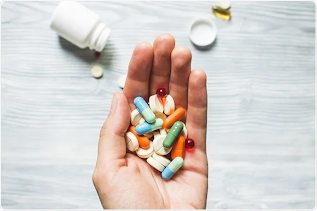
Genetic Testing Could Greatly Benefit Patients With Depression, Save Health System Millions


    A study from the University of British Columbia suggests that implementing pharmacogenomic testing to determine the best antidepressant for patients with moderate-to-severe depression could potentially lead to substantive health system savings and improve patient outcomes. This study, published in the CMAJ, Canadian Medical Association Journal, indicates that in British Columbia alone, pharmacogenomic testing could save an estimated $956 million over 20 years. The aim of pharmacogenomics is to match patients with the appropriate treatment plan by looking into how gene variations affect one’s response to medications. This is done in hopes of finding the best medication and dosing that is likely to be more effective and cause fewer side effects for each individual. This testing uses genetic information that is usually obtained using a cheek swab, blood test, or saliva sample. The findings of this study show that the results are not only cost-effective but also may increase remission rates and increase one's quality of life while also reducing hospitalization rates and intensive treatments. The researchers of this study worked with patient partners, clinicians, and healthy system and government partners in order to develop a simulation model that mimics the experience of majorly depressed patients. 
    The results of this model simulation showed that this testing would result in 37% fewer patients experiencing treatment-refractory depression, where the patients' depression remains unaffected despite several types of treatment. The results of implementing pharmacogenomic testing also showed that patients experience 15% more time without symptoms of depression which results in an anticipated “1,869 fewer deaths and 21,346 fewer hospital admissions over 20 years. This study states that depression is one of the largest public health issues as 1 in 10 Canadians will experience major depression at some point in their lives. Though there are more than 35 antidepressant medications available, over half of patients don’t respond to the medication they are prescribed, and about 27% experience adverse effects. Due to the statistical increase in mental health illnesses over the past 10 years, I believe that the urgency and importance of this study increases. Though it is difficult to prescribe the most effective medication on the first try, pharmacogenomic testing could narrow the medication selection and help physicians make a more informed treatment decision, and reduce the lengthy process of trial and error. Not only does it help improve the patients' quality of life more quickly but it can also save resources and money. 

Links:
https://www.sciencedaily.com/releases/2023/11/231114143921.htm

https://www.medscape.com/viewarticle/998508#:~:text=The%20model%20predicted%20that%20testing,million%20CAD%20over%2020%20years

Saturday, November 11, 2023

Largest Ever Study of Suicide Genetics Gives Clues to Who's at Risk

 Largest Ever Study of Genetics Gives Clues to Who's at Risk 


    New research has discovered that 12 genes can be linked to an increased risk of attempting suicide. People from 22 different populations, also ethnically diverse, were studied for this research. The data also included about 44,000 documented suicide attempts as well as more than 915,000 ancestors of these people who served as the control group. What they found was that not only one gene influences risk, but multiple of them at once. "If we can use genetic information to characterize the health risks of those who attempt suicide, we can better identify those patients who need contact with the mental healthcare system." Anna Docherty, study author states.  
    I believe that this study can save a lot of lives. I do understand that there are environmental, work-related, school-related, and other factors that contribute to depression which can lead to attempting suicide, but I never thought about how genetics plays a role in this. I think it would be good if doctors could target these people because of genetic testing because they could then get these people the help that they need before they get to their breaking point. I think it would be good because they can catch this before the person is even in that state and they can just go to preventative therapy. I think this can be used in many ways depending on the person and how exactly they are feeling. 

LINKS: 

Monday, November 11, 2019

Can Depression be Eliminated?

Suicide rates have grown higher and higher, as depression has as well. There may be a biological reason as to why some people are more susceptible to depression than others. Jonathon Flint hopes to find genetic links to depression and cut down on this mental struggle significantly. He hopes by the end of this century depression can be completely cured.

I think that depression can be linked to some people genetically, but depression can also be caused due to current events happening in someone's life. Everyone experiences sadness throughout their lifetime and some people have harder lives than others, making them more susceptible to depression. Sometimes depression seems to run in families and I think this may be due to genetics. It is great that there is research being conducted on this topic to help people with predetermined depression and hopefully he is successful.


Image result for depression
https://discovermagazine.com/2019/november/prognosis

Related Article:
https://www.healthline.com/health/depression/genetic#curing-depression

Monday, July 22, 2019

Study Debunks 'Depression Genes' Hypotheses

For years, researchers have supposedly found that a certain group of genes play a key role in depression. This has not only lead to a lot of further research, but also given doctors and patients the hope that technology like CRISPR could simply cut these genes out for future offspring. These previous ideas of depression genes come with hypotheses about the future of the disease itself.

Several of the prior studies, at least 10, saw that a certain 18 genes were completely associated with depression. Unfortunately, new testing has proven that of the 18 specific genes that scientists have associated with depression, none of them play any larger role than every other random gene in the body. Though depression is indeed a heritable condition, it “is influenced by many many variants, and individually each of those has a minuscule effect." 

Looking closer at some studies, a particular gene SLC6A4 which directly deals with the transportation of serotonin was previously said to be very important with depression. Specifically, it was believed that a person with a short version of this gene was at a higher risk for developing depression than a person with a “normal” size SLC6A4. This is even more likely if the person was exposed to early life trauma. 

Another study was done with the participation of several DNA/chromosomal data sources such as 23andMe. They used the data from those types of websites in order to determine if any of the so called “associated genes” actually played a role in producing depression when combined with childhood trauma. This is said to be the largest depression study known to man. The researchers were actually surprised to find that those 18 genes are no more related to depression than any other gene. However, it is still believed that as a group, many genes participate in the development of depression. It is important to note that “genes associated with the disease, and what they do, can ultimately come up with more accurate "polygenic scores" to predict risk and still potentially develop drugs designed to counteract that risk.”


I think that this study is really interesting because it involves scientists disproving past hypotheses about this specific disease. More genes must be looked at to determine even the smallest roles in depression, yet I don’t think this disease will ever be completely abolished. Too many genes are involved to pinpoint a certain gene removal or drug that will get rid of all symptoms. This research is a big step in furthering the scientific knowledge of depression 


Friday, September 15, 2017

Depression Might have Genetic Cause


The first thing that first comes to the mind after hearing the word depression is certainly not unicorns and rainbows. It is a very serious disorder, and people suffering from it feel helpless and worthless most of the time. According to the article on ScienceDaily, 800,000 people die from suicide every year. Even though environment plays a big role in depression, genetics is also a key factor. The culprit responsible is a gene known as Slc6a15.  The study done on this gene revealed that the levels of this gene in a neuron have a great impact on the mood of an individual. 

Another study performed by Dr. Lobo suggest that Slc6a15 is present more in specific neurons in the Nucleus accumbens. It is a part of the brain that is known for its role in the brain’s reward circuit. As the pleasure center, this part makes people feel good about enjoyable experiences. The scientists also studied mice behavior with respect to depression. When different types of mice were subjected to stress, they showed signs of depression like- not eating. Moreover; the level of Slc6a15 gene in the D2 neurons of the nucleus accumbens was also significantly reduced. Dr. Lobo also studied the brains of the people who had depression and committed suicide and discovered that in the nucleus accumbens the gene was reduced. Depression is a horrible mental disorder and I think this discovery might help find new ways to treat it.

Wednesday, March 30, 2016

Hunting the Genetic Signs of Postpartum Depression With an iPhone App


         With mothers and medical providers clamoring for answers about postpartum depression, scientists are starting a major effort to understand the genetic underpinnings of mood disorders that afflict millions of women during and after pregnancy. Researchers led by a University of North Carolina team will use a new iPhone app to recruit women who have had postpartum depression. The team’s theory is that postpartum depression may be distinct, involving genes with more identifiable effects because they act during or soon after pregnancy.
          The free app, PPD ACT, will be offered for this research. “To make sure this is not just a study of iPhone-using people,” Dr. Meltzer-Brody said, iPad versions of the app will be available and patients who want to provide their DNA will “right then and there be offered a spit kit.”This Research Kit software will be used for medical data collection, poses questions about sadness, anxiety or panic after childbirth in an effort to assess whether women have experienced serious postpartum depression. Women with high scores are asked if they want to submit DNA; if so, they will be mailed a kit to donate their saliva. Names and email addresses will be required, Dr. Meltzer-Brody said, but the project will encrypt personal data.

This article caught my attention because postpartum depression is a common everyday issue for women all around the country. This study can help and benefit so many women. I hope to read more about this study in the future. Postpartum depression is a serious illness and the fact that researchers are are starting to understand the genetic underpinnings of mood disorders is such a blessing.

Tuesday, March 29, 2016

Similar genes involved in different mental disorders?


       Schizophrenia, bipolar disorder, autism, major depression, and attention deficit hyperactivity disorder (ADHD), may share several genetic glitches that can facilitate the brain on a path to mental illness. These diseases are thought to be caused by environmental or other genetic factors.

A psychiatric disorder that was based on an examination of genetic data of nearly 60,000 people showed that diagnoses should be based on genetic aberrations underlying disease rather than disease symptoms. Two of the aberrations that were discovered were genes involved in a major signaling system in the brain.

Another study found four DNA regions that conferred a small risk of psychiatric disorders. Two regions involve genes that are unknown in what they do. The other two regions involve genes that are part of calcium channels, which are used when neurons send signals in the brain. Researchers believe that drugs that block calcium channels may be useful in treating bipolar disorder. A small-scale experiment is being performed by Dr. Roy Perlis to see if this may be a viable treatment.

What causes mental disorders has always interested me. I had to take a psychology class at Stockton and we learned about these different mental disorders and had a guest speaker who had schizophrenia come in to talk to us. The class did not go in-depth like this article did so it was a great article to read and hopefully a step forward in the treatment of mental illness that many people struggle with everyday.


Sunday, November 29, 2015

Two Genes Link Genetic Variation to Depression


A countless amount of people in the world suffer from various forms of depression in today's society. Various factors cause depression and now for the first time, geneticists have confirmed a genetic link to depression. It has been determined that two genetic variants contribute to the risk of major depression disorder.

Genome sequences of 5,303 Chinese women with major depression disorder (MDD) were observed and then compared to genome sequences of 5,337 non-depressed, healthy Chinese women throughout 38 hospitals across China. The researchers observed two genetic links located on chromosome 10 with the disorder, SIRT1 gene (deals with the mitochondrial function) and LHPP gene (deals with the brain, the liver and kidneys). Despite this discovery being made, the people with these genes only have a slight increased risk of developing MDD (less than 1 percent increase),

Although this discovery was only "borderline significant", there still was a connection made between people with these two genes and depression. I believe that this information is extremely important even though there was not much evidence providing why depression is higher in people with these two genetic variants compared to those who do not have the genes, it still was some information. Opening this door of linking genetic variants to depression could open many other doors and begin to clarify the biology behind depression and how to prevent it from happening or how at a younger age treatment could be offered.

Link to article:
http://www.natureasia.com/en/nmiddleeast/article/10.1038/nmiddleeast.2015.122

Link to supporting article:
http://www.the-scientist.com/?articles.view/articleNo/43557/title/Genetic-Variants-Linked-to-Depression/