Showing posts with label postpartum depression. Show all posts

Thursday, December 4, 2025

Can Blood Tests Show Postpartum Depression?

    In this Smithsonian Magazine article, a San Diego company plans to launch a blood test that predicts the risk of postpartum depression with more than 80% accuracy. MyLuma would be the first test to use biomarkers that are commercially available to indicate if there is an onset of a psychiatric disorder. This is similar to how blood tests can detect signs of cancer and diabetes, so that pregnant women can know if they are at risk for postpartum depression. This would allow preparation and "reduce the stigma that keeps women from seeking help", as said by Jennifer Payne.

    This had come about when Jennifer Payne, a reproductive psychiatrist, asked why this drop in hormones after childbirth affects some women more than others. She teamed up with Zachary Kaminsky, an epigeneticist, who helped compare female mice given high levels of estrogen compared to those without. They found that estrogen caused specific patterns of methylation inside the hippocampus, which controls mood. Now knowing what to look for in blood samples, they tested women who had a history of mood disorders. They located two estrogen-sensitive genes, HP1BP3 and TTC9B, where more than 80% of those with postpartum depression had one gene with more of a methylation pattern than the other. These changes can even be caught in early pregnancy.


    Not all of the telltale signs are the same in people, and the hunt for more biomarkers is still on. This is a very helpful discovery that can really turn someone's life around. The ability to catch onto postpartum depression can lead to preparation and understanding of these feelings with a professional, instead of finding out after having the child. Helping expectant mothers understand these feelings and why they may happen could eliminate the shame that some mothers have in these emotions and get the proper help they need.

Sunday, October 22, 2023

Genetic Basis of Postpartum Depression

PPD, GABA, and the Thalami


    A recent study from the UNC School of Medicine revealed that 14% of the variability in postpartum depression (PPD) is due to genetic factors/on a genetic basis and also provided a glimpse into the connections PPD has with a variety of pre-existing psychiatric disorders. The basis of PPD symptoms lays with GABAergic neurons in the hypothalamus and thalamus; areas of your brain responsible for regulatory functions (hunger, thirst, thyroid function, etc), and seem to have promising advancements for future PPD research. This data was collected using a genome-wide-association study and compiled data in order to get a bigger glimpse into PPD. Jerry Guintivano, PhD, assistant professor of psychiatry at the UNC School of Medicine, was able to identify similarities in the genetic architecture of PPD and major depression, bipolar disorder, anxiety disorders, post-traumatic stress disorder, insomnia, and polycystic ovary syndrome, meaning "...PPD symptoms likely occur as a result of the interplay between the same genes involved in these other psychiatric and hormone-related conditions." Furthermore, the research concluded a link between PPD, its genetic architectural siblings, and GABAergic neurons in the hypothalamus and thalamus of the brain: neurons releasing GABA neurotransmitters appear to have a link to PPD and its similar familial connections of disorders. Brexanolone is a common drug used to treat PPD and now researchers are able to see the interconnectedness of Brexanolone and the two regions of the brain, which is promising for additional treatment in the foreseeable future. Due to such a wide study and too few PPD cases, however, the researchers at UNC were unable to identify specific locations on the genome or loci that are consistently similar amongst the data group.

    This study was fascinating to read and it provided an overlap between multiple specialties in biology -- from neuroscience to anatomy to physiology. Women's health is making big strides in the 21st century and I think this article is just another step towards more progress being made. The linkage between hormones and psychiatric disorders seems to be a hot topic, and scientists had avoided looking at female models for a long time due to the "complexity" of female hormones and their interactions with physiological processes in the body. But now, we have more evidence that encourage this research and should make women feel a lot better about the improvements being made and the connections established between the two factors. Furthermore, the researchers had also confirmed that PPD is genetic which is also a huge step as well! This can impact treatment plans for pregnant women and might improve their quality of postpartum treatment if they are better prepared and more aware of their chances for PPD. Nevertheless, this study was so interesting to read about and I love the idea of its medical/pharmaceutical improvements as well. 


LINKS:

1) https://neurosciencenews.com/post-partum-depression-genetics-24968/ 

2) https://news.unchealthcare.org/2023/10/researchers-confirm-postpartum-depression-heritability-home-in-on-treatment-mechanism/ 


Sunday, July 30, 2017

Iphone App to Hunt for Postpartum Depression


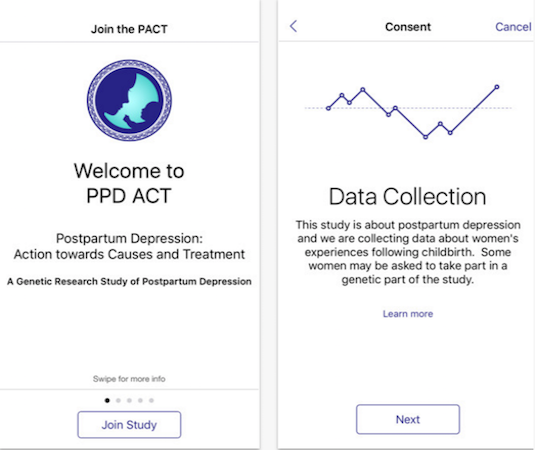
Researchers at The University of North Carolina have decided to use an iPhone app to recruit women who have had postpartum depression. They hope to collect 100,000 DNA samples to compare with women who have never had postpartum depression in order to find varying genetic factors. With this information there would potentially be better maintenance, diagnoses and treatment for the illness. The researchers believe this study will garner better results than looking for general depression in the population because the genes for postpartum depression have more identifiable effects. The app PPD ACT will be available in the United States, Australia and Britain for now, but will hopefully be offered in more countries over time. To make the study more accessible it will also be offered in urban and rural clinics. Each DNA sample will be individually genotyped for around 600,000 genetic markers. This will hopefully be a step in the right direction for mothers experiences postpartum depression or soon to be mothers who are at risk.

Article

Tuesday, April 12, 2016

New App Aids Postpartum Depression Research


A new app for iPhone and iPad users has been developed in efforts to learn more about postpartum depression that could help aid advances in predicting, diagnosing, and treating the maternal disorder. Led by a research team at University of North Carolina, the app aims to gather 100,000 DNA samples from a diverse group of women and compare them to samples from women who are not affected. The team believes that the genes affecting postpartum depression show up during or shortly after pregnancy.

The app, PPD ACT, begins by asking users questions about sadness, anxiety, or feelings of panic after pregnancy to determine whether or not they have the depression. Females with high tests scores are then asked if they would like to receive a kit to submit their saliva for DNA testing. After the team has enough samples, each of the samples will be genotyped for around 600,000 genetic markers all through the genome. Those results will be compared to the results of woman who are demographically similar, have been pregnant at least two times, but have never experienced depression.

I think the initial research has been well developed not because of the questions that the app asks, but because it's an easy way for mothers to see if they suffer from postpartum depression and it even sends them a kit without them having to leave the house. I look forward to hearing about the results from this research as I'm still skeptical as to whether or not postpartum depression is linked to genetics or if it's a hormonal imbalance due to giving birth.