Showing posts with label genotyping technology. Show all posts

Monday, May 2, 2016

Genetic Makeup behind Brain Tumors is Necessary

What is a brain tumor and how is it formed?

             Brain tumors are clusters of abnormal cells in your brain which is enclosed within. If the brain tumor starts to develop it can cause problems because it is growing in limited space. These tumors can be cancerous or non  cancerous but when it starts to grow it can cause the pressure inside your skull to increase. This not only causes brain damage, but later it can develop into brain cancer. 


Are brain tumors genetically inherited?

             Brain tumors can be based on genetic structure, caused by the environment, or both. 


However, inheritance plays a small role at about 5%.  And, other types of brain tumors, such as 


glioblastoma multiforme is associated with inherited genes. More likely cause of brain tumors to 


form specifically based on environment would be the exposure to certain chemicals, such as 


petrochemicals and pesticides. These chemicals are at a much higher risk of developing a cancerous 


brain tumor than those who are weren't exposed to those substances.


What type of research has helped us find solutions to these brain tumors?


             Scientist and brain surgeons together have found that identifying the genetic marker within 


these individuals who have a gene for brain tumor can help treat brain tumors and brain cancers. 


Basically, a an effective treatment is by genotyping and within this research they have found that 


tumors with one genetic profile were slowly developing and more responsive to drug treatment than


 combined with radiation treatment. 


**I believe that genotyping can solve many problems and can save many lives if used and done earlier in the stage of any disease. This is because mostly but not all disease are some way shape or form can be altered if genotyping was conducted. In the case of brain tumors, it seems that it is necessary to genotype in earlier stage of the brain tumor otherwise it can spread and damage parts of the brain and its tissue. 


Tuesday, April 12, 2016

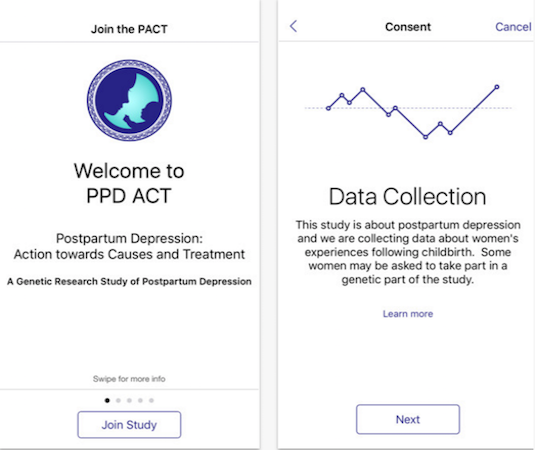
New App Aids Postpartum Depression Research


A new app for iPhone and iPad users has been developed in efforts to learn more about postpartum depression that could help aid advances in predicting, diagnosing, and treating the maternal disorder. Led by a research team at University of North Carolina, the app aims to gather 100,000 DNA samples from a diverse group of women and compare them to samples from women who are not affected. The team believes that the genes affecting postpartum depression show up during or shortly after pregnancy.

The app, PPD ACT, begins by asking users questions about sadness, anxiety, or feelings of panic after pregnancy to determine whether or not they have the depression. Females with high tests scores are then asked if they would like to receive a kit to submit their saliva for DNA testing. After the team has enough samples, each of the samples will be genotyped for around 600,000 genetic markers all through the genome. Those results will be compared to the results of woman who are demographically similar, have been pregnant at least two times, but have never experienced depression.

I think the initial research has been well developed not because of the questions that the app asks, but because it's an easy way for mothers to see if they suffer from postpartum depression and it even sends them a kit without them having to leave the house. I look forward to hearing about the results from this research as I'm still skeptical as to whether or not postpartum depression is linked to genetics or if it's a hormonal imbalance due to giving birth.

Sunday, April 21, 2013

Genetics Defines a Distinct Liver Disease


In a study described by an article in Science Daily, it has been revealed that researchers have associated nine genetic regions with a rare autoimmune disease of the liver known as primary sclerosing cholangitis (PSC).  According to The American Liver Foundation, (PSC) is a chronic, or long-term, disease that slowly damages the bile ducts inside and outside the liver.


Approximately 70 per cent of people who suffer from PSC also suffer from IBD. The team showed that only half of the newly associated genetic regions were shared with inflammatory bowel disease (IBD). For the first time, this definitively proves that PSC, although genetically related to IBD, is a distinct disease by itself. There are no effective treatments available. Although PSC affects only one in 10,000 people, it is a leading cause of liver transplant surgery.

This study has discovered the underlying genetic aspects of PSC, more than ever before.

According to the article,
“Using the Immunochip genotyping chip, we can pull apart the genetic relationships between these autoimmune diseases and begin to see not only their genetic similarities, but also the differences,” says Jimmy Liu, PhD student and first author from the Wellcome Trust Sanger Institute. “As PSC is a rare disorder, sample collection is more difficult than for other, more common, autoimmune diseases. We hope that with more samples from patients, we’ll be able to link more genetic regions to the disease, and it will become easier to identify underlying pathways that could act as therapeutic targets.”