Showing posts with label fertility. Show all posts

Sunday, August 6, 2023

PCOS Genetically Linked

 PCOS is thought to be produced by an autosomal dominant inheritance pattern, and there is evidence to support this theory in the form of family clustering of instances. The investigations, on the other hand, have been hindered by things like limited sample numbers, statistical mistakes, and diagnostic disparities. Based on the findings, it appears that polycystic ovary syndrome is caused by a fundamental genetic defect in the synthesis of ovarian androgens, which then interacts with environmental conditions or other factors that lead to hyperinsulinemia. The suspected PCOS gene is connected to a region on chromosome 19p13.3, which is located close to the gene for the insulin receptor. Additional molecular genetic techniques offer the potential to provide light on the pathogenesis of polycystic ovary syndrome (PCOS).

Polycystic Ovary Syndrome (PCOS) is a complex trait with an oligogenic basis, with genetic factors playing a role. Environmental contributions are crucial, as there are no universally accepted genes important in PCOS etiology. Two approaches are used to identify a genetic locus: association studies and linkage studies. Genetic abnormalities affect signal transduction, steroid hormones, insulin action, energy homeostasis, and chronic inflammation.


https://www.sciencedirect.com/science/article/pii/S1521693404000926?casa_token=Ah_f1TtZaJAAAAAA:Wd4tE3pPIW2sQMJkkWf4IHLk8Sb2eMLZP_AtdXdtKXY4gKaKnL_-g2ZivVprRYKZSdtVWHsFB8pq

https://www.ncbi.nlm.nih.gov/pmc/articles/PMC2776334/

Female Fertility and Genetics

 The influence of female fertility on health, population growth, and the rate of population aging is a significant cause for worry. A woman's reproductive life span, age-specific fertility rates, and the likelihood of having twins are all factors that might influence her fertility. Fertility can also be affected by factors such as developmental programming, environmental exposures, and lifestyle choices, as well as prevalent disorders such as PCOS and endometriosis. Rare mutations in some genes can give rise to prevalent illnesses and features, but more commonly, variation can be found in a wide variety of locations throughout the genome. Genome-wide association studies (GWAS), which led to the discovery of novel genes and pathways that influence certain characteristics and diseases, have fundamentally altered our knowledge of the manner in which genes contribute to the complex traits and diseases that we observe. This research is being conducted at a time when demographic shifts are taking place, including a reduction in the average age at which girls reach menarche and a trend among women in many nations toward postponing childbirth. Variations in reproductive longevity are linked to a wide variety of diseases and health conditions. It is absolutely necessary to do in-depth research on the genetic foundation of female fertility in order to comprehend the variations in female fertility that occur and to either avoid or cure conditions that contribute to decreased fertility.

Recent genetic studies have made significant progress in understanding the genetic factors contributing to variations in traits and diseases affecting female fertility. These studies reveal shared biological pathways linking puberty timing, fertility, reproductive aging, and health outcomes. However, the effect sizes for common variants are small, and large studies are essential to identify a substantial fraction of common variants underlying variation. Large studies are needed to identify specific genes and pathways regulating variation in traits and diseases, but definitive evidence for causal variants and target genes remains limited. To provide functional evidence for specific genes and pathways regulated by genetic variation influencing fertility, multiple lines of evidence from both functional and genomic studies will be required. Advances in genomics, large-scale publically available data, and genome editing are making this more feasible. This knowledge will help better predict and minimize the health impacts of important life events. Genetic risk scores from common variants may be useful in diagnosing disease risk for individuals, and genetic variants associated with natural menopausal timing may influence menopausal timing in women undergoing radiation or chemotherapy. Genetic risk prediction models could be useful for counseling related to family planning, lifestyle choices, or fertility preservation techniques. Epidemiological evidence for comorbidity between traits can be difficult to interpret due to sample ascertainment issues. 


https://www.nature.com/articles/s41525-018-0068-1

https://www.mdpi.com/1422-0067/22/5/2556

Wednesday, April 13, 2022

Baby Boy is Born with DNA from Three People


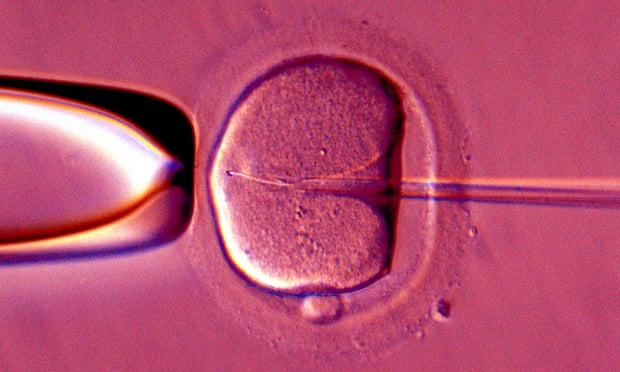
        An article from Times talks about how a woman in Athens, Greece gave birth to a healthy baby boy after many failed cycles of IVF. The baby was conceived using a technique called maternal spindle transfer, which is where the biological mother's DNA is removed from the egg and placed into a donor egg that has been emptied of the donor's DNA. The egg was than fertilized and transferred as an embryo for the pregnancy. This technique has been used in a handful of rare cases where the mother has a mitochondrial disease, and this technique allows them to have children without the disease. This baby boy has DNA from his biological mother, his father, and he has mitochondrial DNA from the egg donor. 

    Seeing that this method was successful, scientists are beginning to wonder if mitochondria play a bigger role in fertility treatments beyond those who have mitochondrial disease. They are planning to look deeper into the effects that different mitochondrial genes can have on children, and it's use in helping with families that struggle with fertility. 

        I find this very interesting and think that is an amazing feat in science and could be a way to help women with fertility issues to have children. I also think this research may help to find other reasons for fertility issues and that this may help with other fertility treatments in the future. 

Link to other births with maternal spindle transfer

Friday, August 6, 2021

Genetic variations could one day help predict timing of menopause


     Coloured scanning electron micrograph (SEM) showing cells coloured pink and brown.Recent studies have shown that there are numerous genetic variants that are involved in determining the age of the onset of menopause. People who are born with ovaries have a set number of oocytes that will either mature into eggs or be destroyed if they contain damaged DNA. As these people get older, the number of these cells continues to decrease until this store of eggs is completely gone and menopause sets in. Researchers have found 290 different variants that determine when that store of eggs will become depleted. The biggest gene to affect this is CHEK2, which can delay menopause for a few years by affecting the CHEK2 protein. Researchers are looking into how they can target this gene in order to help women who want to have kids later in life. This study has only been done in mice so far but one day they hope to be able to see it in humans. 

https://www.nature.com/articles/d41586-021-02128-y

https://www.sciencedaily.com/releases/2019/06/190612110127.htm


Thursday, December 5, 2019

A Baby Was Born With DNA From 3 People

A technique where the mother's DNA is removed from her egg and then placed inside a donor egg from another woman is called maternal spindle transfer. The egg is then fertilized and evolves into an embryo and is then transferred for pregnancy. A woman who had many failed cycles of IVF was able to give birth to a healthy baby boy, with this technique. According to Dr. Jonathon Tilly, mitochondria plays a key role with the development of embryos and fertilization. An abundance of data gathered suggests that people who have an infertility/ poor egg and embryo condition have mitochondrial dysfunction or deficiency.

I think this is a very interesting topic, many times infertility is blamed on other things such as birth control (which have no proven side affects of this), but a mitochondrial dysfunction/ deficiency makes sense. I also think it is great that there have been successful cases with the spindle transfer technique. I hope this can help many women in the future who have trouble with infertility and seek to have children.

Image result for baby

https://time.com/5569057/three-parent-baby-dna/

Related Article:
https://www.newsweek.com/assisted-reproduction-ivf-maternal-spindle-transfer-three-parent-babies-1302044

Monday, April 15, 2019

A Baby Born with DNA from Three People

TIME recently published an article about the success of maternal spindle transfer and how the technique may change reproductive medicine. Maternal spindle transfer was used by researchers at the Institute of Life in Athens, Greece to help develop an embryo for a woman who had experienced four failed cycles of IVF.  The technique of maternal spindle transfer involves removing the grouped DNA from the mother’s egg and implanting it into a donor egg which has had its DNA removed. After the mother’s DNA has been transplanted into the donor egg, the egg is fertilized and developed into an embryo. This technique allows researchers to avoid issues with the mother’s egg that were preventing the formation of a viable embryo. Researchers believe that donor mitochondria are one of the reasons maternal spindle transfer has been successful. Recent research has shown that mitochondria play a large role in reproduction, especially with fertilization and growth of embryos in older women. Maternal spindle transfer has been used in the Ukraine to help women with mitochondrial diseases start families, however, this is the first time the technique has been used on a woman with no known mitochondrial issues. Researchers at the Institute of Health do not see maternal spindle transfer becoming the newest trend in assisted reproductive technology (ART). It is more likely that this technique will be used to help researchers learn what goes wrong in an egg as a woman ages and what steps can be done to reverse these changes. 
While this technique may be able to help some start a family, there are some ethical dilemmas that need to be worked through for this method. This technique is very new and there is not enough research available to understand if there will be lasting consequences or side effects from introducing a third set of DNA into an embryo. While the baby was born healthy, will he face medical issues later in life because of how he was conceived? Also, all of this research has been conducted in Europe because it would be considered illegal in the U.S. United States law prohibits altering the genetic makeup of an embryo. Between the development of CRISPR, gene editing, and techniques like maternal spindle transfer, the United States government needs to reevaluate its policies and adjust them for the technologic advancements that have been made. Personally, I am opposed to allowing maternal spindle transfer here in the U.S. I feel that the lack of research and unknown consequences justify stopping research on this method. 

Tuesday, March 21, 2017

First License for Three-Person Baby Granted in UK


Image: Guardian article, photograph by Alamy

Yes, you read that correctly. A three-person baby (AKA, a baby that has DNA from three people) isn't something new. In fact, a girl named Alana Saarinen is one of the first people to have DNA from three parents (mother, father, and mitochondrial DNA from female donor). Her parents used a fertility treatment called cytoplasmic transfer to have her in the 1990s. However, creating babies using IVF is a new method being used today. Doctors in Newcastle, UK were granted licenses to perform IVF three-parent treatments. What doctors and families hope with three DNA is to essentially eliminate the possibility that their child will be affected by devastating genetic diseases caused by defected mitochondrial DNA in the mother. 
The idea of having children with DNA from three people has been shrouded in controversy since its inception, but it is an interesting topic. It will be exciting to see how successful the treatments are with regards to diseases in children after birth. 

Sunday, February 5, 2017

Will deer sterilization thin a local herd?

http://www.pressofatlanticcity.com/will-deer-sterilization-thin-a-local-herd/article_ffdaa0be-4263-5e29-a04c-4f1c909c5126.html
http://www.whitebuffaloinc.org/deer-management


A group of volunteers in Clifton, Cincinnati recently finished sterilizing does in the residential areas. The Clifton Deer Fertility Control Pilot Program is in its second year of capturing the females and sterilizing them to prevent any further births. The neighborhood says a local herd has grown tremendously, and are being destructive towards the land. This idea was proposed because the people did not want the park to permit bow-hunting of the animals. The neighborhood hired The White Buffalo Company  to sign off on this three year pilot program. The results indicate that there are fewer disturbances from the herd, and there are less fawn than the previous years.

This was an interesting article to read, and although this program is the alternative to hunting the animals, I do not agree with the permanent sterilization. I believe, by not allowing the does to reproduce, the people are taking away a key characteristic of their lives. The does should be allowed to reproduce and have their own fawn. I think using animal birth controls, during the right seasons, would be more beneficial. This program does not seem like a humane solution to their problems.

Tuesday, April 22, 2014

Discovery of New Protein Launches Revamped Fertility Treatment

According to this article, scientists at Wellcome Trust Sanger Institute have discovered a protein vital for fertilization located of the egg cell.  Previously the protein required for fertilization located on the sperm cell was discovered and named Izumo.  Researchers had been curious about the Izumo protein counter part.  This newly discovered egg cell protein is named Juno after the Roman Goddess of love and fertility.  These two proteins are vital for the fertilization of mammalian eggs that lead to a growing organism.  Any organism lacking these proteins, naturally males who lack Izumo and females who lack Juno, will be infertile.  The bond made between Juno and Izumo, though weak, is essential for the creation of life.  After fertilization it is known that the egg will no longer recognize any other sperm.  This may be related to the fact that the Juno protein disappears from the surface of the egg after it is fertilized.  Doctors can now test for the absence of this protein in order to determine the possible cause of infertility in women.  This new discovery will also help scientists research new and improved contraceptives as well as fertility treatment, changing the genetic world.


This research is such an important discovery in the medical field.  Doctors will now be able to improve fertility treatments in order to help women become pregnant.  Today, so many women are unable to conceive and it is a traumatic experience for both the woman and her husband.  It causes an enormous amount of stress, but all this stress could be alleviated by this discovery of the Juno protein.  Scientists can revamp fertility treatments and thus make so many women mothers.  On the other side of the spectrum new contraceptives could be created that would  affect the functioning of the Juno protein.  Overall I believe this discovery, and new research to come, will be extremely helpful and vital to today's society.

Sunday, March 30, 2014

Would you rather live longer or be able to have kids?

If you had the choice between staying alive longer or having children, what would you choose? The idea that fertility and longevity was first proposed by gerontologist Tom Kirkwood in the 1970s. His idea was called the "disposable soma" hypothesis and proposed that we have a limited amount of energy in our bodies that can be used to either repair damaged cells, or saved to allow us to reproduce. Thirty years later while studying the behavior of worms, biologist found that worms have a hormone, IGF-1, that controls when they go into hibernation. Scientist then found the same hormone in mammals, including humans, which controls the way energy is used. When IGF-1 production is low or turned off,  energy allocation is switched from the reproductive organs, to the DNA repair and maintaining the body. In an experiment where mice's ability to produce IGF-1 was shut off, it was seen that these mice lived longer than the control mice but they were also infertile. It was also found that middle-age adults with high levels of IGF-1 were at more of a genetic risk of getting Alzheimer's disease.
            This is going to be a very interesting dilemma for people in the future. The only problem is there isn't one true way to shut off IGF-1. For the mice, scientist put them on a very low calorie diet but now research is being done on a new substance called resveratrol which is found in red wine. So it might actually that getting drunk might help us live longer. Also this might help the problem that may come up in the future that too many people will be on the Earth but there will not be enough resources.

Sunday, April 21, 2013

A way to predict crossing over


Medicalnewstoday released an article about sexual reproduction and crossing over. Neil Hunter and his researchers at the UC Davis College of Biological Sciences have been studying a specific gene. Numerous amounts of genetic studies show that when women make more crossovers they tend to have more children. Studies also show that when a low amount of crossovers are formed gametes may have the incorrect number of chromosomes, and this can cause infertility or chromosomal diseases for the baby. This gene, Rnf212, is said to control crossover numbers in humans and is vital for crossing over in cells of mammals. Hunter explains in a quote in the article that there is not a distinctive site for crossing over to occur since it can occur almost anywhere on a chromosome. He also mentions that there has to be on and that there always is one way. After a series of experiments in mouse cells the research team found out that Rnf212 protein can define where crossovers will occur. The point of crossover is found when the protein binds to one or two recombination sites on each chromosome, which is where it triggers the buildup of protein structures that complete the cutting and entwining of DNA. When the researchers examined mice without the gene for Rnf212, they found out that the mice were sterile, and that a low amount of crossovers happened. This discovery about the infertile mice could be a way to understand a few causes of infertile humans.


http://www.readcube.com/articles/10.1038/ng.2559


http://www.nature.com/ng/journal/v45/n3/full/ng.2541.html


Monday, November 12, 2012

Three-parent fertility method could remove gene defects

A new method developed by Oregon biologists may keep babies from inheriting rare diseases carried by maternal genes. They produced early-stage human embryos from three parents. This sounds shocking and fascinating all at the same time. The gene transplant researchers were led by Masahito Tachibana of the Oregon Health & Science University in Beaverton. The embryos that they produced contained healthy version of mitochondrial DNA. Mitochondrial DNA primarily comes from the mother.  According to the article, defects in these genes can cause diseases that involve muscle weakness and brain abnormalities. These kinds of abnormalities occur in 1,000 to 4,000 births every year nationwide. Bioethicist Kevin Smith sees this new approach as an opportunity for women with affected mitochondrial genetic disorders to produce healthy children. It should be noted that the researchers do not intend to produce children with the engineered embryos.

[caption id="" align="aligncenter" width="560" caption="A white blotch in the tube at right is DNA that has been removed from a human egg, center. The red dot is from a laser used in the procedure. Scientists have successfully transplanted DNA between human eggs and grown them into early embryos. (Photo: Oregon Health & Science University via AP)"][/caption]

In the Nature journal study, researchers inserted chromosomal genes from women into 65 donor eggs and then fertilized them with sperm. By taking the genetic nucleus out of an egg fertilized by two parents and implanting it into another egg with no history of mitochondrial diseases, they can remove the mitochondrial genes in the first mother's egg out of the reproduction equation.

People who should benefit from this new discovery are parents who already have children with mitochondrial diseases.  However, more testing has to be done as well. The study calls for animal testing aimed towards federal approval of safety trial at fertility clinic. As you may know, this study does come with some backlash. The British bioethics council reports that the procedure could be called ethical if proven to be safe. The U.S. Conference of Catholic Bishops criticized studies similar to the one in the Nature journal for the destruction of human embryos.  Even this has the potential to receive severe backlash, I would love for the study to continue. This could lead to elimination of some diseases that can be devastating to a family.  I would like to hear more about this study and I wonder if it will get approval by the Food and Drug Administration.  I don't think it will, but we will see.  The desturction of embryos is barred by law from receiving federal research funding.