 |
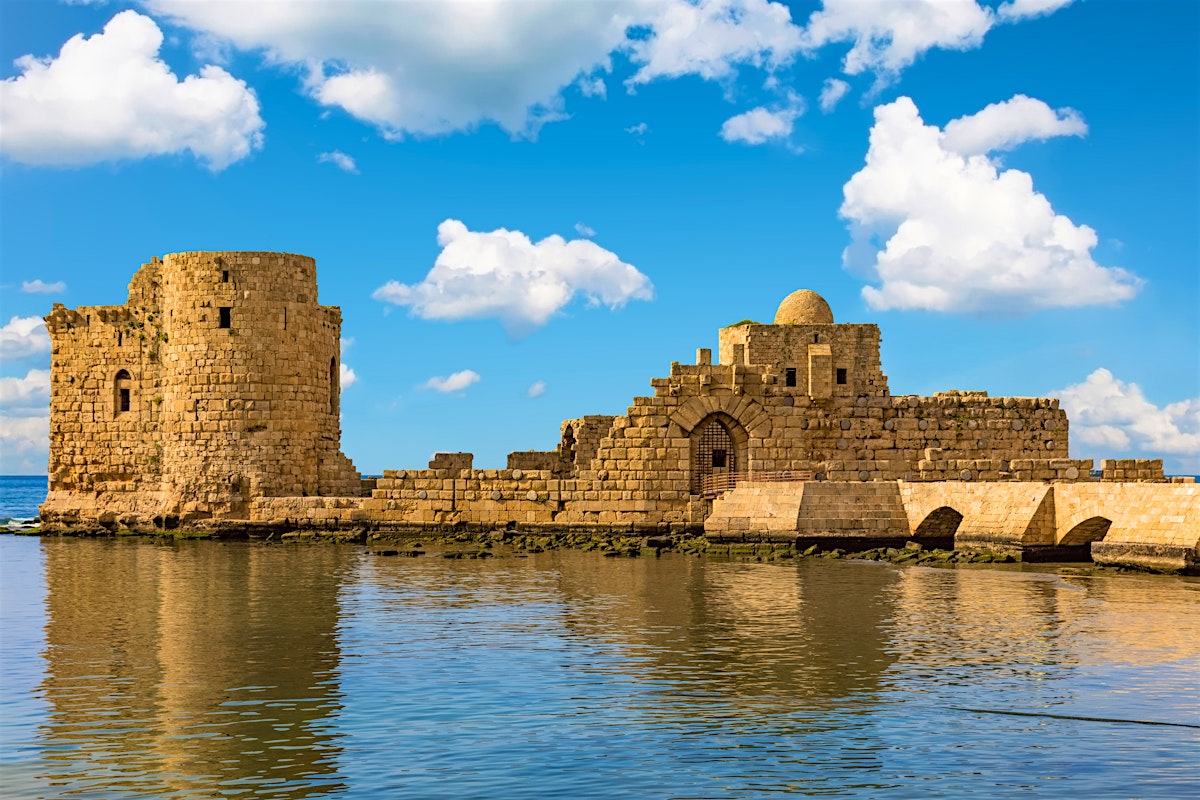
| A 13th century sea castle built by Crusaders in Sidon, Lebanon. |
During those late medieval centuries, soldiers and civilians from Europe were pouring into the Levant, a region in West Asia that borders the Mediterranean Sea. They had arrived seeking to control holy sites that were sacred among all the Abrahamic religions (Christianity, Judaism, and Islam). With their arrival, however, came the murder and displacement of native populations, most of which who were Muslim. This was the time of a series of religious wars, known collectively as the Crusades, that would span 200 years. The date on the Italian coin, the location, and radiocarbon dating of the material from the mass grave points to idea that these men were presumably soldiers of the Seventh Crusade who had died in a failed battle at Sidon in 1253. This war was led by the French king Louis IX.
Geneticist Marc Haber and his colleagues from the Wellcome Sanger Institute obtained DNA sequences from nine of the skeletons. The results of their genetic analysis were astounding. The Crusader armies were much more ethnically diverse than historians had previously believed. In fact, when they compared the DNA of the soldiers to reference databases of modern people’s DNA, they found that three were probably European (two Spaniards and one Sardinian), four were probably Lebanese, and the final two were intermediate between European and Near Eastern.
The last two individuals are evidently of mixed ancestry. When the researchers then analyzed the Y chromosome and Mitochondrial DNA sequences, they discovered that the three European and the two mixed ethnicity soldiers all belonged to Y chromosome haplogroups typical of Europe. However, the latter two had Mitochondrial DNA broadly found across both Europe and the Near East. This suggests that these men were most likely the children of European men who intermarried with local Near Eastern women, or that they were the children of parents who were of mixed ancestries themselves.
This research truly illustrates how long the Crusades lasted. For two hundred years, men from many cultures converged in one place to live, fight, and die together, united by the same religious goal. During their lives, these groups of people forged lasting connections with one another despite coming from different places. This multicultural brotherhood is evident in the genetic legacy they passed on to subsequent generations of Crusaders, born of intermarriages.

