Showing posts with label History. Show all posts

Friday, July 30, 2021

Cancer Comparisons from Medieval to Present

 Medieval bones yield 1000-year-old leprosy genome | New Scientist


Since the dawn of technology and advances in science, it can be commonly believed that the cause of cancer comes from almost anything modern, like cigarettes, modified nutrition, machinery, and radiation, etc. The University of Cambridge has trumped that belief by using X-Rays and CT scans on medieval bones to search for osteosarcomas, which in deed do exist. "The investigators found rates of cancer about 10 times higher than had been previously discovered through examining only the bones' exteriors for lesions." The researchers found signs of cancer mostly in the pelvis. They projected a higher estimate of 9% to 14% because CT scans detect bone metastases about 75% of the time, and only one-third to one-half of cancer deaths involve spread to the bone.

Jenna Dittmar, an archeologist at the University of Aberdeen in Scotland had mentioned, "Until now it was thought that the most significant causes of ill health in medieval people were infectious diseases such as dysentery and bubonic plague, along with malnutrition and injuries due to accidents or warfare." In reality, in modern Britain, about 40% to 50% of people have cancer by the time they die, and it has been that way since back in 3000 BC.

Cancer is not new, and has its own ways of starting regardless of human artificial factors.


Links:

https://www.usnews.com/news/health-news/articles/2021-04-30/cancers-far-more-common-in-medieval-times-than-thought

https://www.cancer.org/cancer/cancer-basics/history-of-cancer/what-is-cancer.html


Sunday, July 4, 2021

Genetically Generated Guessing Game

 The age of AI and computer generation has constantly been improving, and as a showcase of some of their latest advancements, scientists used their knowledge and technology to generate this image, solely from the tested DNA from the long-decayed body of the subject. Can you guess who this is?

https://www.mythicalrose.com/2021/01/egypt-8-who-is-this.html?m=1

https://www.orthobullets.com/pediatrics/4062/clubfoot-congenital-talipes-equinovarus

Thursday, December 10, 2020

Using History to Study Genetics


History and historical records can be used to learn about genetics. This lesson on genetics is brought to us by the Habsburgs, a royal dynasty that lasted from roughly 1450 to 1750. And what is this lesson you might ask. Why, incest and inbreeding coefficients, of course! To keep the “blood pure”, there was a lot of inbreeding amongst family members. The effects of this inbreeding are well documented, such as the “Habsburg Jaw”, where some of the descendants down the line (most notable King Charles II, King of Spain), had an enlarged lower jaw, which made it difficult to speak and eat. It also made King Charles II drool quite often. Another interesting piece of information is that looking at the family tree, King Charles II and Marie Antionette had such high inbreed coefficients, that their coefficients would have been lower if their lineage just had their parents as siblings! To put this into better terms, the Nature article states, “Marie Antione of Habsburg, daughter of Emperor Leopold I and his niece Margaret of Spain (sister of Charles II of Spain), had an inbreeding coefficient of 0.3053, which is higher than the inbreeding coefficient of the progeny of an incestuous union (parent-offspring or brother-sister)”. I enjoyed learning about this topic, and found it very interesting just how inbreed some of these people were. Though there are probably more important things to analyze history for this is, in my opinion, one of the more entertaining things to learn about.


Wednesday, November 25, 2020

Genetic Variations in Africa


        Since Africa has always had a large population there has been a theory that all human have descended from the continent. However not many individuals from Africa have been asked to participate in genetic studies to see if this is true. Zane Lombard and his colleagues studied 426 individuals from 13 African countries to see if their genomes could show any signs of variations that would help prove this theory. They ended up discovering over 3 million new variations as well as many regions of Africa that have shown signs of natural selection. Studying genomes of these individuals is important because it helps to see how past individuals migrated to different places around the world. According to this study, Zambia was a very popular migrant place. In my opinion it's quite obvious that Africa was a big pool of human descendants and hopefully more individuals from different African countries participate willingly so scientists can discover more about humanity.


https://mg.co.za/opinion/2020-11-24-africa-study-finds-three-million-new-genetic-variations/

https://www.nature.com/news/2000/001207/full/news001207-8.html#:~:text=Researchers%20led%20by%20Ulf%20Gyllensten,about%20170%2C000%20years%20ago1.


Wednesday, May 1, 2019

Medieval Crusaders Were Very Diverse Based on Recent DNA Analysis

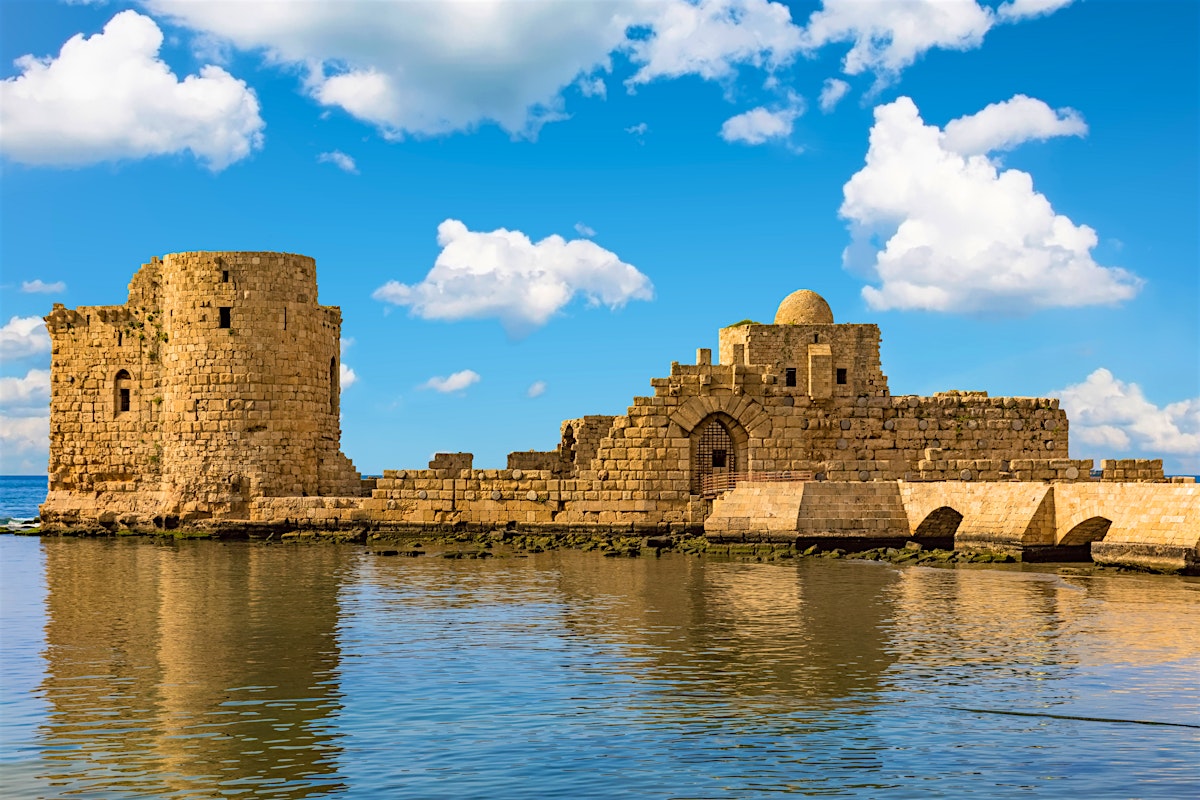
A 13th century sea castle built by Crusaders in Sidon, Lebanon.

In a mass grave around the ruins of the Castle of St. Louis, just outside the city of Sidon, south Lebanon, the burnt skeletons of roughly 25 soldiers were found. The castle was a stronghold for the Crusaders from the 12th to 13th centuries. Based on the evidence that many suffered violent deaths and the origin of artifacts that were found – an Italian coin minted in 1245 and European belt buckles, it was concluded that these were Crusader soldiers.


During those late medieval centuries, soldiers and civilians from Europe were pouring into the Levant, a region in West Asia that borders the Mediterranean Sea. They had arrived seeking to control holy sites that were sacred among all the Abrahamic religions (Christianity, Judaism, and Islam). With their arrival, however, came the murder and displacement of native populations, most of which who were Muslim. This was the time of a series of religious wars, known collectively as the Crusades, that would span 200 years. The date on the Italian coin, the location, and radiocarbon dating of the material from the mass grave points to idea that these men were presumably soldiers of the Seventh Crusade who had died in a failed battle at Sidon in 1253. This war was led by the French king Louis IX.


Geneticist Marc Haber and his colleagues from the Wellcome Sanger Institute obtained DNA sequences from nine of the skeletons. The results of their genetic analysis were astounding. The Crusader armies were much more ethnically diverse than historians had previously believed. In fact, when they compared the DNA of the soldiers to reference databases of modern people’s DNA, they found that three were probably European (two Spaniards and one Sardinian), four were probably Lebanese, and the final two were intermediate between European and Near Eastern.


The last two individuals are evidently of mixed ancestry. When the researchers then analyzed the Y chromosome and Mitochondrial DNA sequences, they discovered that the three European and the two mixed ethnicity soldiers all belonged to Y chromosome haplogroups typical of Europe. However, the latter two had Mitochondrial DNA broadly found across both Europe and the Near East. This suggests that these men were most likely the children of European men who intermarried with local Near Eastern women, or that they were the children of parents who were of mixed ancestries themselves.


This research truly illustrates how long the Crusades lasted. For two hundred years, men from many cultures converged in one place to live, fight, and die together, united by the same religious goal. During their lives, these groups of people forged lasting connections with one another despite coming from different places. This multicultural brotherhood is evident in the genetic legacy they passed on to subsequent generations of Crusaders, born of intermarriages.

Friday, April 6, 2018

The Genetic Lineages of the Modern heirs of the Incan Empire

A team consisting of members from across South America has recently published the first genetic study on the modern descendants of the imperial Inca lineages. The Inca arrived in the Cusco valley and established the largest empire in the Americas, Tawantinsuyu; which served as the cultural center of the Andes for six thousand years. However, despite the vast collections of archaeological and cultural findings, the history of these people vanishes in time due to the lack of a proper writing system. The DNA of mummified remains could have helped the researchers, however most were burned or buried in unknown locations when the Christian conquistadors were persecuting these people. Fortunately, most of the Inca noble families' descendants still live in South America and are the most homogeneous group of Inca lineage. These individuals were studied looking for markers on the Y chromosome and the mtDNA, the results were then compared to the natives from Peru, Bolivia, Ecuador, and Brazil. "The results show distinctive patrilineal origins to two founder individuals who lived between 1000 to 1500 AD, a period between the decline of former Tiwanaku (south) and Wari (north) contemporary empires, and the rise of the Inca empire a few centuries later," says geneticist Fabricio Santos from the University Federal de Minas Gerais. The work also showed that the mtDNA varied widely, suggesting that arranged marriages with neighboring people to form bonds betweens nobles across the empire.
I think its incredible that these Inca families are still showing continuity since before the Americas were "discovered". I also think its very important to study these groups of people, it is a good feeling when you know some history about your past and the people you come from. The colonization of the globe by europeans, really messed this up for people across the globe. Not only were the lives of these people ruined but it makes many feel like they don't fit in anywhere and do not know their family history. Of course the people of South America are not the only ones studies like this should continue around the world.  


https://www.history.com/topics/inca
Read more at: https://phys.org/news/2018-04-genetics-modern-heirs-inca-lineages.html#jCp

Monday, May 1, 2017

How Old is Smallpox Really?


     According to research by an international team of researchers Smallpox might have merged way later then we previously thought. Tissue samples were taken from a Lithuanian child mummy that us dated back to the 1600's. It was concluded that the cause of death was smallpox, but not exactly the strain we cause just a hundred years ago. Reconstructing the full RNA sequence of the smallpox virus strain and compared the results to more recent samples. With this information the team was able to make a time line of the smallpox virus and piece together information about the different strands. While looking at the timeline for the diseases the rate of mutations was also studied and their was found to be two major strand groups, and all related back to a simple common ancestor.  With the information uncovered about the common ancestor it was evaluated that smallpox must have not always been such an epidemic. If small pox had been an epidemic for the thousands of years that it has been around researchers would not have been able to find a common ancestor since it would have diverged tremendously over time. 
     This article is extremely fascinating because with a small sample from a mummy that is thousands of years old they were able to make a time line for small pox and better understand how the virus grew and mutated. With more data like this hopefully we can come to better understand how viruses are spreading so rapidly and diverging out of nowhere. With this knowledge we can better understand and develop more vaccines and save thousands of lives.  

For more information on the history of smallpox go to - https://www.cdc.gov/smallpox/history/history.html

Main article: http://blogs.discovermagazine.com/d-brief/2016/12/08/child-mummy-smallpox-timeline/#.WQfiYIn5601 

Friday, September 23, 2016

Vikings Gave Us Smooth Riding Horses

            Have you ever ridden on a horse and the ride was just really “bumpy?” Chances are the horse you were riding on did not have the DMRT3 gene, otherwise known as the “gaitkeeper” gene.
Horses have long been a way in which human beings have been able to travel far distances. During the early centuries of mankind, horses were mostly used for transportation as well as a “vehicle” for riding into battle. Today, horses are prize animals showcased in equestrian competitions and the Olympics. Interestingly enough, there is one thing that you might not be able to see in Olympic competing horses: ambling. Why is that? The answer: Genes.
There is a certain breed of horses that are known to be able to amble, which is a type of gait that is not as fast as a gallop but faster than a walk which provides riders with a much smoother ride (See video for ambling). Evolutionary geneticist Arne Ludwig and others from the Institute for Zoo and Wildlife Research in Berlin analyzed DNA from the remains of 90 horses some of which dating back to the 9th century. They discovered that some of these horses contained this “gaitkeeper” gene which allowed horses to amble smoothly over long distances. This gene mutation was also found in early Icelandic horses but interestingly enough, not in any other horse remains found from the same time period in mainland Europe. The gene mutation DMRT3 has been viewed by researchers as a controller of the expression of genes in neurons that coordinate muscle movement allowing for the horses to amble.


Although just a theory, it is believed that the Vikings were the ones to first use these ambling horses and began to introduce them into the trading market of the 9th century as far as the Middle East and Caspian Sea. With that in mind, the introduction of ambling horses for transportation revolutionized journeys over long distances for humans. Not only did these ambling horses make traveling smoother, it also allowed travelers to journey longer without having to stop to rest from the “bumpy” ride of horses without the DMRT3 gene, making trips much faster. To this day, there are many breeds of horses that contain the DMRT3 gene. So the next time you want to go horse-back riding, get a genetic sequence of the horses to find the ones that will provide you with a smooth ride.

(http://www.nytimes.com/2016/08/11/science/horses-gaits-ambling-vikings.html)