Showing posts with label mouse. Show all posts

Thursday, September 18, 2025

The Gene for Hands Also Codes for What?

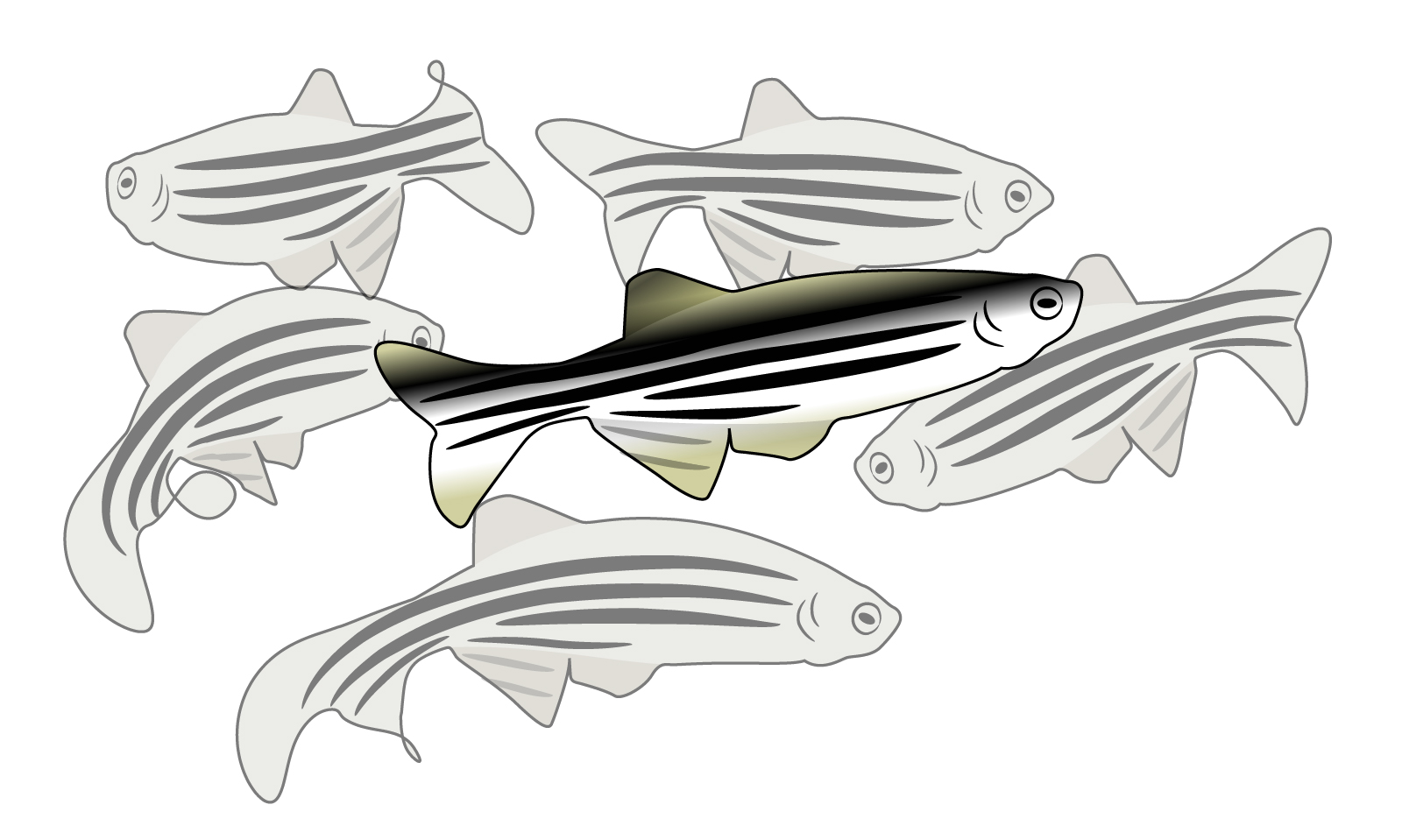
 In this NYT article, "How Did Hands Evolve? The Answer Is Behind You.", scientists had discovered a strange connection between the stretch of DNA called 5DOM that had been found in both mammals and zebrafish. It was found by Dr. Duboule and his colleagues, who were looking at molecular locks that sat along 5DOM. They had snipped 5DOM out of the DNA of a mouse embryo, and it ended up developing legs, but not feet. This led to more questions about when this section of DNA came about in animals, so Christopher Bolt, a graduate student at the time, looked through the zebrafish's genome and found 5DOM there too. This suggests that this set of genes was also present in the primordial ancestor of zebrafish and mammals.

 Dr. Hintermann took over the research and, using CRISPR, removed the 5DOM molecular locks from zebrafish embryos. The deletion didn't have much of an effect on the development of fins, but it did affect the development of the cloaca. When looking back at the same area in mouse embryos, the researchers discovered that the sequence codes for the urogenital sinus in mammals. Scientists are proposing that 5DOM went through evolutionary change, since it is easier to recode than to build a whole new sequence. Both structures that form are extremities that developed towards the far end of the body as well. There is more research needed on exactly why this change in 5DOM came about, but this is a starting point.
 Researchers are slowly finding more pieces of how the different gene codes for mammals came about with the shift onto land. This discovery at least gives a jumping point for how connected animals are and where mutations could have taken place in DNA, or how adapting to environments could have played a role in this.

Friday, November 18, 2022

Fluorescent Mouse Blood Helping to Find Brain Diseases

Albumin Protein


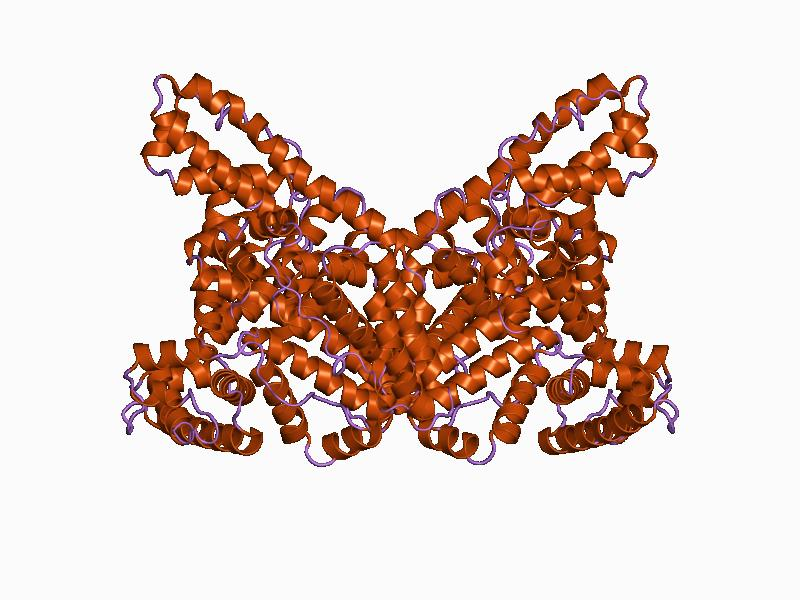
Scientists conducting a study with mice at the University of Copenhagen have discovered a way to make the mice's blood fluorescent so that it can be seen as it moves through the body and brain. The process works with a protein produced in the liver called albumin. The researchers took a gene on a fluorescent protein and attached it to a gene of albumin. The modified albumin is then inserted into a genetically modified virus and the virus is injected into a mouse's tail, which has large blood vessels. The virus causes the mice no harm but enters the liver and tricks it into making the modified albumin which makes the blood fluoresce. As the blood moves throughout the body and goes into places like the brain, the flow of blood can be studied and analyzed to find out more about diseases like Alzheimer's, depression, and even strokes. 

The new fluorescent blood method is a game changer for these types of studies because it lasts in the animal for months. Before this method, the main way to highlight blood and trace its flow was by chemical dyes and this lasted for only hours. Now blood can be traced over much longer periods of time and be used to trace long-term disease progression. The method is also being applauded by advocates for the ethical use of animals in research. The method is less painful and stressful for mice since it only requires one injection whereas the dye method required many reinjections since the dye disappeared over a few hours and had to be reinserted. 

I think this was very fascinating research and really showed how advancements in genetics have allowed for this great new type of technology to be developed. This new method of using fluorescent blood is a revolutionary development and I believe will be very helpful to researchers and tracing blood flow for years to come. Being less stressful for lab animals is another plus of this study and I feel is another important advantage of this new method. 

Monday, November 22, 2021

Monarch Predators Have Also Evolved to Withstand Toxic Milkweeds


Monarch butterflies are famous for their beautiful colors and their long migration patterns. They are also well known for being poisonous due to their consumption of the milkweed plant. A genetic mutation found in monarchs block the plant’s toxins while also allowing said toxic to accumulate in the insect. This mutation is found in 3 copies of a gene for the sodium-potassium pump and is critical to the monarch’s ability to tolerate the toxins of the milkweed found a group of researchers two years ago. This mutation, along with the monarch’s warning color has helped as a deterrent to hungry predators.

However, monarchs are not the only species that can tolerate the milkweed’s toxins. This article shows that four different predators of monarchs were recently discovered to have the same genetic mutation that monarchs have. These organisms are the black-headed grosbeak, the eastern deer mouse, a tiny wasp that parasitizes monarch eggs, and a nematode that parasitizes monarch larvae. All four organisms have at least one or more copies of the gene. The black-headed grosbeak and wasp has evolved single-nucleotide mutations in their sodium pump gene in two of the three locations where monarchs evolved the mutation. The eastern deer mouse and nematode have their changes in all three locations. Noah Whiteman, evolutionary biologist and member of the study, noted that this might be the first time we are seeing the same resistance mutations that have been found in the second and third trophic levels that evolved due to the second trophic level’s ability to feed on toxic plants. The team suspects that there are other organism in the food chain that begins with the milkweed that also have the same mutations found in monarchs.


Thursday, March 9, 2017

Can a Roommate's Genes Influence Your Health?

In this article it discusses how studies have now shown that a roommate's genes can influence and individuals health. Researchers have found that the genetics of a mouse cage mate can in fact affect its health in a number of ways. It has already been known and studied that social interaction like peer pressure contribute to health and disease. However, what researchers now are finding that ones genetic makeup can impact the traits of another. This concept has been identified as social or indirect genetic effects, but is still poorly understood. An example that the article made was a individual who is a morning person in comparison to their partner who is a night owl. The morning person could find themselves staying up later with their partner therefore inclining the morning person to stay up later resulting from an illness of lack of sleep.
I find this article interesting because I can see how interactions with others can influence behaviors which in turn can influence genes. When reading this article I thought of partners when together can influence weight gain. Myself personally have experienced and can see how this would influence my genetic make up.

Saturday, February 21, 2015

Human DNA Placed Into Mouse Embryos

Evolution of the human brain has always been a topic of interest for scientists over the years. Many have wondered how human brains have become so complex and why chimpanzee brains have lagged behind even though chimpanzees have almost all of the same genes that humans have. Scientists at Duke University have tackled this question and obtained some interesting results. More specifically, these scientists have found differences between chimpanzee and human genetic codes and observed how these differences affected embryonic brain development in mice.


For the study scientists focused on shorts pieces of DNA called enhancers that are a part of every genome. These enhancers regulate gene activity and are sometimes human specific. Until now none of these human specific enhancers had been shown to influence brain development directly.  The scientists searched through chimpanzee and human genomes to find enhancers that are expressed in brain tissue and early in development. Enhancers that were largely different between the two species were of high importance. In the beginning, 106 enhancers were narrowed down as being potentially important for discovering the differences in chimp and human brains. Out of these 106, 6 were thought to be involved in brain development. The enhancers were named HARE1-6, standing for human accelerated regulatory enhancers.  HARE5 showed the most promise as it is located near a gene, Frizzled8, which is known for its role in brain development and disease. The researchers directed their attention onto this enhancer and postulated that it enhanced Frizzled8 since HARE5 and Frizzled8 make contact in the brain.  


The HARE5 in humans and chimpanzees only differ by only 16 base pairs. However, the human enhancer was active earlier and more active in general in the mouse embryos than the chimpanzee enhancer. The activity differences between the two enhancers were detected at a critical time in brain development. The mouse embryos with the human HARE5 ultimately ended up with more neurons than those with the chimpanzee HARE5. As the mouse embryos developed more and more and came closer to the end of gestation the difference in size of the brains became noticeable. The mice that had human HARE5 had brains that were 12% larger in area than those that had the chimpanzee HARE5. The part of the brain that was affected was the neocortex. This part of the brain is involved in language and reasoning. 

This feat was astonishing, just narrowing down the enhancers in itself was a difficult and cumbersome task. Many other scientists have tried to do what the Duke University researchers did and failed. As a result of this successful study, a genetic reason as to why humans have bigger brains than chimpanzees has been discovered.

I feel that this is so interesting and awesome that it has finally been discovered. Humans are so closely related to primates, yet so different. It is interesting to realize that all of the differences are most likely due to some small change in the genetic code. I mean if just one different enhancer could make mice brains larger then imagine what a few differences could amount to. It is astonishing to think about the complexity of genes and how they work together to produce many different characteristics. 


Tuesday, April 8, 2014

Degenerated Mouse Organ Fully Restored


        Scientists have been researching a way to reverse the effects of aging on specific organs in the body of mammals, or more specifically- mice. Aging slows down regeneration in organs and causes shrinkage. Scientists first attempted to use sex hormones to pump up the regeneration process and increase size, but this method only temporarily worked and caused limited functionality in the restored organ. Scientists have now tried to engineer mice to react to chemical signals that will cause a gene, known as FOXN1, to ‘activate’ when prompted. This gene slowly comes to a halt with the aging process and is in charge of T-cells and the regenerative upkeep. They were successful and have, for the first time, fully regenerated an organ in a living animal. Scientists require further testing to make sure the organ is fully functional and the process can be controlled before attempting on human subjects.
        If scientists can keep this type of research up we may have a strong and accurate way of fighting most diseases right at the source. I do not necessarily agree with possibly using this treatment on humans in the future. In a world with over 7 billion people, we do not need any of them to live longer than they are biologically supposed to. To read more about the thymus, click here
 

Friday, November 22, 2013

Transgenic Monkeys: could be science's new Mouse!


The mouse has long been used in science to test a realm of different diseases and genetic mutations known to humans. More recently, scientists have began to move on to more complex organisms, such as this article features, like the Monkey. The creatures have both closer cognitive abilities to humans as well as social interactions that can be related more to humans. It is these components that researchers can take into consideration when observing the effects of the mutation or disease (that which had been grown in the monkey). Diseases such as Alzheimer's and autism are just two examples of a vast amount of possible mutations/diseases that can be found within the human genome that which scientists can insert into the monkeys. Although the use of monkeys in science is new, it could be the key to a world of answers. There are millions of people whose lives are effected everyday by things like autism, understanding how they happen is just the first step in being able to successfully treat them. Taking it one step further, the monkeys would also allow the scientists to test different treatment possibilities on the monkeys. This would be more beneficial to humans than testing the same treatments on the mouse.


Further information on using monkeys to do research on can be found at: http://whsc.emory.edu/home/publications/health-sciences/emory-health/winter09/monkey-models.html

Friday, April 13, 2012

Building A Better Mouse

Mice have been used in genetic research for decades. This is mostly due to the face that they have a  95% genetic similarity to humans. Though this is extraordinarily close, the 5% gap tends to produce many hurdles when trying to use mice to determine patterns in the human genome. This comparison is done by the technique called gene mapping which is an extremely tedious and difficult process, but can have some very powerful results if done correctly. Scientists at Tei Aviv University are trying to close this 5% gap by making mice more genetically diverse, allowing for them to became genetically even more similar to humans. This is going to be done through an international process called "Collaborative Cross". The goal is to create 1,000 different strains of mice with a fixed genotype. THe goal here is to take the 10-15 years it takes to accurately identify and work with a gene and shrink it to only 2-3 years which is an outstanding improvement if it can be accomplished. Hopefully, scientists will be able to accomplish working with genes up to 5 times faster than they are right now. This work has been published in Nature, Nature Genetics, and Genome Research, and receives most of its funding from the group "The Wellcome Trust" based in the United Kingdom. The goal is to use these mice to effectively research conditions such as cancers, diabetes, obesity, along with other conditions and mutations. Professor Iraqi, the leading man in this experiment, states that the mice will be available all over the world and available to order by researchers.

Saturday, March 31, 2012

Viking Mice

Where there’s a human, there’s a mouse. A house mouse to be exact. ScienceDaily posted an article displaying the “road trip” that house mice have taken with humans. By using genetic techniques on both ancestral and present day mitochondrial DNA from these mice, scientists were able to trace the timeline of mouse history.

It has been discovered that mouse colonization follows that of Viking colonization. When comparing mitochondrial DNA from mice from the Vikings time, approximately 10th to the 12th century, to present day samples, we are able to see the path these little hitchhikers took to get where they are today. Starting from Norway or the British Isles, they made there way, via Viking transportation, into Iceland and then into Greenland. In the article, a Dr. Eleanor Jones says that, "Human settlement history over the last 1000 years is reflected in the genetic sequence of mouse mitochondrial DNA. We can match the pattern of human populations to that of the house mice."