Showing posts with label zoonoses. Show all posts
Showing posts with label zoonoses. Show all posts
Wednesday, November 21, 2018
A Desperate Response to the West African Ebola Outbrake

Wednesday, March 18, 2015
Genetically Modified Cattle Show Resistance to Tuberculosis.
Research performed at Northwest A&F University in China produced the first genetically modified (GM) cattle resistant to tuberculosis. The cattle produced were more difficult to infect and were largely protected against the actual symptoms of the disease. Myobacterium bovis is the bacteria responsible for bovine TB, which is a close relative to the bacteria that causes TB in humans. Bovine TB affects several species worldwide other than cattle and currently, the only methods of controlling the disease are culling or placing the animals on antibiotics, which can both be extremely costly and/or devastating. When one cow shows up positive for a TB test, usually the entire herd is culled to prevent possible other positives, and human transmission. In undeveloped regions, there is no effective control of the disease, and it can spread to humans via drinking an infected cow's unpasteurized milk.
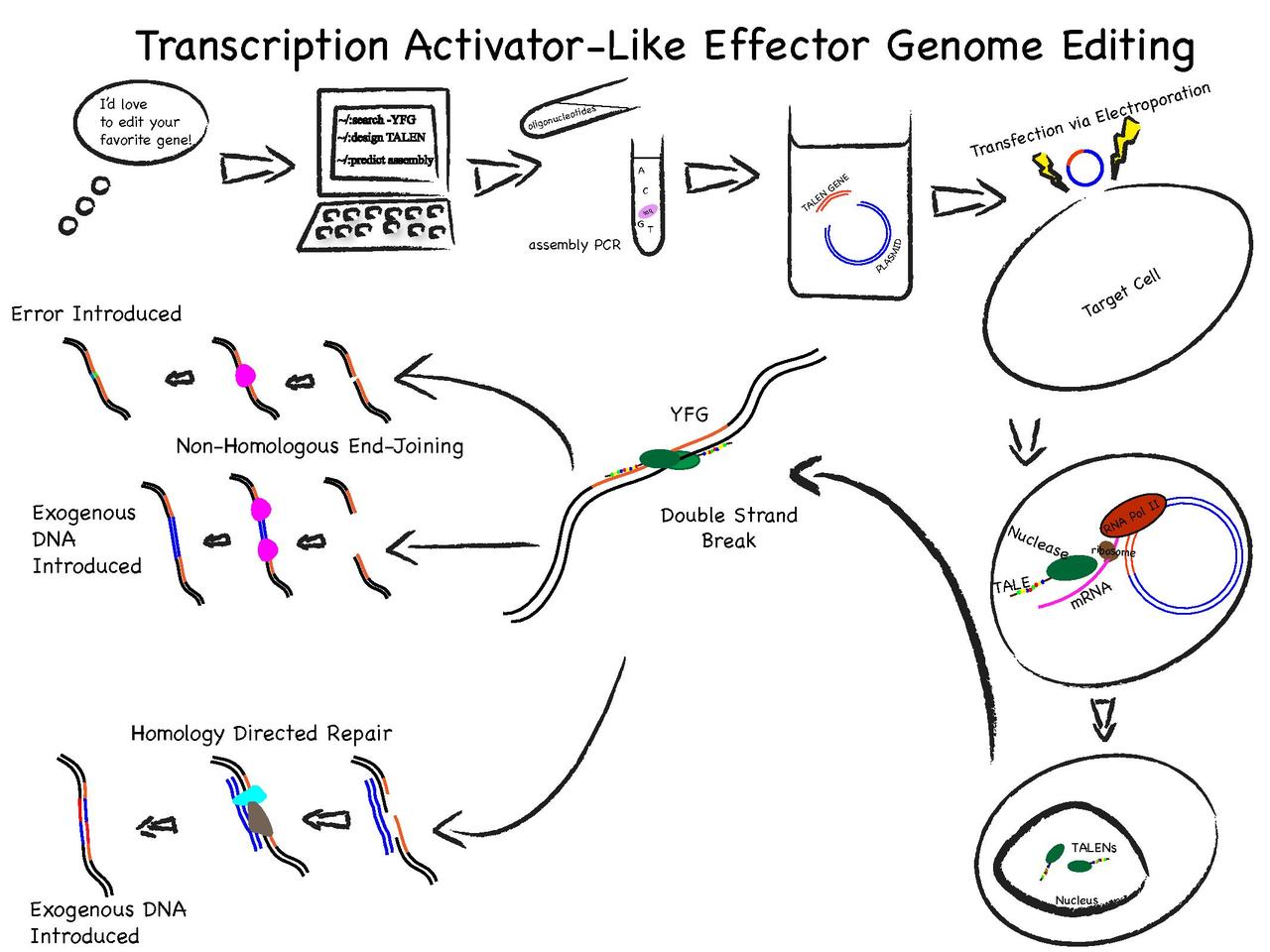
The researchers deleted naturally occurring genes and inserted mouse gene SP110 into Holstein-Fresian cattle DNA using a technique called TALEN. In mice, SP110 helped protect them against TB transmission. 23 GM calves were produced. 13 calves lived into adulthood, and when their cells were studied, they showed higher resistance to M. bovis than cattle that were not genetically modified. The next step of the study was to introduce M. bovis into the lungs of 3 of the 13 GM cattle and 3 control (non-GM) cattle. Out of the GM cattle, 1 showed no signs of TB and the other 2 had reduced lesions on their major organs from the disease after necropsy several weeks later. Next, 9 of the 13 GM cattle and 9 control cattle were housed together with animals infected with TB. 6 out of the 9 GM cattle were not infected and the remaining 3 showed very minimal symptoms. All 9 of the control cattle contracted TB and had extensive lung damage.

While this study did not prove complete resistance, researchers say it is a goal to develop disease-resistant livestock.
GMO, antibiotics, culling... all of these things are huge in the animal welfare and nutrition world. While I personally do not have any issues eating GMO's, I am skeptical as to how this affects the future generations of cattle that have the SP110 gene. Just because the cattle are resistant to TB does not mean they are resistant to other diseases and infectious organisms either.
This is a HUGE step in the right direction, even if some find it morally displeasing. I think we need better methods at controlling transmission other than one gene for one disease at a time. There are still "mad cow disease", west nile virus, and other pathogens that can wipe out an entire herd. In my opinion, the bigger feat here is controlling transmission possibly via sanitation and appropriate farming methods. I applaud the scientists that were able to accomplish this study with goals they had expected, and hope that this helps in the future of zoonotic disease control.
Original Article: TALE nickase-mediated SP110 knockin endows cattle with increased resistance to tuberculosis
The researchers deleted naturally occurring genes and inserted mouse gene SP110 into Holstein-Fresian cattle DNA using a technique called TALEN. In mice, SP110 helped protect them against TB transmission. 23 GM calves were produced. 13 calves lived into adulthood, and when their cells were studied, they showed higher resistance to M. bovis than cattle that were not genetically modified. The next step of the study was to introduce M. bovis into the lungs of 3 of the 13 GM cattle and 3 control (non-GM) cattle. Out of the GM cattle, 1 showed no signs of TB and the other 2 had reduced lesions on their major organs from the disease after necropsy several weeks later. Next, 9 of the 13 GM cattle and 9 control cattle were housed together with animals infected with TB. 6 out of the 9 GM cattle were not infected and the remaining 3 showed very minimal symptoms. All 9 of the control cattle contracted TB and had extensive lung damage.
While this study did not prove complete resistance, researchers say it is a goal to develop disease-resistant livestock.
GMO, antibiotics, culling... all of these things are huge in the animal welfare and nutrition world. While I personally do not have any issues eating GMO's, I am skeptical as to how this affects the future generations of cattle that have the SP110 gene. Just because the cattle are resistant to TB does not mean they are resistant to other diseases and infectious organisms either.
This is a HUGE step in the right direction, even if some find it morally displeasing. I think we need better methods at controlling transmission other than one gene for one disease at a time. There are still "mad cow disease", west nile virus, and other pathogens that can wipe out an entire herd. In my opinion, the bigger feat here is controlling transmission possibly via sanitation and appropriate farming methods. I applaud the scientists that were able to accomplish this study with goals they had expected, and hope that this helps in the future of zoonotic disease control.
Original Article: TALE nickase-mediated SP110 knockin endows cattle with increased resistance to tuberculosis
Tuesday, January 27, 2015
Mice Cured of Rabies after Virus Reached Infectious Stage.
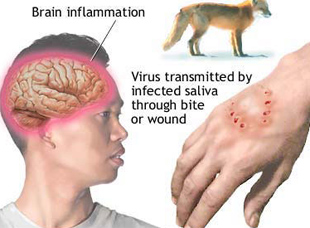
Rabies is a global neurological zoonotic virus that is entirely preventable with appropriate vaccinations. This infection is usually deadly due to the body succumbing to the effects of brain swelling and spinal cord trauma. Transmission is via saliva (bite wounds being most common) and in humans, signs sometimes don't show for up to one year. Most animals show signs and die in 14 days.
Researchers at the University of Georgia have developed a new vaccine against rabies using a slightly different approach compared to the conventional modified live rabies vaccine. A surface protein from the Rabies virus was inserted into a completely different virus called "PIV5", which stands for canine parainfluenza virus 5. Canine parainfluenza is a very common upper respiratory virus transmitted between domesticated dogs and wild canines. PIV5 delivers the rabies protein to the immune system and enables the body to start creating antibodies against the rabies virus. At this time, there are no concerns of human transmission of parainfluenza from this vaccine, as PIV5 is not a zoonotic or human virus. 6 days after rabies infection, the mice began displaying signs of rabies having spread to their central nervous system. 50% of the infected mice in this study showing signs of rabies were cured. Researchers are hopeful that this may be a safer vaccine for the future due to it only using surface proteins.
 Working in the veterinary field, I have seen more rabies positive
wildlife in the past 2 years than I have in the past 10 years, which exposes great risk to
our communities. About 10 days ago, the veterinary hospital I work for submitted a racoon for rabies testing and we were notified soon after that it was a positive specimen. Rabies is a real problem, and not enough people take it seriously. This is a fantastic revelation for rabies vaccine research and development. It was once thought to be hopeless to cure a person or animal infected with rabies once they showed the neurological deficits of the virus. Let this be a step in the right direction for advanced rabies treatment and possible cures. Please vaccinate your pets! Click here to find the closest free rabies clinic to you!
Working in the veterinary field, I have seen more rabies positive
wildlife in the past 2 years than I have in the past 10 years, which exposes great risk to
our communities. About 10 days ago, the veterinary hospital I work for submitted a racoon for rabies testing and we were notified soon after that it was a positive specimen. Rabies is a real problem, and not enough people take it seriously. This is a fantastic revelation for rabies vaccine research and development. It was once thought to be hopeless to cure a person or animal infected with rabies once they showed the neurological deficits of the virus. Let this be a step in the right direction for advanced rabies treatment and possible cures. Please vaccinate your pets! Click here to find the closest free rabies clinic to you!
Here is also an informative video of an actual rabies infected person.
Article: Beating the clock: UGA researchers develop new treatment for rabies
Additional Links:CBC - Rabies Structure of PIV5 Rabies Facts & Prevention
Researchers at the University of Georgia have developed a new vaccine against rabies using a slightly different approach compared to the conventional modified live rabies vaccine. A surface protein from the Rabies virus was inserted into a completely different virus called "PIV5", which stands for canine parainfluenza virus 5. Canine parainfluenza is a very common upper respiratory virus transmitted between domesticated dogs and wild canines. PIV5 delivers the rabies protein to the immune system and enables the body to start creating antibodies against the rabies virus. At this time, there are no concerns of human transmission of parainfluenza from this vaccine, as PIV5 is not a zoonotic or human virus. 6 days after rabies infection, the mice began displaying signs of rabies having spread to their central nervous system. 50% of the infected mice in this study showing signs of rabies were cured. Researchers are hopeful that this may be a safer vaccine for the future due to it only using surface proteins.
Working in the veterinary field, I have seen more rabies positive
wildlife in the past 2 years than I have in the past 10 years, which exposes great risk to
our communities. About 10 days ago, the veterinary hospital I work for submitted a racoon for rabies testing and we were notified soon after that it was a positive specimen. Rabies is a real problem, and not enough people take it seriously. This is a fantastic revelation for rabies vaccine research and development. It was once thought to be hopeless to cure a person or animal infected with rabies once they showed the neurological deficits of the virus. Let this be a step in the right direction for advanced rabies treatment and possible cures. Please vaccinate your pets! Click here to find the closest free rabies clinic to you!Here is also an informative video of an actual rabies infected person.
Article: Beating the clock: UGA researchers develop new treatment for rabies
Saturday, November 1, 2014
Algal Virus ATCV-1 Affects humans
A virus common in algae, known as ATCV-1, has been revealed to also infect humans. This virus, it turns out, has the ability to slow mammal brain function and limit attention span. A study at Johns Hopkins University School of Medicine did a study and found the virus in nearly half of them. That infected half also performed 10% worse on cognitive tests.
Researchers injected mice with the virus, and the newly infected mice took up to 10% longer to finish mazes and spent about 20% less time exploring new surroundings than their uninfected counterparts.
The researchers examined the each infected mouse's hippocampus and found that the virus had affected about 1300 genes in the mice, some of which are crucial to brain function, immune responses, and reactions to dopamine.
Whether or not the general public needs to worry about this virus is still unknown, but these findings open up several figurative rabbit-holes as to the safety of horticulturists. As of now, the consensus is that little to no diseases may be transmitted from plants to humans, but this may change very, very soon.
http://news.sciencemag.org/biology/2014/10/algal-virus-found-humans-slows-brain-activity
Researchers injected mice with the virus, and the newly infected mice took up to 10% longer to finish mazes and spent about 20% less time exploring new surroundings than their uninfected counterparts.
The researchers examined the each infected mouse's hippocampus and found that the virus had affected about 1300 genes in the mice, some of which are crucial to brain function, immune responses, and reactions to dopamine.
Whether or not the general public needs to worry about this virus is still unknown, but these findings open up several figurative rabbit-holes as to the safety of horticulturists. As of now, the consensus is that little to no diseases may be transmitted from plants to humans, but this may change very, very soon.
http://news.sciencemag.org/biology/2014/10/algal-virus-found-humans-slows-brain-activity
Subscribe to:
Posts (Atom)