Showing posts with label leukemia. Show all posts

Tuesday, December 9, 2025

New findings in the development of Childhood Leukemia

    A recent article by the Mount Sinai Health System shows new promising research regarding childhood leukemia. A research team at theIcahnm School of Medicine used gene editing techniques on human blood cells at different stages of development in a child's life. They introduced a cancer-inducing gene and analyzed the stem cells collected before birth, after birthduringat childhood, and during adulthood. By doing this, the team was able to analyze an identical genetic mutation, but at different developmental stages in humans. Their research found that the time the mutation occurs does affect the aggression and treatment of the cancer that develops. In fetal stem cells, the cells rapidly transformed into leukemia, showing the most aggressive form in the entire study. In human cells that were in adulthood, the cells were less likely to transform into leukemia, making the process much harder. This study makes 2 very important findings for the field of cancer studies and genetics.  Firstly, the time the mutation occurs in development matters greatly for the severity and treatment of the cancer. Secondly, it debunks the idea that the same mutation will create an identical cancer. Another study on childhood leukemia analyzed newborn blood samples between children who later developed leukemia and those who did not. By studying the different methylation patterns, they found that not just the DNA sequence mutations affect children who later develop leukemia. This study supports the idea that some childhood leukemia ensues in the prenatal fetus. 

    
       This research is important to society as leukemia is the most common cancer found in children. The implications of this study must be applied ot the future of cancer studies involving childhood leukemia. This finding challenges previous ideas, as it could have been thought that all identical DNA mutations create the same effect on the large idiucal. With the findings of the Ichan School of Medicine, it is now understood that the developmental stage this mutation occurs is just as important as the mutation itself. 


Tuesday, March 11, 2025

Donating Blood Could Decrease the Risk of Developing Leukemia

 A Medical XPress article from March 11 presents new data about the genetics of blood stem cells in relation to blood donations. The new research completed at the Francis Crick Institute looked at genetic changes in stem cells after individuals donated blood. There were two groups studied, one group consisted of individuals who donated blood often (3x per year for 40 years) and the other group consisted of individuals who had donated blood less than a total of five times. After blood is drawn, stem cells have to replenish the supply and the researchers were interested to see how genetic mutations of stem cells differed between the two groups. The findings were that both groups had mutations to the DNMT3A gene which is common in leukemia patients. However, in the frequent donors, the mutation was not in the preleukemic position. When the stem cells were injected into mice, the frequent donor stem cells behaved normally while the stem cells from not frequent donors resulted in the emergence of leukemia. 


According to Medicine Plus, a DNMT3A gene mutation can lead to cytogenetically normal acute myeloid leukemia (CN-AML). One-third of CN-AML cases result from a genetic mutation but are somatic and therefore not inherited. Although the Francis Crick Institute researchers urge a larger study to confirm their results, understanding how genetic changes in stem cells arise could help with leukemia treatment in the future. 

Links
https://medicalxpress.com/news/2025-03-beneficial-genetic-regular-blood-donors.html
https://medlineplus.gov/genetics/gene/dnmt3a/#conditions

Monday, October 1, 2018

Breakthrough Leukemia Treatment Backfires in a Rare Case

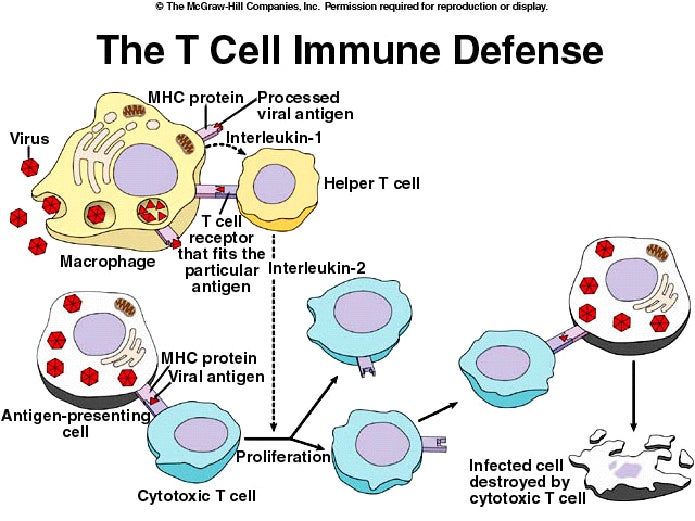
         In recent years, doctors and researchers at the University of Pennsylvania had come up with a very affective leukemia treatment called Kymriah or CAR-T therapy. Kymriah works by removing a patient's white blood cells and finding their T-cells. The lab then introduces a virus to the T-cell that will carry new genetic material to them, making them form the ability to recognize and kill cancer cells as they come across them.
          For the fact that this is still a relatively new treatment for cancer patients, it is still considered experimental. The young man in this case had an extremely persistent and strong form of leukemia, and unfortunately was killed because of a rare occurrence inside the treatment of his cancer. Normally, the doctors will inject the white blood cells and new T-cells back into the body. Some leukemia cells would come out with the white blood cells, but ultimately be killed due to the new genetics of the T-cells, or so it was thought.

         In this rare case, one of the leukemia cells which was picked up during the initial process of collecting the cells, was genetically modified by the virus that was supposed to be only affecting the T-cell. In a result of this, the leukemia cell which was produced was immune to the treatment by the T-cells, resulting in the old leukemia being killed off, and the new leukemia reproducing soon after that.
          Now that scientists and researchers know that this is a possible outcome for this new treatment, they are working on making sure that all of the leukemia cells which are collected with the white blood cells at the beginning of patient treatment are gone before undergoing viral exposure. Although very sad, I believe this extremely rare death to be beneficial to the science community in that we will be able to learn from the mistake of what could possibly happen and be able to create a new drug or treatment in which will better serve these sick individuals.

Related Article
Original Article

Thursday, February 1, 2018

Is Gene Therapy the New Treatment for Pancreatic Cancer?


In August of 2017, Dr. Stephan Grupp, who is the director of cancer immunotherapy, at the Children’s Hospital of Philadelphia, announced a new treatment under research for leukemia. This treatment is called Kymriah, and its goal is to give patients who have undergone a relapse of leukemia, specifically B-cell acute lymphoblastic leukemia, a second chance at survival. Instead of undergoing additional radiation, chemotheraphy, or other forms of treatment, Kymriah focuses on gene therapy. This form of treatment modifies a patient’s own immune cells; the cells get sent to a lab and are genetically modified using chimeric antigen receptor T cell therapy. CAR-T’s aim is to give a patient’s cells the ability to detect and kill cancer cells. This is incredibly interesting, because a patient's own genes are modified and have the capability to save their own lives. Of those involved in the clinical trial, those among children and teenagers had a very successful reaction to the form of treatment. Almost 90% of patients undergoing the use of Kymriah survived the following six months, and nearly 80% of those patients survived the following year. This set of treatment is currently seeking approval for July of 2018, and may revolutionize the treatment of blood cancer.

Sunday, August 6, 2017

Gene-Altering Leukemia Treatment

An article in the New York Times discusses the recent recommendation on approval of a gene-altering Leukemia treatment.  The recommendation came from the FDA panel and it would allow allow the genetic alteration of a patients cells to fight their own cancer.  If the FDA accepts the recommendation, it will be the first gene therapy to reach the market in the United States.  Novartis is the drug company that will likely be first; they target the treatment of Leukemia but are currently working on other types of cancer.  Emily Whitehead was the first child to revive the treatment, as a clinical trial, and it saved her life; Whitehead grew very ill and came close to death but she emerged cancer free.  This is one of the main reasons there has been hesitation with this therapy.  In some cases the patients suffer from life-threatning illness; however, this treatment can be an alternative to the toxic treatments like chemotherapy.  There are still questions about the short-term side affects as well as the chances these cells can cause secondary cancer later in life.  In the current studies the cancer has not reappeared but the study will continue continue until fifteen years from treatment.  This could be a huge breakthrough on curing cancer, this is so important because cancer is hard to fight and the current toxic treatments further break down the immune system making it hared to patients to stay healthy.  This is a huge step in the right direction and will most likely be approved by the FDA.


Monday, July 31, 2017

Two children have been cancer-free for up to 18 months after receiving a controversial gene-editing therapy

A new cancer treatment helped two children with leukemia be disease-free for up to 18 months, new research reveals. Researchers from Great Ormond Street Hospital in London investigated a new cancer treatment in two infants with an aggressive form of leukemia. The youngsters received an immune-boosting treatment alongside a gene-editing technique, known as TALENS, that altered their DNA. TALENS is a form of gene editing that causes specific immune cells, known as T cells, to express proteins that target tumors. The youngsters had previously been treated with chemotherapy and received stem cell transplants.The researchers made four DNA alterations on immune cells from donors and infused the cells into the patients. Results revealed that both youngsters have been cancer-free for 16 and 18 months, respectively.
The findings were published in the journal Science Transnational Medicine. 


Friday, October 21, 2016

Protein's Effect On Blood Cancer

The amino acid Valine has just been found to be a key factor in the formation of blood stem cells. In a recent study by researchers at Stanford University and the University of Tokyo mice deprived of this amino acid for two to four weeks completely stopped making new blood cells. It was found that Valine plays a key role in forming blood cells in humans as well. This finding could have major implications for transplant and leukemia patients. If deprived of protein before a bone marrow transplant, the deprivation would have the same effect the pre transplant chemotherapy has on these patients, killing/stopping all of their blood cells from forming to prepare them for their transplanted blood cells. The head researchers in this study also think that depriving leukemia patients of valine could kill of the cells that are causing their cancers. Deprivation of valine can be achieved from depriving patients of protein through an IV infused diet. Research has to be done to find out how long humans would have to be deprived of valine to completely stop their blood stem cell formation to see if it is a viable option to keep patients on an IV infused diet for the length of time necessary.


The deprivation of Valine could also be used to consider new candidates for bone marrow transplant, like pregnant women, who are not generally candidates because of the pre transplant use of chemotherapy.

Friday, December 4, 2015

Gene editing saves girl dying from leukaemia in world first


For the first time, gene editing has saved a little girl's life. Layla, a one-year-old girl who was dying from leukemia, was treated with an experimental form of gene therapy using genetically engineered immune cells from a donor after all other conventional treatments had failed. Normally, immune cells from the patient's body are removed, genetically altered to attack the cancerous cells, and placed back into the body. In Layla's case, she did not have enough T-cells (cells that are part of the immune system) left after cancer treatments, so a donor's cells were needed. 

If a donor's T-cells are not perfectly matched, they will recognize all cells of the recipient's body as foreign. To prevent this, the team responsible for the genetic editing disabled the gene in the donor's cells that makes the receptor that allows the T-cells to recognize foreign cells, therefore eliminating this problem. Another issue to overcome is that one of the drugs (an antibody) given to cancer patients to destroy their immune system will also destroy the donor's T-cells. To counter this, the genetics team also disabled another gene in the donor's T-cells, which made them invisible to the antibody drug.

The method used to disable genes can sometimes make cuts in the wrong places, which carries a small risk of causing adverse effects such as turning cells cancerous. However, Layla was given a second bone marrow transplant to restore her own immune system after three months, and these healthy immune cells recognized the donor's cells as foreign and destroyed them. Now, she no longer has any genetically modified cells in her body.

This is an amazing step forward in the fields of genetics as it relates to medicine. Clinical trials are underway in many countries using these methods, and hopefully it will lead to a permanent treatment of many different kinds of cancers.

Sunday, November 8, 2015

New Gene-Editing Therapy Technique Effective in Leukemia Patient


          The picture above is of Layla a one-year-old girl with Leukemia who was recently put into remission through the use of gene-editing technology.  This is only the second trial of gene-editing used as therapy the first trial was used in HIV patients.  Layla's was not responding well from conventional treatment methods for Leukemia, so after a request she was given the new gene editing treatment.

          This technique requires the healthy T cells from a donor.  The T cells are then modified so that they are protected from the anti-cancer drugs that the patient has been taking.  The T cells are also "edited" with a DNA-cutting enzyme called  TALEN.  This deactivates the immune cells from attacking the leukemia patient when injected.  The patient then undergoes therapy in which their immune system in destroyed and replaced with the modified donor T cells.  There are however many concerns when dealing with ex vivo and in vivo gene therapy. They can cause cut and mutations in other parts of the genome. Also for in vivo therapy the DNA-delievering vector can stay active in the body years after injection which raises concern for future immune reactions. There is definitely more research necessary for this treatment to become more conventional.

         While this technique resulted in a cancer free Layla it is still an experimental stage and more research is being put into gene-editing therapy.  In my opinion I believe that this can open many doors for treating immune system related diseases. Just the fact that a technique has been used for two diseases that have been found extremely difficult to treat shows where the research is going towards.  To see new treatment techniques coming out out seemingly every year is amazing.


Wednesday, April 29, 2015

Cell Therapy


A large study was completed at the Memorial Sloan Kettering Cancer Center on patients with advance leukemia. They found that 88% of patients went into remission with the use of genetically modified T cells (their own immune cells). Patients with adult B cell acute lymphoblastic leukemia, which is a type of blood cancer in B cells,  normally relapse without a successful bone marrow transplant. So sixteen patients were given genetically modified immune cells from their own body. The cells were modified so that they would recognize and destroy cancer cells that contained the protein CD19. The modified cells are called chimeric antigen receptor T cells. The results were better than the traditional method with salvage chemotherapy. The first patient to receive the treatment is still in remission three years later. This treatment basically uses the persons own immune system to attack and kill the cancer cells because traditionally, without the genetically modified cells, the body does not recognize cancer cells as something to fight off. This method was also successful for cancer treatment in 2013 when tested on five different advanced B-ALL patients. The only known side effects are severe flu-like symptoms (fever), cytokine release syndrome (trouble breathing), low blood pressure, and muscle pain.
I think that the modification of your own body cells is a great new technology to fight cancer. It may prove to have many less side effects than traditional chemotherapy. Using your own cells instead of something foreign and potentially hazardous is a great thing. Hopefully the side effects are manageable and this treatment can be offered more commonly to help more cancer patients reach remission.

Link
Link2

Monday, April 6, 2015

Scientists Discover a Heritable Leukemia Mutation


A study conducted by The University of Colorado Cancer Centre discovered a mutation on the ETV6 gene that causes Acute Lymphoblastic Leukemia (ALL). This was found by investigating the genome of a family with abnormally high rates of ALL.The family had similar traits of big red blood cells, low platelet counts and a tendency to bleed. This observation showed that there must be some genetic linkage that runs in the family. When comparing their high risk genome to a “healthy” family, a mutation in the ETV6 gene was the key difference.

ALL is one type of leukemia, which is a blood cancer. Development begins in the white blood cells called lymphocytes in the bone marrow. From the bone marrow it spreads quickly to the blood and other systems. If not treated it is usually fatal in a few months. Children are born with this “broken” gene that causes them to develop these leukemia causing white blood cells at a young age. Most of the 30,000 ALL cases in the US each year are in children ages 2-5. With this new genetic discovery, families that have a history of leukemia can now be tested to see their risk of passing on this gene to offspring.

This is a great genetic discovery that will hopefully lead to a cure of ALL. Identifying the cause will give families a chance to prevent passing this mutation on to their children or give those who already have the disease a fighting chance to beat this childhood cancer. 

Saturday, March 28, 2015

Genetic Cause of Increased Leukemia Risk Identified


Scientists from the University of Colorado Cancer Center have determined that a mutation in the ETV6 gene is the genetic cause of acute lymphoblastic leukemia (ALL).  The ETV6 gene is a gene that encodes a transcription factor required for the formation of blood cells and for maintaining the arrangement of blood vessels in the body.  Much like how the identification of the BRCA gene mutation allowed doctors to predict the development of breast and ovarian cancer, the identification of the ETV6 gene mutation may grant doctors the ability to predict the development of ALL.  The identification of the ETV6 gene mutation may also help doctors to develop strategies to prevent ALL.
            Dr. Chris Porter, an investigator at the CU Cancer Center, stated that the study began with the performance of whole exome sequencing on a family that had an unusually high rate of ALL.  The sequencing data obtained from the high-risk genomes were compared to normal-risk healthy genomes.  During the examination of the two genomes, bioinformaticist Ken Jones realized that a mutation in the ETV6 gene was the only difference between them.
            Previous studies have revealed that somatic mutations of the ETV6 gene are associated with the development of blood cancers.  Somatic mutations of the gene, however, require the help of other mutations in order to cause ALL.  Germline mutations of the ETV6 gene create the possibility of the development of leukemia from birth.  Dr. Chris Porter stated that he and his colleagues hope to conduct future studies to help reveal the prevalence of the mutation of the ETV6 gene.
            I think the findings of this study are exciting because people will now be able to know if they are likely to be affected by ALL and will be provided with the opportunity to prepare and take steps to catch it early in development.  Hopefully future studies will help provide strategies on how to help prevent the development of ALL.

Monday, November 24, 2014

Selenium Slows Down Immuno-Response to Treat Melanoma, Prostate Cancer, and Types of Leukemia


By researching more about disease mechanisms that cause cancer in the skin and body, cancer can be fought by neutralizing these stimulants. New research about a Selenium compound (element naturally found in garlic and broccoli) that partook in the University of Copenhagen: The Faculty of Health and Medical Sciences (in a Journal of  Biological Chemistry) involving Selenium's cancer treating properties was written in this article. More specifically, the researchers found that a liquid form of NGK2D ligands (or tumor marker) can be seen to be neutralized by Selenium and therefore, slowing the cancer spread. This neutralization is helpful against Melanoma, Prostate Cancer, and Types of Leukemia because these types of cancer are a result of over expression by the immune system. By neutralizing the over-expression, these cancers can be effectively treated with future Selenium-type drugs.

However, this was not the first test in determining whether Selenium was effective in any cancer treatment because of its possible long term adverse effects by too much dosage over time and conflicting results in test studies. For example, three years ago, a study done through randomized controlled clinical trials showed that Selenium was not beneficial in blocking prostate cancer and had long term health complications. However, with this new discovery, Selenium can be taken to the next step into producing effective drugs.

I found this topic and articles very interesting because anything cancer treatment fascinates me because I'm living in the generation that has the high possibility of solving the problem of  many types of cancer. Knowing that better treatment like Selenium is out there to be exploited gives my mind comfort with the fact that humanity is one step closer to curing cancer completely.
Original Article: http://www.sciencedaily.com/releases/2014/11/141124125442.htm
Supporting Article: http://www.sciencedaily.com/releases/2011/05/110510211556.htm

Monday, November 10, 2014

"Smart Bomb" Drug To Combat Leukemia

     A team of researchers at the University of Southern California - Health Sciences are working to develop a "smart bomb" to attack B-lineage acute lymphoblastic leukemia. This is the most common and deadly form of childhood cancer. Their technique is believed to eventually be lifesaving for children who have relapsed after initial chemotherapy and have less than a twenty percent chance of long-term survival.


    Once they had discovered what made these leukemia cancer cells resistant to chemotherapy, they started working on a drug to combat them. The aim of the "smart bomb" is a defective gene that results in the abnormal form of the protein CD22, which causes cancer cells to proliferate and resist chemotherapy. This defective gene resists "supralethal" chemotherapy,  total-body irradiation, and bone marrow transplantation.
   The drug is called RNAi and potentially has the capability to shut down the defective gene. The team joined forces with the University of Illinois, where a small polypeptide was engineered to deliver the RNAi. The "smart bomb" created has a diameter of only 100 nanometers. It is one of few nanomedicines that works on the molecular level.
   I think this "smart bomb" drug would revolutionize cancer treatment in children. As stated before, this form of leukemia is common and deadly, so if it were able to be treated so many lives could be saved. Cancer research is one of the most popular topics in science and this project specifically seems promising.

Article: http://www.sciencedaily.com/releases/2014/11/141105093506.htm

Friday, October 17, 2014

Extended Remission for Leukemia Patients

Every year in the United States about 2,400 people older than 20 are affected by acute lymphoblastic leukemia with only 40% cure rate and around 1,170 adults who die from it whereas 3,600 people under the age of 20 get affected by acute lymphoblastic leukemia with 80% cure rate and 270 who will die from it. Dr. Stephan A. Grupp, Dr. Carl H. June, and other researchers at the Children’s Hospital of Philadelphia (CHOP) have found an experimental treatment which uses patients’ own T-cells. T-cells are extracted then genetically engineered using a disabled virus to slip new genetic material into the cells. This genetic material reprograms the T-cells to identify and kill any cell that carries a specific protein on its surface. Once that happens the cells are dripped back into the patient. These cells are also encoded to multiply so they can produce as many as 10,000 or more cancer-killing cells.

The specific protein that is searched for is CD19 which is found on B-cells. This was chosen because the type of leukemia patents have affects the B-cells. Therefore, the T-cells are trained to destroy the B-cells. Since there is no way that cancerous B-cells can only be killed the healthy B-cells also have to be killed.
The usual treatment for acute lymphoblastic leukemia is stem cell transplant so some researchers believed to be on the safe side of any patient who went into remission after this T-cell treatment should also undergo stem cell transplant. Dr. June and Dr. Grupp suggested that due to the long remission the stem cell transplant might not be needed and that the T-cell treatment could hopefully replace the stem cell transplant.
Although this treatment sounds astonishing, T-cell treatment has its own side effects. T-cells churn out hormones called cytokines that can cause patients to have fevers, aches, drops in blood pressure, and trouble breathing. This is known as cytokine release syndrome. It is said that that more cancer there is to destroy the worse the syndrome.
The research trial Dr. June and Dr. Grupp did included 30 patients which 7 of the patients died who completed remission and then relapsed and 3 of the patients had the leukemia come back in B-cells that lacked the target protein which made them not vulnerable to the treatment.

Clearly this research doesn’t work for everyone but it is innovating in that in today’s world we can find cures for certain diseases and cancers. Although this is helpful for some patients this is only a research for the acute lymphoblastic leukemia and the researchers should find out why those seven patients died and come up with a method in how they can find who could be a perfect candidate for this research.  

Article: http://www.nytimes.com/2014/10/16/health/leukemia-patients-cell-therapy-childrens-hospital.html?mabReward=RI%3A17&src=rechp&WT.nav=RecEngine&module=ArrowsNav&contentCollection=Health&action=keypress&region=FixedLeft&pgtype=article

Monday, October 13, 2014

New Vector for Treating X-linked Severe Combined Immunodeficiency

X-linked severe combined immunodeficiency (SCID-X1) is an inherited, life-threatening condition which affects approximately 1 in 50,000 to 100,000 newborns, almost all of which are boys. SCID-X1 rarely affects girls because the mother must be a carrier for the mutation, and the father must have SCID-X1. SCID-X1 is caused by a mutation in the IL2RG gene. This mutation essentially prevents lymphocytes from properly maturing and functioning. Ultimately, in SCID-X1, the immune system is drastically weakened, resulting in chronic infections and probable death.

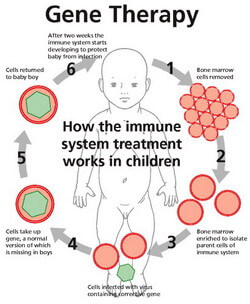
SCID-X1 is ideally treated via a transplantation of blood-forming stem cells and gene therapy; however, some patients do not have a matched bone marrow donor. In the case of lacking a suitable donor, "doctors remove stem cells from the patient's bone marrow." Then, using a Maloney murine leukemia virus-based-gamma-retrovirus vector, a corrected gene is inserted into the cells, and the cells are then returned to the patient. This method has worked in restoring immune function; however, after two to five years from receiving the treatment, one-quarter of the patients developed leukemia. This vector "may activate genes that control cell growth," unluckily leading to leukemia.


Currently, a study is being conducted to evaluate the outcome of using an engineered self-inactivating gamma-retrovirus vector to treat SCID-X1. The study consists of nine boys with SCID-X1 who received gene therapy using this vector form. This treatment has produced positive results in seven of the nine boys who "developed functional T cells at levels comparable to those seen in previous studies and have remained healthy for one to three years after treatment." The results from analyzing the boys' T cells indicate that the self-inactivating vector "causes fewer genomic changes that could be linked to leukemia." One of the boys who did not respond well to the treatment passed away from a previously existing viral infection, and the other received a stem cell transplant. The boys who did respond to the treatment will be regularly monitored for the development of leukemia.

Although the condition appears fairly rare with only 1 out of 50,000-100,000 boys being affected, this number means there are anywhere from 3,161 to 6,322 boys suffering from this condition in the United States. Knowing that 3,000-6000 boys may have to be placed in a bubble to prevent infections is very saddening; however, the development of the self-inactivating vector can ultimately strengthen the boys' immune systems. This will allow them to live life the way a young boy should while also reducing and potentially eliminating the increased risk of developing leukemia from the treatment.

This article reopened my eyes to the complexity of the human body almost leaving me dumbfounded. While it may seem like the human species has everything figured out, there is so much information to be learned.

Article: http://www.niaid.nih.gov/news/newsreleases/2014/Pages/SCIDtherapy.aspx
Related Article: http://www.nejm.org/doi/full/10.1056/NEJMoa1404588#t=articleResults