Showing posts with label bone marrow. Show all posts

Wednesday, December 11, 2024

CRISPR Stem-Cell Technique Provides Accessible, Possibly Curative Sickle Cell Treatment

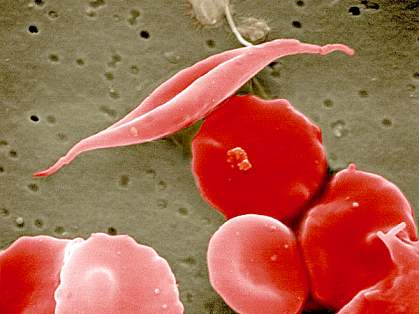
Sickle Cell Anemia is a vicious genetic affliction that affects more than 8 million people every year. Genetic advancements made with the gene editing technology CRISPR has the potential to treat or, hopefully, entirely cure individuals afflicted with the disease as shown in this recent study. By using CRISPR to modify the stem cells within the bone marrow of patients and repair the genetic mutation causing Sickle Cell mutation within them, the hope is that those stem cells can then replicate and overtake a majority of the marrow supplying the patient with new red blood cells. There are current methods to transplant healthy stem cells from a donor into someone affected with Sickle Cell, but by using the patient’s own stem cells and CRISPR technology, the need for finding a donor and risking rejection is no longer necessary and can significantly improve success rates for such a procedure. 


The use of CRISPR technology to repair genetic ailments is an exceedingly promising venture. By using this gene editing technology to repair a patient’s own genetic mutation, the instilled obsolescence of donor marrow/stem cells would be a massive breakthrough. Hopefully by continuing to explore the editing of stem cells, a multitude of other genetic ailments can be cured without the need for transplantation.


Links:


https://www.ucsf.edu/news/2024/11/428941/novel-gene-therapy-trial-sickle-cell-disease-launches

https://curesickle.org/crispr-scd

https://www.genengnews.com/topics/genome-editing/going-public-doudnas-dream-team-launches-groundbreaking-sickle-cell-trial/


Thursday, October 22, 2020

Nanoparticles Can Turn Off Genes In Bone Marrow Cells


MIT engineers discovered a way to turn off genes in bone marrow cells. This new discovery can help treat heart disease, which is a huge killer in America, as well as produce more stem cells in patients. Researchers did a study with mice in which they turned off these genes and inhibited the blood cells in bone marrow that produce inflammation as well as aid heart disease. The results showed that the mice were able to recovery easier from a heart attack given this technique. If this can work for tiny mice, imagine the effect it would have on humans especially in America where many people die every day from heart disease. Scientists begin a technique called RNA Interference in which they bring short strands of RNA to block the genes from being turned on that would promote the inflammation. These nanoparticles are able to target the diseased cells and the scientists are able to apply gene therapy. SDF1 is a gene that doesn't allow the blood cells to leave the bone marrow, and MCP1 is a gene that is released from bone marrow after a heart attack. By knocking down SDF1 with the use of nanoparticles, we are able to produce more stem cells which would help so many people. MCP1 delivers immune cells to the heart and aid with the progression of heart disease, by turning off this gene, we are able to improve heart disease. Another study with mice tested and the results came back to same. Overall, this is a great discovery that can help millions and I am so excited for what new discoveries on this topic come in the future.

https://news.mit.edu/2020/nanoparticles-bone-marrow-rnai-1005

https://www.ncbi.nlm.nih.gov/pmc/articles/PMC3423651/

Friday, October 21, 2016

Protein's Effect On Blood Cancer

The amino acid Valine has just been found to be a key factor in the formation of blood stem cells. In a recent study by researchers at Stanford University and the University of Tokyo mice deprived of this amino acid for two to four weeks completely stopped making new blood cells. It was found that Valine plays a key role in forming blood cells in humans as well. This finding could have major implications for transplant and leukemia patients. If deprived of protein before a bone marrow transplant, the deprivation would have the same effect the pre transplant chemotherapy has on these patients, killing/stopping all of their blood cells from forming to prepare them for their transplanted blood cells. The head researchers in this study also think that depriving leukemia patients of valine could kill of the cells that are causing their cancers. Deprivation of valine can be achieved from depriving patients of protein through an IV infused diet. Research has to be done to find out how long humans would have to be deprived of valine to completely stop their blood stem cell formation to see if it is a viable option to keep patients on an IV infused diet for the length of time necessary.


The deprivation of Valine could also be used to consider new candidates for bone marrow transplant, like pregnant women, who are not generally candidates because of the pre transplant use of chemotherapy.

Wednesday, April 20, 2016

Antibody Therapy Reduces Cancer Stem Cells in Multiple Myeloma

A team of researchers lead by Dr. Matsui and Dr. Huff conducted a seven month study that involved individuals with multiple myeloma who were receiving Chemotherapy drugs called lenalidomide and dexamethasone. They tested the effect of the antibody MEDI- 551 on these individuals to measure the influence of cancer drugs on stem cells by counting the stem cells in bone marrow and blood samples from the patients. MEDI-551 is an antibody that targets specific protein CD19 which can be found on the surface of multiple myeloma cancer stem cells (Matsui 2016). After the patients received two full treatments with both cancer drugs, the results showed that the number of stem cells from bone marrow doubled. When the patients were treated with MEDI-551 in the third and fourth months of treatment, the stems cells decreased by half in all of the patients, except for one person. In opposition to the patients receiving MEDI-551, the stem cells increased 10 times in the newly diagnosed patients who did not receive antibody treatment but were still administered both cancer drugs. In a majority of the patients, there was a decrease in multiple myeloma cancer cells after 3 treatments of MEDI-551. However, there was an exception of two patients that experienced an increase in their stem cells even after they received the antibody treatment. The researchers were unable to identify the reason as to why this occurred but they plan to conduct more studies to further examine how the antibody treatment works and to determine what other cancer drugs it is compatible with. 


The results from the two methods used in this study were almost identical so the researchers determined that in future studies they would just use the blood sampling method because it is easier to retrieve than bone marrow. Although it will be years from now, I think that the findings from this study in conjunction with findings from future studies can lead to new cancer treatments that have less  damaging side effects and can hopefully replace the two main Chemotherapy drugs lenalidomide and dexamethasone. In these future studies, I would like to see if the antibody treatment is applicable and effective to multiple myeloma cancer patients of all ages, especially for the elderly. Additionally, I think that researchers next mission should be to determine if there is a specific stage of multiple myeloma where the antibody treatment would be most effective. 


Wednesday, April 8, 2015

Trying to fool cancer


This year, scientists have been attempting to create a medication that will ultimately “fool” cancer cells. It is considered precision medicine and it uses “cancer’s molecular underpinnings to develop drugs that attack the genes or gene products that make up cancer’s factory while sparing normal cells.” There have been many experiments conducted in hopes of finding a way to cure cancer, once and for all.
            The first study is done on 600 patients with one of two bone marrow cancers, myelodysplastic syndromes or acute myeloid leukemia at the Cleveland Clinic.  These cancers are most commonly found in people age 70 to 80 and can be fatal if left untreated.  These cancers cause cells to outgrow and form a mass of cells or remain immature making it nearly impossible to function normally.  Majority of the patients tested developed an average of 10 genetic mutations before the cancers were diagnosed.  The fact that so many mutations were present makes treating cancer that much harder.  There is no medication available to treat that many mutations and only treating a few of them would help the rest of them thrive allowing the treated cancer to regrow.
The next step in this research is to determine where the mutations start and which one they start with. But it is possible that these starter mutations are found in both cancerous and noncancerous cells so attempting to kill them could wreak havoc within the patients.  A drug was administered to patients that would hopefully improve their blood count and attack the mutations in cancerous cells.  But for some patients, the mutation had nothing to do with causing the cancer.  Despite everything, the road to curing cancer has had massive improvements but nothing is curative.  And although many new forms of treatment have come into play, the older techniques are not a thing of the past.
Cancer has always been a topic of interest for me just because of how unpredictable it is.  It is a brilliant idea that scientists and researchers are continuing to try to find new ways to treat cancer in hopes of one day curing it for good.  Chemotherapy and modern medicine are good cancer treatments but they do not always work so the continued research for a drug that could pinpoint the mutations and destroy them at the source could only help pave the way to a cancer free world.