Showing posts with label BRCA1/2. Show all posts

Sunday, April 19, 2026

Biological Pathways and the Risk of Inheriting Cancer

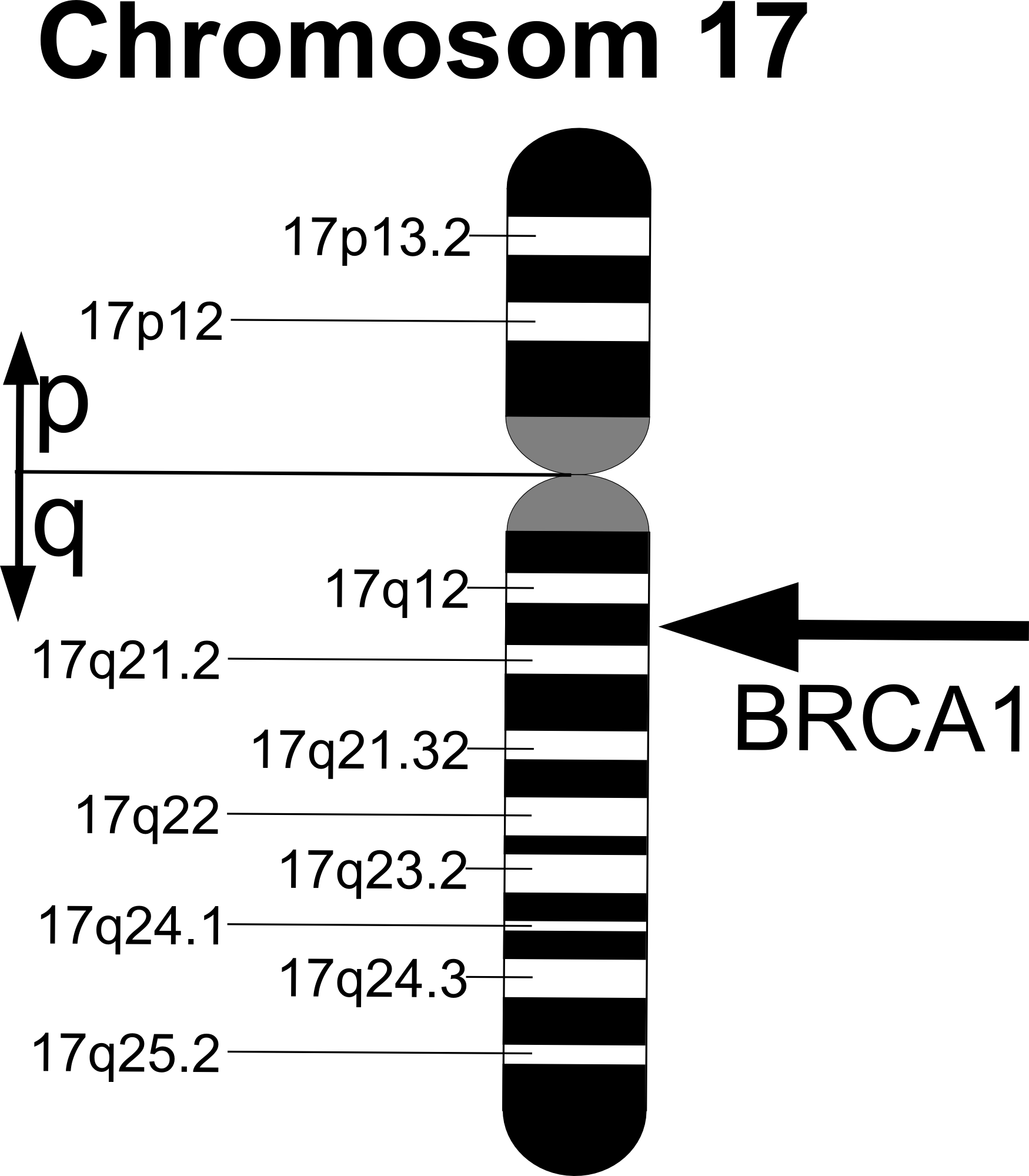
     Researchers at Stanford Medicine studied different biological pathways that are associated with the chance of inheriting cancer. These researchers found less than 400 pathways that are functionally related to the risk of inheriting cancer. This research was the first large scale screening of DNA changes to determine which exact changes in nucleotide changes lead to cancer.  The study focused on the DNA sequences that existed after conception. This is referred to as a germ line genome because it is not the DNA changes that occur during the life of an individual. The study saw 380 variants that control the cancer associated gene expression. Major mutations in genes that have an association with the risk of inheriting cancer are the BCRA1 and BCRA2 genes; these genes indicate a higher risk of inheriting breast cancer. 


Figure 1. Location of BCRA1 and BCRA2 Genes on Chromosomes

    In this article, the author mentioned that this research opens doors to being able to assess a persons lifetime risk of having cancer. This idea could be interpreted in two ways. A person might want to know what the chances of them having cancer in their lifetime can be to feel relieved, grateful, or even so they can make life decisions that can help their situation if they were to be diagnosed. However, on the other side of things, people can fixate on their determined risk of having cancer and never be able to relax because they feel impending doom. Ultimately, I believe this research is beneficial to learning more about cancer and how it is inherited but individuals might have mixed emotions about hearing their lifetime risk of cancer.


Source: https://med.stanford.edu/news/all-news/2025/02/dna-cancer-risk.html

Additional link from National Cancer Institute focusing on BRCA gene:

https://www.cancer.gov/about-cancer/causes-prevention/genetics/brca-fact-sheet

Monday, July 23, 2018

Choosing surgery in response to genetic testing


 While many people consider genetic testing to be a novel tool that should be taken with a grain of salt, some folks are making big life decisions in response to test results. 3 sisters from Berkeley Heights, NJ tested positive for a mutation on the BRCA1 gene in 2012. By 2013 all three women had each successfully undergone a double mastectomy (removal of both breasts) and oophorectomy (removal of ovary).

This was not an easy decision for the women to make, however the choice to undergo surgery became more clear when reviewing the probabilities of developing cancers. All three were determined to be at a 60% lifetime risk of developing breast cancer and a 40% chance of developing ovarian cancer. Their pedigree also showed their brother's offspring to have a 50% chance of carrying the mutation.

After surgery one of the sisters, Patti, had reason to be proud of her decision. After her mastectomy, the tissue was found to be cancerous. She told the Star Ledger, "Our decision isn't right for everyone, but there are many options in between and, at the very least, genetic testing gives people the option to be closely monitored so that changes can be identified and addressed early."

I tend to agree with Patti. While not everyone should immediately jump to surgery following a genetic test, we should make use of this tool to identify and monitor mutations. Granted the individual wants to know their risk factors. 

Article
Related Article

Saturday, April 15, 2017

Why Most Women Shouldn't Undergo BRCA Testing for Breast Cancer Risk


It is not necessary for all women to be tested for the BRCA gene to determine breast cancer risk. In the article "Why Most Women Shouldn't Undergo BRCA Testing for Breast Cancer Risk" Michael Schroeder talks about why BRCA testing is recommended and why it is not necessary for most women. The BRCA gene is a mutation that was found in women with breast cancer and is passed down creating a higher risk of breast cancer in future generations. According to Dr. Jennifer Litton, an associate professor of breast medical technology, only about 5 to 10 percent of women with breast cancer have a mutated BRCA gene. However, physicians still recommend getting tested if there is family history of having breast cancer. This is a preventative screening if there is a higher risk of the cancer. All women do not need to get the test done if they do not have family history of the mutation or breast cancer. This is interesting because people tend to think if they have the mutation they will definitely get breast cancer or if they have breast cancer they have the gene. This is not necessarily true, the BRCA test is a preventative screening not a definite yes or no of having breast cancer.

http://health.usnews.com/wellness/articles/2017-01-05/why-most-women-shouldnt-undergo-brca-testing-for-breast-cancer-risk

https://ghr.nlm.nih.gov/gene/BRCA1

Monday, November 14, 2016

Genetic Testing After Breast Cancer Diagnosis


Picture of the Breast Cancer Symbol

People thought that cancer before was just one single disease, but now we are starting to understand the unique qualities of an individual's cancer compared to someone else's. It goes beyond the type of cancer as well because on breast cancer for example could be different than another breast cancer. With individualized treatment plans there also come a lot of different tests one can take to be screened or checked.
"With the ever growing number of tests available, which tests really matter? For women diagnosed with breast cancer, two types of genetic tests that can be especially important are genetic testing of the person for BRCA 1/2 mutations and genomic testing of the cancer, such as the Oncotype DX test."
To find out if you need chemotherapy, people use the Oncotype DX test. Before, it was thought chemotherapy treats cancer, but not all chemo treatments are successful at treating certain cancers. This test gives measurements based on the recurrence of cancer. Another type of test that matters is the BRCA 1/2 gene test. This is more of a preventative measure and to try to see if you are at high risk or not in developing cancer. An abnormality in this gene could help doctors develop a special plan for a breast cancer patient, or be able to tell low risk patients that there isn't much to worry about now.
"Everyone has BRCA1 and BRCA2 genes. The function of the BRCA genes is to repair cell damage and keep breast, ovarian, and other cells growing normally. But when these genes contain abnormalities or mutations that are passed from generation to generation, the genes don't function normally and breast, ovarian, and other cancer risk increases. Abnormal BRCA1 and BRCA2 genes may account for up to 10% of all breast cancers, or 1 out of every 10 cases." 
I think that it is wonderful that our genetic testing has become more accurate in the past years. We are able to adjust our treatment plans from the past in order to help save more lives and we are able to educate the populous about cancer and how the solution isn't as easy as some make it to be. It is hard to help someone with cancer because it is so individual and specific to them, two different things might have caused even two cancers in the same person. Either way, it's great that genetics is impacting cancer research and most likely impacting parenthood in knowing how their children may be affected if they inherit the gene.

Monday, February 8, 2016

Colorimetric Analysis Promises Easier Detection of Faulty Genes

Just last year, scientists from Shaanxi Normal University in China developed a colorimetric analysis test for detecting faulty or unwanted genes (such as the BRCA1 and BRCA2 genes, implying a high risk of getting breast cancer). Colorimetric tests are usually used to determine the concentration of a specific chemical or reagant in a solution or compound, through use of a color reagant for easy detection. When this technique (specifically, an ultrasensitive cascade signal amplification strategy) is applied, it becomes visually easier to detect genes that cause colon cancer, breast cancer, and countless other diseases.

According to their published paper in RSC Advances, the six researchers began their experiment by using a hairpin probe containing a 3' DNA sequence for target recognition and an enzyme referred to as DNAzyme. Upon contact with target DNA sequences, the enzyme freed itself, cleaved multiple molecular beacons, and as more DNAzymes were released, padlock probes triggered an RCA reaction (which amplified the DNA). This amplification produces a different DNAzyme that reads out signals, such as BRCA1 detection, so precisely that it can detect the gene down to approximately 3.3fM (femtolomars) (RSC Publishing).

Of course, there are alternative ways of testing for genes such as BRCA1/2, so this new technique isn't an 'end all be all' for gene detection. However, I think this is certainly a more accessible method of doing so. For one, using RCA to amplify the sequences in question is a great idea, because the detection of the gene will be far easier to see at the end, especially in colorimetric analysis. It's like putting layers of the same color on top of each other - easier to detect, harder to miss. More than that, due to Myriad Genetic's recent loss of patent protection for their BRCA1/2 gene test, more accessible tests are needed. If this test continues to be experimented with and researched on, it's likely doctors will soon be using them in hospitals worldwide. I'm personally excited to see where this leads.

http://www.rsc.org/chemistryworld/2015/04/brca1-gene-breast-cancer


Sunday, November 1, 2015

The Roots of BRCA1 Mutations for Ashkenazi Jews

The BRCA1 gene is associated with breast cancer. Recently it has been found it has been found that this gene mutation is found at a higher rate in Ashkenazi Jewish women than in other Jewish women in present day. This is because this specific gene mutation appeared in Central and Eastern European Jews, around the time when 350 of the ancestors of modern day Ashkenazi Jews were alive. Another reason is because of the longstanding tradition of them marrying within the group which allows for no genetic variation and the continuation of the BRCA1 reoccurrence within the families.
In a study done in 2012 of modern carriers' DNA, concluded that the mutation was present in other European populations for hundreds of years and entered the Ashkenazi gene pool in Poland 400 to 500 years ago. In the late medieval period, according to a study done in 2014, researchers claimed that the reason the gene came into the pool was because of the 350 people and the rapid expansion of the Jewish population.
BRCA1 mutation are not the only problem with the Ashkenazi Jews. The harmful mutations in the BRCA2 gene are more commonly found in the population of Ashkenazi Jew in the United States as well as other groups around the would. The mutation in these genes are associated with breast cancer and ovarian cancer.
This study is extremely important because the public, especially these specific group, can have knowledge of their possible risk factors and how they could possibly be prevented or treated earlier.
Original Article

Wednesday, February 11, 2015

Myriad Breast Cancer Gene Lawsuit


Myriad Genetics is a molecular diagnostic company that focuses mainly on the developing and marketing of predictive medicines, personalized medicine, and prognostic medicine tests. The Myriad Genetic Company uses the information they collect from their testing to help guide individuals toward which drug therapy they would respond best to. They help regulate the dosages of medicine to ensure optimal treatment and assess the likelihood of an individual to develop a disease, its progression, and its re-occurrence.
The Myriad Genetics Company has finally ended its patentdispute on breast cancer risk testing. Myriad Genetics Company was testing for mutations on two genes, BRCA1 and BRCA2. The mutation of these genes have been linked to an increase risk of breast cancer and ovarian cancer. This testing caused the competitor companies to start making their own versions of the test only they made them cheaper. Myriads sued those companies and claimed that the competition was infringing on their patents.
Unfortunately, when brought to Judge Robert J. Shelby, he ruled against Myriads request. Later, the Federal Circuit agreed with the decision and ruled that human genes cannot be patented. The Myriad Company had to settle in court against the competitors, LabCorp, Invitae and Pathway Genomics, Ambry, GeneDx and Counsyl, and Quest Diagnostics. The agreement was that Myriad would not sue the other companies for the patent of the test on BRCA1 and BRCA2, as long of the other companies dropped their counter-suits against Myriad.

I think this test is needed especially in times like these where cancer is prevalent and can happen in a blink of an eye. As someone who has a family history of breast cancer, I think it would be beneficial to have a test that can determine the chance of me or any family member developing cancer. For the court to deny (rule against) Myriad’s claim, was an unfair decision.  They created the testing first and the competitors took their idea and made it cheaper, so they could get more patients and in turn more money.

Saturday, October 4, 2014

Genetic Testing, is the Knowledge Worth the Risk?

Jennifer is a 39-year-old healthy woman whose grandmother passed away from breast cancer at an early age. For this reason, Jennifer wanted to be tested for two genes mutations associated with an increased risk for the breast cancer (BRCA1, BRCA2.) When offered additional testing the results yielded a link to a high risk of stomach cancer. Those with the gene and a history of the disease in his/her family are at such a high risk that surgery is advised.

The issues  with treatment and preventative measures arise when results such as Jennifer’s are received but there is little knowledge behind the meaning of the test results. Increasing technology has made it more cost effective to sequence numerous genes instead of just one. However, some doctors worry that these new multigenetests will “open a new can of worms” fearing that the ability to uncover new mutations has outpaced the understanding and its implication. Today tests discover cancer-related mutations with lack of preventative measures leaving the patient with a bleak prognosis.


Experts say that as time goes on and more people are tested, more will be learned about mutations. In the meantime, such a dilemma will continue to wedge a gap between genetic testing and its understanding further, patients such as Jennifer will be left confused and unsure about possible next steps.


I believe that this could pose a problem making genetic testing more detrimental then helpful. It is in our human nature to stress and worry when given information that puts our health at risk. Without enough knowledge or answers to reassure us that the results may be insignificant, the unknown can be daunting. Perhaps information such as in this article should not be discussed with the patient until further information can accompany the results. What good is knowing about a possible mutation without the knowledge of how it could potential impact your life? 

Monday, September 22, 2014

Wider Genetic Screening for Breast Cancer

The prominent scientist and geneticist, Marie-Claire King, who identified the first breast cancer gene is now urging all women to be tested for the genetic mutations that can lead to breast cancer. Her and her colleagues believe that no matter the woman’s personal or family history, that she be offered genetic testing for those mutated genes.


 For the most part, doctors will only recommend women to be tested for the breast cancer genes, BRCA1 and BRCA2, if cancer runs in their families. However, it has been found that around fifty percent of women who carry mutations in their BRCA1 and BRCA2 genes have no family history of breast or ovarian cancer. Marie-Claire King, along with her fellow colleagues, conducted a study that found that over 400 women that had no family history of this mutation, but carried it themselves, had the same high risk of getting breast cancer from the mutated genes. For this reason, King feels strongly that it is time for all women to be screened.


Opposers, however, state that some women that have these mutations never actually end up getting breast cancer and that the very serious surgeries that go along with the removal of the mutations can do more harm than good. Still, I completely agree with King. I think that all women should get tested for these genetic mutations because the worst thing it can do is make you aware of something that can be very dangerous if not treated. The decision as to what the women want to do with the information is completely in their hands. If they decide to get a mastectomy or not, at least they are aware of what is going on inside their body. With the information offered by the wider genetic screening for breast cancer, women can make decisions that can ultimately prolong and better their overall quality of life.

Article Link: http://www.npr.org/blogs/health/2014/09/08/346770167/researcher-urges-wider-genetic-screening-for-breast-cancer

Friday, November 22, 2013

Cheap Genetic Testing Leading To More Complications


By now most Americans have heard of the cheap genetic testing available from companies like 23andme. For as little as $99 and about 5 mL of your saliva you can have a genetic profile with what part of the world your ancestors came from, your risk of male pattern baldness, or even if cilantro tastes soapy to you. What many people are interested in are the risk factors to diseases that these tests can detect. Angelina Jolie, after discovering a mutated BRCA1 gene, underwent a prophylactic double mastectomy for which she is both being applauded and criticized for.


In addition to the likelihood of a false positive, diagnostics cannot be reliable when dealing with a single parameter. The identification of a single mutated gene does not guarantee cancer and in many cases does not even accurately reflect risk. More information is not always a good thing if it is left misunderstood or without context. Unfortunately the results from these inexpensive genetic tests may become the next generation of the "WebMD" diagnosis.