Showing posts with label organelles. Show all posts

Friday, November 17, 2023

Newly Discovered C. Diff Structure Required for Infection, Offer New Therapeutic Drugs


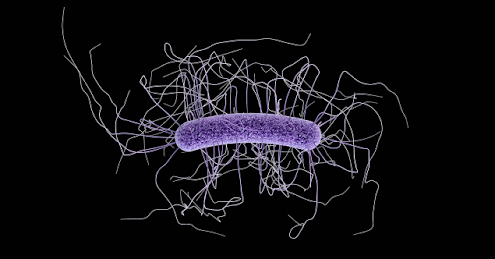
It was discovered that the bacteria C. diff (Clostridium difficile) produces spheres called ferrosomes and that these structures are important for infection in animals. Bacteria have long been thought to not have any organelles like eukaryotic cells do, but this now appears to be incorrect. The researchers at Vanderbilt wanted to determine if C. diff produces ferrosomes to manage its need for iron, focusing on how pathogens like C. diff get their iron and other nutrients. C. diff causes more than 29,000 deaths a year in the United States and its treatment options are limited. The research team found that two genes, fezA and fezB, were required to form ferrosomes. Using C. diff bacteria that did not have these genes, the researchers found that ferrosomes were necessary for the bacteria to fully colonize and cause disease in an animal model. They found that ferrosomes were especially important for C. diff infection in inflammatory bowel disease. This discovery demonstrated that the ferrosomes helped with combating “nutritional immunity”. The ferrosomes were encased in a membrane, classifying them as organelles in this bacteria. 

This study is really interesting as it demonstrated the presence of organelles in bacteria, which was otherwise thought to not contain any at all. What also makes the study more interesting is the possibilities it creates of creating new antibacterial drugs. Without ferrosomes, C. diff cannot perform to their full functions. Using this information on how the host-pathogen interaction is important for infection, there are a number of ways to discover how new antibacterial drugs could be made to treat C. diff. 

https://www.sciencedaily.com/releases/2023/11/231115113402.htm 

https://www.nature.com/articles/s41586-023-06719-9 


Wednesday, March 28, 2018

Tiny implants for cells are functional in vivo

A team from the University of Basel has successfully integrated artificial organelles into the cells of living zebra fish embryos for the FIRST TIME EVER! I this approach they used artificial organelles as cellular implants offering new potential in treating a range of diseases. These cellular implants could carry enzymes, which are able to convert a pharmaceutical ingredient into the active substance. Which then releases it “on demand” under certain conditions. Distributing drugs in this way could reduce the side affects and usage.

These artificial organelles are based on tiny capsules, which form spontaneously in solution from polymers. The artificial organelles presented here contain a peroxidase enzyme. This enzyme only begins to act when specific molecules penetrate the wall of the capsules. To control the way this substance is disbursed through out the cell the researchers chemically modified natural membrane proteins into the wall of the capsules. These proteins will act like gates that open according to the glutathione concentration in the cell. The researches chose zebra fish embryos because they have transparent bodies. Which allow great tracking of the cellular implants under a microscope, when marked with a florescent dye. When they injected the artificial organelles, they were eaten by macrophages, which allowed it to make its way through the organism. The researchers could then show that the peroxidase enzyme that was trapped inside the artificial organelles was activated when hydrogen peroxide produced by the macrophages entered through the protein gates.

Wednesday, November 27, 2013

Genes outside the Nucleus “Punch above their Weight”

While DNA is found mostly in the nucleus, there are organelles in human and plant cells that also contain genetic material. These organelles include mitochondria for human cells and chloroplast for plant cells. It has recently been discovered that the DNA contained in these organelles is important as well. When scientists looked at genes found in chloroplast in 300 species of Arabidopsis plants, they found that they influenced concentrations of sugars, metabolites and amino acids. The fact that this powerful DNA lays outside the nucleus is groundbreaking discovery. It was known that these genes existed outside the nucleus however the degree which they affected metabolism has recently been discovered.  They believe this research can open new pathways for treatment for diseases such as obesity. In terms of vitro fertilization therapies it is believed that damaged mitochondria is being passed from mother to child. A treatment option that is being looked into is removing the nucleus from the mitochondria of the faulty egg and replacing it with healthy mitochondria. The new egg can then be fertilized. This method has been tested on animals however the interactions between mitochondria DNA and nucleus DNA is not fully understood so more research needs to be done. By shifting attention away from nucleus DNA and looking at organelle DNA we may be able to better understand certain diseases.    


Link:
http://www.insidescience.org/content/genes-outside-nucleus-punch-above-their-weight/1456

Related Links:
http://news.ucdavis.edu/search/news_detail.lasso?id=10743
http://mda.org/publications/facts-about-genetics-and-NMDs/genes-outside-cells-nucleus