Showing posts with label "#Gene Editing". Show all posts

Thursday, December 11, 2025

Screwworm Returns, and What is Being Done to Fight it.

 This past summer, an article was published in the New York Times detailing the re arrival of screwworm in the United States. Screwworm, largely eradicated in the 1970s in the United States, has made a reappearance due to breaching a barrier in Panama, sparking concern from both the U.S. and Mexico. The parasite is a flesh eating maggot that feasts on the open wounds of animals. It affects mostly livestock, but can also spread to other animals including deer, rabbits, and even humans.
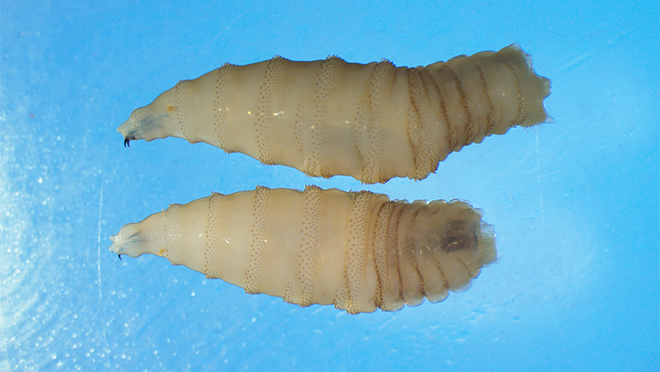
 Two individual larvae on a blue background 

The issue is, this problem had already been solved before. In the 1950s, it was discovered that scientists could create sterile male screwworm flies and release them into areas that contained massive amounts of screwworm. This would severely decrease the population as the females would mate with the sterile males, thus decimating the population. A barrier was created and maintained from 2006 onward, until 2022 where said barrier was somehow broken through, causing screwworm to start to make its way back into Central and North America. This means that these companies that were making the sterile flies will need to heavily ramp up production to drive down the population of these invaders and send them away for good. To me, this article highlights that safety and attention to detail that is needed to work in the field of science. If something like this can happen once, there is nothing stopping it from happening again. We need to ensure that  careful attention is payed to everything, so that something like this, or worse, doesn't happen again.

Wednesday, December 10, 2025

Bringing the Dire Wolf to Modern Times

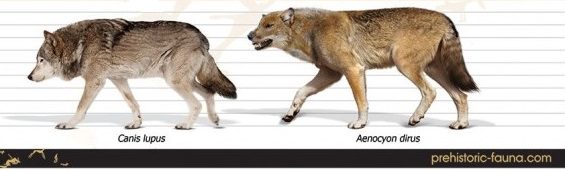
 An article from 9 months ago from the New York Times highlights the process of de-extinction, and the efforts of a team of scientists to attempt to bring back the dire wolf species. Basically, DNA was extracted from the fossils of dire wolves, which was then studied. The scientists were able to edit 20 genes of gray wolves to have the distinct features that they discovered in the dire wolves. Embryos were then created of these new wolves and implanted in a surrogate mother, who then gave birth to three healthy wolves. These wolves are bigger than the average gray wolf and have a dense fur coat, both traits that belonged to dire wolves. The experiment is considered a success, and while these particular wolves remain in captivity, these scientists believe that the technology that was used and developed in this experiment could be used to help preserve endangered species today. They believe that they can make copies of endangered species and release them to the wild to help improve genetic diversity and help increase the species's numbers.


Did We Really “De-extinct” the Dire Wolf? - Ohio History Connection 

 Of course, these animals aren't going to ever actually be dire wolves, just animals that are coded to look like them. Bringing back an animal from extinction is an impossible task, however the animals that can be de-extinct can offer a unique perspective into what life looked like on this planet thousands of years ago. Also, if this technology can actually be used to help save animals from extinction and this is just the start, then there seems to be a bright future ahead of this planet's biodiversity.


Monday, December 8, 2025

The Ethical Dilemma of Genetic Engineering: How Far Should We Go?

Genetic engineering is one of the most exciting and controversial topics in science today. Technologies like CRISPR allow scientists to edit genes, and this could mean huge breakthroughs in curing diseases or improving crops. But there's a big question: how far is too far when it comes to changing the genetic makeup of living things, especially humans? For example, gene editing could potentially lead to the creation of “designer babies” where parents pick traits like eye color or intelligence for their child. While that might sound cool, it also raises serious ethical issues. Scientific American discusses how scientists are trying to set guidelines to make sure gene editing is used responsibly and doesn’t go too far.


At the same time, gene editing could be a game-changer for treating genetic diseases. Imagine being able to fix a disease like sickle cell anemia by editing out the defective gene. This could change the lives of millions of people. But as exciting as this is, it also brings up tough questions. If we can cure diseases, should we also be allowed to enhance people’s genes for things like better athletic ability or intelligence? The NCBI article dives into these tough ethical issues, pointing out that while gene editing has huge potential, we need to be careful and think about the bigger picture.