Is the Dire Wolf Back from Extinction?
Kylee French
BIOL-2110-001 - GENETICS
Professor Guy F. Barbato
October 19, 2025
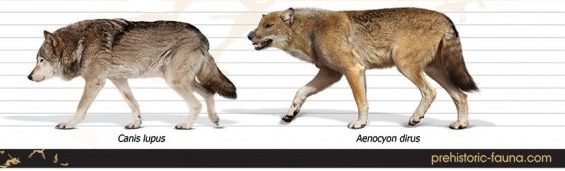
The recent achievement by Colossal Biosciences, creating animals that carry key genes of the extinct dire wolf, is both fascinating and a little alien to me. The article "Scientists Revive the Dire Wolf, or Something Close", highlights how scientists are using advances in genetics to analyze ancient DNA, identify important mutations, and edit the genomes of living gray wolves to recreate traits of a long-extinct species. It’s amazing to think that humans can now use science to “bring back” characteristics of animals that disappeared thousands of years ago. This project reminds me of efforts to clone pets, showing that humans have long been trying to bring back life. At the same time, the article also raises concerns. Sometimes genetic experiments don’t always succeed, and animals can suffer negative effects, such as blindness or other health problems, when the editing goes wrong. Overall, while this work is incredibly cool, it also comes with responsibilities that cannot be ignored.
To elaborate more from the article, scientists set out to bring back traits of the extinct dire wolf using genetics. They first retrieved DNA from ancient dire wolf fossils and identified the key mutations that made dire wolves different from gray wolves. Using cells from living gray wolves, they edited 20 genes to include these dire-wolf traits and created embryos, which were implanted into surrogate dog mothers (Zimmer, 2025). This article also mentions that if it was possible they could maybe bring back other extinct animals too: "Suppose, for instance, that they recovered an intact cell from the frozen carcass of a woolly mammoth. Perhaps the cell could be thawed and used to create a mammoth clone" (Zimmer, 2025). For one, while it is relatively easy to make a single edit to the DNA of an animal, the scientists hoped to make dozens of edits. Then there was the matter of producing animals from the edited DNA. This is where many challenges arrived for them, but instead scientists pivoted to focus on the dire wolves. While the animals born are not exact copies of dire wolves, they carry the most important genetic features, marking a major step toward “de-extinction” and demonstrating the potential of modern genetic engineering.
On a related note, this process reminds me of owners wanting to clone their pets. An article titled “Insights from One Thousand Cloned Dogs” explains how animal cloning has been pursued for two decades, with dogs being the most commonly cloned mammals. The article notes, “These observations differ between donors and their clones, and between clones from the same donor, indicating a non-genetic effect. These differences cannot be fully explained by current understandings but point to epigenetic and cellular reprogramming effects of somatic cell nuclear transfer” (Olsson, 2022). This shows that genetic cloning might not always produce the results we expect and can come with complications. For example, in the dire-wolf project, “The scientists introduced dire-wolf mutations to 15 genes. But they did not introduce the remaining five, because previous studies had shown that those five mutations cause deafness and blindness in gray wolves” (Zimmer, 2025). Overall, these examples show that while genetic engineering and cloning hold incredible potential, they also come with unpredictable outcomes and ethical considerations that scientists must carefully navigate.
References
Olsson, P.O., Jeong, Y.W., Jeong, Y. et al. Insights from one thousand cloned dogs. Sci Rep 12, 11209 (2022). https://doi.org/10.1038/s41598-022-15097-7
Zimmer, C. (2025, April 7). Scientists Revive the Dire Wolf, or Something Close. New York Times. Retrieved October 19, 2025, from https://www.nytimes.com/2025/04/07/science/colossal-dire-wolf-deextinction.html