Showing posts with label Oceans. Show all posts

Friday, April 15, 2022

Thousands of new Viruses Discovered in the Ocean


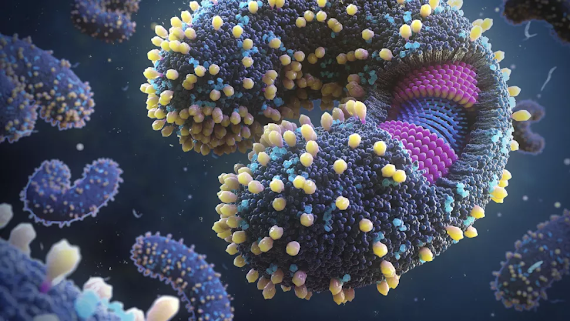
In an article published by Live Science, a new study identified more than 5,000 new virus species in the world’s oceans. The researchers in this study analyzed tens of thousands of water samples from around the globe, hunting for RNA viruses. These viruses are understudied compared with DNA viruses, which use DNA as their genetic material, according to the authors.


The diversity of the newly-discovered viruses was so great that reachers proposed doubling the number of taxonomic groups needed to classify these viruses from the existing five phyla to 10 phyla. As stated by Matthew Sullivan, a professor of microbiology at The Ohio State University, the discovery of an entirely new phylum, Taraviricota, in nearly all of the world’s oceans suggests that they’re ecologically important.


Studies of RNA viruses usually just focused on those that cause diseases, according to Sullivan, however, these make up a very small percentage of all RNA viruses on Earth. For the study, the researchers analyzed 35,000 water samples taken from 121 locations in all five of the world’s oceans. The examined genetic sequences were extracted from plankton, which are common hosts for RNA viruses. They homed in on sequences belonging to RNA viruses by looking for an ancient gene called RdRp, which is found in all RNA viruses but is absent from other viruses and cells. Over 44,000 sequences were identified with this gene.


The RdRp gene is billions of years old and has thus evolved many times. Because the gene’s evolution goes so far back, it was difficult for researchers to determine the evolutionary relationship between the sequences. So the researchers used machine learning to help organize them.


Overall, 5,500 new RNA virus species were identified that fell into the five existing phyla as well as the five newly proposed phyla, which were named Taraviricota, Pomiviricota, Paraxenovirivota, Wamoviricota, and Arctiviricota. Virus species in the Taraviricota phylum appeared to be absent from temperate and tropical waters while viruses in the Arctiviricota phylum are abundant in the Arctic Ocean, according to the researchers.


Understanding how the RdRp gene diverged over time could lead to a better understanding of how early life evolved on Earth.


Related article: https://www.nature.com/articles/sdata201817

Tuesday, September 20, 2016

Mediterranean Mystery: First DNA of Ancient Shipwreck Victim


On August 31st, off the tiny Greek island of Antikythera, sponge divers found human remains from a 2,000 year old merchant shipwreck. This is the first ever shipwreck to be examined by archeologists. The first question that came to mind for the scientists was whether or not they were able to collect DNA from the recovered bones.  After closely examining the remains which consisted of pieces of  skull, teeth, femur, several arm bones, rib bones and petrous bone (dense bone behind the ear), scientists agreed that the bones were very well persevered. This is shocking yet amazing news since it has been over 2,000 years since they've been in the oceans waters! Before testing the remains for DNA, bone expert, Hannes Schroeder suspects the remains belong to a young male, in his early twenties based on the formation of the skull and teeth.

If Schroeder is able to recover the bones DNA and sequence it, this would mean breaking through to new grounds that have never been reached before. The only other ancient DNA identification scientists were able to recover was last year on a sample from a cold climate (northern Europe), which resulted in the discovery of the first Mediterranean ancient genome of a Neolithic (New Stone Age) individual from Spain.

One question that many researchers have been asking themselves is: Why have so many bones been found at this site compared to many other shipwrecks were hardly none are recovered?
Well, researchers have concluded that this shipwreck must have possessed two components that a majority of other shipwrecks did not.
     1. The wreck must have happened fairly quickly, much faster than the time it takes for the passengers to react to it.
     2. Many people must have been below deck at the time of the sinking.
For the time of the wreck, the vessel was extremely large, measuring up to forty meters long. The ship also had multiple decks with many passengers. Since the wreck happened close to shore, researchers think the boat crashed against the rocks and broke up the boat and started sinking, before the passengers on the lower deck realized and had time to evacuate.

More news will be released on this exciting discovery, as soon as the results from the DNA testing are confirmed. Then the next step will be to sequence the genes which will take several months. For now, that is all that has been reported.
The below link is a document on how scientists recover DNA from ancient remains!
http://www.nature.com/nprot/journal/v2/n7/full/nprot.2007.247.html


Friday, April 25, 2014

Scientists Identify Mysterious Sound in the Southern Ocean

Scientists have been recording a mysterious sound coming from the Southern Ocean for decades. This unique, rhythmic sound was first heard by submarine personnel in the 1960's. They called it, "bio-duck" because, (you guessed it!) they thought it sounded like a duck. The culprit behind the bio-duck had remained a mystery, until now.


Scientists have tied the sound to the elusive Antarctic Minke Whale. In February 2013, an international team of researchers managed to deploy acoustic tags upon two Antarctic Minke Whales off the Western Antarctic Peninsula. These were the first successful acoustic tags placed on the species. These tags have provided much more information about the species other than the bio-duck noise itself, including its annual habitual migration. Although researchers have concluded the source behind the  bio-duck sound, the reason why they make it still remains one of the many mysteries of the ocean.

Original article:
http://www.sciencedaily.com/releases/2014/04/140423132614.htm