Showing posts with label flowers. Show all posts

Thursday, February 11, 2021

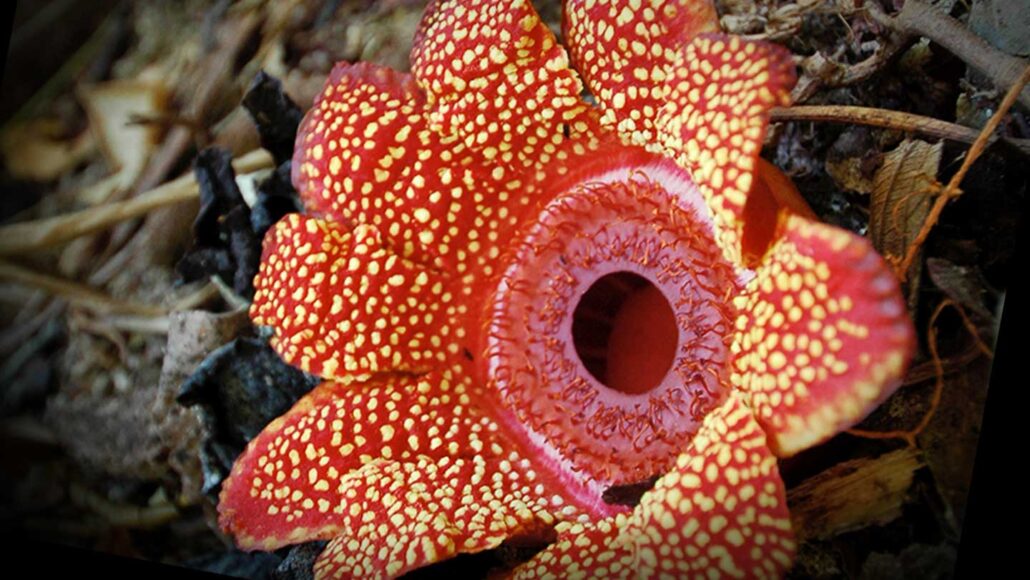
New Genetic Blueprint Found in Parasitic Plants


Newfound research on the genetic instruction book of the Sapria genus reveals the lengths to which it has gone to become a specialized parasite. The new discovery illustrates the level of commitment S. Himalayana and its relatives have given to evolving a parasitic lifestyle and provides a comparison to other extreme plant parasites. 

Based on the findings published by Current Biology, most of the Sapria genus have lost half more than half of their genetic material. Not only that but plants like the Sapria Himalayana and their genomes were used for research. Findings showed they had completely removed the need for stems, roots, and even any photosynthetic tissue—and based on further research, even chloroplast genome have vanished

Charles Davis, an evolutionary biologist at Harvard University states that these genetic variations from such parasitic plants have left biologists confused by the sudden change. Such obvious plants recognize by their “rotting flesh” smell, are no longer producing flowers. He notes, “these plants have lost half of their genes, yet they still survive.” 

However, further investigation into this interesting genetic modification will allow researchers to determine some of biology’s limits, which I think will benefit us greatly. 

Links:


Thursday, November 28, 2019

Space-breeding Research Center


China wanted to increase the yield and quality of crops. So, the Chinese government researchers launched 8 recoverable satellites and 5 high-altitude balloons, that exposed seeds of vegetables and flowers to cosmic radiation and triggered mutations, in the space. Those seeds were then brought back on earth to be sown. These satellites also contained bacteria to see how high-energy radiation affected them. With hundreds of space-breeding experiments being done, many seeds were successfully selected because they were more resistant to drought and main diseases.

Even after exposure to a high dosage of radiation, it was concluded that the seeds contained no trace of any radioactive substance after extensive testing. Researchers are also combining biological techniques such as genetic sequencing, molecular labeling and gene editing to help improve the efficiency of new crop species.


“The question is, should we stick entirely to the pace of nature, or give it a little boost?” Dr. Li Jingzhao, a scientist involved in the program, asked.


I think this program is an important one because it improves the economy, scientific research, and biodiversity. We are exposed to radiation every day, with human activities, we are exposed to radiation even at more (and there are consequences) but as long as my food is safe, I say you scientists go for the ride! 


Article publication: South China Morning Post on November 7, 2019.
Article URL: https://www.abacusnews.com/culture/china-wants-produce-mutant-crops-space/article/3036708
Related article: http://www.spacedaily.com/news/china-00zb.html

Thursday, May 3, 2018

Preventing Honeybees from Becoming Queen


An article done by the New York Times reviews certain factors on how to stop honeybees from becoming queens. Researchers from PLOS Genetics found that certain molecules in the pollen of flowers and in honey will determine if females will be able to reproduce and live a longer life, or if they will become sterile and a worker bee. These conditions are directly linked to their diet, and not determined at birth like many would think. MicroRNA is contained within the small molecules of the plants which affect plant size and color. This microRNA, when transferred to a bee can affect genes and inhibit growth to the bee, making the bee sterile. In an experiment done by Nanjing University in China, researchers raised honeybees to better understand the microRNA effects to their growth. In larva raised on the microRNA contained diet, it was found that the bee population had smaller bodies and smaller ovaries than those raised on a diet not containing the microRNA. Researchers found that the TOR gene for growth is affected when the microRNA is ingested.

Scientists also studied the interdependence between the honeybees and the plants. Through honeybee pollination, certain flowers can become larger and more colorful thus attracting more bees creating a larger pollen spread. Researchers also suggest that further study of this interdependence can be applied to areas like therapeutic research for applications in cancer or obtain a better understanding on seasonal allergies and anaphylaxis.

This article in my opinion was very informative. The honeybee population is on a steady decline which should be a major concern for everyone. Without the honeybee population, many plants would not be pollinated. Therapeutic research through these interdependencies of plant and insect is also an interesting field to study.

Saturday, July 29, 2017

There is A New Mum In Town


The color blue is found all over the earth from the sky to what we see on the ocean, though one place a true blue color is not found in abundance is in mums, being the flower. From a scientific breakthrough mums are finally able to truly grow blue as can be by the correct manipulation of their genes. Scientist Naonobu Noda who works at the National Agriculture and Food Research Organization located in Tsukuba, Japan along with other colleagues has been credited this accomplishment. By taking a gene from the Canterbury bells and adding a gene from butterfly peas the manipulation in mums allowed an important enzyme to create the compound needed for a blue color. The compounds for natural blue colors in flowers that have now been activated in mums, which were not present before are known as delphinidin-based anthocyanin pigments. In the experiment a total of 19 out of the 32 mums treated bloomed into a blue color rather than their normal pinkish colors. These results made the experiment quite a success and will allow gardeners and flower lovers to lavish in blue mums in a true blue natural setting.

Saturday, February 25, 2017

Where do flowers come from? Shedding light on Darwin’s 'abominable mystery'


Scientist have partially solved the origin of flowering plants. A team from the Laboratoire de Physiologie Cellulaire et Végétale questioned the appearance of a structure as complex as the flower over the course of evolution. We know that flowering plants provide our food and contribute color to the plant world. Flowering plants appeared only 150 million years ago. They were directly preceded by a group known as the gymnosperms. the flower contains the male organs and the female organs, surrounded by petals and sepals, while the ovules, instead of being naked, are protected within the pistil. They wondered how was nature able to invent the flower, a structure so different from that of cones. The researchers found genes similar to those responsible for the formation of flowers, and which are organized according to the same hierarchy. The fact that a similar gene has been found in flowering plants and their gymnosperm cousins indicates that this is inherited from their common ancestor.
I found this amazing because we see flowering plants everyday, but we never question how or why they are here in the first place. We know that they help give the world a better look by there ravishing colors, yet we have no clue how they came to be like so. I feel like this study will make more scientist to go back in time and draw out the genetics and history of the common ancestor of modern day flowers. 

Wednesday, September 23, 2015

Genes That Make Roses Smell Sweet


Roses these days do not smell as sweet as they used to. Scientists found that there are more than 400 chemicals in roses that contribute to their fragrance, which alcohols being the most common. One specific type of alcohol, called monoterpenes, is the most important one that makes roses smell good. Researchers compared the genes of roses that that smell sweet (roses from the past) to ones that do not smell as sweet (present day roses). They found that the enzyme that makes monoterpenes are different in the two types, and that there is a new gene present that has caused them to be less fragrant. Now, they can modify the DNA of the roses to produce more of that enzyme to make them smell sweeter.

I found this information pretty interesting because I always knew flowers stereotypically smelt good, but whenever I smelt them, I never cared for the smell. Maybe this is why. However, I do believe this type of research is kind of pointless because does it really matter how sweet flowers smell? Unless the roses' change in smell is affecting the ecosystem in some way, I find this study unneccessary.

In the related article that I posted, it talks about how when flowers are less fragrant, it makes it harder for pollinating bugs to find them. Therefore, the ecosystem is affected in some way, so this research is in fact important.