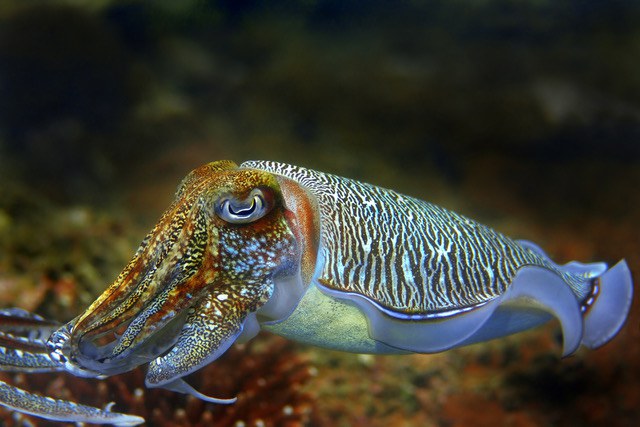
Cuttlefish have an escape plan when they are approached by predators, they release a cloud of dark ink. While the ink does help hide them, it also has a strong odor that drives sharks away. The chemicals that give blood a strong scent to sharks is weaker than the ink. One of the main elements that make up the ink is melanin, it sticks really well to the smell receptors in sharks. Researchers looked deeper into the genetics behind how sharks sense of smell works. They gathered genetic data on three shark species - the cloudy catshark, small-spotted catshark, and great white shark, this would model the shapes of 146 different odor receptors. Sharks have 45 smell receptor genes which is not a lot compared to mammals who have somewhere around 850. What that means for the sharks is that they can detect fewer types of odors but are very sensitive to the ones they actually can smell. When scientists modeled how melanin interacts with these smell receptors, they found that it binds really tightly to the receptor. Because sharks are already sensitive to scents the ink is very overwhelming for them driving them away. The melanin's ability to bind so tightly to the receptors is why the sharks react more to the ink than the metallic smell of blood.
I think this article is a very interesting example of how evolution can improve the survival skills of animals. Its amazing that a fish that is on the smaller side can get sharks to leave an area because of the ink's odor. I never realized scientist could just make models of smell receptors using the genetic information from different types of sharks to demonstrate how certain component impact the sharks behavior. In this case it was melanin which i also learned gives the black color to the ink. This article kept me very engaged because of the way they connected animal behavior with genetics. It made me realize that something as simple as ink can be a product of natural selection.

