Showing posts with label #babies. Show all posts

Tuesday, November 25, 2025

Identifying Rare Diseases at Birth

 Last month, a BBC article was published highlighting a baby that had its vision saved by genetic testing. This baby had a rare form of eye cancer called retinoblastoma, and it was only identified through the genetic testing and genetic code analysis of newborns, done through something called, "The Generation Study." The study involves taking blood from a newborn and using it to analyze their genetic code and look for rare and serious conditions that would otherwise take forever to diagnose. In this case, the doctors are very hopeful that because they were able to catch this disease so early, they will also be able to save his vision.

Studies like this are very important for the future of medicine. In the second article, it's states that the program used to test the genetic code of the babies only tests for diseases that both develop in early childhood and have effective treatment options. As modern medicine continues to improve, and scientists look tirelessly to treat more diseases, it' not farfetched to say that there exists a future where we can identify and treat all life-threatening diseases before they can cause harm, using this technology. If we are able to develop treatments for early developmental diseases like retinoblastoma that we don't currently have, then we can give everyone an equal chance at life from birth. If this study and technology is already yielding positive results so early in its lifespan, than there is reason to be optimistic towards a better life for everyone in the future.
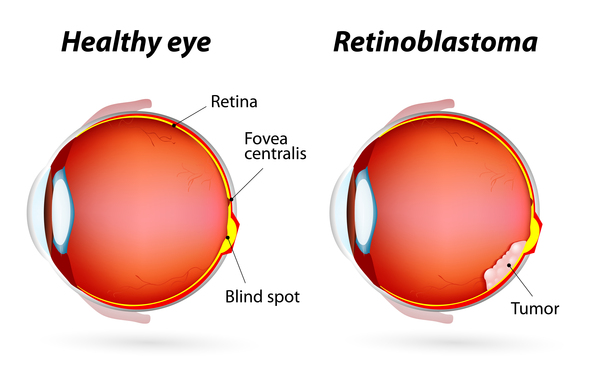
Retinoblastoma: MedlinePlus Genetics 

Wednesday, March 27, 2019

Gene therapy for unborn babies

The Guardian posted an article about doctor's using CRISPR to treat a rare brain disorder in unborn babies. The gene therapy they are using could mend the mutations in the womb that causes Angelman Syndrome. The treatment has never been tested before but it would involve the doctor's injecting a virus into the brain that infects the neurons and delivers molecules to correct the genetic faults. The disorder can be detected at 10 weeks and has been tested on a brain cell grown in a dish.  It is suggested that the procedure will be best performed in the second trimester. Normal brain development gene comes from UBE3A where the gene from the mother is "on" and from the father is silenced. During development the gene from the mother is missing or mutated, so the CRISPR technology turns the father's gene "on".
Angelman syndrome affects one in 15,000 births and the children often experience seizures, along with difficulty sleeping and walking. I believe that once this is tested more that it would greatly improve the lives of many children. The testing could be better if doctor's were able to actually use the CRISPR technology on babies in the womb but due to the uncertainty I understand why the testing is only done on mice. Hopefully within the next few years this technology and syndrome can be handled and cured or at least be a treatment for children already suffering from the syndrome. 

Tuesday, November 27, 2018

Chinese Scientist Claims to Use Crispr to Make First Genetically Edited Babies

          Ever since CRISPR, a type of gene editing process, became prevalent scientists have worked hard to perfect the process and be sure not abuse it's powerful abilities.  Even some nations banned scientists from having the ability to genetically modify human beings, due to the fact of having the ability to alter a child's I.Q. to the color of their eyes.  CRISPR was meant to be used to genetically engineer life-threading medical conditions and diseases, not the ability to be smart or athletic.
          On Monday, November 26, 2018 the unimaginable came true and a scientist from China, He Jiankui, announced before the Second International Summit on Human Genome Editing in Hong Kong, that he genetically edited two girls who were just born this month.  Before implanting the embryos in the mother's womb, scientist Jiankui edited the babies to be resistant to the H.I.V. infection.  The only thing is that He Jiankui did not provide any data or evidence to prove his work in the lab.  Dr. He claims that he found a male who had H.I.V. and then used in vitro fertilization to produce embryos resistant to the viruses that can cause AIDS.  He used CRISPR-CAS9 to disable CCR, a specific gene that produces the protein H.I.V. needs to enter cells.
          Even though it is illegal to do such actions in the United States, it was not yet illegal in China, but other Chinese scientists do not agree with Dr. He's actions and believe what he did was crazy.  A group of researchers believe what he did was unethical because there are other ways H.I.V. can be prevented in newborns and ruins the reputation of Chinese science so far.  Dr. He then states that "I feel a strong responsibility that it's not just to make a first, but also make it an example""Society will decide what to do next." (Kolata and Wee and Belluck, 2018) Some question why Dr. He did something medically unnecessary, what do you believe about his research?


Tuesday, April 26, 2016

Genetically Modified Babies


A process known as "mitochondrial manipulation technology" was discussed by the Cellular, Tissue and Gene Therapy Advisory Committee, part of the FDA, in 2014. In general, germ line gene therapy is a highly controversial topic, making research and advances in this field difficult in some areas on the world. For some, they believe that the creation of new life is a sacred process that should not be tampered with. Others point the risks and possibility of devastation if errors are made within humans. In theory, mitochondrial manipulation technologies could make mitochondrial diseases a thing of the past. This technique is especially interesting and controversial because it requires the use of genetic material from three parents in the creation of a child. Because mitochondrial DNA is inherited from the mother, this technique focuses on the transfer of DNA from one egg to another, to provide an egg with healthy mitochondria for the future child. In an informative New York Times article the process is described as one that consists of "removing the nuclear material either from the egg or embryo of a woman with inheritable mitochondrial disease and inserting it into a healthy egg or embryo of a donor whose own nuclear material has been discarded". The article notes that 1,000-4,000 children are born annually with mitochondrial diseases that are potentially devastating and without a cure. Unfortunately, the research done at Oregon Health and Science University raises many questions about the current technology in mitochondrial manipulation. In trials with macaque monkeys, five successful offspring were produced and future research will be done to see how these manipulations will affect future generations. However, in trials with human zygotes, mutations and other developmental abnormalities were seen that were absent from the trials with macaque monkeys. The sensitivity of human embryos makes me wary of the use of this technique until more successful methods are developed. Overall, I think that this is an interesting method for mothers to avoid passing mitochondrial disease to her children. Without further research, I know that it would be impossible to attempt to use this technique to make mitochondrial diseases preventable. Since this discussion, new news on the topic is few and far between. England continued mitochondrial manipulation research and in 2015 they passed a law, allowing fertility clinics to use this technology. With the continued interest in this area of research in Europe, I hope that they can fine tune their mitochondrial manipulation techniques so that they will be safer, more effective and that their success will make skeptics more willing to accept this groundbreaking technology.

Saturday, December 5, 2015

Link Between Heart Defects And Neurodevelopment Disorders


Congenital heart disease or CHD is the most common birth defect out of all the others. Many used to be fatal, but thanks to advances in medicine, many can be treated with surgery so that the newborn can live a normal life. It is now being shown though that these newborns tend to develop cognitive and social disorders even after surviving the congenital heart disease as a baby. This puzzling correlation was then solved when a gene mutation was found to be causing not only the CHD, but also the cognitive and social disorders in the children as well. These neurodevelopmental problems include conditions such as autism. The chromatin modifiers that are responsible for causing the CHD are then also responsible for normal brain function as well. These advancements and discoveries will help newborns with CHD to be treated so that they may be able to prevent the cognitive/social disorders through understanding why they occur. Mitigating adverse outcomes in the newborns is obviously the goal of all of this research.