Showing posts with label symbiosis. Show all posts

Saturday, September 24, 2022

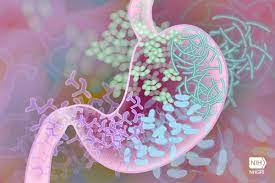
Humans Evolved with the Bacteria in their Stomachs


Scientists have discovered that species of bacteria in human stomachs may have had some influence on human evolution. Most bacteria in human stomachs are similar, but there are some species that show the differences in some human populations.  Scientists have tested for codiversification by collecting samples from people around the world and comparing them. As early humans spread out across the world, there were different sources of food that humans had to acclimate themselves to. Phylogenies were created to understand how people of different regions and the microbes in their stomachs are related. The scientists were able to trace people with relatives in Europe, Asia, and Africa.


Codiversification occurs in organisms that live in symbiotic relationships. A symbiotic  relationship occurs between very different organisms. There are three main examples of symbiotic relationships, which are mutualism, commensalism, and parasitic relationships. Mutualistic relationships are when both organisms benefit, commensalistic relationships are when one organism benefits and the other is not affected, and parasitic relationships are when one organism benefits and the other is negatively affected. Humans and the species of bacteria in our stomachs is a mutualistic relationship because humans are able to digest their food and the bacteria have a habitat and a food source. 


I think that it is good that scientists are finding other ways to trace the origins of humankind. It is difficult and expensive to dig to find skeletons and other things that give answers to questions about the origin of humans. Other scientists have commented on this new information and they have made the point that the relationship between humans and their bacteria could create microbiome treatments specific to a population of people based on their ancestry. Personalized medications could help patients that experience issues with their stomachs, since every patient is different and could react differently to generic medicines. The reason that stomach medications might not always work is most likely because of the diversity of the species of bacteria in every person’s stomach. 


Monday, April 11, 2022

Pavona decussata transcriptome analysis provides insight into the mechanisms behind coral bleaching recovery


Zhang et al. analyzed the scleractinian coral Pavona decussata, in conjunction with its obligate symbionts, at four stages during a natural bleaching event. The four conditions were healthy, healthy-looking, bleached, and recovered coral fragments. Each fragment was used for RNA sequencing as well as zooxanthellae density and chlorophyll a content analysis. The overall goal was to examine the transcriptomic response at different stages to better understand the mechanism behind recovery.

It was revealed that symbionts were under oxidative stress after a bleaching event. This was the result of an imbalance between photosystem I and photosystem II. This stress caused harm to the coral through stress and metabolic decline. The symbiont expulsion may also be attributed to induced apoptosis as an immune response from the host coral. Comparison between the recovered and bleached tissues revealed recovery of the immune system, activation of cell proliferation, and reparation of damaged DNA as the most significant changes during the recovery; however, many more changes were identified.

Although Pavona decussata was able to recover on a transcriptomic level during this study, I still fear that as the duration between bleaching events becomes more frequent, the time it takes to progress between recovery stages will lengthen. If the coral cannot reach a recovered state fast enough due to constant stress, the coral will not be able to recover.

At this point, since the rate of warming, which causes bleaching events, has increased so rapidly, the use of biotechnology is essential. Understanding which genes are expressed during different stages of recovery can help with conservation efforts. For instance, knowledge of the mechanism of recovery can lead to more precise gene manipulation to help increase resistance to oxidative stress or reduce apoptosis. At this point, since the rate of warming, which causes bleaching events, has increased so rapidly, the use of biotechnology is unavoidable.


Thursday, January 27, 2022

Genetic Differences In Dinoflagellates Could Help Coral-Symbiont Pairs Become More Resilient Against Climate Change


        As climate change increases stress on coral and their symbionts, extinction is on the horizon. Reefs are given shorter and shorter intervals to recover naturally which can be seen most easily as the effect of coral bleaching. The coral bleaching effect is a result of symbiotic dinoflagellate expulsion from the main coral body. The dinoflagellates provide essential nutrient processing to coral bodies, such as photosynthesis, so their expulsion causes the coral to die.
        An article about how Symbiodiniaceae, a genus of dinoflagellate, meets the challenges of life during coral bleaching explains the specific impacts climate change has on the Symbiodinium genome. Symbiodiniaceae first alters at transcriptomic levels potentially mediated by second messenger systems, followed by proteomics and metabolic reprogramming. By pinpointing specific changes and differences among the 7 Symbiodinium clades, identification of stress-specific or stress-independent genes could be utilized for trait improvement using genetic engineering.
        Hope is found in research that is being conducted on the implementation of Type I RuBisCO as opposed to the Type II RuBisCO currently found in Symbiodiniaceae. The Type I RuBisCO found in cyanobacterium provides a more heat-resistant form which will help maintain the rate of the Calvin-Benson Cycle during photosynthesis. Increasing heat resistance will help maintain the integrity of the symbiotic relationship.
        Although genetic engineering is frightening in the sense that it can induce a monoculture, at the rate the planet is heating up, coral reefs are already vulnerable. It is paramount for each variety of genetically engineered coral to maintain a level of genetic diversity to lower its vulnerability to environmental factors not mitigated by targeted genetic alterations. I do not believe that any one genetically modified coral-symbiont combination should be the stopping point. It is only a good first step in preserving biodiversity, so one of the most genetically diverse ecosystems does not cease to exist in the coming years.


What to read next: Thermal tolerance of the hermatypic coral Acropora tenuis elucidated by RGB analysis and expression of heat shock proteins in coral and symbiotic dinoflagellates