Showing posts with label #APOE. Show all posts

Saturday, August 5, 2023

Is Alzheimer's Genetic?

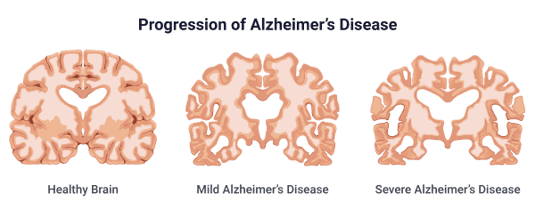
 Alzheimers is a disease that effects roughly 6 million Americans over the age of 65. Researchers have discovered that are genes (genes :APOE-2, APOE-3, and APOE-4) that are directly associated with the increased risk of developing Alzheimer's, as well as genes that directly cause the disease (genes: APP, PS1, and PS2). 40-65% of people diagnosed with the disease are found to have the APOE-4 gene, meaning that only 1% of people with Alzheimers actually inherit the disease. Alzheimer's happens because the brain is made of billions of neurons that communicate through charges from one neuron to another, Inside the neuron, there is a tau protein which helps provide nutrients to the cell. In Alzheimer's, it is believed that there is abnormal tau proteins causing an inability of the nutrients reaching the cell which then causes cell death. With the death of so many cells, the brain eventually shrinks. There is no known way to cure or prevent Alzheimer's, but it is believed that life style changes such as, quitting smoking, controlling blood pressure, maintaining a healthy weight, reducing alcohol consumption, etc. can reduce the risk of Azheimer's. 


Sunday, July 30, 2023

Gene-Editing Tools Pave Way for New Alzheimer's Treatments

Clustered Regularly Interspaced Short Palindromic Repeats, or CRISPR, is a potent technique that enables precise gene modification. The research discussed centers on identifying individual genes linked to Alzheimer's disease in an effort to lower risk or decrease the illness's course.

Amyloid precursor protein (APP), which is essential for Alzheimer's disease: Depending on how it is broken down in the brain, the APP can produce metabolites that are either protective or pathogenic. In order to decrease the creation of beta-amyloid plaques, which are harmful protein deposits linked to Alzheimer's disease, while improving neuroprotective activities, the researchers employed CRISPR to alter the APP gene. In an Alzheimer's disease animal model, the CRISPR therapy resulted in a decrease in beta-amyloid plaques and related signs of brain inflammation as well as an increase in neuroprotective APP molecules. 

The APOE-e4 gene, which is regarded as a prevalent risk gene for Alzheimer's, is the focal point of the additional investigation. Having two copies of APOE-e4 raises risk of Alzheimer's disease by up to 12 times, whereas inheriting one copy increases risk by two to three times. In humanized mouse models and small brains made from Alzheimer's patients, the study demonstrated that levels of APOE-e4 may be greatly lowered using CRISPR without altering levels of other APOE variations that are thought to be neutral or protective. This strategy has the potential to help cure or stop Alzheimer's disease.


Wednesday, April 11, 2018

Breakthrough: Researchers fix Alzheimer's gene

Researchers at the Gladstone Institutes in San Francisco, CA wanted to find out more about the apolipoprotein (APOE) gene with the accompanying variant E4 and the harmful effects in the medical mystery Alzheimer's Disease. APOE's purpose is to create lipoproteins which regulate levels of cholesterol through the bloodstream. There is however, an E4 variation of this gene, which displays a higher risk of toxic amyloid beta and tau buildup that is detrimentally harmful to the brain. APOE4, a variation of E4 and the APOE gene, is known to raise the risk of Alzheimer's Disease by two to three times just for having one copy of this kind of gene. As such, having two copies of the APOE4 gene proves to increase the risk of Alzheimer's by 12-fold.

The question still remained however, if APOE4 was so detrimental, does it alone cause devastating toxic poor outcomes to the brain or could it be affecting APOE3 to lose some of its normal functions? The leading researcher Dr. Yadong Huang, a professor of neurology and pathology at the University of California, San Francisco, addressed the importance of this question, "If the damage is caused due to the loss of a protein's function, you would want to increase protein levels to supplement those functions." The researchers analyzed previous studies done on mice for Alzheimer's Disease looking at the variants of the APOE gene, but quickly realized that the mice were not a good example of a human model. In a human, they found the APOE4 gene increased amyloid-beta production, but in the mouse model there was no such increase.
This was an extremely important finding. Considering that mice and other animals are used a majority of the time as lab subjects to test new drugs for diseases that affect humankind, if the mouse did not react the same way as the human did with APOE4 in its system, then this could mean the difference between whether the drugs made to treat the mouse cannot be used successfully to treat the human patient, as they both have different reactions to APOE4.
The last step of this lengthy process, was to see if the loss and lack of APOE3 was the cause for Alzheimer's Disease, or the over-production of APOE4 being the primary cause. The researchers compared neurons that did not produce either E3 or E4 variants, and cells that already contained APOE4. When the host behaved normally, adding APOE4 contributed to symptoms of the disease, thus confirming that APOE4 is the targeting factor that leads to thousands of people contracting Alzheimer's Disease. To correct this addition of APOE4, Dr. Huang then administered a "structure corrector" that had been previously developed, so that the APOE4 behaves and looks like a APOE3 gene. By this administration, the signs of the disease stopped, and corrected the defects caused by APOE4 and restoring the cells to its natural state.
This is an unbelievable breakthrough. There has been plenty of research done for the Alzheimer's Disease, since it is one of the most heartbreaking diseases to see unfold upon family members and loved ones. The researchers went back to old studies and experiments conducted, and were able to find flaws, correct them and conduct their own experiments with successful results. To say that these researchers are inches away from eliminating Alzheimer's Disease from our lives would be an understatement. Dr. Huang and his research team have accomplished what was thought to be a settled matter, that Alzheimer's Disease is what it is. But in fact, there is hope, and it grows only stronger from here on.

For more information on this article: https://www.medicalnewstoday.com/articles/321455.php

To better understand the APOE gene: https://ghr.nlm.nih.gov/gene/APOE

Thursday, December 14, 2017

Research for halting progression of Alzheimer's

Image result for alzheimer's brain


New research has been done using a molecule against APOE in mice, and this study may reduce brain damage by half.  APOE is a gene that encodes for protein called apolipoprotein E, which can dramatically increase the risk of Alzheimer's.  The E4 variant of APOE is expressed in over half the people with the condition, and those with both copies of the gene have a 12-fold higher risk of developing the disease Alzheimer's.  
Dr. Holtzman and a Ph.D. student revealed that molecule called antisense oligonucleotide interferes with the production of the APOE protein, which can lead to less brain damage.  They injected this molecule into newborn mice predisposed to the disease and a control group of newborn mice that were give a placebo of saltwater.  This research that the APOE proteins had halved in the mice given the antisense molecule.  This information suggests that the molecule has successfully staved off neuro-degeneration related to this disease. 
This article provided a lot of information and the possible reasoning behind Alzheimer's.  By discovering the involvement of the APOE gene in this disease may lead to a possible prevention or cure.  This gene needs more research and one day hopefully will lead to a breakthrough and be able to help those with this disease. 

https://www.medicalnewstoday.com/articles/320279.php
https://www.nature.com/articles/nature24016