Showing posts with label #proteins. Show all posts

Tuesday, November 25, 2025

Shining a Light on the World of Tiny Proteins

     Scientists have been studying proteins for over two centuries. There are strong tools that are used to find molecules. These tools can scan genomes to find genes that encode proteins. They can also use AI to model complex protein structures that help them do their job. Scientist have recently discovered 4,208 unknown proteins that were created by viruses like influenza and HIV. Researchers have also found new proteins in animals, plants, and bacteria. 

    A well-studied micro-protein called Myc- Induced Nuclear Antigen 1 (MINA) controls apoptosis and cell proliferation. Another example of a microprotein is No Body, which is involved in DNA repair and is used in genomic stability. Micro-proteins are key for functioning organisms and cells. By studying these proteins, researchers can get new insight into disease mechanisms and possibly be able to identify information for drug development. 


This picture shows ribosomes through a transmission electron micrograph. Ribosomes are inside cells and are responsible for protein synthesis. 


References:

 A shining light on the world of the microtic ones

Shining a Light on the World of Microproteins - The New York Times

Friday, April 26, 2024

Octopuses and Cephalopods Can Edit Their RNA


New research by Joshua Rosenthal and Eli Eisenberg identified that octopuses and other cephalopods adjust to environmental differences like temperatures by editing their RNA. Previous research has found that cells have the capacity to swap one member of the four letter genetic code, Adenosine, for a substitute molecule, Inosine. This protein altering is called A-to-I and it was found in octopuses. Researchers used the California two-spot octopus and acclimated them to their natural range of temperatures in the cold and warmer tanks. When examining their RNA they found increases at 13,285 sites in the cold tanks where the one letter change alters the protein. In the warmer tanks they found 550 sites. With the help of other collaborators at the University of Michigan and Texas Tech University, they were able to identify proteins that were altered when the processes of RNA editing occurred. One of the proteins was kinesin-1, which changes the rate at which this molecule travels. This then alters the responsiveness of a protein called synaptotagmin that allows for communication between neurons. 


Sunday, August 6, 2023

Cancers Protect Themselves From Their Own Mutations


A new study has shown how it is possible that cancerous tumors accumulate thousands of damaging mutations over time while yet being able to continue to thrive. Genes that minimize the misfolding of proteins are up-regulated by tumors with a large number of mutations which is why they are protected from their own mutations. Research was conducted on the gene expression on over 10,300 human tumors across 33 cancer types. It was found that there was a consistent up-regulation of chaperone proteins and proteasome which degrade misfolded proteins. Researchers validated their findings by using cell line data which showed higher mutational load in correlation with lower cell viability, which suggests that gene upregulation protects tumors. This finding shows that there is a weakness in tumors that could be exploited and possibly could lead to new therapeutic opportunities. 

Sunday, July 30, 2023

Gene-Editing Tools Pave Way for New Alzheimer's Treatments

Clustered Regularly Interspaced Short Palindromic Repeats, or CRISPR, is a potent technique that enables precise gene modification. The research discussed centers on identifying individual genes linked to Alzheimer's disease in an effort to lower risk or decrease the illness's course.

Amyloid precursor protein (APP), which is essential for Alzheimer's disease: Depending on how it is broken down in the brain, the APP can produce metabolites that are either protective or pathogenic. In order to decrease the creation of beta-amyloid plaques, which are harmful protein deposits linked to Alzheimer's disease, while improving neuroprotective activities, the researchers employed CRISPR to alter the APP gene. In an Alzheimer's disease animal model, the CRISPR therapy resulted in a decrease in beta-amyloid plaques and related signs of brain inflammation as well as an increase in neuroprotective APP molecules. 

The APOE-e4 gene, which is regarded as a prevalent risk gene for Alzheimer's, is the focal point of the additional investigation. Having two copies of APOE-e4 raises risk of Alzheimer's disease by up to 12 times, whereas inheriting one copy increases risk by two to three times. In humanized mouse models and small brains made from Alzheimer's patients, the study demonstrated that levels of APOE-e4 may be greatly lowered using CRISPR without altering levels of other APOE variations that are thought to be neutral or protective. This strategy has the potential to help cure or stop Alzheimer's disease.


Wednesday, November 27, 2019

Cure for the Common Cold?

A protein that is inside of humans is used by many viruses to replicate. In research on mice and human cells where this protein is lacking, viruses could not replicate. Researchers at Stanford University used CRISPER to deleted chunks of DNA, each missing a gene, so they can no longer make a specific protein. These chunks of genes were infected with viruses and studied to determine which proteins were interacting with viral proteins. The one protein that repeatedly interacted was SETD3, which was previously known as an actin protein helping muscles contract. Engineered Mice and human lung cells made to lack the SETD3 gene did not get sick when infected with viruses. To further surprise, this gene could also affect getting sick from diseases other than the common cold. With this new knowledge drugs can be synthesised to block the human protein and the viral from interacting, but complicated targeted treatments like this are not going to be available for prescriptions any time soon. Even so, it is always nice to know the expansion of science is working to make life better for those who are sick. I hope some form of treatment becomes available, and they are able to find cures for as many viruses that respond to the SETD3 protein as possible.
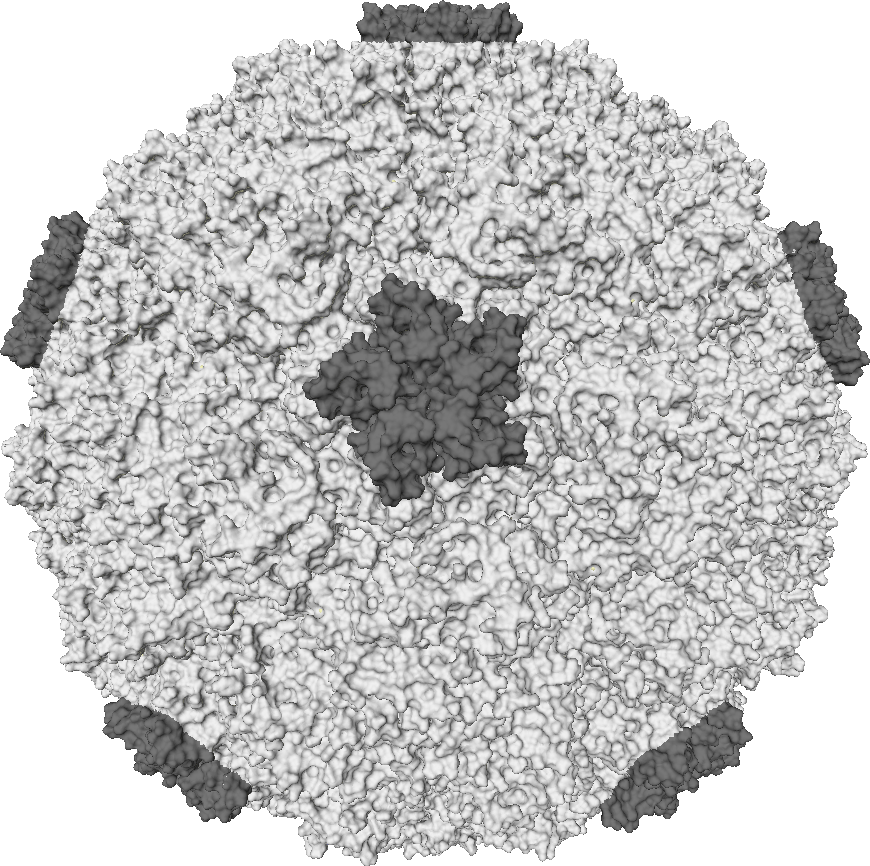
Image result for rhinovirus
original link: https://www.sciencenews.org/article/common-cold-virus-disable-protein
related link: https://www.contagionlive.com/news/disabling-setd3-gene-could-halt-viral-infections


Sunday, April 15, 2018

New insight about how viruses use host proteins to their advantage

Researchers at Uppsala University discovered a host protein that many viruses use as their transport gene when infecting their host and growing throughout the body. Viruses first infect the person, and use the host's own body cells to and mechanisms to jumpstart their takeover of the body's systems. A human gene called ZC3H11A has been known for almost 20 years yet the functional importance of the gene remained unknown. Because of this curiosity of this gene, the researchers decided to use gene-editing to turn off the gene in the human cells, since the gene was considered to be unknown in terms of purpose. The result of this inactivation displayed that the gene played no major role in the growth of human cells in the body, which was slightly disappointing to still not find its purpose. With this knowledge in mind, the researchers then decided to conduct an experiment to infect the human cells lacking ZC3H11A with a virus infection and the results were astounding.
When infecting the human cells lacking this particular gene resulted in a drastic reduction in virus growth. The theory was then tested again with 4 different kinds of viruses, HIV, adenovirus, influenza virus and herpes simplex virus, and all had a similar conclusion. These viruses need ZC3H11A to act as a transport protein, so that these strong viruses can use to latch onto and spread more of their virus cells to the rest of the host. This is very surprising however, considering that the host protein is usually shut down when the host is infected with a virus, but to benefit the virus, the cellular mechanism for RNA transport was able to be taken over for their own advantages to multiply and reproduce more efficiently and quickly. Knowing this information now can serve a major purpose in the future, specifically for anti-viral therapies and finding ways to use this information to our own advantage. In my opinion, this is such a major step to eliminating the virus from the moment they infect a person, because if a strong enough method is developed to stop the virus from reaching this transport protein, then there would be a significant amount of virus cells to deal with. All these viruses listed like HIV, adenovirus, influenza virus and the herpes simplex virus are all not simple to treat, they all have their strengths as viruses do, but knowing the first step of these virus' processes when beginning to infect the host, is highly important information and the first step to eliminating the virus from becoming a major problem that can potentially never be treated.

For more information on this article: https://www.sciencedaily.com/releases/2018/04/180402160754.htm

To read the study done by the Uppsala University on the ZC3H11A gene and what it could mean for viruses: http://www.pnas.org/content/early/2018/03/30/1722333115

Thursday, December 14, 2017

Research for halting progression of Alzheimer's

Image result for alzheimer's brain


New research has been done using a molecule against APOE in mice, and this study may reduce brain damage by half.  APOE is a gene that encodes for protein called apolipoprotein E, which can dramatically increase the risk of Alzheimer's.  The E4 variant of APOE is expressed in over half the people with the condition, and those with both copies of the gene have a 12-fold higher risk of developing the disease Alzheimer's.  
Dr. Holtzman and a Ph.D. student revealed that molecule called antisense oligonucleotide interferes with the production of the APOE protein, which can lead to less brain damage.  They injected this molecule into newborn mice predisposed to the disease and a control group of newborn mice that were give a placebo of saltwater.  This research that the APOE proteins had halved in the mice given the antisense molecule.  This information suggests that the molecule has successfully staved off neuro-degeneration related to this disease. 
This article provided a lot of information and the possible reasoning behind Alzheimer's.  By discovering the involvement of the APOE gene in this disease may lead to a possible prevention or cure.  This gene needs more research and one day hopefully will lead to a breakthrough and be able to help those with this disease. 

https://www.medicalnewstoday.com/articles/320279.php
https://www.nature.com/articles/nature24016

Monday, July 31, 2017

The Reason Human Cells Preserve the Correct Amount of Chromosomes.


According to Science Daily, researchers have discovered an important factor during cell division which helps keep human cells in maintaining the correct amount of chromosomes. Researchers from Queen Mary University of London had identified two specific proteins, very tiny, that helps attach the chromosomes and micro tubules correctly. They have found out that these proteins task is very important when it comes to the connection between chromosomes and micro tubules because without or lack of these proteins causes a gain or lost of a chromosome which then affects the human cell indefinitely. Aneuploidy is the term when the cell concludes with the incorrect amount of chromosomes. But, with the finding of this great discovery, this could be the solution towards ending aneuploidy once and for all. The two identified proteins are Aurora-B kinase and BubR1-bound PP2A phosphatase which counteract with each other to successfully give the correct amount of chromosomes for human cells. Aurora kinase adds phosphate groups to the cell while BubR1 removes phosphate groups. In addition, they help control the connection between the micro tubules and chromosomes. Dr Viji Draviam is the senior lecturer in structural cell and molecular biology from QMUL's School of Biological and Chemical Sciences. He has conducted this research with a group of students and discovered this significant breakthrough. Dr. Draviam stated "By contributing to a molecular understanding of the chromosome segregation process, this work will support future development of predictive markers or drug targets for a variety of disorders linked to irregular chromosome numbers." which could mean that prevention of chromosomes and genetic diseases will slowly decay and the future of human cells is looking bright.

Friday, July 28, 2017

Turning off genes, the recent way.

A article from Science Daily reported that scientists have discovered an amazing way to turn off genes. They experimented with mice and have uncovered this new approach towards shutting off imprinted genes. To start off, imprinted genes have affected human DNA for some time now, replicating unwanted genes which ultimately damages human beings by causing developmental and neurological disorders or worse, cancer. However, a new component towards turning off genes is by chemical tagging histones, a type of protein that aids in keeping DNA wrapped safely in the nucleus. A histone called H3K27 effectively ceases the activity of some imprinted genes in mice. Yi Zhang, an investigator from the Howard Hughes Medical Institute and his colleagues had reported this in a journal called Nature. Yi Zhang says this new finding could improve children who are born with developmental disorders by assisted reproductive technologies such as vitro fertilization. Also, the issues with cloning of mammals could be explained. Mr.Zhang has great expectations with this discovery and has said that he "believes our study will open up a new field of research" Mr Zhang approach towards "silencing" the imprinted genes is by adding methyl groups to the histones. Although this discovery is a massive step towards defeating replicated genes, researchers are still learning about the imprinting process of genes being replicated. But with this significant finding, it is said that diseases such as Angelman syndrome and Beckwith-Wiedemann Syndrome could be reduced. Also, cloning of mammals could be less difficult in the upcoming years as well. Mr Zhang concluded by saying " The new imprinting mechanism may eventually offer a target for treating such development failures"

Friday, January 20, 2017

New Techniques: Making Genetics Speed Up

SMiLE-seq: A new technique speeds up genetics

Within the human body, it contains genes. In the genes, DNA code is held together there and contains the proteins of the human body and DNA must be transcribed to RNA. in order to transcribe DNA into RNA, transcription must occur. Transcription involves DNA-binding proteins. The process can take hours. In the lab of Bart Deplancke at EPFL's Institute of of Biotechnology, a new technique called SMiLE-seq. SMiLE-seq can accelerate the process, but with minimal transcriptions needed.


SMiLE-seq is known to have many benefits including using less transcription factors, cutting time in half multiple times, and can read about all protein strands. 

Monday, November 21, 2016

Microbial Therapeutics

Bacteria are normally thought of as harmful or infectious. However, a growing field known as microbial therapeutics makes bacteria beneficial to humans. The bacteria would act like secret agents and release medicine only when instructed to. The release of the medicine to one particular area increases the efficiency of the medicine in comparison to a medicine given to the entire body. In order to induce the release of the medicine, a ultrasound machine will gently heat up the desired area. This therapy seems to most useful for cancer and diseases of the gut. The research done so far on mice has been able to show how the temperature increase causes the release of the drug and also once the temperature gets too high, like a fever, the bacteria no longer releases it. The bacteria then has an on and off switch.
Taking things a step further, the research has also shown that the newly engineered bacteria in the patient could also be programmed to self-destruct after leaving the body. The decrease in temperature from the inside the body to the outside world, could activate a genetic switch to destruct. One of studies have shown that the engineered bacteria can release a tumor destroying drug, hemolysin directed to the tumor. The mechanism of genetically modifying the bacteria involves two proteins, one from a virus, bacteriophage and one from Salmonella. Both of the proteins bind to the DNA to turn the genetic code on or off in response to temperature.

The idea that medicine can be dispensed from a bacteria is quite genius and the fact that it can also be temperature controlled is out of this world. The scientists working on this seem to have put a lot of time into every last detail of this creation and I cannot wait to see how it affects our world. I wonder how many different conditions this can help after more research is done. 

Sources:
https://www.sciencedaily.com/releases/2016/11/161114142353.htm
http://digital.csic.es/bitstream/10261/127912/1/COBIOT-D-15-00008R1.pdf