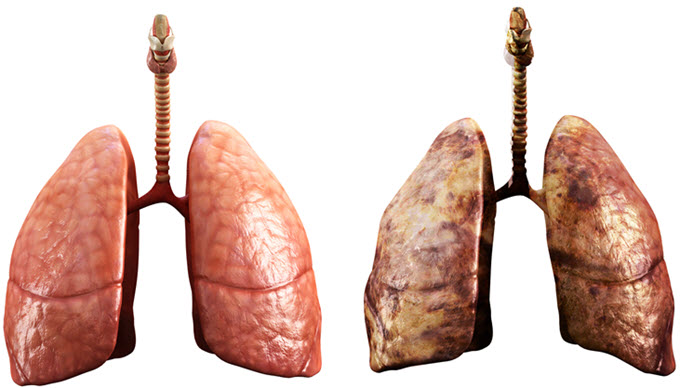
Recent discoveries in rats has shown one of the causes for pulmonary hypertension, the increase of blood pressure in the arteries of the lungs. Individuals can be examined to be completely healthy and still be victim towards the disease. These symptoms originate from a dormant mutation in the genes of rats and becomes active once the rat is effected by another condition. For example, if the rat is exposed to something as simple as the flu, it can activate the mutation in the gene, leading to pulmonary hypertension.
Scientists have discovered that most individuals with the mutation live completely healthy lives, and only a small percentage (about 20%) of individuals are effected by the mutation. On the other hand the version of the gene that is most lethal is the mutation on the BMPR2 gene. The only form of treatment and cure is to have a lung transplant that involves only a 30% chance of survival.
Due to the small chance of survival from the lung transplant, scientist could perhaps work on another pulmonary hypertension preventative. Perhaps scientist can develop a genetically modified gene that can be directed to decrease the risk or amount of inflammation in the lungs and manually place it into the DNA of humans.
Link to original article: here
Showing posts with label "lungs". Show all posts
Monday, September 16, 2019
Fatal Genetic Mutation in Rat Lungs
Saturday, April 14, 2018
A Cure for Pulmonary Arterial Hypertension could be in the works...
![]() |
| Illustration depicting the location of Pulmonary Arterial Hypertension |
Pulmonary Arterial Hypertension is a specific type of high blood pressure that affects, not only the arteries, but the lungs too. It can cause lifelong symptoms of dizziness, shortness of breath, and chest pain. Researchers at St. George’s University, in London, have identified new genetic markers for this condition.
Genome sequencing of 1,038 patients was conducted, to understand its genetic components. The researchers identified three genes for pulmonary arterial hypertension and one gene that puts someone at risk for developing the disorder. Prior to this study, no singular genes were matched to pulmonary arterial hypertension. Without understanding its genome, diagnosis, treatment, and possibly a cure is very difficult to proceed with.
With about 200,000 cases per year in just the United States alone, this discovery can lead to new drug development and treatment of this condition. In addition, it can improve diagnoses and treat those with the at risk gene ahead of time, saving their life from uncomfortable side effects.
Link to Article: https://medicalxpress.com/news/2018-04-genetic-treatments-pulmonary-arterial-hypertension.html
Monday, September 18, 2017
Does COPD have a Genetic Component?
Some people are genetically predisposed to developing chronic obstructive pulmonary disease. This is due to a mutation that prevents a protein called alpha-1 antitrypsin (AAt) from exiting the liver. This protein is produced in the liver and used by the body to fix environmental damage in the lungs. With this mutation, AAt is produced in excess causing polymerization, or chains of the protein that are too big to exit the liver. People with this mutation are more likely to develop chronic obstructive pulmonary disease, emphysema, and/or cirrhosis of the liver. A person can live with the mutation and be completely healthy or have one cigarette and develop emphysema. Researchers who found the genetic mutations have said that the major risk factors for developing COPD are whether or not that person smokes.
This mutation seems to work differently on a case to case basis. Recently, a person close to me developed COPD and after reading this article I was concerned that it could be genetic. However, half way through the article it stated that smoking was still the biggest cause of COPD and the person close to me had been a smoker for over 40 years. The second article below states facts about COPD including the statistic that 3.2 million people died of COPD in 2015.
http://health.usnews.com/health-care/patient-advice/articles/2017-06-02/does-copd-have-a-genetic-component
https://www.sciencedaily.com/releases/2017/08/170816221606.htm
Labels:
"cirrhosis",
"copd",
"genetic mutation",
"liver",
"lungs"
Subscribe to:
Posts (Atom)