Saturday, November 29, 2025

Wolf DNA in Dogs Is More Complex Than Originally Thought


Wolf DNA in Dogs Is More Complex Than Originally Thought

Benjamin Pruss

BIOL-2110-001 GENETICS

 Professor Guy F. Barbato

November 29th, 2025


    In a recent study conducted by researchers from the American Museum of Natural History and the Smithsonian's National Museum of Natural History, it was discovered that modern dogs have more wolf DNA than originally thought. They studied the genotypic and phenotypic characteristics of wolves and dogs from the Pleistocene to the present. 

    They found that, as one might expect, larger dogs bred for specific purposes, such as guard dogs, usually had the highest amount of wolf genes. There were a few exceptions to this, as dogs like the St. Bernard didn't have any wolf ancestry, while a small dog like the chihuahua did. They also found that dogs labeled as 'friendly' or 'easy to train' typically had fewer wolf genes, while those labeled as 'independent' or 'territorial' usually had more wolf genes. 

    "Dogs are our buddies, but apparently wolves have been a big part of shaping them into the companions we know and love today," said one of the authors of the study. Wolf genes have helped dogs live beside us for ages. For example, free-range dogs have adopted wolves' stronger olfactory sensor genes to find food in the towns and villages that they roam. 

Sources

Thursday, November 27, 2025

Ancient DNA uncovers a hidden chapter in the history of Down syndrome, Blog#6

  Ancient DNA uncovers a hidden chapter in the history of Down syndrome!

Potential new Ebola drug targets

I came across this MIT article about scientists using CRISPR and high-resolution imaging to study Ebola, and honestly, it was one of the most interesting things I’ve read in a while. Instead of testing one gene at a time, they used a method called optical pooled screening (OPS) to look at millions of cells at once, each with a different gene turned off, and then infected them with Ebola to see which genes the virus depends on.

Usually, research on viruses like Ebola can be extremely slow due to the fact of the safety level required. But with OPS, they were able to screen almost 40 million cells and found hundreds of human proteins the virus might rely on. Instead of trying to attack the virus directly (which mutates quickly), this approach focuses on the cell machinery that Ebola needs in order to spread. To me, that feels like a much smarter angle to target the host instead of the virus itself.

What I really like about this research is how it could lead to new antiviral drugs, not just for Ebola, but maybe even for similar viruses. It makes me think about how far genetics tech has come. Just a few years ago, we couldn’t screen millions of cells like this or see gene function in real time, and now researchers are using it to look for treatments for one of the deadliest viruses we know.

We’re evolving too slowly for the world we’ve built, according to science

This article put a lot of things into place for me. It made me realize that in all of human history, the amount of advancements and changes that have been made to our lifestyle have increased significantly in the last 100 years. In 100 years we went from screens being something that you see at a movie theater to something that everyone carries in their pocket all the time. The world we built is one we are not built for. 

                      Managing Screen Stress Caused by Technology | D'Amore Healthcare

The article explains that the amount of stress we experience on a daily basis is not something we were meant for. They put us into a sensory overload that we were never meant to experience. It also explains that this constant stress could be affecting sperm motility and count, causing a form of natural selection for stress resilience. This is obviously not a solution to the problem of stress.

Overall, this article opened my eye and I think I might be making some changes to reduce my stress levels in my life.


Source: https://newatlas.com/biology/evolution-modern-life-anthropocene/

Secondary: https://www.vice.com/en/article/modern-life-is-too-stressful-and-human-evolution-is-struggling-to-keep-up/

Why Poor Sleep Might Be In Our Genes

    I’ve always wondered why some people can knock out the second their head hits the pillow while others toss and turn for hours. I used to think it was just bad habits or too much caffeine, but after looking into it more, I learned that genetics play a bigger role in sleep than most people realize. I read a study that found certain genetic variations are linked to insomnia, meaning some people are naturally more prone to sleep issues even if they do everything “right” (Jansen et al., 2019). That made me feel better about the nights I lie awake for no reason. It’s not always about poor sleep hygiene or staying up too late. Sometimes your biology just works differently.


    Another study I found talked about how genetics also influence our internal clock, which is the system that tells our body when to be awake and when to feel tired (Jones et al., 2019). That explains why some people are naturally night owls while others wake up at sunrise full of energy. It also made me think about how unfair it is to judge someone for being “lazy” or “unmotivated” when their brain literally runs on a different schedule. After learning this, I started seeing sleep less as a moral thing and more as something tied deeply to genetics and brain chemistry. Everyone’s wiring is different, and for some people, sleep just doesn’t come easy. I think understanding the genetic side of sleep can help people be a little kinder to themselves and each other, especially when struggling with something as basic and universal as rest.


References

Jansen, P. R., Watanabe, K., Stringer, S., Skene, N., Bryois, J., Hammerschlag, A. R., … & Posthuma, D. (2019). Genome-wide analysis of insomnia in 1,331,010 individuals identifies new risk loci and functional pathways. Nature Genetics, 51, 394–403. https://doi.org/10.1038/s41588-018-0333-3

Jones, S. E., Lane, J. M., Wood, A. R., van Hees, V. T., Tyrrell, J., Beaumont, R. N., … & Weedon, M. N. (2019). Genome-wide association analyses of chronotype reveal extensive genetic links to circadian rhythms and sleep behavior. Nature Communications, 10, 343. https://doi.org/10.1038/s41467-018-08259-7

New Sequencing Method Speeds Up Genetic Diagnoses

 A new study demonstrates that long-read sequencing can drastically improve diagnosis for rare genetic diseases, cutting what often takes years of testing down to just days. Traditional genetic tests rely on short-read sequencing, which misses many regions of the genome, especially those with structural variants or complex sequences. With long-read sequencing, researchers uncovered additional genetic variants and epigenetic signals that were invisible before. 


This matters because roughly 1 in 10 people worldwide are affected by rare genetic conditions, but about half remain undiagnosed even with current technologies. By making testing faster, more comprehensive, and more affordable, long-read sequencing could finally bring an answer (and potentially proper care) to many families who’ve waited for years without a diagnosis. 

The related development, a new method called SDR-seq, goes even further by reading both DNA and RNA from the same single cell. This ability to link non-coding regions (which regulate gene activity) to actual gene expression gives scientists a richer, more functional view of genome variation. That means not only can we detect “what’s different” in someone’s genome, but also “what that difference actually does” inside cells, a major leap in understanding complex genetic diseases. 

Taken together, these advances could reshape genetic diagnostics. Instead of a fragmented puzzle solved over months or years, doctors might soon have powerful “one-test” tools that deliver rapid and accurate results. For patients and families coping with rare diseases, that kind of clarity can make all the difference.

Main Article: https://www.sciencedaily.com/releases/2025/01/250124151012.htm

2nd article: https://www.sciencedaily.com/releases/2025/10/251016223110.htm

Wednesday, November 26, 2025

Gluten May Soon Be On The Table for Celiac Patients

 Cassidy DeMasi

Dr. Barbato

11/26/2025

                                           Gluten May Soon Be On The Table for Celiac Patients 

Celiac disease is an autoimmune disorder where the body reacts abnormally to gluten. Gluten is a protein found in wheat, barley, and rye. When someone with celiac disease eats this protein, their immune system attacks something called the villi in the lining of the small intestine. These are tiny structures that help absorb nutrients. This damage not only makes it hard for the body to get the nutrients it needs but also can deteriorate the intestinal lining. 

Researchers are believed to have found a way to control these proteins from binding to each other using the identification of genes in genetics. They have found a new drug that could potentially block this protein from binding. This was done using genetic testing.

"In celiac disease, gluten causes inflammation and damage to the intestines. This happens because gluten attaches to specific proteins in the body called human leukocyte antigens (HLA). Before gluten can attach to HLA, an enzyme in the small intestine called transglutaminase 2 (TG2) changes the structure of gluten through a process called deamidation. In people with celiac disease, this deamidation makes gluten more harmful, leading to damage and inflammation in the small intestine. The drug ZED1227 could help by blocking TG2, preventing the harmful changes to gluten, and reducing intestinal damage. (New Hope for Celiac Disease: Promising Drug Shows Progress in Clinical Trials | Celiac Disease Foundation, 2024).


The patients who received the drug in the clinical trial were able to reintroduce gluten back into their diets with no issue. This science is groundbreaking because, unfortunately, even when trying to keep gluten out of a patient's diet, they are inadvertently exposed. This new finding could help save patients who are accidentally exposed to gluten.

Sources 

Celiac Disease - Allergy & Asthma Network. (2024, October 22). Allergy & Asthma Network. https://allergyasthmanetwork.org/health-a-z/celiac-disease/?gad_source=1&gad_campaignid=22862937281&gbraid=0AAAAADoPaAJhxa7QG5BQag22V_I9uw1_7&gclid=CjwKCAiA55rJBhByEiwAFkY1QG_27D-Fo0HKAZUs6uoH5i_W9Xp_kzc8XqMqb2A6OYFkpIO28xhBahoCDPoQAvD_BwE

New Hope for Celiac Disease: Promising Drug Shows Progress in Clinical Trials | Celiac Disease Foundation. (2024, July 24). Celiac Disease Foundation; Celiac. https://celiac.org/2024/07/24/maki-trial-2024/


Understanding Sensory Issues


    If you're a person who has a negative response to certain smells, tastes, sounds and textures, you may be dealing with certain sensory issues. There are many different sensory issues, such as (SOR) which is Sensory Over-Responsivity.  This means that you are overly sensitive to certain information. Or other sensory issues such as (SC) which is sensory craving. People who have this seek out sensory information to feel stimulation. 

    As a person who deals with a lot of sensory issues myself, I find myself feeling very uncomfortable in certain fabrics, especially when it rubs against a certain body part. Although it may not seem like it, these sensory issues can be explained through genetics. 

   For people who have sensory issues, it is sometimes passed down through family roots, like families with autism. Autism is linked to multiple genetic mutations that are inherited in families. Often times, sensory issues traits are shared amongst twins. 

    Overall, there is not a lot of research on sensory issues nor is there a cure but by acknowledging where these traits stem from, it might lead to why people deal with this. 

Links:


Myth of Tylenol Induced Autism

     I’ve heard a lot of people talk about Tylenol during pregnancy and claim it causes autism, and honestly it always felt like one of those internet rumors that gets repeated so many times people start believing it. Once I actually looked into the research, I realized how misleading that claim really is. I read a study that looked at acetaminophen use during pregnancy and found associations with things like attention or behavior differences in kids, but the researchers were very clear that this did not show Tylenol causes autism (Ji et al., 2020). The study pointed out that there are tons of other factors involved, like genetics, environment, and even the health problems the parent was taking Tylenol for in the first place. It made me think about how easy it is to confuse “correlation” with “causation,” especially when people are already scared or looking for answers.


    Another study went even further and explained that autism has a strong genetic basis, meaning it is influenced much more by DNA than by things like occasional medication use during pregnancy (Ji et al., 2014). That made way more sense to me, especially since autism runs in families and shows patterns that medication exposure could never fully explain. What frustrates me is how these myths can make parents feel guilty for something that isn’t their fault. People forget that Tylenol is one of the most commonly used medications in the world, and if it actually caused autism, we would see massive, obvious patterns in every country. Learning more about the research made me feel relieved, but it also made me realize how important it is to look at real science instead of headlines or social media claims. Autism isn’t caused by a pain reliever. It’s a complex neurodevelopmental condition with deep genetic roots, and spreading misinformation only hurts families who deserve better explanations.


Ji, Y., Azuine, R. E., Zhang, Y., Hou, W., Ji, H., & Di Napoli, N. (2020). Association of cord plasma biomarkers of fetal acetaminophen exposure with risk of attention-deficit/hyperactivity disorder and autism spectrum disorder. JAMA Psychiatry, 77(2), 180–189. https://doi.org/10.1001/jamapsychiatry.2019.3259


How Did Roses Get Their Thorns?

    Over 400 million years ago, more than two dozen plant species developed prickles. The spiky thorns are what botanists call prickles. Prickles are examples of evolution. Roses grow prickles on their stems, while other plants grow them on their leaves or on the fruit itself. In Brazil, a plant that is related to potatoes has been given the nicknames "Malevolence" and "Purple devil" due to its unpleasant prickles. A recent study found that a single gene is the reason behind the development and evolution of prickles. 

    Zachary Lippman, a plant geneticist intrigued by prickles, was studying a group of crops. Lippman found that plants most likely developed these prickles as a defense mechanism to prevent being eaten or harmed. The prickles can also have other purposes, like some grass species use the prickles to get onto animal fur, and some plant species use the prickles to climb. 


        This plant is called Solanum atropurpureum. This is the plant that is found in Brazil and was nicknamed "purple devil." 


References: 

https://www.hhmi.org/news/not-every-rose-has-its-thorn-and-now-scientists-know-why

https://www.nytimes.com/2024/08/01/science/how-did-roses-get-their-thorns.html


Longevity: Lifestyle or Genetics

 The question of longevity has been studied by scientists and researchers for a long time. A recent article in The New York Times argues whether lifestyle choices or “good” genetics are what extend a person's life. Decades of lifestyle research show that ignoring conventional advice on exercise, lifestyle, and dieting negatively impacts a person's health and, therefore, longevity.  The question is how much of a person's lifespan is attributable to lifestyle choices and how much is left to genetics. The study reveals that some families have special gene variants that are advantageous in living a longer life by helping these individuals avoid disease. Some genes prevent people from developing certain diseases, such as the APOE gene for Alzheimer's. It was found that some of these special gene variants counteract the unhealthy lifestyle choices some indicators make. Generally, scientists believe that 25% of life span is attributed to genes, and 75% is due to lifestyle choices. Another article in the National Library of Medicine explores this problem; the result is that both lifestyle and genetics play a role in longevity. However, those who live 100 and beyond have rare genetic factors that are important for longevity. The chances of having these genetics are like winning the “lottery”. 

This research is important to both the medical community and society because it is important for people to understand how they can contribute to their overall well-being and life span. This research allows us to understand that lifestyle is important to overall longevity, while also factoring in the rare genetics that families may have. 


New Link Between Sleep Apnea And Parkinson's


A new study reported by The New York Times in Sleep Apnea Linked to Parkinson’s Disease, New Study Finds found that people with untreated Obstructive Sleep Apnea (OSA) face a much higher chance of later developing Parkinson's Disease (PD). Researchers reviewed over 11 million U.S. veterans’ health records and found that individuals with OSA, after about six years, were nearly twice as likely to be diagnosed with Parkinson’s compared with those without OSA, even after accounting for factors like age, obesity, and high blood pressure.  Study links obstructive sleep apnea to Parkinson's disease by The Washington Post  shows that patients were not helpless to their statistics as they found OSA patients who started treatment early with a CPAP machine largely decreased their risk for Parkinson’s. This does not prove OSA causes Parkinson’s but suggests that disrupted breathing, oxygen deprivation, and poor sleep might contribute to long-term brain vulnerability. 


This emphasizes how something we often dismiss as “just sleep issues” may actually have long term implications for brain health. If untreated sleep apnea significantly increases the odds of developing Parkinson’s, it adds another compelling reason to take sleep disorders seriously especially since OSA is fairly common and treatable. The fact that early CPAP treatment seems to offer a protective effect is hopeful, because it points toward a way people might reduce their risk. The research could have expanded their study as it relied on veteran’s health record and couldn’t verify how often or well CPAP was used. So, while this is important work and a wake-up call about the value of good sleep, more research, especially in more diverse populations, is needed before drawing definitive conclusions.


Schizophrenia in the Brain Blog #5


Angelina Tadros

November 26, 2025

Dr. Barbato

Genetics Blog #5


Schizophrenia in the Brain


A recent study aimed to map the genetic structure of schizophrenia in the brain, focusing on the caudate nucleus, an area linked to the disorder and targeted by antipsychotic medications. Researchers in this study analyzed postmorton tissue (which is biological tissue collected after a person has died) from 443 donors, including people with schizophrenia or bipolar disorder and healthy controls. They examined gene expression, identifying the risk genes, gene networks and how antipsychotic use influences brain activity. They found altered expression in over 2,700 genes in people with schizophrenia, revealing both known and new genes associated with the disorder. 


This study highlights the role of dopamine regulation in schizophrenia, specifically through the dopamine receptor gene DRD2. Reduced expression of this receptor in the caudate nucleus can lead to elevated dopamine levels, which are linked to symptoms like psychosis. Additionally, researchers used a new method to map gene networks, finding linked genes involved in neuron development and signaling. These findings reflect that schizophrenia and things like medication use can cause small changes in brain cells, which may lead to problems in thinking and behavior. Understanding these networks can help researchers make treatments that target multiple genes and biological pathways at the same time. Structural imaging studies have also shown that people at high risk for developing psychosis (converters), as well as people with schizophrenia, experience fast shrinking of certain brain regions, especially the prefrontal cortex, compared with nonconverters and healthy individuals (shown in Figure 1). These studies demonstrate how genetic and cellular changes in the brain can lead to obvious structural changes that may cause symptoms of schizophrenia.

Figure 1.

Converters: people at ultra high risk for psychosis who went on to develop psychosis.

Nonconverters: people at ultra high risk who did not develop psychosis.

Schizophrenia patients vs. healthy controls: Another comparison showing how brain contraction differs between diagnosed patients and healthy people.

Brain surface contraction: Red/pink areas on the scans show areas where the brain surface is shrinking faster over time, measured in mm/year. Blue areas show movement or growth, but the focus is on the contraction.

Prefrontal cortex: Both converters and schizophrenia patients show the most contraction as shown in figure 1, this ultimately affects functions like judgment, decision-making and impulse control.


This research has highlighted the complexity of genetic risk in schizophrenia and the importance of focusing on how genes work together in networks rather than in isolation. It also shows that treatments like antipsychotics have effects on gene expression and their effects should be considered in more genetic studies. Focusing on genetic networks could help professionals to develop treatments specific to a person's genetic needs, and possibly creating better treatments to help those living with schizophrenia. 


Sources

Article: https://www.nimh.nih.gov/news/science-updates/2022/researchers-map-the-genetic-landscape-of-schizophrenia-in-the-brain

Picture+other source: https://pmc.ncbi.nlm.nih.gov/articles/PMC4235761/

Why Anxiety Might Run in Families

     I used to think anxiety was mostly shaped by the way someone grew up or the stress they go through, but after learning more about genetics, I realized there is a lot more going on behind the scenes. I read a study that looked at thousands of people and found that anxiety does have a genetic component, meaning some people are simply born with a higher chance of developing it (Levey et al., 2020). The researchers found certain genetic variants that are more common in people who struggle with anxiety disorders. It made me think about families where multiple people have anxiety, and how it is not just “learned behavior.” Sometimes the wiring for those feelings is already built into a person’s biology.


    What really got my attention is that the study also talked about how genetics don’t determine everything. Just because someone has a higher genetic risk doesn’t mean they are guaranteed to have anxiety. Environment still plays a huge part. This actually made me feel better, because it shows that people aren’t stuck with whatever traits they inherit. It also explains why two siblings can grow up in the same home and still have totally different experiences with anxiety. Reading this reminded me that mental health isn’t as simple as people think. It’s a mix of genetics, environment, coping skills, and even random chance. Overall, it made me appreciate how complicated the brain is, and how important it is to be patient with ourselves and others. Anxiety is not a weakness. Some people are just wired differently, and that’s okay.


References

Levey, D. F., Gelernter, J., Polimanti, R., Zhou, H., Cheng, Z., Aslan, M., … & Stein, M. B. (2020). Reproducible genetic risk loci for anxiety: results from ∼200,000 participants. American Journal of Psychiatry, 177, 1031–1040. https://doi.org/10.1176/appi.ajp.2020.19080845

A New “Super Wheat” Created Through Gene Editing

 China has approved its first gene-edited wheat variety, signaling a major step toward wider acceptance of genetically modified food crops in the country. The newly approved wheat was edited to improve disease resistance by altering the plant’s existing genes rather than adding foreign DNA, a method many scientists consider safer and more precise. This move is especially important because China is the world’s largest producer and consumer of wheat, and boosting crop resilience is key for food security. The approval also aligns with China’s recent efforts to expand the use of gene-edited and genetically modified crops, following similar decisions involving corn and soybeans, even as public hesitation toward GM foods remains a challenge.


Link : https://www.reuters.com/markets/commodities/china-approves-first-gene-edited-wheat-step-open-up-gm-tech-food-crops-2024-05-08/
Additional link: https://www.researchgate.net/figure/The-CRISPR-Cas9-system-is-utilized-to-improve-wheat-grain-quality-by-precisely-editing_fig4_372910165

Commentary: Researchers used gene editing to create a new wheat strain that is resistant to drought and fungal infections. The edited wheat has higher yield potential and requires fewer pesticides, making it more sustainable for global food production. This article shows how genetics is not only used in medicine but also in solving environmental and agricultural challenges. Genetically edited crops could help feed growing populations while reducing climate impacts, though public concerns about GMOs still influence acceptance.


New Genetic Test Predicts Alzheimer’s 10 Years Earlier

 You don’t need to have a family history of Alzheimer’s to develop the disease, but having a parent or sibling with Alzheimer’s does increase your chances. The risk becomes even higher if more than one close family member is affected. When Alzheimer’s appears repeatedly in the same family, it can be due to inherited genes or lifestyle factors like poor sleep, smoking, high blood pressure, or diabetes that make the risk even greater.

Link : https://www.alz.org/alzheimers-dementia/what-is-alzheimers/causes-and-risk-factors/genetics

Researchers at the University of Oxford used brain scans and genetic data from the UK Biobank to study how our genes shape both the structure and function of the brain. By analyzing thousands of brain imaging measurements, they identified over 100 genetic regions linked to differences in brain size, connectivity, tissue makeup, and other features. Some of these genes are involved in how brain pathways develop, while others relate to iron levels in the brain, which are important for understanding diseases like Alzheimer’s and Parkinson’s. Overall, the study provides a major resource for discovering how genetics influences brain health and may help scientists better understand and treat neurological disorders in the future.

Link : https://www.ox.ac.uk/news/2018-10-12-first-genetic-analysis-brain-function-and-structure-using-uk-biobank-imaging-data

Commentary: A new genetic screening test can predict Alzheimer's disease a decade before symptoms begin by analyzing a combination of risk genes and epigenetic markers. This test could be used to identify individuals who may benefit from early interventions. The work demonstrates how genetics is reshaping preventive medicine. It also raises ethical concerns: should people know their future disease risks, especially when treatment options are limited? Still, this discovery brings science closer to early detection and intervention in neurodegenerative diseases.


Scientists Grow Human Organs Inside Pigs

 Organ transplants are often the final treatment option for people with severe organ failure. Still, their success depends heavily on having enough donor organs, something the medical field continues to struggle with. Because of this shortage, scientists are placing high hopes on organ regeneration as a future solution. One major goal in regenerative medicine is to grow human organs from pluripotent stem cells. Recently, researchers have made progress in creating organs with complex structures and functions using these stem cells. Reproductive biology has also become essential in developing new strategies for organ regeneration. This review explores how animal biotechnology, especially using pigs, could serve as a platform for growing human organs in the future.

Link to article ; https://www.sciencedirect.com/science/article/pii/S0093691X16300954
Additional source: https://www.researchgate.net/figure/Generating-exogenic-human-organs-in-interspecies-chimeras-using-blastocyst_fig1_373257214

Commentary: Researchers have successfully grown human-compatible organs in pigs using advanced stem cell technologies. This process involves editing pig embryos so that they cannot form a particular organ, then inserting human induced pluripotent stem cells to grow the organ in its place. This breakthrough could solve the organ transplant shortage and save countless lives. However, it also raises ethical concerns about chimeras and the boundaries between species. The research shows how genetics and biotechnology can transform medicine in ways that push ethical and scientific limits.


Gene Drives Aim to Stop Malaria

link: https://www.nature.com/articles/s41434-024-00468-8
2nd link: https://pmc.ncbi.nlm.nih.gov/articles/PMC10795774/

Tags: Gene Drive, Population Genetics, Public Health

Commentary: Scientists are developing gene drives genetic tools that force a trait to spread rapidly through wild populations to reduce mosquito populations that transmit malaria. The goal is to either make mosquitoes infertile or prevent them from carrying the parasite. This is a powerful example of applied genetics affecting global health. Gene drives have the potential to save millions of lives, but they also raise concerns about ecosystem disruption. This article helped me understand how genetics can influence entire populations, not just individuals.


CRISPR Gene Editing Cures Genetic Disease in Humans

🔗 Link to article: https://pmc.ncbi.nlm.nih.gov/articles/PMC10980556/


🔗 Additional credible link: https://crisprmedicinenews.com/clinical-trials/#:~:text=Gene%2Dediting%20Clinical%20Trials,Other%20rare%20inherited%20diseases

Tags: CRISPR, Gene Therapy, Biotechnology

Commentary:

A new CRISPR-based therapy has shown success in curing a genetic condition directly inside human cells, marking a breakthrough in gene editing. The article explains how scientists used CRISPR-Cas9 to correct a mutation responsible for a rare blood disorder. This represents a major step toward treating inherited diseases at their root cause instead of just managing symptoms.
This research matters because it shows that gene editing is becoming safer and more precise. It also raises questions about long-term risks and how gene editing should be regulated. Overall, the study highlights how rapidly genetics is shifting the future of medicine.


The Genetic Alphabet Has Been Expanded and Welcomes New Proteins

     Researchers at Scripps Research have created a new paradigm that expands the genetic alphabet as we know it by engineering biologic molecules. As a typical protein is built from 20 amino acids encoded in mRNA by triplet codons, the new method done at Scripps use four RNA nucleotides instead of three. This new technique will allow for easy addition of non-canonical amino acids to proteins. 


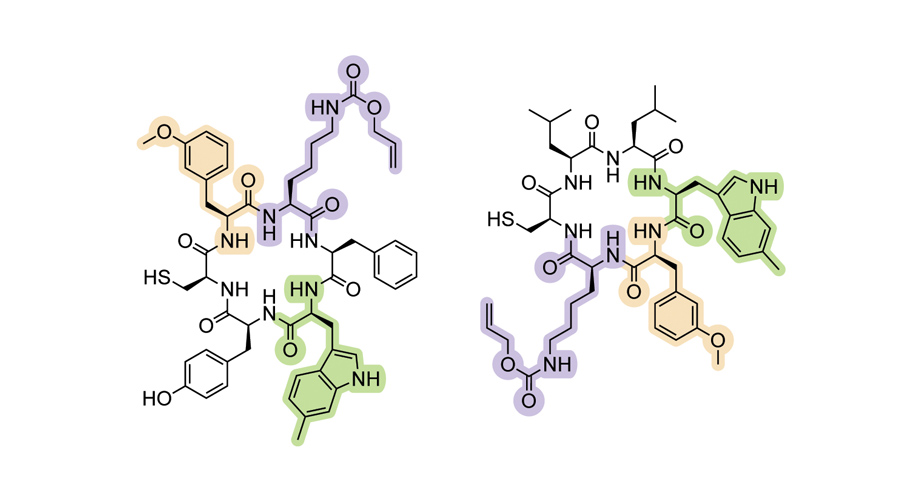
Figure I:  "Examples of the >100 macrocycles generated in this study. Colored components represent new-to-nature amino acids that were incorporated into either peptide" (Scripps Research)

    The engineering of unique transfer RNAs (tRNAs) correspond with the four-letter codons shows that editing one gene will incorporate the synthetic amino acids by using the cell's ability to synthesize proteins.Using this successful technique allowed scientists to generate over 100 new cyclic peptides (aka macrocycles), where all contain no more than three non-canonical amino acids. This result bypasses the need to rewrite the organism's entire genome, allowing for a flexible, efficient application to tailoring proteins. 

    Using this successful technique allowed scientists to generate over 100 new cyclic peptides (aka macrocycles), where all contain no more than three non-canonical amino acids. Lead researcher Dr. Ahmed Badran exclaims "our results suggest that one can now easily and effectively incorporate non-canonical amino acids at diverse sites in a wide array of proteins." 

    This newfound ability, when perfected, will broaden the horizons for future biological endeavors and presently, more research will only benefit the scientific community as a whole. 


Sources: 

https://www.scripps.edu/news-and-events/press-room/2024/2024911-badran-rna-nucleotides.html 

https://pubs.acs.org/doi/10.1021/acs.chemrev.5c00065


* sorry for black/ white highlighting, formatting was affected when taking quotes from study

Is Some of Our DNA Really Junk?

     I’ve always thought of DNA as this super organized instruction manual — you know, genes that code for proteins and everything else being mostly filler. But this new study from Cornell kind of blew that idea out of the water. Apparently, there’s a huge chunk of our DNA — the parts we used to call “junk” — that might actually be doing important stuff. They used a new sequencing method to explore these regions, which are full of repetitive sequences and transposons, and the results are surprising.

    The coolest part is that these “hidden” regions could be involved in regulating genes, influencing how our bodies respond to stress or disease, and maybe even explaining why some mutations have effects we didn’t understand before. It’s kind of crazy to think that for years we were ignoring half of our genome, and now it might hold answers to questions scientists have been puzzling over for decades.


    Honestly, this makes me rethink my idea of DNA. It’s not just neat, tidy segments coding for proteins. It’s messy, flexible, and seems to have hidden layers that we’re only starting to notice. I like that this study challenges the old idea of “junk DNA”,  it’s a reminder that science is always growing and getting better, and what we think we know might just be the tip of the iceberg.

    For genetics, this is exciting because it opens a whole new set of questions. How do these hidden regions interact with the genes we already know about? Could they help explain complex diseases? And, on a bigger scale, what else might we be missing because our tools weren’t good enough to see it? It really shows how much there still is to discover about our own genome.


First Source: https://phys.org/news/2025-11-genome-hidden-dna-sequencing-technology.html?utm_source=chatgpt.com#google_vignette 

Second Source: https://phys.org/news/2025-10-reveals-hidden-regulatory-roles-junk.html 


New In Vitro Strategies to Improve Healthy Baby Delivery Rate


    Studies using new IVF techniques performed by expert scientists at Britain's Newcastle University and and Monash University of Australia resulted in eight healthy babies being born. This new strategy combines the DNA from the mother, father, and an additional donor to lessen the risk of inheriting rare mitochondrial diseases. 

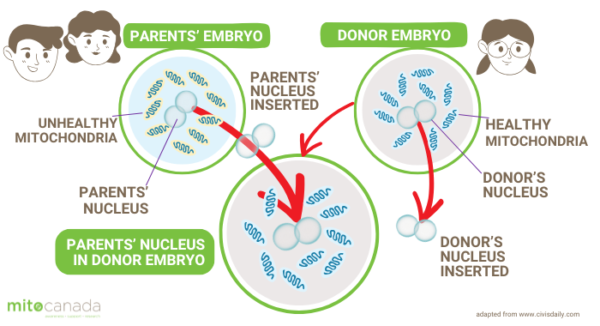
    The procedure is called pronuclear transfer, where the nuclear DNA from the mother and father is transferred into a donor egg that acquires healthy mitochondria, yet lacks the nuclear DNA. This results in the child having over 99% of their genetic material derived from the original parents, while allowing just enough DNA from the donor to replace disease-causing mitochondria. 

Figure I: chart demonstrating pronuclear transfer

    The outcome was a success, where all 8 babies (four girls and four boys) demonstrate on track development while presenting low non-disease causing and even undetectable levels of mitochondrial mutations.

    The downsides to this research is that long-term monitoring is required before this is an everyday practice. Additionally, it is also an ethical debate being that this technique involves gene alterations to humans. However, it is important to note that this is an incredible opportunity for families affected by mitochondrial diseases to be able to have children without passing down that unforgiving variant and it is a major stepping stone for other hereditary diseases as well. 

Sources:

https://mitocanada.org/what-is-mitochondrial-replacement-therapy/


https://www.scrippsnews.com/health/healthy-babies-born-in-britain-after-scientists-used-dna-from-three-people-to-avoid-genetic-disease 

 https://www.nejm.org/doi/full/10.1056/NEJMoa2415539 

Advancements in molecular and genetic testing transform brain tumor care


        This article was very interesting because it dove into the process but also the problem with access to the treatment. In the UK, genetic testing has advanced brain tumor care by leaps and bounds. So far though, only patients who have time to wait are able to undergo these treatments, "Study lead, Professor Kurian from the University of Bristol...said: "My husband, Gerard, was able to access cutting-edge treatment...because his tumor was frozen and underwent whole genome sequencing. The genetic data revealed a match with a new trial..." this is a process that takes time and can be very selective. Many are not having samples frozen for sequencing, and in some cases results took over 150 days to arrive. 

        The fact that the rollout for brain tumor treatment is so slow makes me upset. While I understand the need for caution in this area, it feels as though the progress is being artificially slowed by the boundaries in place. 

 Source: https://www.news-medical.net/news/20251112/Advancements-in-molecular-and-genetic-testing-transform-brain-tumor-care.aspx

Secondary: Kurian, K. M., et al. (2025). Transforming Molecular Neuropathology for Adult Brain Tumour Patients in the UK: Insights on Implementation, Adoption, and Patient Access (2021-2024). Neuro-Oncology Practice. doi: 10.1093/nop/npaf099. https://academic.oup.com/nop/advance-article/doi/10.1093/nop/npaf099/8263829 

A New Era in Genetic Engineering

        During my search I found this article about how a new compact tool is being used for genetic modification. The scientists working on it say that because of how compact it is, it is more practical for future treatment of genetic conditions. The system is called mvGPT, and it can simultaneously edit genes, activate gene expression, and suppress gene expression all in one system.

https://www.genengnews.com/wp-content/uploads/2025/01/Low-Res_Tyler_Gao-Lab-8.jpg
       

 I think that this is an incredible advancement, especially as someone with family diagnosed with type 1 diabetes. The fact that it can handle doing multiple tools jobs simultaneously is enough on its own but the potential for practical treatment applications this has is extraordinary to think about. 

Source: www.seas.upenn.edu/stories/a-new-era-in-genetic-engineering/

Secondary: https://www.genengnews.com/topics/genome-editing/new-prime-editing-system-mvgpt-combines-editing-and-regulation/ 

Personalized Gene Editing

 Zaneyah Hughes

November 26, 2025

Genetics

Dr. Barbato

Personalized Gene Editing

    The Children’s Hospital of Philadelphia (CHOP) made history by being the first in the world to personalize the CRISPR gene-editing technology in order to save an infant’s life. The infant, named KJ, had a rare metabolic disease called severe carbamoyl phosphate synthetase 1 (CPS1) deficiency. Thanks to Ahrens-Nicklas and Kiran Musunuru, MD, PhD.'s years of preclinical research studying similar variants to KJ’s disease, they were able to target KJ’s variant soon after birth. 


    Not only is this use of CRISPR technology groundbreaking, but as it proved in KJ’s case, it's also life-changing. If KJ hadn’t have been treated with the gene editing therapy by the CHOP and Penn Medicine team, he would’ve been stuck with the general solution for patients with CPS1 deficiency. The problem with that is that he would have required a liver transplant, which requires the patient to be medically stable and old enough for it. Sadly, KJ was neither before the gene-editing therapy. Even though the CHOP and Penn Medicine team personalized KJ’s gene-editing therapy doesn’t mean that this was a solution unique only to him. I feel like Dr. Ahrens-Nicklas and Musunuru’s technique to save KJ can be applied not just to other patients with similar diseases, but many of people who have genetic diseases.


Source: https://www.chop.edu/news/worlds-first-patient-treated-personalized-crispr-gene-editing-therapy-childrens-hospital

Extra Source: https://innovativegenomics.org/news/first-patient-treated-with-on-demand-crispr-therapy/