Thursday, November 5, 2015

Predicting Drugs Side Effects Based on Genetic Makeup

As Prof. Bernhard Palsson states in the article, to sum up his work thus far, "this study is a step forward in demonstrating that patients could be precisely treated based on their genetic makeup". What him and his colleagues aim to accomplish through this model is to be able to predict how individuals will react to the same drug based on their genetic makeup, Palsson specifically did this using red blood cells.

Palsson based this model on the idea that people have different variations of the same gene, which as a result would affect how they metabolize a certain drug.  The model was designed to collect data about the genetic type of the person as well as their specific metabolism; and as a result to help predict how an individual's body will react to a drug.

This particular study involved the kinetic model of red blood cells, as defined in the article, a genetic model is "one that stimulates the chemical reaction of a system and takes into account rates and changing levels of products".

Using this model researchers were able to identify people at risk for anemia induced by ribavirin, and through the model identify the regions in the red blood cells that cause this side effect.

Taking this study the researchers want to build models for larger groups in order to test their ideas further, extending the models into platelet cells and eventually cells of the liver, which would be ideal as this is where most drugs are metabolized.


If this model were to succeed and they research eventually reaches the point where they are able to use a model of liver cells, I think this would be a huge step forward in science / medical field especially when creating new drugs, and in the process of clinical trails.  As a result, researchers, doctors, etc., would be able to better treat each individual based on their own genetics, resulting in a better outcome for the patient.  Eliminating unwanted side effects of a drugs just by knowing how ones body would react to a specific drugs, even when it works for some people, would be amazing, not just for doctors / scientists and people in the field, but also for the people and communities as a whole.

Can The Loss of Hearing Be Reversed?

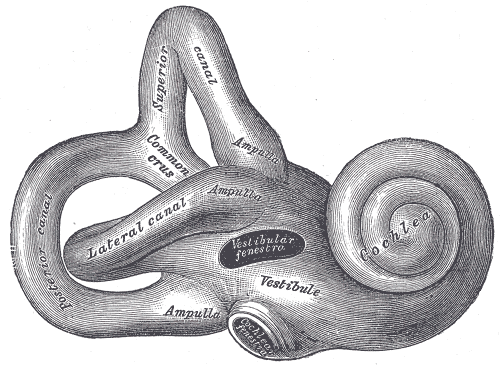
Researchers at the Rockefeller University in New York City have studied the inner ear and have come across a breakthrough that may lead to the restoration of hearing and balance. The inner ear contains hair cells that make a big contribution to hearing and balance. As humans age, these hair cells slowly die and hearing and balance progressively impair hearing and balance, mostly when people are elderly. The research was conducted by professor A. James Hudspeth and Dr. Ksenia Gnedeva. In their work, they studied mice and found two genes that may be linked to the generation of hair cells.
The inner ear contains structures called utricles, which are sac-like organs that contain hair cells and detect motion. Two genes were found in the utricles that were found to be highly active before birth and slowly declines in activity after birth. This gene activity was found to be directly linked to the development of hair cells. In further studies of the mice, Dr. Gnedeva found that when these genes were turned off, the mice developed abnormally. When the genes were turned on, the mice the older mice had fully mature hair cells. This research opens up many possibilities if these genes could be manipulated in humans. It could lead to the reversal of the loss of hearing and balance in the elderly and even the regeneration of hair. I think that this research made a great contribution to the medical and health industry, as it is a natural occurrence to slowly lose your sense of hearing as you age, and it would be a great advancement if one of your senses could be restored through gene manipulation.

Researchers Build Nanoscale Autonomous Walking Machine from DNA

Researchers have found a way to create a molecule that walks in a bipedal fashion along a bumpy surface. Using a single piece of DNA connected to two legs and a torso, this nanotechnology may be able to be used to find cancer cells. According to this article, there may soon be DNA walkers that walk around an organ, "constantly computing whether cancer is present," according to Andrew Ellington, a professor in the department of Molecular Biosciences.
Similar molecules had been synthesized in the past that were only able to walk in specific directions or on specific DNA sequences. For example, in a paper published by William B. Sherman and Nadrian C. Seeman, similar DNA motor molecules that are able to use a "foot...to pair with complementary strands of DNA." These molecules differ from the new molecules in that previously, there were specific locations they could move. The new molecules can move randomly in any direction over a bumpy surface, allowing them to be indiscriminant of what cells they land on. This allows them to randomly find what may be cancer cells and eventually to amplify them to notify their presence.They may also mean there is a future for nanoscale therapeutics.
This is so interesting to me because I remember in a high school biology class we watched a video of a molecule that walked along DNA, literally, with what appeared to be legs. To see that humans are able to recreate this with actual DNA molecules and that we can use it to our advantage is amazing.

Wednesday, November 4, 2015

Gene alteration makes an ordinary stomach bug a dangerous virus

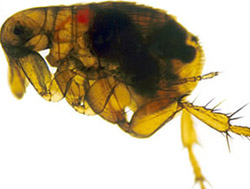
Tourists from the Yosemite National Park were diagnosed with a virus assumed to be the Black Plague. The plague, caused by the bacterium Yersinia pestis, has spread to multiple Western Americans through flea transmission. Recent findings suggest that the Y. pestis became lethal after altering the gene pla. The gene pla is originally responsible for preventing blood clots. Any bacterium with pla would be capable of preventing the body from forming clots during an injury and prevent further bleeding. The gene alteration made pla more virulent, so it could spread more easily with human contact or flea transmission. With the gene alteration in pla, Y. pestis can cause pneumonia at an alarming rate, and kill any person who hasn't receive proper antibiotics.

Oriental rat flea with Y. pestis in its intestinal tract
With findings in how the plague became more dangerous, scientists began to how the plague came to occur. They found that the plague existed for over 20 million years after finding an amber encased flea carrying an ancestor bacterium of Y. pestis. Other findings revealed that Y. pestis had an evolutionary precursor pathogen strain called Y. pseudotuberculosis, which at worst could cause slight diarrhea. After an experiment with the two pathogens, it was shown that the Y. pseudotuberculosis was poisonous to fleas, which made it impossible to carry to other organisms. On the other hand, the Y. pestis was not poisonous to fleas, so that could easily carried to other living organisms, such as humans. This made Y. pestis a more effective virus strain. Further research is being performed, but all that is known now is that Y. pestis has become a dangerous strain because of only one small gene alteration.

Original Article

Secondary Article

Cause of Host Specificity in Salmonella Determined by Penn Researchers

Many species of bacteria have multiple serovars, one species is Salmonella. Salmonella is commonly known for causing food poisoning, but only certain serovars contribute to human illness. Other strains which do not affect humans could possibly affect cows, poultry, or other numerous hosts. University of Pennsylvania scientists studied these different strains of Salmonella to determine the cause of their host specific adhesion. To determine the differences in the strains of bacteria, the researchers compared the bacteria's genomes. The analysis allowed the researchers to identify SNPs of the bacteria, most importantly polymorphisms in proteins on the surface of the bacteria. Surface proteins allow the bacteria-host interaction and were believed to be crucial in host specificity. After studying 580 different strains of the bacteria, the researchers determined that variation of the surface proteins supported their belief of host specificity caused by surface proteins. The scientists then examined the protein FilmH further, due to it having the most variation. To verify that the change in the FilmH protein was the cause of the different affinities of the Salmonella, the scientists modified E. coli bacteria to carry two forms of the FilmH protein:affinity to humans and affinity to bovines. The E. coli cells acted as predicted; the cells with the FilmH strain associated with human affinity were only attracted to human cells, while E. coli with FilmH protein associated with bovine affinity were only attracted to bovine cells.

By determining the protein which causes affinity in Salmonella, scientists can help prevent illness caused by this bacteria. The affinity of Salmonella strains was determined to be caused by the change of one amino acid. By altering this amino acid, vaccines can be made to prevent food poisoning from Salmonella.This can also help farmers protect their livestock if they are infected by Salmonella. I also feel that creating a vaccine based on altering FilmH can be dangerous. If the vaccine in humans alters the FilmH to a serovar with bovine affinity, could it lead to greater risk of livestock infection. I am sure there are other precautions which could be taken to avoid this risk, but an outbreak of Salmonella in livestock could be detrimental to human society.

Tuesday, November 3, 2015

Egg Being Fertilized By More Than One Sperm In Birds?

Birds' eggs are fertilized by more than one sperm, a process called polyspermy.  Studies have shown that more sperm in an egg is correlated with more viable offspring.  In birds, when more sperm fertilize an egg, the developing chick will make it full term before hatching as opposed to eggs with less sperm that are more likely to die during development.  In humans, polyspermy is very uncommon but does occur on occasion.  Many times, in humans, polyspermy leads to the death of the developing baby due to complications during meiosis because of all the extra chromosomes that are made.  It is still unknown why birds have to have more than one sperm fertilize their eggs, but future studies may find a better understanding to explain this.  This is very interesting because of how polyspermy varies from species to species.  If humans were to survive after undergoing polyspermy in utero, how would they look, or function? 

To read the article publised by the New York Times on birds and polyspermy, click HERE

A Newly Discovered Tumor Suppressor Gene Affects Melanoma Survival


A research team at Weizmann Institute of Science has discovered a gene that is one of the "drivers" of a particularly deadly type of melanoma (cancer of pigment-containing cells.) This gene is a member of a group of genes called tumor suppressor genes, and as the name suggests, tumor suppressor genes normally inhibit cell growth, including that of cancer cells. When these genes are mutated, they act like defective brakes on cellular proliferation. The expression of this specific gene was found to be lost in over 30% of melanomas that effect humans. The theory is that this loss of expression is associated with a reduction in patient survival.

"The melanoma genome sequences contained mutations in known tumor suppressor genes, but there was also a new gene that stood out in the team's search, named RASA2. The researchers' next step was to conduct a series of functional experiments to understand exactly what this gene does. They cloned both the normal protein and the most recurrent mutated versions to see their effects on melanoma cells. They found that RASA2 regulates a key protein in the cell, called RAS. RAS has been identified as a major oncogene that contributes to the unchecked growth of cells. When they restored the production of the protein in melanoma cells that harbored RASA2 mutations, these cells stopped growing and eventually died."

Most targeted cancer therapies today focus on inhibiting the products of oncogenes. The loss of function or mutation of tumor suppressor genes like RASA2 are a large contributor to melanoma development, and may lead researchers to target these genes in future cancer treatments.

"Prkci" Genes Maintain Stem Cell Count

Stem cells have the ability to develop into may different cell types in the body during early life and development.  Stem cells are unspecialized and have the ability to replicate and go through cell division.  They can also be differentiated under certain conditions and become organ or tissue specific with specific functions.  However, due to stem cells having a non-specific function, too many can lead to cancer and not enough can lead to damage in maintenance and repair in the body.  Francesca Mariana and colleagues at the University of San Diego in California are performing research on a gene that maintains the essential balance of stem cells in the body.  This gene is called the Prkci gene.  The gene is the commander for all stem cells and deciphers whether the stem cells will self-renew and replicate or differentiate into special cell types.

Mariani and colleagues performed experiments on mice embryonic stem cells which lacked the Prkci genes.  Without the gene, the stem cells favored the renewal and replication of the cells.  When looking closer at the stem cells, they generated typical stem cells and activated neural, blood forming, and cardiac cells. The Prkci genes activate and deactivate whats called the "Notch signaling pathway".  When Prkci genes are absent, the pathway signals stem cells to regenerate to make more unspecialized stem cells.  When the Prkci genes are present, the pathway signals for the stem cells to become differentiated and specific.

I think this gene that is being researched and experimented with has positive and negative aspects.  When Prkci is inhibited (not turned on) in people it can cause consequential overgrowth of cells which may lead to cancer.  However, in people who are seriously injured or who have a disease, inhibiting the gene could be beneficial because stem cell production is boosted and promotes faster healing.  Stem cells are tricky, yet essential to the human body and with more research, are found to be a rapid army of cells commanded by the Prkci gene.