Showing posts with label Anemia. Show all posts

Thursday, December 7, 2023

CRISPR Gene Therapy Approved

 CRISPR-Cas9 has been one of the most pivotal developments in 21st Century Genetics. To put it simply, CRISPR technology uses a "Guide RNA" to bind to a specific site of DNA. That RNA-DNA pair is then cleaved with an Endonuclease and a cut in the DNA chain is made. Selected/Desired genes can then be inserted into the cleaved portion of DNA allowing for novel protein expression. For agriculture this has been particularly well studied as it allows botanists to insert genes that make crops resistant to pathogens, tolerate droughts better, or grow uniquely colored/flavored products. The same pattern of applications have been used in animal agriculture, making many disease resistant breeds of fish, poultry, etc. 
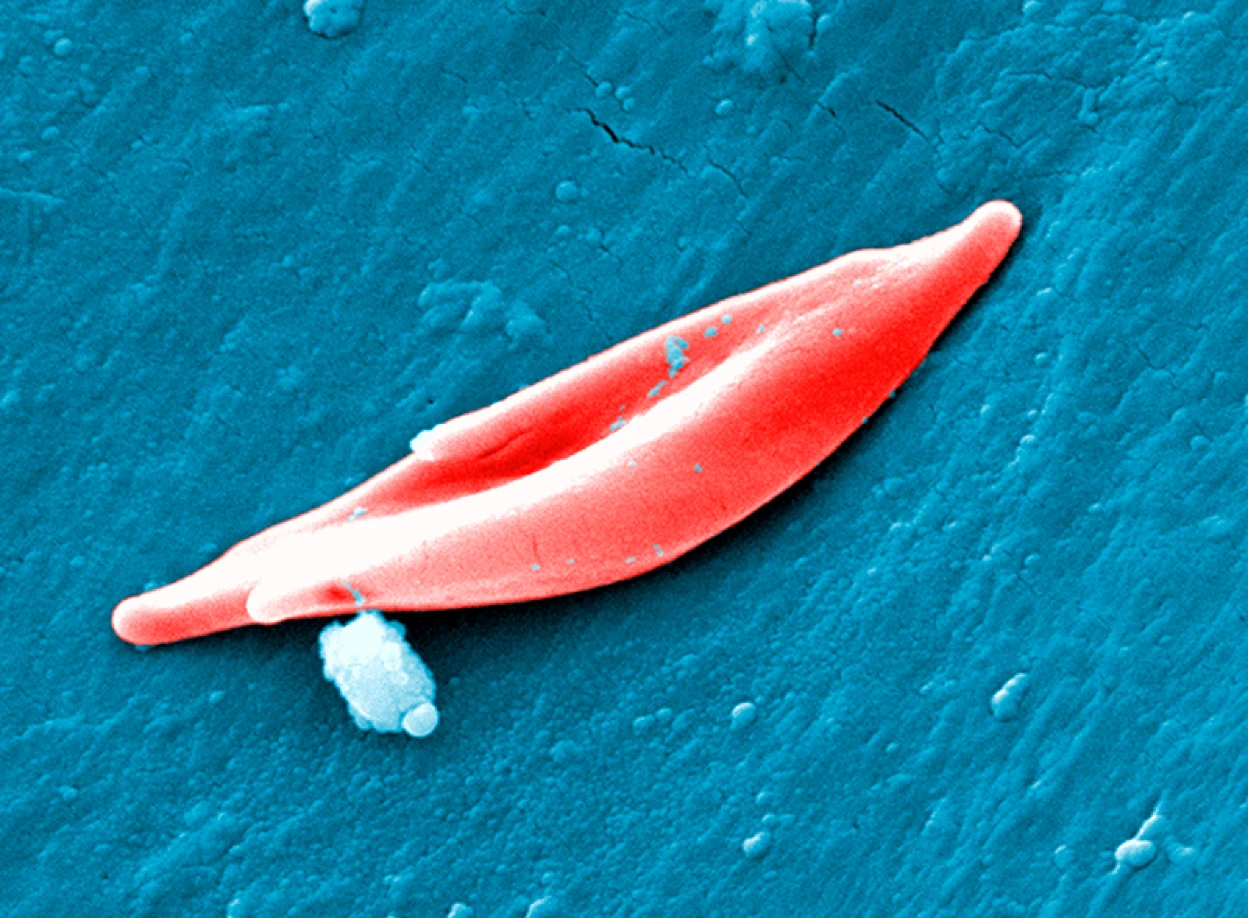
A Red Blood Cell with Sickle Cell Anemia

In medicine, gene therapy is becoming one of the hot topics. Recently, CRISPR-Cas9 was approved by the FDA for human trials to treat Sickle Cell Anemia. Sickle Cell Anemia is caused by a genetic mutation that inhibits the formation of hemoglobin. By manipulating the genomes of those with sickle cell anemia, scientists could theoretically let those afflicted produce normal hemoglobin, and in turn be cured of their condition. 

A diagram on how CRISPR-Cas9 works

One worry I have is whether or not mutations associated with sickle cell anemia are pleiotropic. If they are there is a potential for patients to produce healthy hemoglobin but could potentially express other currently unknown problematic proteins. However, given the thoroughness of modern medical trials, this worry seems highly unlikely. 


Link to article here

Wednesday, December 1, 2021

Gene Therapies Used to Treat Sickle Cell Anemia and B-thalassaemia


Sickle cell anemia and B-thalassaemia are two genetic blood disorders that are caused by the mutation of the B-globin gene. Sickle cell anemia (SCA) is a form of anemia where the redblood cells are sickle, or crescent moon shaped. B-thalassaemia is a form of anemia that causes a reduction in the production of hemoglobin. Both of these forms of anemia affect the way that red blood cells contain and carry oxygen, which negatively influences our physiology and overall quality of life. Although the only form of treatment for these types of anemia are stem cell/bone marrow transplants, this article highlights gene therapy techniques including CRISPR-Cas9 as well as using RNA to alter the B-globin gene have been used to treat the painful symptoms, otherwise known as pain crisis that follow SCA and B-thalassaemia. These gene therapies were used to change the expression of the B-globin gene that affects these anemias at the level of fetal development and turns them off right after birth. In doing this,it was hypothesized that more -globin could be produced.  The CRISPR-Cas9 approach altered the expression of the BCL11A gene in red blood cells while the RNA approach copied the functioning B-globin gene and placed it into blood-producing stem cells. The downsides to these therapies are issues in fertility, abdominal pain and infection. These therapies are still being tested to further improve the treatment of these therapies.

https://www.nature.com/articles/d41586-020-03476-x

Thursday, August 5, 2021

Sickle Cell Anemia Presence in Africa


    The inspiration of this article comes from a conversation I had today with a co-worker whose ancestry descends from Nigeria. We work in an emergency room together, our experiences today is what initiated this conversation. Sickle Cell Anemia (SCA) is a homozygous recessive trait that causes an abnormality amongst red blood cells, hemoglobin is the protein in your red blood cells that is responsible for carrying oxygen. Sickle cell anemia is common in places where malaria amongst mosquitoes is prominent, natural selection promotes family pedigree who are resistant to the malaria disease. In turn, if a person is immune malaria they unfortunately carry the sickle cell trait. This immune population can either be heterozygous or homozygous recessive. Being diagnosed with sickle cell anemia brings many potential health risks including sickle cell crisis, vaso-occlusion blood clots to digits in infants, the spleen, lungs, etc. If someone has sickle cell anemia, they are immune-compromised, if their body were to come in contact with common bacterias that cause pneumonia, or common colds, without proper medical attention these bacterias can yield fatal results. The first link of my article is a video that gives insight on the pathophysiology, potential health risks, and treatment methods of sickle cell anemia. I recommend giving it a watch, as it is quite fascinating. 

    Reflecting back on the conversation with my co-worker, she began to explain some methods countries in Africa and South-East Asia use to try to mitigate the presence of this brutal disease in their countries. In her home country, it has gotten to the point where churches will not conduct a marriage unless the genotype of the parents is confirmed. If the engaged couple runs the risk of producing offspring who can suffer from SCA, the church will not conduct the marriage. While some may regard this as unethical, the prevalence of sickle cell in their country is alarming. It is estimated about 150,000 children in Nigeria have SCA, and nearly 25% of the country are heterozygous carriers of the trait. Since there is no cure for the disease, the only way to lower these numbers is to try to prevent it from being passed on. This was a very interesting topic to me, if anyone has more insight on this please leave a comment as I would like to learn more. 


Link: https://www.youtube.com/watch?v=fIIJmg_1hv0

Link: https://bmcmedethics.biomedcentral.com/articles/10.1186/s12910-019-0376-8

Link: https://www.cdc.gov/ncbddd/sicklecell/data.html 

Sunday, March 17, 2019

How The Icefish Got its Transparent Skull and See-Through Skull

In an article from The New York Times, it describes how the icefish got its transparent blood and see through skull basically through "genome" hacking. At first, a Norwegian scientist figured out the species doesn't make red blood cells or hemoglobin that carry oxygen through the body. This works for the icefish because red blood freezes and is harder to pump throughout the body. It's acquired by part of adult genomes being dedicated to creating "ice-preventing proteins in shell like casings that surround fish embryos. A developmental biologist, John Postlethwaite, discovered the fish developed supersized gills and lost its scales to enable absorption of the waters oxygen through the skin.


The icefish has also accumulated lipids that help the fish float in water along with floppy bones that are less mineralized allowing it to rise in the water column to feed on krill that aren't found near the sea floor. The research team is still working to understand how the adaptations of bone density can be reflected in the icefish genome which may lead to a better understanding why/how humans lose bone density and develop osteoporosis with age. How the icefish lives with severe anemia may also help with the reason why humans can't. Dr. Postlethwaite calls this species "evolutionary mutant models" due to their genomes being able to explain traits.

Photo Credit: Doug Allan/Nature Picture Library, via Minden Pictures

Thursday, November 5, 2015

Predicting Drugs Side Effects Based on Genetic Makeup

As Prof. Bernhard Palsson states in the article, to sum up his work thus far, "this study is a step forward in demonstrating that patients could be precisely treated based on their genetic makeup". What him and his colleagues aim to accomplish through this model is to be able to predict how individuals will react to the same drug based on their genetic makeup, Palsson specifically did this using red blood cells.

Palsson based this model on the idea that people have different variations of the same gene, which as a result would affect how they metabolize a certain drug.  The model was designed to collect data about the genetic type of the person as well as their specific metabolism; and as a result to help predict how an individual's body will react to a drug.

This particular study involved the kinetic model of red blood cells, as defined in the article, a genetic model is "one that stimulates the chemical reaction of a system and takes into account rates and changing levels of products".

Using this model researchers were able to identify people at risk for anemia induced by ribavirin, and through the model identify the regions in the red blood cells that cause this side effect.

Taking this study the researchers want to build models for larger groups in order to test their ideas further, extending the models into platelet cells and eventually cells of the liver, which would be ideal as this is where most drugs are metabolized.


If this model were to succeed and they research eventually reaches the point where they are able to use a model of liver cells, I think this would be a huge step forward in science / medical field especially when creating new drugs, and in the process of clinical trails.  As a result, researchers, doctors, etc., would be able to better treat each individual based on their own genetics, resulting in a better outcome for the patient.  Eliminating unwanted side effects of a drugs just by knowing how ones body would react to a specific drugs, even when it works for some people, would be amazing, not just for doctors / scientists and people in the field, but also for the people and communities as a whole.

Thursday, November 8, 2012

Loss of Essential Blood Cell Gene Leads to Anemia

Recently in Science Daily news there has been a discovery of a new type of gene which regulates hemoglobin synthesis during red blood cell formation. These types of findings have been able to relate to treatment of human anemias and different types of mitochondrial disorders. Researchers first tested this on zebrafish. The fish were genetically screened to clone this mitchodontrial factor connected to the gene called Atpif1.


This is the gene which allows to successfully make hemoglobin. Hemoglobin is the protein in red blood cells which allows the transportation of oxygen in the blood. Atpif1 not present in the body can result into anemia. This gene also regulates enzymatic activity of ferrochelatase. This is also known as Fech, which is the terminal enzyme in heme which is a part of hemoglobin. This gene has allowed to successfully modulate the synthesis for the heme production. The deficiency of gene Atpif1 can relate to congential sideroblastic anemias. This is a disease in which the bone marrow produces ringed sideroblasts rather than healthy red blood cells.

[caption id="attachment_5739" align="aligncenter" width="512" caption="Atpif1"][/caption]

There is constant research being done in order to identify genes which can be responsible for hematopoietic stem cell development. Slowly researchers are looking into more of these works they have been doing and creating better opportunities for human congenital anemia’s. The number of visits emergency departments with anemia as the primary diagnosis has been estimated as to 5.3 million. Hopefully there will be more research done for many more successful treatments among humans.