Monday, November 2, 2015

Researchers Discover a Way to Produce More Red Blood Cells


As a result of the shortage of blood supply in blood banks, scientists found a way to use stem cell techniques and genomic editing that cause red blood cells to grow rapidly. According to a new TIME article, Dr. Vijay Sankaran and his colleagues took blood stem cells and conducted genetic surgery to find a specific gene that is linked to lower red blood cell production. Then they were able to turn off this gene and allow more cells to be produced. "The process of surgically altering the gene in question and coaxing the stem cells to develop and produce blood cells, resulted in a tripling of the number of red blood cells compared to control stem cells that were simply allowed to grow in a lab dish."

This is a huge discovery in genetics and health because the process could be improved upon to create more blood cells for medical procedures that require transfusions. I know if scientists further this research and continue to perform genetic surgery to alter genes, there will be incredible advances within medical care in curing chronic conditions. If we could alter a gene to produce more cells, it could be possible to alter them to stop producing the cells. Imagine where that could lead us in cancer treatment and could even replace invasive chemotherapy. This is the beginning of major findings in the human genome and the power we have to manipulate it.




Chicken study reveals evolution can happen much faster than thought

According to a study led by Greger Larson preformed at Oxford University Research Laboratory of Archaeology, evolution can occur much faster than previously thought. A study preformed on chickens has shown that two mutations that have arose in the mitochondrial genome of chickens occurred in just 50 years. This study involved following the pedigrees of individual chickens. It has been long believed that the rate at which mitochondrial mutations occur were not faster than 2 percent per million years. This new study shows that the rate of evolution is 15 times faster than previously thought.

Another interesting finding that came out of this study was the “discovery of a single instance of mitochondrial DNA being passed down from a father.” This was discovery was made possible because the experiment included both the identification of the genetic sequence of the chickens as well as having the pedigree of each individual chicken that was involved in the study.

This article was very interesting. I always enjoy reading about things that are thought to be a certain ways but can be proven to be untrue. I am not sure that evolution would occur this fast in other species but the fact that it only took 50 years for a mitochondrial mutation to occur in chickens is truly fascinating.

Asians and Europeans; Lactose-Intolerant 5,000 Years Ago

     Studying ancient DNA has always been a big part of genetics as it gives insight into the past history of humans. What was generally already found is that around 5,000 years ago, Europeans and Asians are generally light-skinned and - surprisingly - lactose intolerant. During the Bronze Age, which ranged from the years of 3,000 - 5,000 years ago, was a time of mass human migrations throughout the region of Europe and Asia. Because of these large migrations, the present-day demographic structure has been developed. 
     Researchers have sequenced genomes from 101 unearthed ancient humans from Europe and Asia. Although DNA sequences have previously been studied using ancient DNA, the new technology that is available makes for clearer data. It has recently been discovered by Morten Allentoft of the University of Copenhagen’s Natural History Museum and his colleagues that light-skinned Europeans were present at a high frequency already in the Bronze Age, thus implying that light-skinnedness was first developed previous to 5,000 years ago. Another conclusion from their data tells that during the Mesolithic hunter-gatherer age, the presence of blue eyes was already established. 
     These data are set to answer the question, could there be a greater distribution of Neanderthal DNA in the genomes of Europeans and Asians? This is still unclear, however the findings suggests that these humans were settled into Europe and Asia before the Bronze Age.
     Something also interesting about the data is that 5,000 years ago, humans had not evolved the enzyme to break down lactose - the sugar found in milk. In an evolutionary perspective, this makes sense because ancient humans and - in fact, mammals in general - do not need to drink milk to survive after infancy, thus the lactose intolerance. When humans began to produce the enzyme to break down that indicated the start of domestication of animals which did not occur much before 5,000 years ago thanks to the data. 

     I personally think that this article is interesting because there are people who today are still lactose intolerant. The article tries to explain this as their ancestors did not drink much milk, thus never needing the enzyme to break down lactose. It is amazing how using the preserved DNA from bones that have been under the earth for so long can lead to vast discoveries like this. This discovery tells a lot about the time line of when humans became what we are today.

Inner ear gene discoveries offer clues about hearing and balance

Normal and defective inner ear
Normal development on the left, absence of Sox11 and Sox4 leading to malformation of the inner ear structures on the right.
A new study from the Rockefeller University in New York may show researchers ways to regrow hair cells and restore lost hearing and balance. The study was lead by senior author and professor, A. James Hudspeth, and the lab work was done by Dr. Ksenia Gnedeva. They examined mice before and after birth, and discovered that two genes control the process of generating hair cells. By switching the genes on, new hair cells were observed in mature utricles. The utricle, a small sac or bag-like organ lined with hair cells that detects motion, is highly controlled by the transcription Sox4 and Sox11. Even in older mice, when the genes are turned on, Gnedeva found new hair cells developing. However, if both genes are turned off in developing mice, it leads to the entire inner ear developing abnormally.
This study was done in hopes to find a way to "restore hair cells later in life".
A study in a similar field was done recently, and it is the development of a genetic blueprint of inner ear cell development. This was found with a new technology called single-cell RNA-seq. This sequencing provides a' foundation for the potential development of cell-based therapies for treating hearing loss and balance disorders. The adaptation from the original media release can be found here.
I find this so interesting that such a small factor can have such an expansive outcome.

Sunday, November 1, 2015

Meat causing cancer?


     Experts in the World Health Organization have states that processed meat like hot dogs, ham, and bacon increase the risk of colon cancer as well as other red meats. However they did not specify how much is okay to consume. Others explained that the increased risk of cancer is relatively small compared to other factors such as alcohol, asbestos, and tobacco smoke. Dr. John Loannidis, the chairman of disease prevention at Stanford University, stated in the article that the risk that is associated with smoking and drinking are much higher than the association of red meat that risks people for cancer. “Smoking causes a roughly 20-fold increase in a person’s risk of developing lung and other types of cancer, and every year it results in about a million deaths worldwide” (O’Connor, 7). For every serving of processed meat consumers about 1.1 or 1.2 of factor increases, expect the amount of deaths that should occur according to the increasing fact is far more than actual. It said that the type of cancer that can be developed  are colorectal, pancreatic and prostate.
    After reading this article I was actually surprised because I have always heard people say how healthy it is to eat meat because of the protein. If it increases the risk of cancers and especially prostate cancer, I wonder if it has anything to do with the genes males have. Based on the article, smoking and drinking is worse than eating meat, which I totally agreed. Smaller portions of red meat might be helping when considering the risk of cancers.

Genes Determine the People You're Attracted to

According to a study by researchers at the University of California, San Francisco, a person tends to be attracted to people with similar DNA, specifically with specific genetic ancestry. The phenomenon known as assortative mating suggests a similar theory. According to the study, people typically select mates based on genetic ancestry, outweighing "other socioeconomic factors, such as education levels, which itself has shown to be a powerful predictor of attraction in previous research". The study further concluded that mates were often, on average, the "genetic equivalent of between third and fourth cousins". The specific statistics and collected data pool can be seen in the recent release of Proceedings of the National Academy of Sciences. In 2014, a study was conducted by the University of Colorado, Boulder, in which single-nucleotide polymorphisms were examined among a population. To their surprise, "married individuals were like to be more genetically similar than two individuals randomly selected from the same population". Lots of evidence from multiple studies around the country have confirmed that genetics play a large role in the selection of a mate.
I find this article interesting because I had always assumed that attraction was completely psychological. I hadn't imagined that genetics could be a factor in attraction to others. It is an interesting discovery that I believe needs further scientific investigation, but nonetheless is very interesting and likely an evolutionary adaptation.

The Roots of BRCA1 Mutations for Ashkenazi Jews

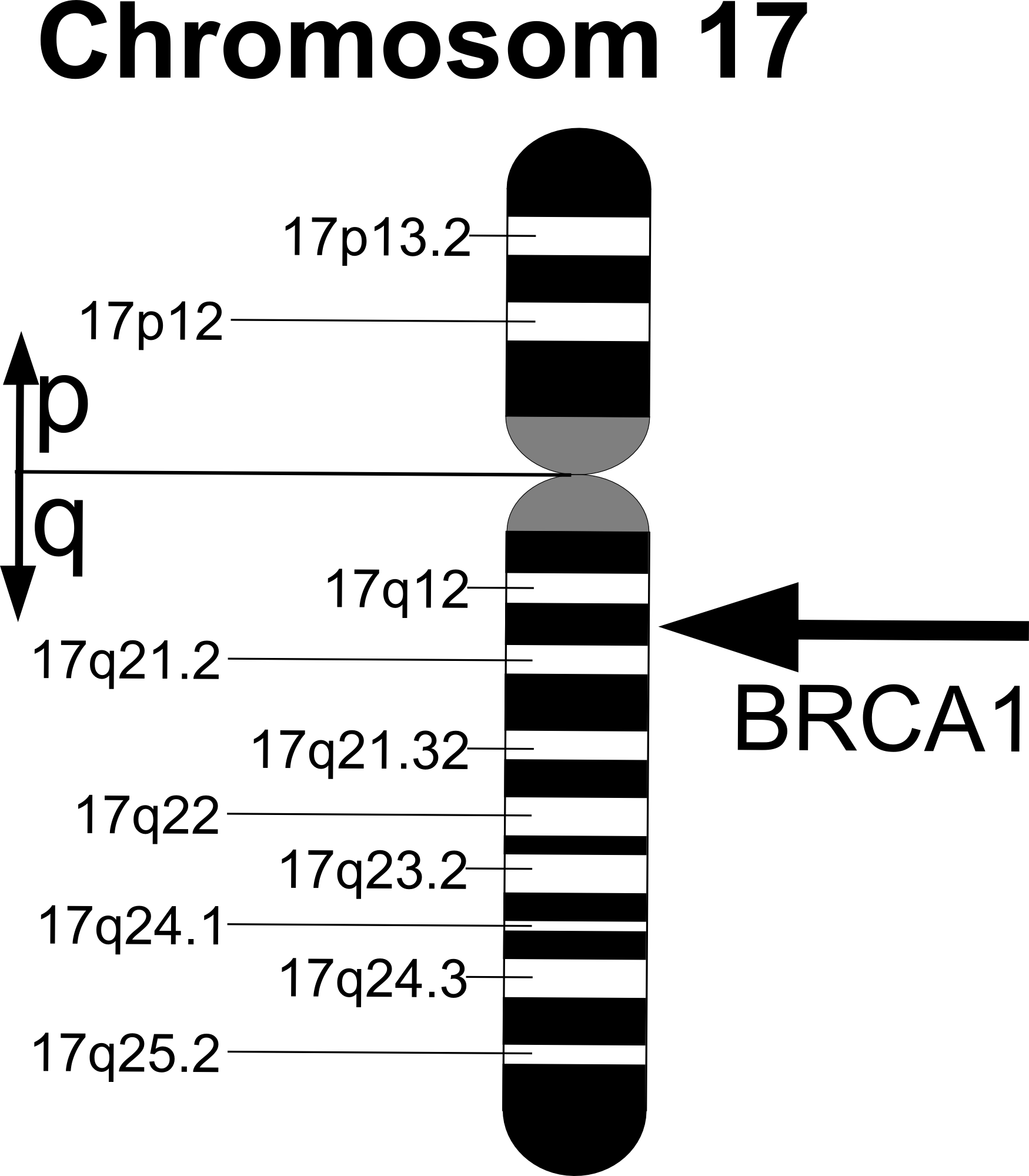
The BRCA1 gene is associated with breast cancer. Recently it has been found it has been found that this gene mutation is found at a higher rate in Ashkenazi Jewish women than in other Jewish women in present day. This is because this specific gene mutation appeared in Central and Eastern European Jews, around the time when 350 of the ancestors of modern day Ashkenazi Jews were alive. Another reason is because of the longstanding tradition of them marrying within the group which allows for no genetic variation and the continuation of the BRCA1 reoccurrence within the families.
In a study done in 2012 of modern carriers' DNA, concluded that the mutation was present in other European populations for hundreds of years and entered the Ashkenazi gene pool in Poland 400 to 500 years ago. In the late medieval period, according to a study done in 2014, researchers claimed that the reason the gene came into the pool was because of the 350 people and the rapid expansion of the Jewish population.
BRCA1 mutation are not the only problem with the Ashkenazi Jews. The harmful mutations in the BRCA2 gene are more commonly found in the population of Ashkenazi Jew in the United States as well as other groups around the would. The mutation in these genes are associated with breast cancer and ovarian cancer.
This study is extremely important because the public, especially these specific group, can have knowledge of their possible risk factors and how they could possibly be prevented or treated earlier.
Original Article

Discovery of Inner Ear Gene Grants Clues about Restoring Hearing and Balance

Normal and defective inner ear

The inner ear contains hair cells that are important for hearing and balance, however, the number of hair cells an individual has is reached before we are born. Thereafter, loud noise, trauma, infections and aging will take their toll until loss of hair cells impairs hearing and balance. However, a new mouse study from The Rockefeller University in New York, NY could help researchers look at new ways to regrow hair hair cells and and restore lost hearing and balance. The study took place at Rockefeller and was done by a postdoctoral researcher, Dr. Ksenia Gnedeva. She examined mice before and after birth and found two genes that could switch on the process of generating hair cells.

Dr. Gnedeva began her work by looking for changes in gene expression in the utricle, an inner ear structure. She spotted two genes that are highly active before birth, but become silent after birth, which coincides with a halt in the development of hair cells in the mice's utricles. The two genes code for the transcription factors Sox4 and Sox11, which help shape the destiny of precursor cells into their final cell types by regulating the activity of other genes. Dr. Gnedeva found when the two genes were switched off, the entire ear, not just the utricle, developed abnormally. When she turned on the genes in older mice, she found it led to the regeneration of hair cells inside fully developed utricles. In the picture above, the image on the right happened with the absence of Sox4 and Sox11, which led to severe malformation of the inner ear structures that contain hair cells. 

Hearing occurs when sound waves reach the structures inside your ear, where the sound wave vibrations are converted into nerve signals that your brain recognizes as sound. Aging and exposure to loud noise may cause wear and tear on the hair cells in the inner ear. According to the CDC, Centers for Disease Control, around 36 million American adults report some degree of hearing loss. 36 million is a huge number and it is unfathomable to think about. Everyone should be able to hear because life without hearing can be severe. Imagine waking up everyday and not being able to hear. I cannot imagine myself not being able to hear. I hope Dr. Gnedeva does more research with these genes and maybe someday hearing loss will be a thing of the past.

Original article here