Showing posts with label FOXP2. Show all posts

Monday, April 21, 2025

NOVA1: The Gene That Found Its Voice

    How humans developed the ability to speak has been a mystery to scientists for a very long time, especially because it doesn't leave behind physical evidence like fossils. A new study found a gene called NOVA1 changed a significant amount in humans somewhere around 250,000 and 500,000 years ago. NOVA1 might have played a role in helping early humans speak in more advanced ways. In a study, scientists inserted the human version of NOVA1 gene into mice, which resulted in the mice making more complex sounds, especially during mating calls. Dr. Darnell discovered that the human version of NOVA1 influenced the production of over 200 proteins in mouse brains, many of which are linked to how animals produce sounds. This points to NOVA1 potentially affecting the brain's control over speech-related behaviors. Dr. Jarvis and Dr. Darnell explain that NOVA1 is most likely just one of many genes involved in language development. The evolution of the gene became common in humans after we split from Neanderthals and Denisovans. Their research, along with studies on the FOXP2 gene, gives us new clues about how language might have evolved. 
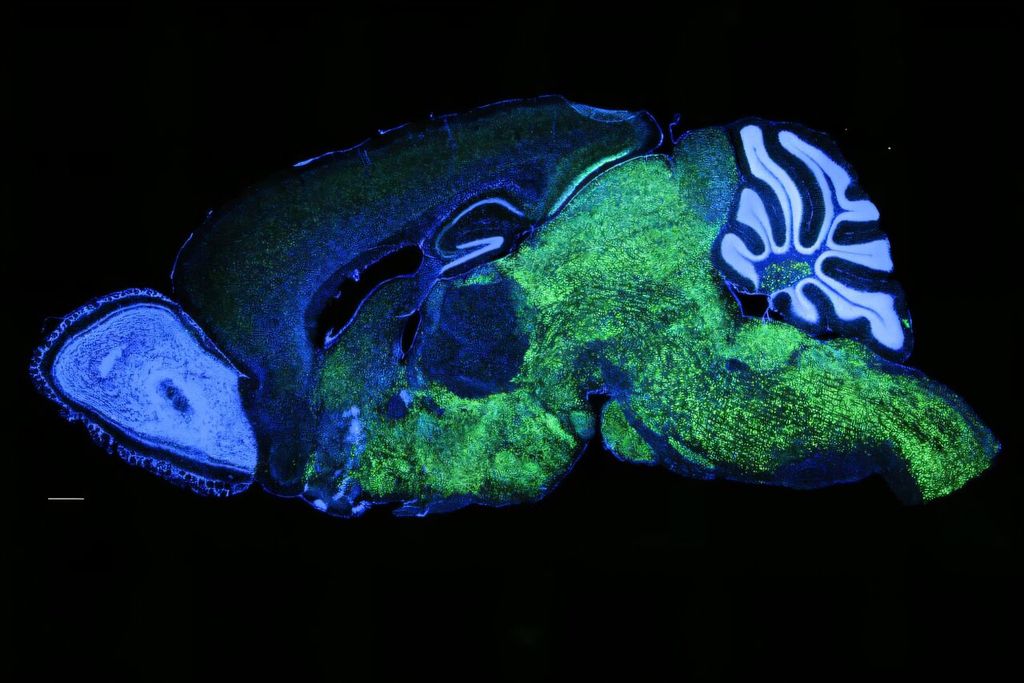


    I chose this article because language is such a fundamental part of what makes us human, yet I never really thought about how it might have developed through genetics and evolved over time. It's fascinating how much the NOVA1 gene may have contributed to our ability to produce more complex sounds. I thought the study done using mice was especially interesting and informative because it demonstrated the impact the human version of NOVA1 has on brain function and sound production. When I found out that the mating calls became more complex with the introduction of the gene, I was honestly speechless. The study was a creative and effective way to connect genetics to speech-related behaviors, and it not only helped scientists better understand how language evolved but also made the topic more engaging and meaningful for me as a student.  

Wednesday, April 4, 2018

Song Birds Singing to Fix Language Impairments


Male Zebra Finch singing
A study, recently conducted at University of Southern California, by Biology Professor Stephanie White, discovered an important relationship between song birds and human speech. All of the roughly 4,500 species of song birds have a gene called FoxP2. When the birds begin to sing, FoxP2 lowers in a region of the brain, called Area X, which is responsible for vocal control. When FoxP2 decreases, thousands of other genes get altered. 

            This study has found that FoxP2 plays an important role in the speech of humans, as well. Professor White believes this gene holds the molecular basis for vocal learning. FoxP2 produces a long gene and a shorter gene; those with a mutation in the longer gene have speech problems. The study involves inserting a modified version of FoxP2 into male zebra finches, which are song birds, to lessen the decline in the Area X, of the brain. Although the levels of FoxP2 remained high, it altered their ability to learn. White describes this as, “the molecular version of practice makes perfect.” Although it would take the songbirds time to learn their song, there would not be a decline in FoxP2, which means other genes can function normally and Area X is not disturbed.

            White’s research could possibly lead to new treatments for language impairments, among humans. There have not been many developed, due to the lack of understand in how our vocals work. Mutated versions of FoxP2 could treat children with autism and those with the mutated long gene. Who ever knew that songbirds could be used to help people communicate? 

Wednesday, November 23, 2016

Study Proves Mice Have The Same Gene For Speech As Humans

Dr. Erich Jarvis and his research team report the results of their investigation on the effect of the gene Fork-head box protein #2 (FOXP2) with a genetic mutation on the vocalization patterns of adult male mice. In humans, FOXP2 regulates speech production and people with deficiencies of this protein have trouble forming complex syllables and speech construction. Mice communicate not through speech like humans , but they do use other vocalizations as a means for communicating with each other. Dr. Jarvis' study investigated wether the FOXP2 deficiencies in humans have the same consequences in mice. 

 Dr. Jarvis' results concluded that they do! He suggests that his results support the "continuum hypothesis", meaning that the FOXP2 affects vocalization patterns in humans as well as all other mammals. 

The study used 26 male mice which were bread to have the FOXP2 mutation (just like it is found in humans with speech deficits). As well as 24 wild type male mice (normal amount of FOXP2). Both the heterozygous (FOXP2 deficient) and wild type mice were housed certain circumstances such as an active wild type female mouse, close to only the urine of a wild type female mouse, or with a sleeping mouse of either gender. These circumstances were duplicated from the research published by Chabout and colleagues in 2015.

The study discovered that in any of the social circumstances, wild type male mice expressed more duration and sequence differences in ultrasonic vocalizations (USV). USVs are high-pitched sounds mice make that cannot be heard by humans. The investigators still have to find out if the mice with FOXP2 deficiency had an effect on their communication patterns. 

The results were that wild type mice can create complex vocalization patterns with no trouble. However, the FOXP2 heterozygotes had difficulty producing the same sounds as the wild type mice. The teams findings held true after an intricate statistical analysis was done by Dr. Jarvis.

The research team conducted another study using transsynaptic tracing to compare the vocal brain regions of of wild type and heterozygote FOXP2 mice. It was discovered that the vocal motor neurons of the heterozygote were more widely spread across the cortex in comparison to the wild type mice.    

It still shocks me every time I read an article that proves how close animals are to humans. I always thought humans and other animals such as mice were completely different and that humans are superior to any other animals. Studies like this one proves that humans are not as different as I originally thought. Humans and mice are both mammals after all.
   

Monday, November 21, 2016

Geneticists hope to unlock secrets of bats' complex sounds

Animal communication is a topic that still baffles many, and bat communication consisting of: calls, chirps, and shrieks specifically are still a mystery to humans. The project that was taken underway to further understand bat communication was titled Bat 1K and will involve sequencing the genome of more than 1,000 different bat species. The project was just recently announced with the hope of also gaining a deeper understanding of bats' abilities to fly at night using echolocation, their longevity and long life-spans, as well as relatively strong immune systems. Their immune systems are so strong in fact, that some are capable of resisting the Ebola virus.

Unlike many animals whose genes are better understood, bat genes have barely been studied in comparison to other mammals. Different bat behaviors have been observed including: chattering, screeches, whistles, and barks and it's even been identified that certain species of juvenile bats learn songs from elder male bats, who teach them to apply the behaviors during the search for food, mating, and defending their territory, but the reason as to why and how, is unclear.

Only roughly 50 bat species have had vocal sounds analyzed yet, and four species have demonstrated the ability to learn vocal sounds from their fathers or other male bats. The four species are the greater sac-winged bat, the Egyptian fruit bat, the pale spear-nosed bat, and the greater spear-nosed bat, and all four species differ in location, age, sex, and vocal sounds.


The gene that has been correlated to speech and communication in bats has been identified as FOXP2. It is a gene involving how humans learn languages and how songbirds learn vocal patterns, but the gene has evolved and is more diverse in bats, which remains an unanswered question. Researchers hope to find other genes that are involved in bat communication, as well as other species of bats that exhibit this capacity.

I believe that this research is essential for a better understanding of the many vital bat species, their purpose, and finding a way to eradicate the negative stigmas that the bats carry. Not only would understanding the behavior and communication of bats be in their best interest, but the research may open doors to understanding other species' communication pathways and the genes involved.

http://www.nature.com/news/geneticists-hope-to-unlock-secrets-of-bats-complex-sounds-1.20997

The Genetics of Bat Communication

The mystery about how bat's learn to communicate is finally being unlocked.

Scientists announced Project Bat 1K on November 14th (not even a week ago!), where they hope to sequence the bat genome of over 1,000 bat species to understand how they communicate. Scientist's have exhausted the genomes of the all well too known species of mice and birds, but what about the only winged mammal on earth? We know nothing about them and they express very peculiar vocal behaviors that peak the interest of scientists such as Mirjam Knörnschild.

Behavioral ecologist, Knörnschild, of Free University Berlin, Germany commented that of the 50 species of bat studied, 4 were observed to learn how to communicate from each other, from their fathers, and from other male bats, much like how a human child learns language from their parents. These 4 species are: the greater sac-winged bat (Saccopteryx bilinear), the Egyptian fruit bat (Rousettus aegyptiacus), the pale spear-nosed bat (Phyllostomus discolor), and the greater spear-nosed bat (Phyllostomus hastatus).

Scientists have already identified the gene FOXP2, which is linked to speech and language in btw and has been known to play a significant role in learning language in humans and vocal learning in songbirds. There is still much more to study and learn from the bat genome, after all there are 1,000 species to study, so there are far more genes that code for sound, language, and vocalization. As Knörnschild put it, "there is a whole continuum in bat vocal learning, and it's more widespread than just 4 species."


Saturday, November 19, 2016

Genes for Speech May Not Be Limited to Humans

It is widely believed that mice have no or rather extremely limited neural circuitry that allow them speak, however, studies have shown that mice do in fact communicate using a form of vocalization. Dr. Jarvis, the lead investigator studied the effects of mutation in the Forkhead Box Protein #2 (FOXP2) gene, which regulates the vocalization patterns in humans. Those whom have mutations in this gene tend to struggle with speech impediments. They are unable to master the “coordinated sequences of syllables/phenomes for fluent speech.”2 Dr. Jarvis and his team found that the same effect can occur in mice as well. Even more so, according to Dr. Jarvis, this supports the hypothesis that the FOXP2 gene affects not only humans, but all mammals.

The study compared the differences in the sequence and duration of the ultrasonic vocalizations (USVs) of heterozygous male mice with the FOXP2 mutation and healthy wild-type male mice. The results showed that wild-type mice were able to produce complex vocal communication with ease in the presence of active female mice. Heterozygous mice with the FOXP2 deficiency were three times likely to have difficulty in producing complex syllable length and variability over a period of time.

     
The vocal motor neurons of heterozygous mice were also studied and Dr. Jarvis and his team found that they are spread more widely across the cortex than that of wild-type mice. This leads them to believe that the FOXP2 gene mutations not only changes the quality of communication, but the location of the neurons in both mice and humans. 

Although previously the FOXP2 gene was thought to play a slight role, Dr. Jarvis "believes the FOXP2 gene already had a pre-existing role in regulating vocal communication before human communication evolved."1

References:

 1. Frontiers. "Genes for speech may not be limited to humans: Study shows vocal communication in mice is affected by the same gene needed for speec h in humans." ScienceDaily. ScienceDaily, 15 November 2016. www.sciencedaily.com/releasses/2016/11/161115114333.htm. 

 2. Johnathan Chabout, Abhra Sarkar, Sheel R. Patel, Taylor Radden, David B. Dunson, Simon E. Fisher, Erich D. Jarvis. A Foxp2 Mutation Implicated in Human Speech Deficits Alters Sequencing of Utrasonic Voclizations in Adult Male Mice.Frontiers in Behavioral Neuroscience, 2016; 10 DOI: 10.3389/fnbeh.2016.00197


Monday, November 14, 2016

Ancestors of Modern Humans Interbred With Extinct Hominins, Study Finds

Neanderthals and Denisovans were found to of interbred with ancestors of modern humans at least four times. We still carry DNA from those meetings and these genes have specifically helped with our ability to resist pathogens. It wasn’t until a finger bone was discovered in the Siberian cave, called Denisova, that the new group of DNA was found. Some of this new DNA has been found in people in Melanesia. Joshua M. Akey, a geneticist at the University of Washington, ran a study that found that every non-African person in their study had Neanderthal DNA, while the Africans had little to none. Europeans, East Asians and Melanesians had their own mix of Neanderthal DNA. The best explanation they could come up with for this distinctive mix of DNA found in modern humans was that they acquired Neanderthal DNA on three occasions. “The first encounter happened when the common ancestor of all non-Africans interbred with Neanderthals. The second occurred among the ancestors of East Asians – but not Europeans – interbred a third time with Neanderthals.” The Melanesians were found to interbred with both Neanderthals and Denisovans. Dr. Akey noted that both their DNA was more common as generations passed because it provided some type of survival advantage with immune system genes. This Neanderthal and Denisovan mix of DNA was absent in four regions of the modern human genome and one of those regions includes a gene called FOXP2, which is involved in speech. In February, PingHsun Hsieh, a biologist at the University of Arizona, reported that the genomes of African pygmies contained DNA pieces that come from an unknown sources within the last 30,000 years.

Tuesday, March 13, 2012

Scientists ID 2,000 Genes in Zebra Finch Brain Linked to Singing: May Teach Us About Human Speech Disorders

[caption id="attachment_3942" align="alignleft" width="300" caption="Male zebra finches learn to sing a courtship song between 35 days and 100 days after hatching, which is when they are sexually mature."][/caption]

In this article published by Science Daily Zebra Finch have thousands of genes that allow for singing.  The genes are located in an area of the brain called area X.  Previously scientists did not know just how many genes are involved with speech.  Area X is located in the male Finch's basal ganglia which is also true for humans.  Language is only used by humans but the ability to create new sounds is a skill we share with the Finch.  FoxP2 is the master gene for human speech and speech disorders in Area X.  A mutation in the FoxP2 gene caused a speech disorder in a family in England and a study was published in 2001.  Every family member that was affected with a speech disorder had the same mutation of the FoxP2 gene.  Scientists recently have been learning that behaviors change the way our brain operates.  When you conduct a certain activity specific genes are turned on.  The basal ganglia was removed from a Finch to study the genes.  Scientists have identified most of the genes used for speech in the Finch but so far we do not have that same knowledge for humans.

I think that finding the gene mutation for speech disorders is an important area of research.  Being able to correct the mutation would cure speech disorders which prevent people in participating in some activities and plague their life.   They need to study these genes in other species of animals to determine if it plays a similar role.

Monday, November 21, 2011

‘Language gene’ speeds learning

In a recent article, Christiane Schreiweis, a neuroscientist at the Max Planck Institute for Evolutionary Anthropology in Leipzig, Germany and colleagues presented experimental work conducted on mice.  In an effort to elucidate the significance of the FOXP2 gene and its involvement in muscle movements for human speech, these scientists genetically engineered mice to produce the human form of the gene FOXP2.  The significance of this gene was suggested in a study conducted in 1990.  In that study, three generations of a British family, which was known as the KE family, suffered from severe speech problems: an inherited mutation inactivated a copy of FOXP2.  In mice, it was found that those mice engineered to make the human FOXP2 protein produced altered squeaks compared to those mice with the mouse version of FOXP2.  Also, the mice with human FOXP2 were shown to contain neurons with more and longer dendrites.  In addition to this, these mice became unresponsive after repeated electrical stimulation to the basal ganglia, which is a trait called long-term depression that typifies learning and memory.   Experiments involving mazes proved that mice with the human FOXP2 gene were quicker to learn.  These scientists believe that the FOXP2 gene in humans plays an important role in perfecting facial movements involved in speech.  FOXP2 involvement in learning and memory are still not completely understood, however.  These experiments could prove to be major breakthroughs for the understanding of human speech.

Sunday, April 24, 2011

Artistic Abilities Triggered by "Genetic Changes"

Though this article wasn't extremely current (2003), it was interesting. My professor brought up the possibility of things other than physical traits being genetically linked. She mentioned that her grandfather had been an engineer and her son became one as well. She said that they had never met and she doubted that her son even knew what his great-grandfather had done for a living. I started to think about other traits and if they might be genetically linked. Art runs in my family. My cousin and I both enjoy painting and drawing (he actually went to school for art) and, before the tremors started, my uncle was a very talented painter. Could artistic ability be genetically linked? I didn't find anything about that, but according to Professor Richard Klein, Professor of Anthropological Studies at Stanford, the explosion of art and culture that occurred in humans between 50,000 and 100,000 years ago was due to a "genetic mutation". Evidence in support of this theory cites FOXP2, the first gene proved to affect the ability to learn and process language. So according to this guy, our language abilities as a species reflect our artistic abilities (i.e. making and wearing jewelry and drawing cave paintings, etc.). Art is a form of communication so this makes sense.