Showing posts with label Chernobyl. Show all posts

Wednesday, April 28, 2021

Genetic effects of Chernobyl radiation

 35 years since its nuclear disaster, Chernobyl prepares for tourist influx  | Euronews

This article explains the work of researchers who used genomic tools to test the health effects possible from a carcinogen from 1986 in Chernobyl. There were two studies done with two different observations. The one study concluded that there was no evidence of radiation exposure to parents. This resulted in a number of genetic changes passed from parent to offspring. As for the second study, the researchers concluded genetic changes in tumors of those who had developed thyroid cancer. These people were diagnosed with this cancer after having been exposed as a child or a fetus to the radiation that had been emitted by said Chernobyl accident.

This study had been conducted 35 years after the devastating Chernobyl accident. The researchers were excited to have worked on something that happened so long ago and is continuing to happen to date. It was a sad and crazy accident where many people were affected mentally, physically and emotionally. It was neat reading about current studies on something that was taught to me as a kid.

To learn more about the Chernobyl accident come here

Friday, April 23, 2021

Kids born to survivors don't show more genetic mutations

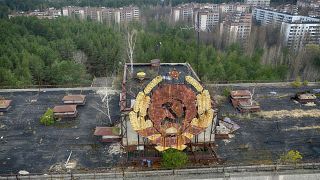
Back in 1986 the Nuclear Power Plant at Chernobyl had a meltdown and exposed people living in, near or liquidators that had to clean up the aftermath.  In this article it goes talks about a study that was done that showed promising results that the parents of the kids don't pass down any excess mutations.  Researches hope this is a good sign because they hope the information can benefit others in this situation.  The article also talks about the fallout and Thyroid Cancer among the people that were exposed to the radiation.  In the picture on the right you can see one of the most iconic things in Chernobyl the Ferris Wheel.  In the picture on the left you can see the aftermath of the Chernobyl meltdown.  I think that is is promising that the kids of these people don't have a higher chance of having a mutation in their genes.  I also think that knowing this information will help anyone who has been affected by a nuclear accident. 


Sunday, November 15, 2020

Radiation and Its Affects On Wildlife


    Chernobyl was one of the largest radioactive accidents in history. In 1986 a radioactive reactor at a plant failed and exploded causing mass contamination. The town was immediately evacuated, but the animals remained. Scientists are now able to study long term effects of large amounts of radiation. The radioactive isotopes damage DNA in the animals therefore causing mutations in their offspring. Animals were being born deformed, extra appendages, and abnormal coloring and size. Although a lot of domestic animals have suffered greatly, wildlife has blossomed. There is an increase of wild horses, wolves, elk, boars, bison and many more. These animals, although highly radioactive, have adapted to live in this harsh environment. Scientists are still looking into the detrimental effects of the radiation to the wild animals. I think that studying these animals is helpful so that scientists know how radiation affects the body. This comes in handy when considering moving people back into places like Chernobyl and it can help with treatments such as chemo radiation.

https://www.thoughtco.com/chernobyl-animal-mutations-4155348

https://allthatsinteresting.com/chernobyl-animals-red-forest

Tuesday, November 22, 2016

At Chernobyl, Hints of Nature’s Adaptation

After the reactor explosion at Chernobyl in 1986, radioactive fallout coated much of the surrounding area and rendered much of the region uninhabitable. The Chernobyl disaster was a product of severely flawed Soviet-era reactor design combined with human error. The death toll due to the plants explosion was only 2 people, but it is estimated that over 4,000 people died due to overexposure to radiation. Biologists often venture inside the exclusion zone (approximately 1000 square miles around the Chernobyl power plant) and observe how different species were affected/adapting to the constant radiation.


Dr. Timothy Mousseau led a team of biologists and photographers into a few villages on the outskirts of the radioactive fallout to examine different species and how they have changed due to extended exposure to radiation. Mousseau has been coming to the exclusion zone for years in order to examine physical/behavioral changes due to large amounts of radiation. Over the years, Mousseau and his colleagues have reported evidence of radiation’s toll: higher frequencies of tumors and physical abnormalities like deformed beaks among birds compared with those from uncontaminated areas, for example, and a decline in the populations of insects and spiders with increasing radiation intensity.


In some area of the exclusion zone, the radiation levels are low enough for wildlife to live without being at an extremely large risk for genetic mutation. Since the wildlife in these areas have little to no human contact, they thrive. Recently, Mousseau had found a bird species that adapted to the radioactive environment by producing higher levels of protective antioxidants. Because of the high amount of these protective antioxidants, there was overall less genetic damage.


http://science.time.com/2011/04/22/how-many-did-chernobyl-kill-more-than-4000/
http://www.nytimes.com/2014/05/06/science/nature-adapts-to-chernobyl.html?_r=0

Sunday, March 13, 2016

Effect of radiation on species in Chernobyl


 The Chernobyl disaster happened in Pripyat, Ukraine, where a nuclear reactor exploded releasing large quantities of radioactive particles into the atmosphere. It is now abandoned and there were many casualties as a result of exposure to high levels of radiation.


High doses of radiation can affect living tissue in various ways. One of those ways involves breaking strands of DNA.  A high enough dose can cause serious illness or death. However, low doses of radiation are not as lethal. Over time, it can cause genetic mutations which can lead to different types of cancers.


Dr. Mousseau, who is a biologist at the University of South Carolina, makes trips to Chernobyl to study the effects of radiation on different species on birds and insects. He has observed species in areas of varying radiation. In areas of higher radiation, Mousseau has noticed higher frequencies of tumors and physical abnormalities like deformed beaks in birds. He also noticed that insect populations decreased in areas of higher and higher radiation.


One of the biggest observations that Mousseau noticed was that one species of bird seemed to have adapted to the radioactive environment by producing higher levels of protective antioxidants, which correlates with less genetic damage. This discovery has led Dr. Mousseau to state that chronic exposure to radiation acts as a source of natural selection.


 Lastly, Dr. Mousseau noticed that birds in higher areas of radiation showed greater adaptation than those living in areas with lower radiation levels. There is no explanation for this, but it is an interesting observation to say the least.


The effects of radiation have always interested me. I find it amazing that a species of bird has possibly found a way to adapt to the radioactive environment at one of the worst nuclear disasters in history. I do not find it out of the realm of possibility that this discovery can lead to possible advancements in technology as we continue find ways to fight against cancer.