Showing posts with label #Y chromosome. Show all posts

Friday, December 6, 2024

Y Chromosome Analysis of Horses


Scientists are attempting to trace the paternal line in horses by using the Y chromosome. The Y chromosome has always been difficult to study since it contains many repeating sections and palindromes. Since computer technology has made it easier to analyze it, a worldwide collection of horse DNA samples were able to be analyzed, and the ancestries of these horses were able to be traced. Horse and human history are closely linked, and humans have used stallion mediated breeding with horses due to the fact that it is easier to trace a stallion’s fertility than a mare’s. Pedigrees are used to trace horse ancestry today, but since they are done manually then only go back a few generations. With the Y chromosome analysis, however, they are able to go back many generations and examine evolutionary lineages within the horse’s paternal ancestry. This will allow horse breeders to better prevent inbreeding and maintain genetic diversity.

In my opinion, this is a very useful and unique effort. Mapping the Y chromosomes of a variety of horses in order to examine their evolutionary development and lineages on their paternal side proved to be extraordinarily beneficial. By gaining the ability to trace the genetics of horses across multiple generations, we can better keep record of particular lineages and ensure that horses with similar lineages do not breed together in order to prevent genetic defects. We can work to better conserve and enhance genetic diversity within horses. We are also able to better analyze breeding influences over time and how they connect with human history as well.


Tuesday, November 19, 2024

Secrets of Horse Genetics


         For many years the Y chromosome had been difficult to study due to its repeating sequences and many palindromes within it. With new technology surfacing, Scientists at Texas A&M College of Veterinary Medicine and Biomedical Sciences have made it their goal to uncover the secrets of the Y chromosome in horses. If successful in decoding and solving the mysteries that lie within its sequences the researchers believe they can help obtain knowledge of the last 1500 years pertaining to horse lineage and the evolution of equines in the world.


    Due to breeding with equines being easily traced using the stallions DNA researchers can trace those lineages using the Y chromosome to see an individuals paternal ancestry and accurately look at what traits it inherited and go further than what is recorded about these equines. Studying these ancestries can help conserve rarer breeds by showing which parental ancestries were exposed to incest which causes birth defects like club foot and even loss of fertility that could end a whole line of future generations. The impact that this can have on the equine industry and future studies on the Y chromosome will be tremendous and will serve as a base for the build up of new research regarding other mammalian Y chromosomes.


 Sources:

https://www.agdaily.com/livestock/horse-genetics-secrets-discovered-breeding-conservation/ 

https://www.sciencedaily.com/releases/2024/11/241119181604.htm

Friday, March 29, 2019

Sons or Daughters?

In an article posted by Science daily,  a scientist, Corry Gellatly, claims that a undisclosed gene carried by the male sperm is the reason why a couple produces a boy or girl baby. The idea behind the New Castle University scientist, is that the men inherit the tendency to have more sons or daughters from there parents. If the man has more brothers compared to sisters than it is likely that he will have more sons than daughters and vice versa. This idea was tested using 927 family trees and over 550,000 people. Scientifically, we know that men carry the X(male) and Y(female) chromosome while the female carries the X chromosome. If we end up with an XY then a male baby is produced and an XX produces a female. Gellatly's theory hypothesizes "that men carry two different types of alleles in which three combinations could possibly occur which control the ratio of the X and Y sperm".
They first combination is called "mm" and concludes that if there are more Y sperm than you end up with more male sons. The opposite is also true in which if we have more X sperm than we end up with more daughters. He calls this "ff". The last possibility is referred to as "mf" which produces equal amounts of sons or daughter because it has equal amounts of X and Y sperm. I find this article fairly interesting that we are coming very close to predicting whether someone will be having a baby boy or girl based upon family history.

Thursday, November 15, 2018

X vs. Y Chromosome

A new study suggests that men are actually right when they say that women are “too complex”.  With the latest study of X and Y chromosomes, scientists have learned that the Y chromosome have much less complexity than having a double X chromosome. In fact, women are able to express genes 15% better than males due to having a double X chromosome.  
However, it has also been seen that the X chromosome is actually shrinking over the course of millions of years.  The Y chromosome performs such little gene expression that is basically unused, staying small similar to a pinky finger remaining small.  It could be hypothesized that the Y chromosome could actually shrink to such a minute size that it will disappear altogether.  But, as another study points out, the amount of genes and the Y chromosome remains the same because the genes, which only hold 100 of the original genes that the chromosome began with, are key to the males’ survival.
Scientists argue that the Y chromosome doesn’t only result in maleness and being fertile, but also having gene expression that differs from women, allowing different responses to diseases.  This means that males could be more prone to symptoms or risks from diseases than females, or vice versa.  By understanding these differences and as our medical technology advances, I believe that medication and certain techniques could be developed in order to cure specific diseases for either males or females in particular.  This may even aid in curing X-linked inheritable diseases.

Links:

Monday, February 19, 2018

4,000 Year Old Egyptian Mummies Thought To Be Brothers

Coffins of two mummies who may be brothers are displayed in the Manchester Museum. Some anticipated the thought of the two mummies being brothers for many reasons. Scholars pointed out that the anatomy of the skulls were different and researchers began studying scraps of their skins. From this information, researchers concluded that their complexions revealed that they do not share parents. Genetic studies are being tested to help determine if these conclusions are true. The researchers began to analyze DNA and have also dug deeper into the mummies Y chromosome, which were inherited from their father. The DNA results showed that complete mitochondrial profiles have been recovered, therefore making them being able to say confidently that they are maternally related. According to an article on News Week, "The researchers say that the different treatments of mothers and fathers in the inscriptions suggest that maternal heritage was more important to the ancient Egyptians than paternal heritage was." I found this article interesting because I think that it is cool that there is technology out there to be able to help researchers trace back ancestry. Even including mummies, that is something that always seemed interesting to me throughout history.


Saturday, February 18, 2017

Understanding bulls' gene-rich Y chromosomes may improve herd fertiliy


This article talks about a better understanding on how cattle and other mammals evolved, as well as help animal breeders and farmers better maintain and enhance fertility in the cattle industry. Scientists identified 1,274 genes in the male specific region of the bovine Y chromosome, compared to the 31 to 78 genes associated in the Y chromosomes of various primates. Understanding genetic diversity may give farmers another tool for managing their herds to improve male fertility. The researchers analyzed the expression of the entire Y-linked genes as the bull aged, beginning soon after the bull's birth, during puberty and then again after the bull matured. 

I think that this will help farmers and breeders in the long run for cattle. They understand low fertility is a big problem for the dairy and beef industry, which means it's time to pay more attention to male fertility now. What I find interesting is that most animal breeders and farmers select bulls based on physical characteristics, such as the size of the testis. They think this because the Y chromosome is only found in males and only passed through the male line. 

http://www.pnas.org/content/110/30/12373
https://www.sciencedaily.com/releases/2013/07/130711135321.htm

Tuesday, November 29, 2016

Male Mice With No Y Chromosome

A new experiment suggests that a Y chromosome is no longer to needed to make a male. Scientists have taken mice and begun to "play" around with the chromosomes, making it possible that any detection of the Y chromosome simply does not exist. Some researchers believe that later in evolution  the Y chromosome will no longer be needed, other scientists disagree and so do I. The researchers found that the male mice that were made without the Y chromosome, could not produce sperm or had immature sperm. I think that without a Y chromosome, reproduction is not an option. Experimenters used the Sox9 gene usually turned on in females, was expressed, developing the male. These were the males that did not make sperm. For mice to make sperm they must have the Eif2s3y gene, therefore, if there was no Y chromosome, this gene is not there.
I find this article weird. Why would we try to find males without the Y chromosome? There is the X and Y chromosome which determines the sex, why are we looking for more options? I understand there are chromosome mutations such as Kleinfelter's Disease (XXY), but no Y at all, makes you a female. It is really an interesting topic, but very weird. It's hard to tell what scientists are trying to get from this type of study. 

Monday, April 11, 2016

Neanderthal Y- Chromosome Analysed

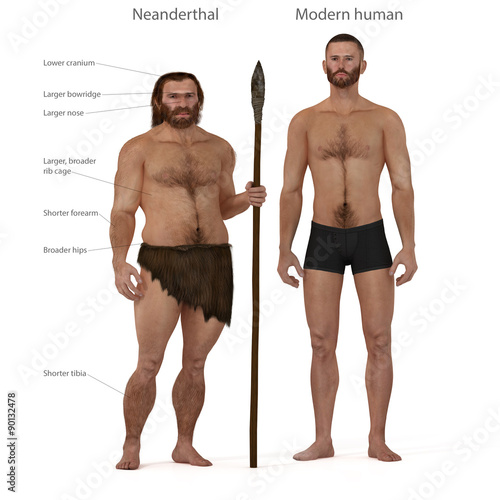
Neanderthals were some of the first and earliest humans to walk the earth, very closely related to modern man, but the neanderthal subspecies went extinct thousands of years ago. Because of evolution and mating, genes from thousands of years ago could still be incorporated into the modern human genome, which stands at about 3.5 billion base pairs, and 2.5-4% of neanderthal DNA does exist in the genome.

However, the neanderthal genome has never been fully examined until this week where Stanford University author Dr. Fernando Mendez analyzed the remains of a neanderthal from El Sidron, Spain, and compared it to what was already know about the neanderthal/human genome from previous studies. In previous research, the X chromosome was examined from neanderthal women who passed on the X to children of both genders, but the Y was never taken into account. Since the specimen recently found was a male, and the Y chromosome is only transferred to sons because of the nature of the sex chromosome, this gave researchers the opportunity to examine the genes,


What they found was a bit shocking; in all of the genome of modern humans, no neanderthal Y chromosomes were found, which led the geneticists to believe that the genes had gone extinct thousands of years ago, and the only traces that are found in modern humans are the X genes passed on by mothers to their children.

After further examining, the scientists were able to spot some differences between the modern human and neanderthal Y chromosome, including different protein coding in the genes and antigens. One of these antigens called KDM5D targets male fetuses and kills them, which is a strong case for why modern humans and neanderthals started to grow apart. If infants were being killed in the womb because of a gene in their partner's body, that pregnant mother would not want to stay with her partner any more, since part of the human psyche is furthering the species and reproducing.

The next step is to try and fully understand why a hybrid of the two human species has not formed in the past, and hopefully when the research is completed, a more definitive answer can be reached and the information will be added to the ever growing database of knowledge on genetics from the past