Showing posts with label preventative treatment. Show all posts

Sunday, January 28, 2024

Can Advancements in Genetic's Prevent Parkinson's Disease?

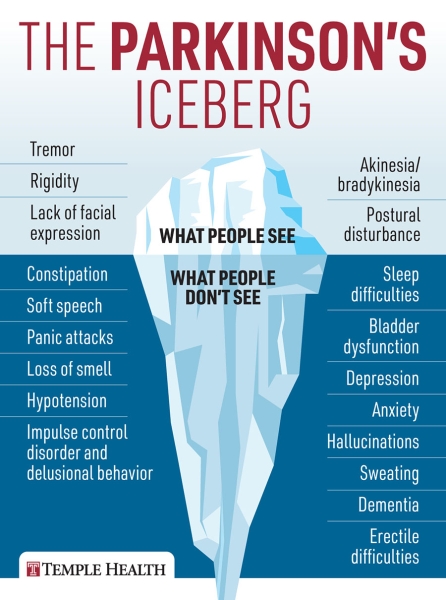
 In the article written by U.S. News & World Report researchers at the University of Southern California have discovered a genetic mutation that might decrease the odds of having Parkinson's disease by half. This mutation is found in only 1% of people of European descent, but if findings are more thoroughly tested they can possibly create prevention or therapies for the disease. 

The mutation is found in the mitochondria, affecting a microprotein called SHLP2. The genetic variant only changes the genetic code of SHLP2 by one singular letter. Dr. Pinchas Cohen discovered the gene mutation in 2016. Other research Cohen had conducted with this gene variant seemed to lessen the chance of cancer. In their research, they compared people of European descent who have been diagnosed with Parkinson's and those without. Those with this gene had half the chance of developing it compared to those who do not. This small mutation prevented the dysfunction of cellular mitochondria, a possible link to what causes Parkinson's disease. The research team even sampled human and mice tissue to test possible cellular connections.

I truly believe that research on diseases such as Parkinson's is extremely important to the genetic field. Not only has the advancement in genetics saved lives, but it will completely change the lives of those who are not born yet. If we can genetically advance ourselves to prevent horrible diseases such as cancer and Parkinson's we will have proven that science and technology advancement has changed our world forever. The more we study and understand these diseases, the more we come closer to curing them. 
Sources:

(News Article) https://www.usnews.com/news/health-news/articles/2024-01-05/gene-mutation-protects-against-parkinsons-disease

(Published Study) https://www.nature.com/articles/s41380-023-02344-0

(Alternative Link) https://www.parkinson.org/understanding-parkinsons/what-is-parkinsons 

Monday, April 9, 2018

The Parent has a Gene for Cancer - Should the Child Get Preventative Surgery?

The Wall Street Journal wrote a story about cases where a parent has a cancer gene and the child must decide whether or not to get preventative surgery. One case follows Dennis Reilly who lost both of his brothers to stomach cancer and made the decision to have his stomach removed after testing positive for the cancer gene at 68 years old. With his positive diagnosis in the mutation of the CDH1 gene, his daughter also tested positive for the mutation and decided to have her stomach removed as well with preventative surgery. With the rise of genetic testing, more families are able to be tested for common gene mutations likely to cause cancer and make decisions about how to deal with their diagnosis.
Dennis Reilly and his daughter Cailyn Reilly Knapp

CDH1 gene testing is becoming more common with the rise of gene testing for abnormalities in the BRCA1 genes testing for breast cancer. People with mutations in the CDH1 gene has a 55-70% risk of developing Hereditary Diffuse Gastric Cancer (HDGC) which is the deadly and aggressive form of cancer the Reilly family had inherited which is difficult to diagnose until it has already spread, and women also have a 42% lifetime risk of developing breast cancer.

Another case was with 63 year old Kathy Hayes who was diagnosed with breast cancer. Years earlier, her daughter died of stage 4 breast cancer but the connection with the mutation in the HDGC gene were connected until she received her diagnosis. Many of her family members were also tested for the mutations and the results came back positive for many, leading some to have preventative surgery.

I find this article interesting because a diagnosis in one family member with a mutation can save the lives of mamy other family members who may have also inherited the cancer gene. In the case with Mrs. Hayes, it was two late for her daughter, but the connection made from her death and Mrs. Hayes diagnosis helped discover the hereditary gene mutation that lead many members of her family to get tested and get preventative surgery. I have great hopes for the growth of genetic sequencing and the access people have to be able to get tested for many different mutations that could possibly save lives.

Original Article: The Parent Has a Cancer Gene—Should the Child Get Surgery?
Related Information: Hereditary Diffuse Gastric Cancer

Friday, April 17, 2015

Predicting Breast Cancer


Researchers at the University of Copenhagen have determined that by analyzing a blood sample, it can be predicted if a woman will get breast cancer in the next two to five years. The method used in this research was a metabolic blood profile, which is able to predict the likelihood of developing breast cancer with a sensitivity of 80%. This method was found to be even more effective than a mammography, which can detect newly developed breast cancer with a sensitivity of 75%.

The research was based on a population study, where blood test data from 400 women who were healthy initially, but were diagnosed with breast cancer in the next 2-7 years was compared to data from 400 women who did not develop breast cancer.

Breast cancer is one of the most common forms cancer in women in the United States. This study is important because if breast cancer in women can be predicted, preventative measures can be taken, hopefully allowing for better treatment options.

My Article
Related Article

Friday, May 2, 2014

Three Sisters Choose Preventative Care after Genetic Testing Results

     Three sisters, Patti Broccoli, Cathy Balsamo and Cindy Lepore decided to go for genetic testing after Cathy saw an advertisement in her doctor's office. After giving a detailed family history, the sisters were informed that they would be good candidates to be tested for the BRCA 1 and BRCA 2 gene mutations. The results showed that all three of them had the BRCA 1 gene mutation, meaning that their chances of developing breast and/or ovarian cancer in their lifetime was as high as 90%. With this new found information, they decided to all get double mastectomies and had their ovaries removed as well. This drastic measure is one that the women felt that they needed to make in order to ensure their survival. Nowadays, more and more women are opting for the preventative care of double mastectomies and oophorecomies.
Patti Broccoli, Cathy Balsamo, and Cindy Lepore
     As someone who has a high prevalence of breast cancer within my family, I can understand the fear of getting the disease one day. Personally, I am planning on getting genetic testing done in the near future to see exactly how high my risk is. If it comes up that I have the BRCA 1 or BRCA 2 gene mutation, preventative care is certainly an option that I will be looking into. I simply hope that advancements in medicine will help so that such drastic measures won't need to be taken by women who have the mutations. 


Monday, April 22, 2013

Cancer Centers Racing to Map Patients’ Genes

A recent New York Times article talks about the "arms race" that is taking place in the genetic community. Millions of dollars have been spent in recent years to create a way to quickly and effectively process genetic and other biological information. Mount Sinai medical center recently developed a $3 million supercomputer capable of making quick work of this information, while other New York hospitals and colleges are spending more than half a billion dollars on research facilities! This arms race has become a crucial part of an ongoing war: the war against cancer and other diseases.

The belief is that eventually being able to routinely sequence everyone's genome would lead to "precision medicine" or treatment based on the unique characteristics of a patient's genes. John Hopkins is looking to, within the next two years, develop a systematic genomic sequencing program that also includes an individual's environment, family history and other factors in order to create preventative  medicines (seen here) specific to the individual. The hope is that by understanding the genome, and where diseases come from, that scientists and doctors can, at the earliest age, implement preventive measures and medicines to combat diseases.

Although scientists are still a long way from generating useful information from the genome, this new race to be the first to do so, will speed up the process as well as increase the amount of genomes able to be sequenced.