Showing posts with label canine. Show all posts

Friday, May 5, 2017

Dog DNA study maps breeds across the world


Scientists have analyzed 161 breeds of dog's DNA. Over the past 20 years, dogs have been bred to do different things, depending on what they are needed for. Dogs used to be used for hunting and gathering, now there are many hybrid breeds that are available. Dogs origins can be traced to two basic places in the world the United Kingdom or the Mediterranean. Many dogs like the mastiff has not changed genetically over the years. This article was very interesting to read. Dogs are very important in the world and majority of people have them. Now with all these different dog breeds breeding together, this genetic mapping of them will allow us to better understand what dogs are good for what area.


Article: https://www.sciencenews.org/blog/science-ticker/dog-dna-study-maps-breeds-across-world

Saturday, December 12, 2015

In-Vitro Puppies

           
Thanks to Cornell University, the first in-vitro puppies have been born. The primary end-goal of this project is to preserve endangered canine species, using gene-editing technologies to help eliminate hereditary diseases. The prevalence of these diseases are only heightened by interbreeding, a common practice amongst breeders. Out of nineteen embryos, seven fully healthy puppies were born. Researchers have been making attempts at canine in-vitro fertilization since the 1970’s but have been unsuccessful until now. Considering the similar diseases canines and humans share, they may lead to a better understanding and new scope of how to treat the same diseases in humans.
            This is obviously a beneficial and successful step in genetics and developmental biology. I think it is ironic that humans have found a way to rectify a heritable disease dilemma in dogs that might not exist if it wasn’t for humans in the first place with the relentless need for purebred dogs. Nevertheless, I think this is a safe way to explore artificial selection and genetic enhancements without causing too much disruption. If this were humans, there would be outrage fueled be ye ole “designer baby, slippery slope” argument. In the case of dogs, we are just helping make our family friends a little healthier and happier.
           

http://www.travislab.vet.cornell.edu/reproduction/dog-ivf-2/

Sunday, November 23, 2014

Genetic Testing for Gastric Dilatation-Volvulus

"Bloat" is one of the most common ailments affecting large-dog breeds.  This common unassuming misnomer refers to a serious life threatening condition known as Gastric Dilatation-Volvulus or GDV.  A dog suffering from GDV experiences a twisting of the stomach, which causes the organ to swell. The dogs natural reaction is to "retch and swallow air" leading to inflation of the stomach.  The trapped air causes a build up of pressure in the organ.  This excess of pressure quickly cuts off circulation greatly reducing, if not stopping blood flow from the caudal and abdominal end of the animal returning to the heart.  Most dogs with GDV die from shock if not taken immediately for emergency major surgery.
      

Veterinarian researchers Claire Sharp and Elizabeth Rozanski were awarded a two-year grant to begin genetic studies of GDV.  As of now it seems that the condition runs in the family but the exact mode of inheritance is unknown.  Researchers suspect the ailment is caused by a combination of environmental and genetic factors.  Sharp and Rozanski are looking to genetics to determine the cause and therefore a method of measuring risk for "bloat."  By creating a genetic test for the condition, dog owners could be pro-active about testing for and preventing GDV.  Furthermore,  it would also be an aid to dog-breeders to hopefully reduce the number of offspring with a predisposition to the condition.
      
Article: http://www.laboratoryequipment.com/news/2014/11/research-aims-id-genetics-deadly-dog-disease


Thursday, April 17, 2014

OCD Dogs Make for the Perfect Model of the same Disease in Humans


OCD stands for Obsessive Compulsive Disorder and it is related to an anxiety disorder and performs rituals over and over again. I mean, everyone double checks things, whether it is making sure the stove is off or if you locked your car doors. It becomes a disorder when the actions or thoughts become very frequency and obsessive. Rather recently, researchers identified four genes that are linked to canine OCD and very similar to human OCD. How did they do this you may ask? The researchers performed a Genome Wide Association Study of Doberman pinschers, and then they sequenced bull terriers, shetland sheep dogs, and German shepherds. These dogs were sequenced because OCD in these canines is most prominent. Canine OCD includes continuously chasing the tail,needing excessive grooming, and sucking. From these dogs, they could figure out case only genetic variants, with mutation present in OCD dog and not in the healthy control dog. They then tested 69 more dogs from OCD susceptible breeds and 19 from insusceptible breeds. The researchers found that the four genes associated with OCD. These four genes associated with the OCD disorder are CDH2, PGCP, ATXN1, CTNNA2. Although, more tests need to be done to be sure that these genes are also the genes in humans, if these results remain consistent within humans, then this could advance treatment for people that suffer with this disorder. Personally, I think that this would be pretty cool if  the genes associated to OCD in canines are the same genes linked to Humans. I think it is possible that the two are closely related. I never even knew that OCD was even gene related, so to find this out, was interesting. I am curious to see what researchers find when they further this study in humans.

Tuesday, March 18, 2014

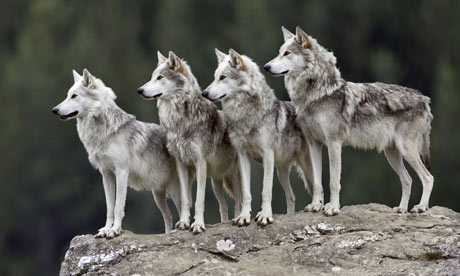
Dog and Wolf Share Common Ancestor


A recent study in PLoS Genetics claims that dogs and wolves evolved from a common ancestor between 9,000 and 34,000 years ago. This dates back to before humans transition to agricultural societies which contradicts previous notions that early farmers adopted docile, friendly wolves that would later become our domesticated companions. It is believed that the earliest dogs may have lived among hunter-gatherer societies thus adapting to agricultural life later.

The team behind this study used the highest quality genome sequences to date from three grey wolves. They chose one wolf from China, Croatia and Israel because these regions represent where dogs are believed to have originated. They then compared these sequences to those of a basenji, which originates in central Africa, and a dingo from Australia. These breeds were chosen because both of these locations are isolated from modern wolf populations.

Their analysis of the different genomes revealed that the dog breeds were more closely related to each other rather than to the wolves. Likewise, the wolves genomes were also more closely related to each other than to the dogs. This indicates that instead of the dogs being closely related to one of the wolf lineages, or each dog being related to its closest geographic counterpart, (i.e. the basenji and Israeli wolf, or the dingo and the Chinese wolf), they may have descended from an extinct, wolf ancestor common to both species. It can now be said that it’s none of these three wolves that dogs are most closely related to because these are wolves that diverged in the recent past. It most likely is something more ancient that isn’t well represented by today’s wolves.
 
The history of the domestication of dogs has always been of interest to me and to find out that dogs are less related to modern wolves than we thought really makes the domestication process of canines much more complex. This study suggests that the genetic overlap between some modern dog breeds and wolves is the result of interbreeding after dog domestication, not just a simple direct line of decent from one group of wolves. Even more intriguing to me because as a husky owner I always wanted to believe my dog was more closely related to wolves than other breeds but this and other studies have stated that is simply not the case.

Article: 
Related Article:

Sunday, September 25, 2011

Turning dogs into humans

In a recent article scientists have discovered that man’s best friend is closer related than one would believe.  Researchers at  North Carolina State University  have experimented with dogs that have non-Hodgkin lymphoma by altering their genes so that they would share the genome of a human.  The scientists involved in this experiment took the altered purebred canines with non-Hodgkin lymphoma and compared their genome to that of humans with the same disease. The researchers did this to see where the cancer lied on their chromosomes. This data revealed that the area that dogs and humans share that contributes to lymphoma is small. Showing that scientists many have been studying all the extra genes in humans when the problem might lie in the small area that is shared between canines and humans.  Since, dogs are affected in the same way that humans are from the cancer shows that the answer may lie in these few shared chromosomes.


     I found this article very interesting and shocking. I did not like the fact that the scientists altered the genes of these dogs because I found that to be cruel. I did, however, think that this is a huge step in the right direction to finding a cure to cancer. My great grandfather died from lymphoma and it was hard to watch him waste away. I feel that this discovery does not answer the question of where exactly the cancer lies on chromosomes but it does help scientists know where to start next. This study helped prepare many new studies in the process of finding a cure for cancer.

Saturday, April 16, 2011

Canine Genetic Wrinkle Has Human Potential

Shar-peis are an ancient Chinese dog breed characterized by two singular traits; thick wrinkly skin and frequent bouts of fever.  Researchers now say that the same gene mutation is responsible for both the wrinkles and the fever.

“All shar-pei dogs have this mutation that causes the wrinkles, but the more copies they have, the higher the risk to have this fever,” said Mia Olsson, a doctoral student at Uppsala University in Sweden who worked on the study.

It was already known that the wrinkles were a result of excess production of a substance called hyaluronic acid distributed throughout the dogs’ skin. That excess is likely caused by to the overactivation of a gene called hyaluronan synthase 2.

“Our highest priority right now is to see if there’s some way to create some kind of test or tool to reduce the number of dogs with the fevers,” she Ms. Olsson.  The fever closely resembles certain periodic fevers that humans inherit, and studying the mutation in the dogs could help human geneticists develop treatments.

I am more concerned with the wrinkle cure. Yet, I suppose its good that by observing the genetic mutations in these wrinkly pugs could possibly lead to a genetic solution of fevers among humans.  I think its amazing how geneticists can configure DNA from a dog to ours.