Showing posts with label United Kingdom. Show all posts

Sunday, November 20, 2022

Near-Sightedness Linked to Genetic Variants and Education Level


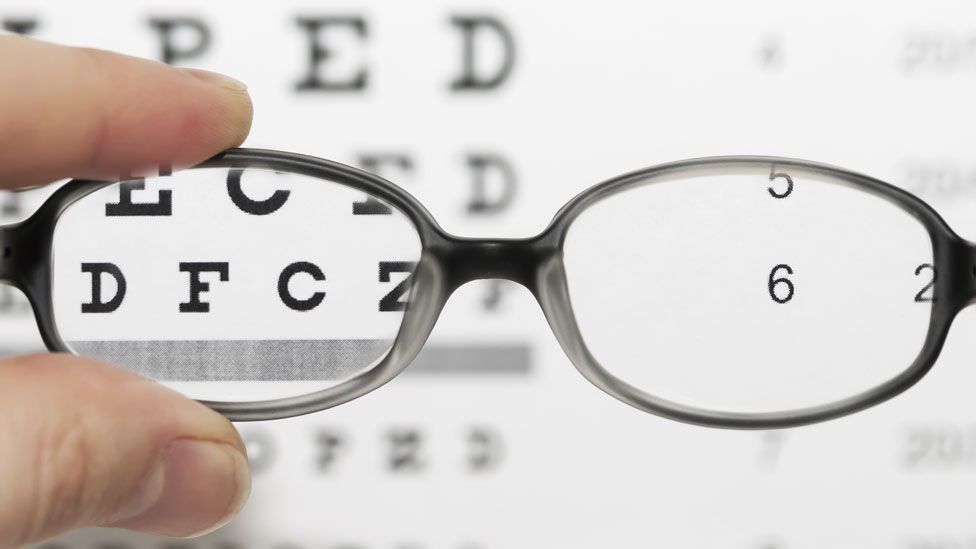
Researchers from Cardiff University in the United Kingdom conducted a genome-wide association study to understand how certain environmental and lifestyle factors influenced myopia. Myopia, also known as near-sightedness, or short-sightedness, affects the ability to see distant objects. Symptoms include eyestrain, headaches, squinting to see objects properly, as well as difficulty seeing objects that are far away. The researchers looked for genetic variations that may be linked to myopia in over 88,000 adults, using a standard eye test to determine whether participants had myopia. They found and identified 19 genetic variants that were found to be linked to different levels of severity of myopia.

The researchers also wanted to determine if there was a link between genetic variants, myopia, and the education level of individuals. Their results suggested that out of the 19 genetic variants, five were affected by education level. Two of the variants were previously linked to a study looking at myopia in individuals with east Asian ancestry. These genetic variants could help determine the risk of myopia in children in the future. The researchers also stated that more time in education is linked to more time indoors, which prevents individuals from spending time outdoors. Spending time outdoors may prevent myopia or stop its worsening. 

I found the article, and research itself, interesting because as an individual with glasses, it shows an insight into how my vision was affected by genetics and lifestyle/environmental factors. Although I’ve glasses since a young age, I know that the environmental factors in which I also grew up in, such as staying indoors and not going outside much, which worsened my vision. I also found it interesting how recent discoveries, such as this, brings a new light into how we can determine certain health conditions before it worsens. In the article, it stated that 30% of children with European ancestry developed myopia, while 80% of children with east Asian ancestry developed myopia, and I was curious about that. From previous knowledge, I know that east Asian education systems were much different than western systems, and wondered if that was a big factor into why the percentage difference was high.

Thursday, January 28, 2016

Squirrels Spread by Humans

Grey Squirrel
People have played a bigger role in the spread of grey squirrels in the United Kingdoms than grey squirrels themselves did. DNA profiling has revealed that different squirrel populations in the UK are genetically distinct, or are more closely related to squirrel populations some distance away than to populations close by.  Instead of the squirrels expanding into new habitats themselves, humans have been responsible for their movements, sometimes intentionally and sometimes accidentally.

Red Squirrel
These findings could mean hope for the native red squirrel, which is outcompeted by the grey squirrels in many places. If the spread of squirrels by humans can be stopped, red squirrels in places with no grey squirrel populations may have a chance at surviving.  Can all transport of squirrels by humans actually be stopped? Probably not, because even if all the people actively transporting squirrels (out of good intentions or as pets) were somehow stopped, accidental squirrel transport (in cars, for example) cannot really be controlled.  However, just slowing the spread of grey squirrels may create chances for other solutions to be found.

Sunday, November 22, 2015

UK Becomes the First Country To Allow Three-Parent Babies


    The United Kingdom recently became the first country to allow the creation of children with the DNA of three parents in February. At the House Commons, Lawmakers voted in favor of, with the majority of 254 votes, allowing in-vitro fertilization involving two women and one man. This law is directed towards families trying to prevent diseases being inherited by mothers with defective mitochondria to their sons. 
   With the help of another, healthy female donor, "the [in-vitro fertilization] technique leaves the resulting baby with 0.1 percent" of healthy mitochondrial DNA which is surprisingly enough to thwart off any disabling or deadly diseases caused by defective mitochondrial DNA from the main female donor. (Discovery News, 2015)This healthy DNA could then be passed onto this baby's future offspring.

   Although this is obviously beneficial to any future parents afraid of passing on any detrimental diseases, this is still a controversial topic as there are still some who oppose to this recent ruling. Some say that this is a gateway into creating "'designer babies," or children who's traits are selected by the parents based on looks, intelligence, or other traits. (Discovery News, 2015) These people are definitely fans of the movie Gattaca. Other opposers include the church who "who objects to the destruction of embryos that inevitably comes with [in-vitro fertilization]." (Discovery News, 2015) While there are still opposing opinions, I believe this an incredible breakthrough that means a lot to parents afraid to conceive due to the fear of diseases. From this article, this new law shows promising results. The first baby created from this technique could be born as soon as next year.

Wednesday, December 3, 2014

23 and Me Approved for Genetic Testing in UK


On November 22nd, 2013 the genetic testing company 23 and Me was warned by the FDA to cease sales of genetic testing due to marketing disease testing without the FDA's approval. The FDA wanted this to cease because it could cause people to make life-changing medical decisions without knowledge of whether the information given was potentially falsely positive or negative. This could cause risks to people who choose to make decisions based on the testing that may be risky and dangerous. These decisions could be made even if the disease may not present itself in the person, and it could be deemed unnecessary risk. Today, 23 and me is not allowed to provide medical information, and instead provides only raw genetic data and heritage information. The alert on it's main page states "23 and me provides ancestry-related genetic reports and uninterpreted raw genetic data. We no longer offer our health-related genetic reports."


Health alert and Health Page on U.S site (https://www.23andme.com/)
In the UK however, 23 and me has just been announced to be approved for sale. They are to be used for further genetic and health information, but are warned to be taken with caution. The information given reports genetic results of over 100 genetic diseases such as Parkinson's disease genes and breast cancer genes. The U.K decided that knowing this information and making the informed decision on health care is up to the purchaser, while the U.S does not allow for purchasers to know the information at all.
Health Information Provided by Genetic Testing in U.K. (https://www.23andme.com/en-gb/)
Unfortunately, the U.K genetic tests are only available to U.K citizens, and are not available for purchase by American citizens. Genetic testing and knowing the risk factors for diseases that are deadly or degenerative could have a huge impact on treatment. Many diseases are more easily treated or even prevented by having prior knowledge of their existence. A double mastectomy for breast cancer could prevent the cancer from ever occurring in those who have both affected genes. Since the vast majority of those with the genes end up with the disease by 70 years old, solving the problem now could prevent ever having to suffer through chemotherapy and having to make horrible life decisions. It could even prevent deaths to those with advanced breast cancer.

The decision to make health care decisions has almost always been in the hands of the affected individual. To take that away now is to take away the human right to know what is going on with your own life. With informed medical guidance and proper decision making, these genetic tests could save lives. And if they ever come back on sale in the United States, I'll be one of the first ones to get mine done.

Sources:

Tuesday, December 2, 2014

New Genetics Test Released in UK

A new genetics test from 23andMe was recently approved and released in the UK.  Costing only £125 (about $150), the test is sent to your home for you to provide a saliva sample.  Then you mail the sample back to 23andMe and they do genetic tests on the sample to determine if you are susceptible to certain conditions or if you have certain genes that are linked to different diseases.  It can test for conditions such as sickle cell anemia or cystic fibrosis and can also tell you if you are at risk for certain cancers and diseases like Alzheimer's or Parkinson's. It can also determine some not-so-serious traits such as hair color or eye color and can even determine your ancestry.

This genetic test was banned in the US because the Food and Drug Administration did not approve of the medical uses of the kit and feared that people would rely solely on test results and not seek professional medical advice.

While I think that this test can be helpful in determining ancestry, I feel that the Food and Drug Administration has a good point.  It can be reassuring to those people who get the test results back and learn that they do not have any diseases or genetic risks for diseases.  However,  people who learn they have a genetic predisposition to certain diseases may live in fear for the rest of their lives simply because they MIGHT one day be diagnosed with a condition.  This is not how someone should live their life, and I think that 23andMe will soon realize the consequences of selling such a readily available genetic testing service.