Showing posts with label Decoding. Show all posts

Friday, April 15, 2022

Decoding a direct dialog between the gut microbiota and the brain


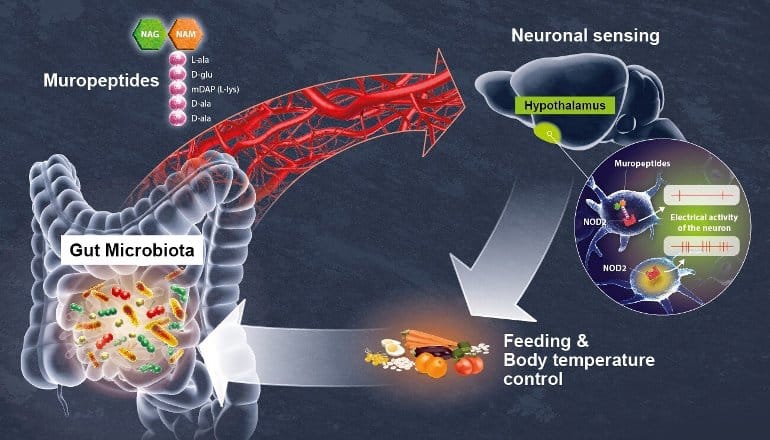
By-products of the gut microbiota circulate in the bloodstream, altering host physiological processes such as immunity, metabolism, and cognitive function. Hypothalamic neurons in an animal model directly sense differences in bacterial activity and adapt appetite and body temperature appropriately, according to researchers from the Institut Pasteur (a partner research organization of Université Paris Cité), Inserm, and the CNRS. These findings show that the gut microbiota and the brain communicate directly, a finding that could lead to new therapeutic methods for metabolic illnesses including diabetes and obesity. The gut is the body's greatest bacterial reservoir. The degree of interaction between hosts and their gut microbiota is becoming clearer, highlighting the relevance of the gut-brain axis. The researchers concentrated their efforts on the NOD2 (nucleotide oligomerization domain) receptor, which is present primarily in immune cells. Muropeptides, which are the building components of the bacterial cell wall, are detected by this receptor. Furthermore, variations of the gene coding for the NOD2 receptor have previously been linked to digestive problems, such as Crohn's disease, as well as neurological diseases and mood disorders. These findings, however, were insufficient to show a link between neuronal activity in the brain and bacterial activity in the stomach. This was uncovered in a new investigation by a group of scientists.
The scientists first discovered that the NOD2 receptor is expressed by neurons in numerous parts of the brain in mice, particularly in the hypothalamus, using brain imaging techniques. They discovered that when these neurons come into touch with bacterial muropeptides from the stomach, their electrical activity is reduced. Muropeptides, on the other hand, have no effect on these neurons if the NOD2 receptor is missing. As a result, the brain loses control over eating habits and body temperature. The mice acquire weight and become more prone to type 2 diabetes, especially in older females. Scientists discovered that neurons may directly perceive bacterial muropeptides, despite the fact that this activity was previously assumed to be exclusively performed by immune cells.
Muropeptides' impact on hypothalamic neurons and metabolism raises questions about their possible participation in other brain functions and may help us comprehend the link between certain brain illnesses and NOD2 genetic variations.

Article links:


Wednesday, November 16, 2016

Ferroptosis, Iron Controlled Cellular Death


https://www.sciencedaily.com/releases/2016/11/161114110708.htm

The way a humans have gone through controlled cellular death has been a mystery for year and has eluded the hand of scientist for years. Control cellular death is particularly important because it can help cure many diseases like cancer and radition sickness. There are a number of way a cell can do this usally it needs the help of the body and other molecules in order to properly regulate the disposale of the damaged cell. Ferroptosis is different than apoptosis, a more commonly know form of cell death, is that the ferroptosis pathway uses iron in order to catalyze a reaction that safely removes or recycles the damaged cellular material. (Helmholtz). Decoding the signals that facilate this pathway can help answer many questions about controlled cellular death. An international team of scientists head by the University of Pittsburgh have thought ton have mapped the ferroptosis pathway. Their findings were published in two papers published in Nature Chemical Biology, their work can be used to develop treatmeants for many different types of illinesses.

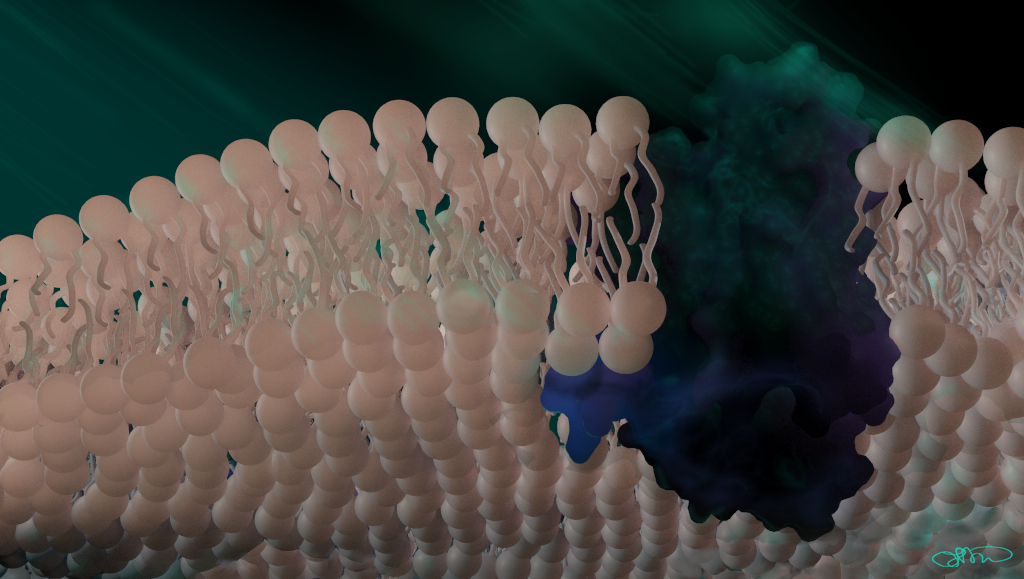
 They found that there are four phospolipid molecules that signal to the body rest of the body that the cell they are around is damaged and needs to be properly taken care of. A phospholipid is a molecule with phosphate head with a lipid tail, it is commonly found throught out the body. Phospholipids are the molecules that make up the majority of cell membranes, the picture above is depiction of a cell membrane. A lead member of the team Professor Kagan says, "Scientists have long known that these lipids were important for encasing the cell and giving it structure... What they didn't know is that they do so much more, including communicating and signaling messages like 'danger' inside the cell itself, to other cells and to the cellular community as a whole, so that organisms can function in a coordinated way." (UPMC). Their findings have also suggested that ferroptosis can be used to treat the underlying cell that cause radiation sickness. Althought apoptosis has already been decoded every controlled cellular death pathway is different and every new decoded pathway can help uncover why certain pathways are not working. Certain pathways are also used in certain types of cells, apoptosis is not the path choosen everytime in every sitituation. Figuring out what pathway is used at what time and to what cells are the focus on is the next medical breakthrough that will help treat and cure many terrrible dieases.


Helmholtz Zentrum Muenchen - German Research Centre for Environmental Health. (2016, November 15). Cancer research: How cells die by ferroptosis. ScienceDaily. Retrieved November 16, 2016 from www.sciencedaily.com/releases/2016/11/161115083915.htm

 University of Pittsburgh Medical Center (UPMC). (2016, November 14). International team decodes cellular death signals. ScienceDaily. Retrieved November 15, 2016 from www.sciencedaily.com/releases/2016/11/161114110708.htm