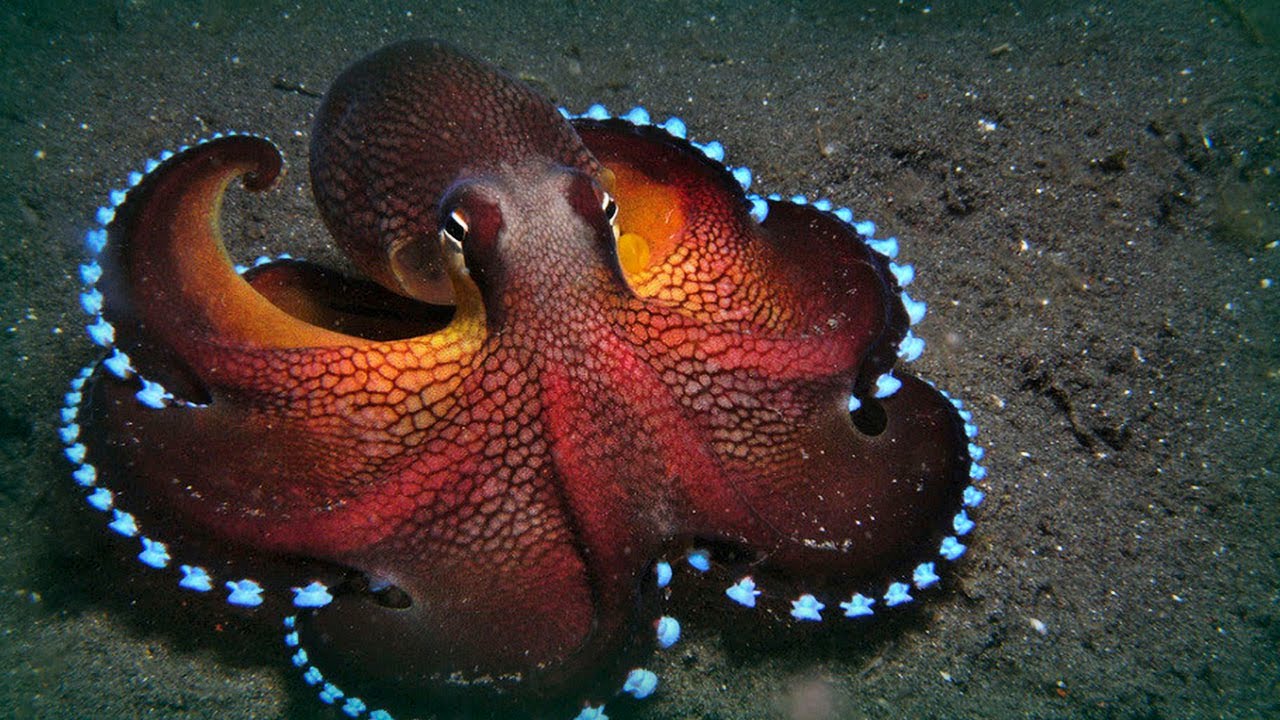
Showing posts with label Coleoid cephalopods. Show all posts

Tuesday, August 1, 2023

How Cephalopods Modify Their RNA

Soft-bodied cephalopod's main source of RNA editing is known as adenosine to inosine (A-to-I) editing. A-to-I editing happens when the enzyme ADAR2 takes one nitrogen and two hydrogen atoms from adenosine which turns it into inosine. Inosine is read as guanine by ribosomes which can change the amino acid into something other than what it used to be if there was still an adenine. This type of RNA editing is known as RNA recoding. Mollusks, humans, and other mammals do not seem to do it to the same extent. For example, Rosenthal, Eisenberg, and colleagues reported that longfin squid have 57,108 recoding sites. Multiple species of octopus, squid, and cuttlefish had been examined and each had tens of thousands of recoding sites. Coleoids have these many opportunities to recode because of their ADAR2 enzyme can be found in the cytoplasm. 


Tuesday, April 18, 2017

Mutations Account for the smarts of Octopuses and Squids

https://www.nytimes.com/2017/04/06/science/octopus-squid-intelligence-rna-editing.html?_r=0
Coleoid cephalopods are known for their smarts, such as being able to open jars, communicate with each other, and identify prey as embryos. The intelligence of these organisms may be attributed to how their use of RNA editing, which may slow down the evolution of their DNA. Scientists have found that cephalopods have tens of thousands of sites where the RNA editing leads to a different protein being made than the DNA codes for. When compared to less intelligent mollusks, it was evident that they do not have as many instances of this editing. The RNA recoding sites of squids and octopuses, who are not very close in terms of evolution, showed that they shared many of the same recoding sites. Compared to humans and mice that only share 40 recoding sites and are closer in terms of evolution, this pointed to an evolutionary advantage for these organisms to have the RNA editing. This comes with the trade-off of having a slower evolving genome because DNA cannot mutate as easily. Scientists have found that RNA editing is enriched in the cephalopod's nervous tissue, which may contribute to their complex behavior and ability to adapt to temperature changes. I think that this is a very interesting study and will ultimately lead to a better understanding of these organisms. Further research into this topic may uncover evolutionary information on why some organisms have intelligence while others do not. By understanding the minds of squids and octopuses, it may lead to new developments that can be used in humans to increase intelligence in the future.

Monday, April 17, 2017

A Genetic Oddity May Give Octopuses and Squids Their Smarts


Octopuses, cuttlefish and squid belong to the coleoid cephalopods family of invertebrates. Dr. Eisenberg, Dr. Rosenthal and Noa Liscovitch-Brauer, at Tel Aviv University, studied these intelligent species more in depth. They found out that they make their RNA useful unlike any other species. These coleoids were recoding their sites, where RNA editing results in a protein different from what was initially encoded by DNA. This discovery breaks the norm of enzymes used for recoding like ACGU, now these coleoids can add new riffs to its base genetic blueprint.

This is fascinating because it proves how brilliant these species are. Although it’s a slow process, its proves that the change is well worth it. It might be of great use to further study these coleoid and understand what features in the brain allow them to edit these sites.

Sunday, April 16, 2017

Coleoid Cephalopod Smarts


Octopuses, squid, and cuttlefish; they all belong to a group called coleoid cephalopods. This specific group is known to be the smartest of the invertebrates. According to NY Times, a senior scientist at the Marine Biological Laboratory named Joshua Rosenthal had said that they are the only “animal lineage that has really achieved behavioral sophistication”. A recent study conducted by Dr. Rosenthal and Eli Eisenberg revealed that RNA editing is favored among coleoids even though it slows DNA evolution. Modified RNA allows the creation of proteins that originally did not exist in the DNA. It was then found that there are actually tens of thousands of recording sites. These recording sites are where the resulting protein from RNA editing is different from the originally encoded DNA. Coleoids share many of the tens of thousands of sites while in humans and mice, even though they are closer in evolution, only share about forty. The behavior of coleoids are believed to be due to the RNA editing in the nervous tissues, potentially helping octopus quickly adapt to temperature change. Those who were not involved with the study say that the extensive RNA editing is “extraordinary” and “evolutionarily a big deal”.

The trade-off of having such capabilities shows the problem of slow evolution. According to Dr. Eisenberg, it is a “big price to pay,” but “must be worth it”.
This is a really interesting topic which makes me wonder what if humans were capable of this as well.


Wednesday, April 12, 2017

A Genetic Oddity May Give Octopuses and Squids Their Smarts


Octopuses, squids, and cuttlefish, scientifically known as coleoid cephalopods, are the only species aside from humans known to have achieved behavioral sophistication. Dr. Rosenthal a marine biologist, Eli Eisenberg a biophysicist, and Noa Liscovitch-Brauser a postdoctoral scholar at Tel Aviv University uncovered in their research that these coleoids use extensive RNA  editing to flexibly diversity proteins within their nervous system. In order to determine this change in coleoid's genetic coding, they looked at the differences in the DNA and RNA sequences of two octopuses, a squid, and a cuttlefish. In the study, they found that these species tens if thousands of re-coding sites in which the RNA edits proteins that were initially encoded by the DNA. When they compared the re-coding sites of each of the studied species, they uncovered that they each shared tens of thousands of similar re-coding sites, which is a major evolutionary discovery. They also uncovered that DNA mutations are marked depleted within these sites. These depletions hinders these aquatic animals from undergoing evolutionary change because DNA mutations are what usually causes a species to develop new adaptive traits. The researchers also found that RNA editing is abundant within the nervous tissue, which they hypothesized is the cause of their behavioral sophistication.

I found this article interesting because we could learn a lot about gene editing from these cephalopods. I also found it fascinating to learn how these animals develop sophisticated behavioral attitudes/functions. This article also sheds new light on RNA editing's function within different species, because it was once thought to be insignificant. It is also important to note that the article states that RNA editing seems to be favored by natural selection in cephalopods.

  New York Times article
molecular phylogeny of coleoid cephalopods
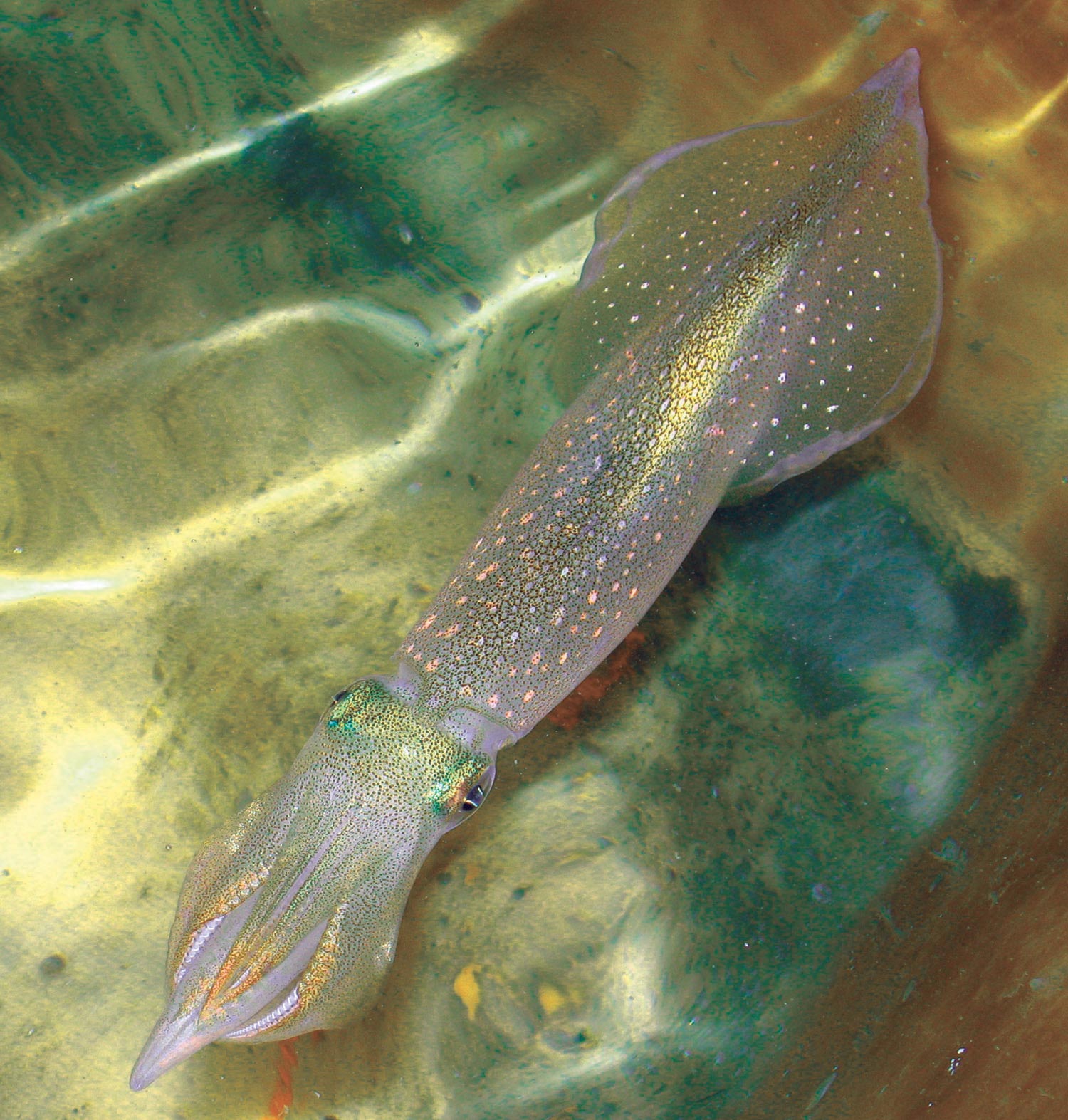


A Genetic Oddity May Give Octopuses and Squids Their Smarts


Researchers have found that Coleoid cephalopods are capable of RNA editing.  Post transcriptional RNA editing allows for the greater diversification of proteins.  This genetic process allows for proteins, that weren't encoded for by the DNA, to be created.  Researchers studied the RNA editing in octopus', squids, and cuttlefish.  The coleoids all had tens of thousands of sites where the RNA sequence was different from what the DNA had encoded.  The researchers then compared all of the coleoid RNA recoding sites and found that they shared a great majority of these sites. 

This is a very interesting topic because it makes you think about how humans could manipulate this process.  One drawback from this ability is slower evolution though.  DNA mutations were depleted around recoding sites.  It sounds like they still need to do a lot of research in order for it to be an effective form of gene therapy.  It reminds me of CRISPR somewhat.

https://www.nytimes.com/2017/04/06/science/octopus-squid-intelligence-rna-editing.html
https://futurism.com/these-species-recode-their-own-genetics/
http://www.cell.com/cell/fulltext/S0092-8674(17)30344-6